The Proclamation at Allahabad
1 November 1858: the Crown takes over, and the four laws that turned the next forty years into village wars
On 1 November 1858 Lord Canning read the Queen's Proclamation at a durbar in Allahabad, and the Company's India became the Crown's. The promise was generous and the Raj largely kept it, then passed four laws that did the real work: the Peel army with its martial-races rule, the Arms Act of 1878, the Forest Act of 1878, and the famine policy of 1876 to 1878. This scene-setter shows why the fights of 1860 to 1895 look isolated, and carries four with no lesson of their own: the Biswas brothers of the indigo refusal, Ratna Naik of Keonjhar, Khonoma in 1879, and the cultivators shot at Patharughat in 1894.
The Tent at Allahabad
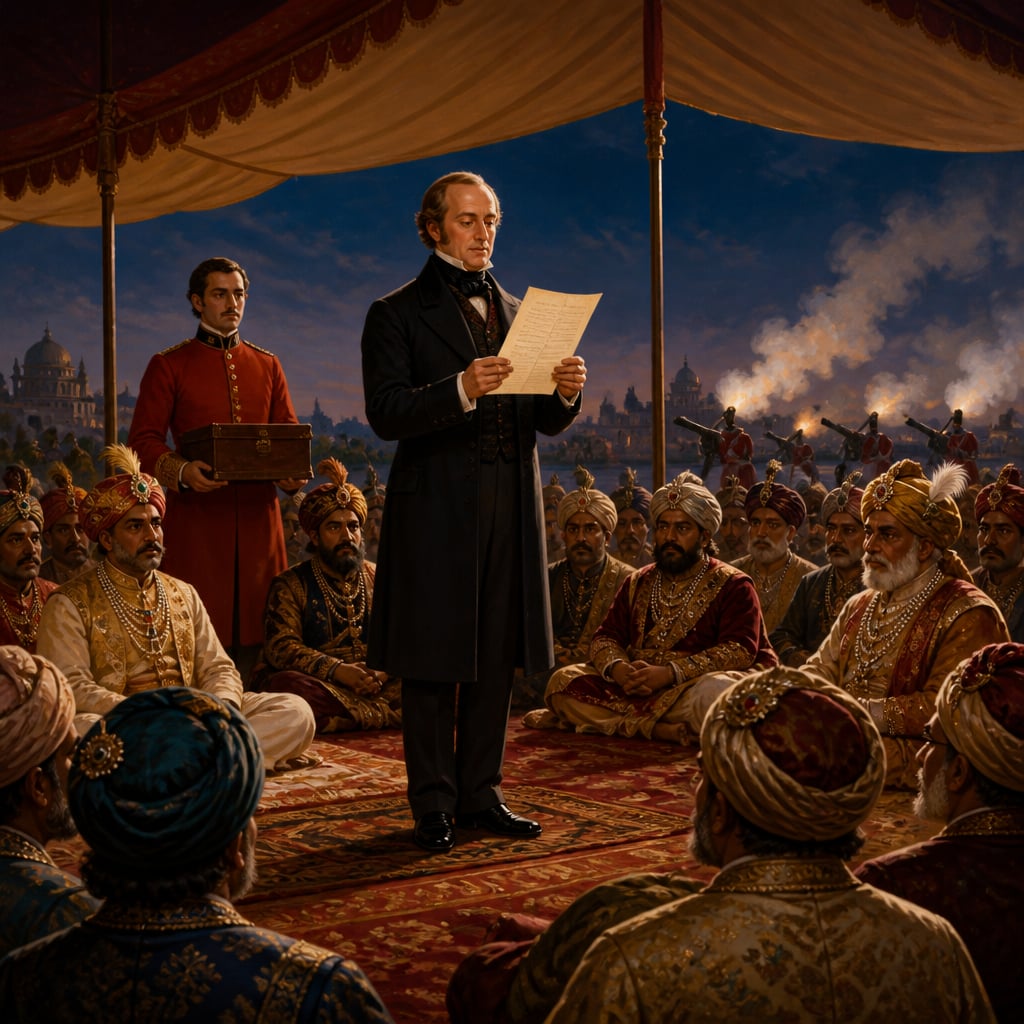
It is 1 November 1858. At Allahabad, on the flat ground between the Ganga and the Yamuna, a durbar has been set up under canvas. Princes and chiefs sit in rows. Guns fire a salute. Lord Canning, until this morning the Company's Governor General, stands up to read a letter from a woman he has never met.
The letter is from Queen Victoria, and it is short. The East India Company is finished. India now belongs to the Crown. The Doctrine of Lapse is dead, adopted heirs will be recognised, and the Queen desires no extension of our present territorial possessions. On religion she is plainer still. Her officers are ordered to abstain from all interference with the religious belief or worship of any of her subjects, on pain of her highest displeasure.
The same text was read out in English and in translation at durbars across the country over the following weeks. In the Awadh countryside, where the hangings had not finished, men were still being taken out of villages and shot. Fifty miles from where Canning stood, Beni Madho Singh was still in the field.
So read that promise again. It is generous, it is specific, and almost none of it was broken in the letter. The Raj kept its word to the princes for ninety years. What it did instead was pass laws. Over the next twenty years the new government wrote four of them. Those four laws turned the next forty years into a string of small wars that almost nobody now remembers. This lesson is about how a promise and a gun licence can be the same policy.
What the Raj Learned From 1857
The Crown took over a country that had nearly thrown it out, and it drew four conclusions. Each became an instrument.