The Bhil Who Fed the Villages
Tantya Bhil: eleven years in the Nimar and Satpura hills, betrayal by a man who called him brother, and a hanging at Jabalpur on 4 December 1889
From 1878 Tantya Bhil raided moneylenders and treasuries across the Nimar hills and into Khandesh, burned the debt ledgers, and gave the grain away to Bhil villages. For eleven years no reward bought him, because three police forces, three borders and a hundred silent villages stood in the way. In 1889 a man who had been tied a rakhi by his own family gave him up, and he was hanged at Jabalpur on 4 December 1889.
The Grain That Went the Wrong Way
It is a night in the early 1880s, in a village in the Nimar hills south of the Narmada. A moneylender's storehouse has been opened. Sacks of jowar are being carried out into the dark by men who did not buy them.
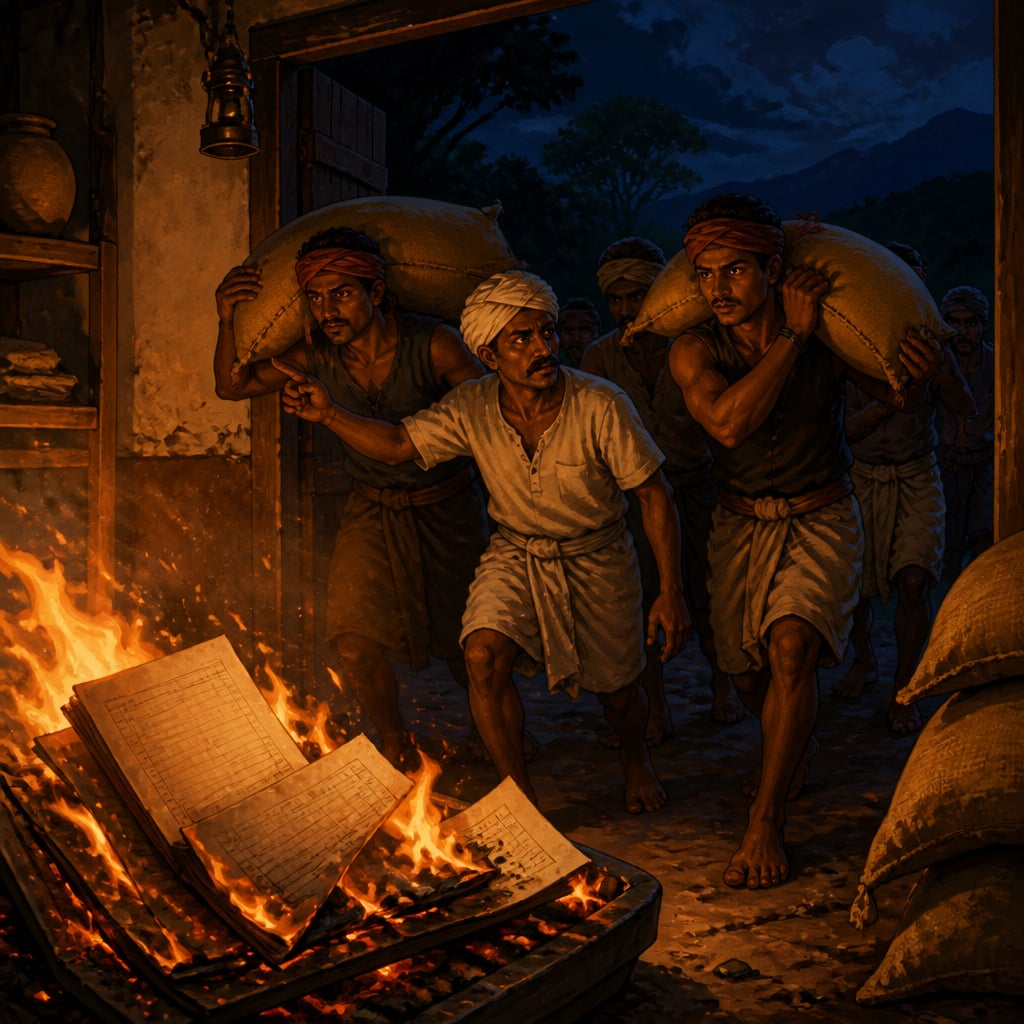
The man directing them is short, barefoot, and about forty. His neighbours call him Tantya. Behind the storehouse a thin fire is going, and on it the moneylender's account books are curling and turning black. The debt papers burn faster than the grain moves.
By morning the sacks are gone into a dozen houses in a dozen hamlets, and the man is gone into the Satpura forest. When the police arrive, nobody in the village has seen anything. Nobody in the village will ever see anything.
For eleven years the Raj and the Holkar state hunted this man across three sets of borders and could not hold him. They caught him in 1878 and he was out of Khandwa jail in three days. The question the police files never answered is the one this lesson is about. Not where he hid. Who fed him.
Who Tantya Was
Tantya Bhil was born in the Pandhana country of East Nimar, in what is now Khandwa district of Madhya Pradesh. Accounts of the village differ: Badada and Baroda Ahir are both named, and the state's memorial now stands at Baroda Ahir. His birth year is given as 1840 in most accounts and as 1842 or 1844 in others. He was a Bhil, one of the tribal communities of the Satpura and Vindhya hills.
He was not a chief. He had no land, no army, and no title. Around 1874 he served a spell in jail on a charge of bad livelihood. He came out and took work as a labourer at a village called Pokhar. It was near Pokhar that he made his first raid. That is the whole of his qualification.