Rampa, 1879
Tamman Dora, the leader of the Rampa rising of 1879, and the one end the Raj never wrote down
On 13 March 1879 hill men came down to the Sub-Collector's camp at Chodavaram, stated their grievances about a tax on toddy, and then opened fire. The rising that followed took the Madras government twenty months, six regiments and 590 malaria cases to put down. Of the four leaders the Raj named, three have a dated end; Tamman Dora was still raiding in October 1880, and after that the file goes silent.
The Tent at Chodavaram
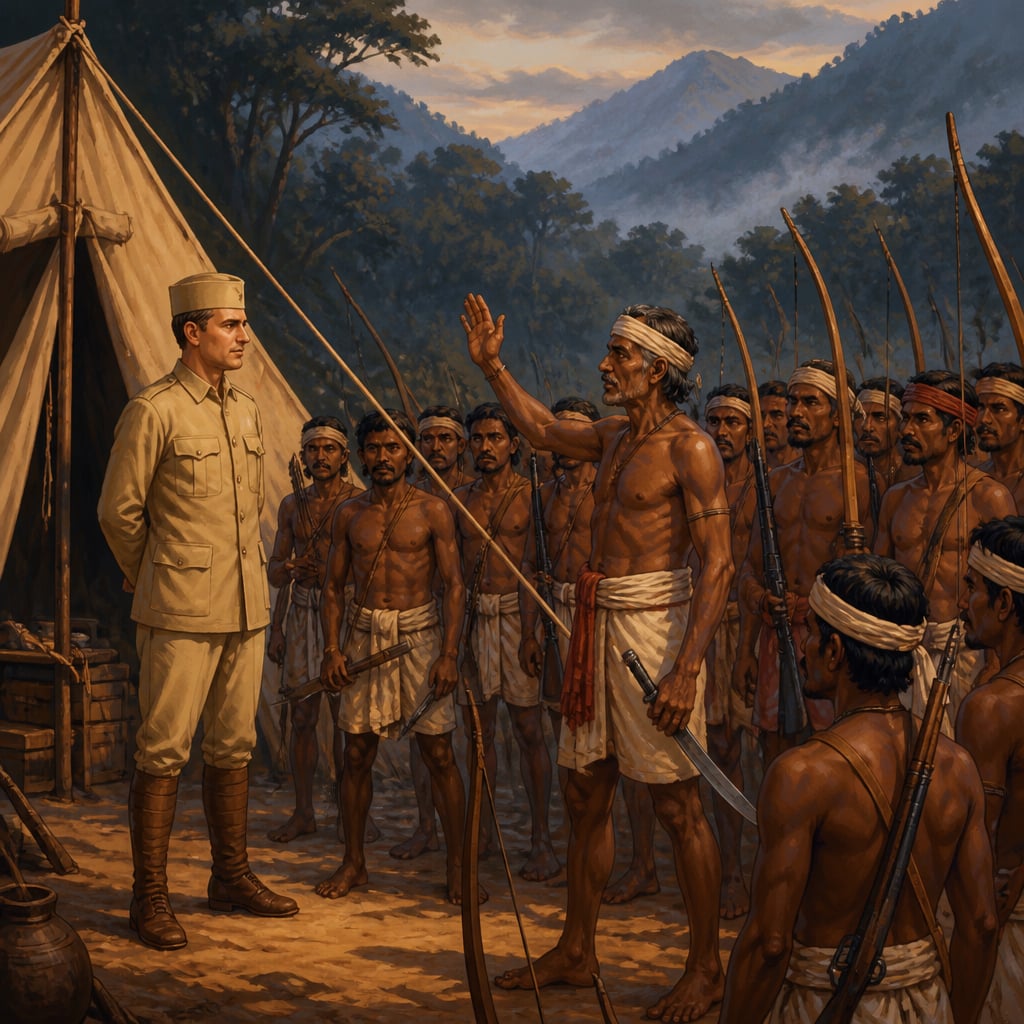
It is the morning of 13 March 1879. A large party of hill men has come down out of the Rampa country to the Sub-Collector's camp at Chodavaram. They carry bows, long knives and a few matchlocks. The officer walks out of his tent unarmed to meet them.
They tell him what is wrong. The renters are charging them a fee to tap the palm trees behind their own huts. The mansabdar of Rampa wants a second fee on top of the first. The constables are taking their chickens.
The Sub-Collector says he will look into it. For a few minutes it seems to work. The Raj's own record says the hill men "expressed themselves satisfied." Then they call out that they cannot trust the Sircar's promises, and start firing on the camp.
Nobody on the officer's side was badly hurt. He had thirty-nine police and thirty-two carbines, and he held the village easily. But the shooting settled something.
Over the next twenty months the Madras government put six regiments of infantry into those forests. Two companies of Sappers and Miners. A squadron of cavalry. A wing of the Hyderabad Contingent. More than five thousand square miles were in revolt.
The Raj named four men as the chief leaders of that revolt. Three were caught or killed on dated days. The fourth was still raiding after the others were gone, and then the file simply stops carrying him. His name was Tamman Dora.
Four Names in a Government File
We know these men because the Raj wrote them down as a problem. The Godavari District Gazetteer, compiled by a British officer named F. R. Hemingway, lists them in one sentence: "four notorious characters named Chandrayya, Sirdar Jangam Pulicanta Sambayya, Tamman Dora, and Ambul Reddi of Boduluru."
That is the whole of their introduction. "Notorious" is the Raj's word, not ours.