The First Issue of Ghadar
Lala Har Dayal, the paper called Ghadar, and the founder who later walked away
On 1 November 1913, in a rented house at 436 Hill Street, San Francisco, a scholar who had given back an Oxford scholarship printed the first Urdu issue of a paper called Ghadar. It named the aim, named the cost, and gave the movement its name. Har Dayal was arrested five months later, fled to Berlin, and in 1920 published a book arguing against the fight he had started.
The Press on Hill Street
It is Saturday, 1 November 1913, in a rented house at 436 Hill Street, San Francisco. The house has a name the men who live in it gave it: Yugantar Ashram, the ashram of the new age. Inside, a small hand press is turning out four pages of Urdu on cheap paper. The ink smells sharp. The sheets come off damp and are stacked on the floor to dry.
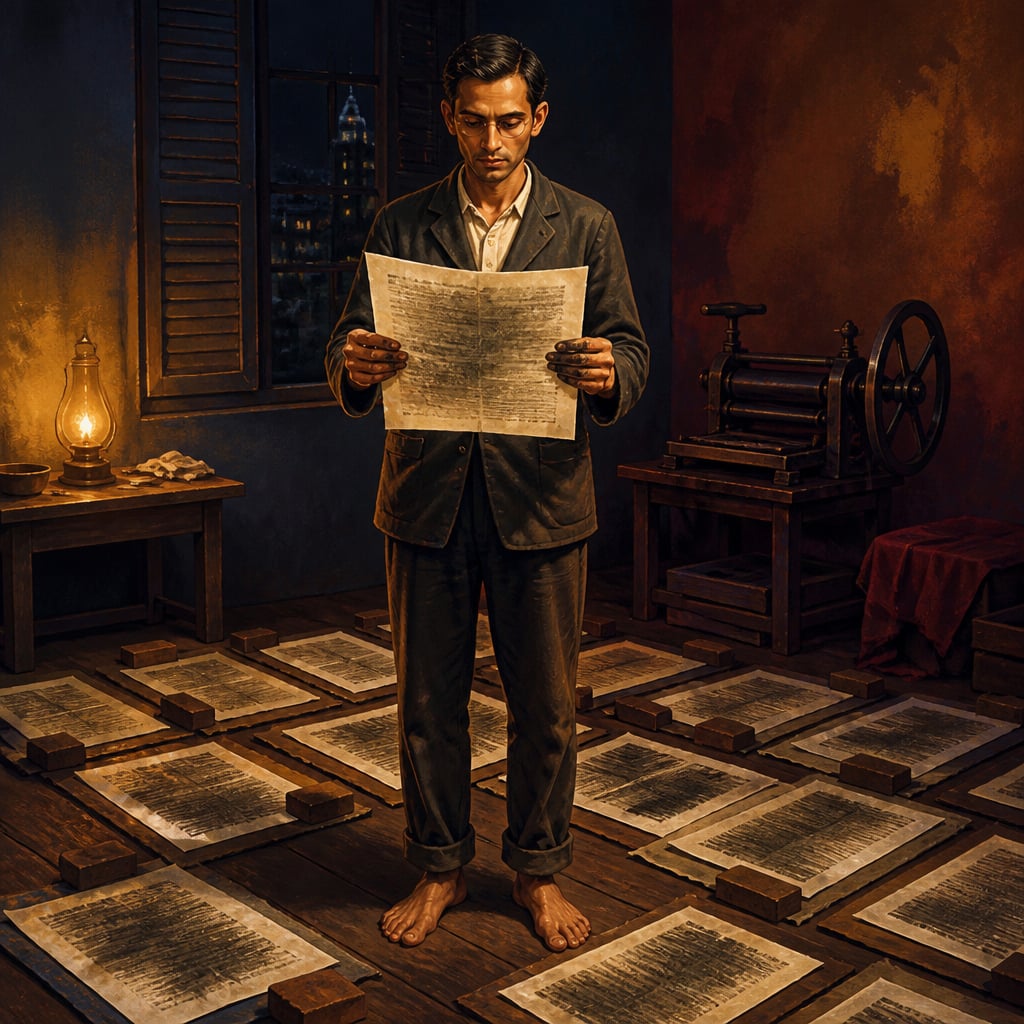
The man reading the first sheet is twenty-nine years old. His name is Lala Har Dayal. He weighs very little, eats almost nothing, and sleeps on the floor of the same house. Until last year he was lecturing on Indian philosophy at Stanford University. Before that he held a Government of India scholarship at Oxford, the kind that usually ends in a safe job in the Indian Civil Service. He gave it back.
The paper in his hand has one word on the masthead. Ghadar. Mutiny. Under it, in the first issue, is a line that tells the reader exactly what he is holding.
The men around him are not students. Most are Punjabi farmers who came to work in the lumber mills of Oregon and the fruit farms of California. They are about to send this paper, free, to every Indian address they can find, from Vancouver to Shanghai to Manila to the villages of Doaba. Within eighteen months some of them will be dead on the gallows in Lahore.
And the man holding the first sheet will not be with them. That is the part of this story people leave out, and it is the part that matters most.
The Scholar Who Refused the Ladder
Har Dayal was born in Delhi on 14 October 1884, into a Kayastha family in which his father worked as a reader in the district court. He was the kind of student the Raj system was built to collect. St Stephen's College, then Punjab University, then in 1905 a Government of India state scholarship to Oxford.