The Clerk from Dehradun
Rash Behari Bose planned the Delhi bomb, commanded the 1915 rising, and sailed out of Calcutta as another man
The morning after the bomb on Lord Hardinge's elephant, the head clerk of the Forest Research Institute at Dehradun sat in a meeting condemning the attack he had planned. This lesson follows Rash Behari Bose from that desk to the command of the February 1915 rising, and out of Calcutta on 12 May 1915 as P. N. Tagore aboard the Sanuki Maru. It ends where he began again, hidden in a Tokyo bakery.
The Meeting He Attended
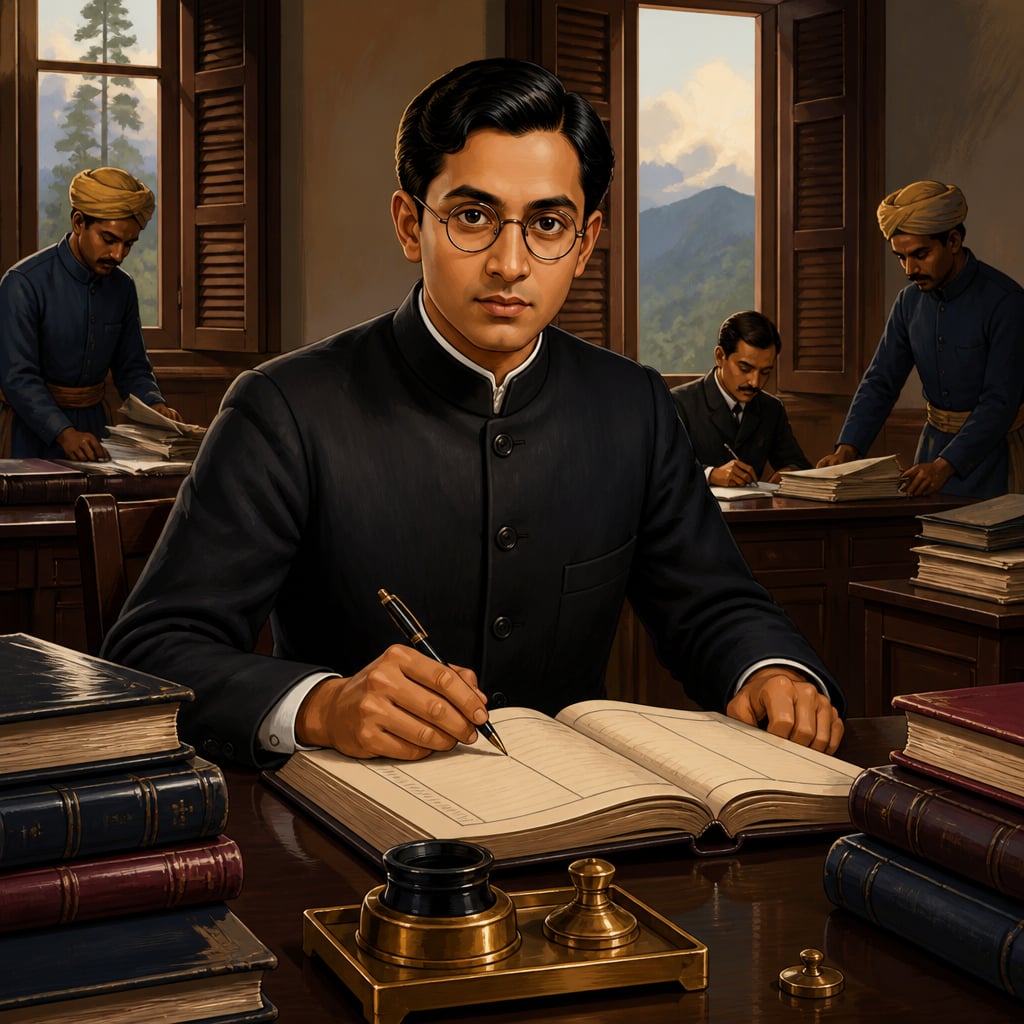
It is 24 December 1912, the morning after. In the office of the Forest Research Institute at Dehradun, the head clerk is at his desk on time, as he is every day. His name is Rash Behari Bose. He is twenty-six. The files in front of him are about timber.
Word has reached the hill town overnight. In Delhi, during the Viceroy's state procession through Chandni Chowk, a bomb was thrown at Lord Hardinge on his elephant. The Viceroy was wounded. His mahout was killed. The Empire is hunting whoever did it.
That afternoon the respectable men of Dehradun gather to pass a resolution condemning the outrage. The head clerk of the Forest Research Institute is among them. He is a loyal government servant of good standing. He had come back on the night train.
He had also planned the bomb.
This is the man this lesson is about. For nearly three years he ran the largest revolutionary conspiracy in northern India from inside a government office, and no British officer suspected him. The question the lesson has to answer is what happens to such a man when the disguise finally fails.
The Clerk
Rash Behari Bose was born on 25 May 1886 at Subaldaha, a village in Burdwan district in Bengal. He grew up partly in Chandernagore, the French pocket on the Hooghly where British police could not simply walk in. That town taught him something he used for the rest of his life: a border is a tool.
He took the Dehradun job at the Forest Research Institute, which had been set up in 1906. A head clerk was a small man in the Raj's eyes. He kept registers. He was polite. He travelled on official business without anybody asking why.