Nineteen
The student who set Ghadar type in San Francisco, and hanged at Lahore at nineteen
Kartar Singh Sarabha went to San Francisco at sixteen to study and ended up running the Gurmukhi press of the Ghadar paper instead. He came home in late 1914 for a rising fixed for 21 February 1915, which an informer named Kirpal Singh destroyed, and was arrested on 2 March while trying to bring cavalry troopers over. He was hanged at Lahore Central Jail on 16 November 1915, aged nineteen, and Bhagat Singh carried his photograph in his pocket.
The Boy at the Press
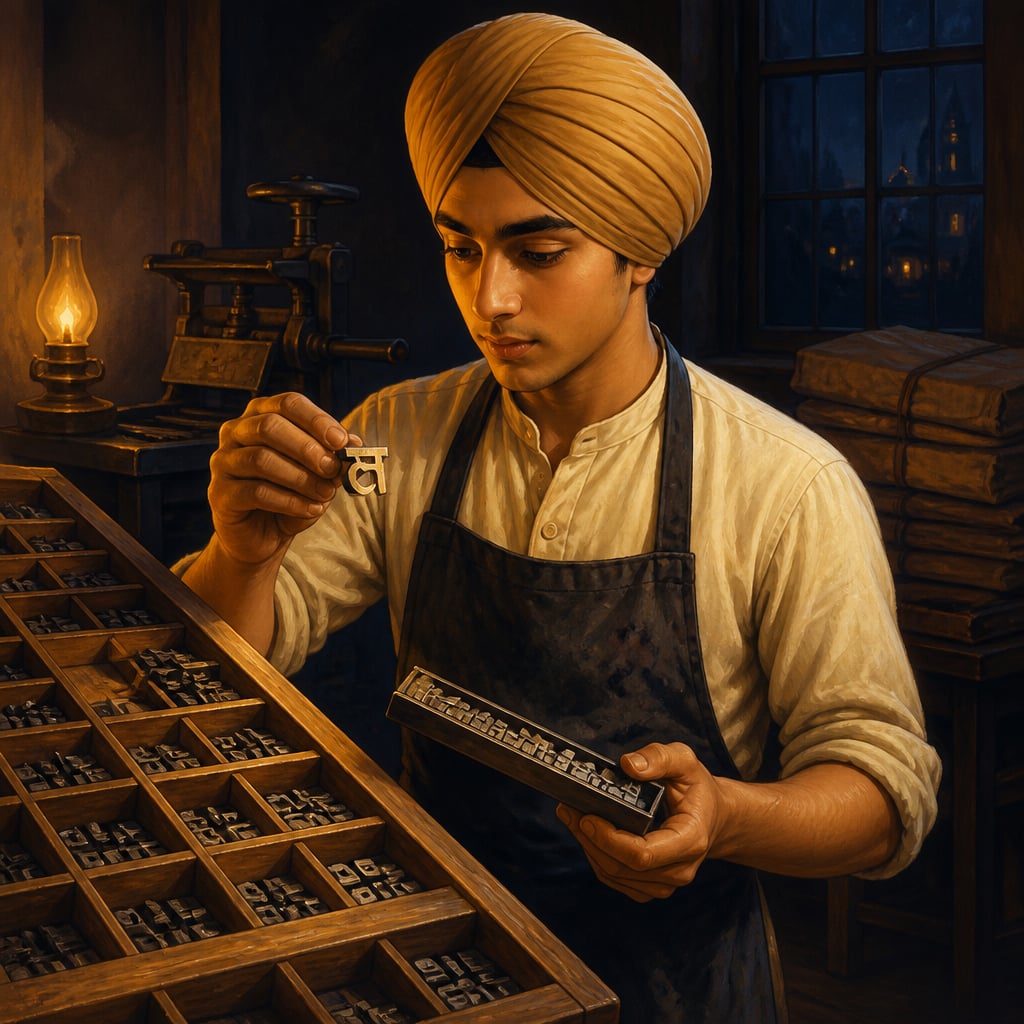
It is 1913, in a rented house at 436 Hill Street, San Francisco. A small hand press is working in a back room. The room smells of ink and hot metal. A boy of seventeen is setting Gurmukhi type, letter by letter, for a newspaper that will be smuggled into Punjab inside parcels of cloth and tins of tea.
His name is Kartar Singh Sarabha. He came from a village near Ludhiana the year before, sent by his grandfather to study in America. He has stopped going to classes. He lives at this house instead, which the men here call the Yugantar Ashram, and he does the work nobody else wants: the printing, the packing, the addresses.
The paper is called Ghadar, the Urdu and Punjabi word for mutiny. On its masthead it prints what it wants, plainly. Enemy: the British Government. Pay: death. Price: martyrdom. Place: India.
Two years from this room, this boy will be hanged in Lahore Central Jail. He will be nineteen. The question this lesson asks is not how he died. That part is on the record and it was quick. The question is what a nineteen-year-old thought he was doing.
The Village, and the Ticket
Kartar Singh was born on 24 May 1896 in Sarabha, a village on the Ludhiana road. His father died when he was small. His grandfather, Badan Singh, raised him and paid for his schooling at the Malwa Khalsa school in Ludhiana.
In July 1912 the family put him on a ship for San Francisco. He was sixteen. The plan was ordinary and hopeful: study, get a degree, come back with a job. Thousands of Punjabi families were making the same bet that decade. Many of the men who ended up in the Ghadar party had gone abroad for exactly this reason, to earn.