Mandalay, February 1916
Ghadar sent a Punjabi schoolmaster to turn the Indian regiments in Burma, and he was offered his life for one written apology
Sohan Lal Pathak resigned a secure teaching job in 1908 rather than break with Lala Lajpat Rai, and ended up carrying Ghadar's plan into Burma by way of Siam in 1915. He went barrack to barrack among the Indian troops there until a soldier handed him to the police at Maymyo in August 1915. Sentenced to death, he was offered his life in exchange for a written apology, refused it, and was hanged at Mandalay Jail on 10 February 1916.
The Walk Across the Yard
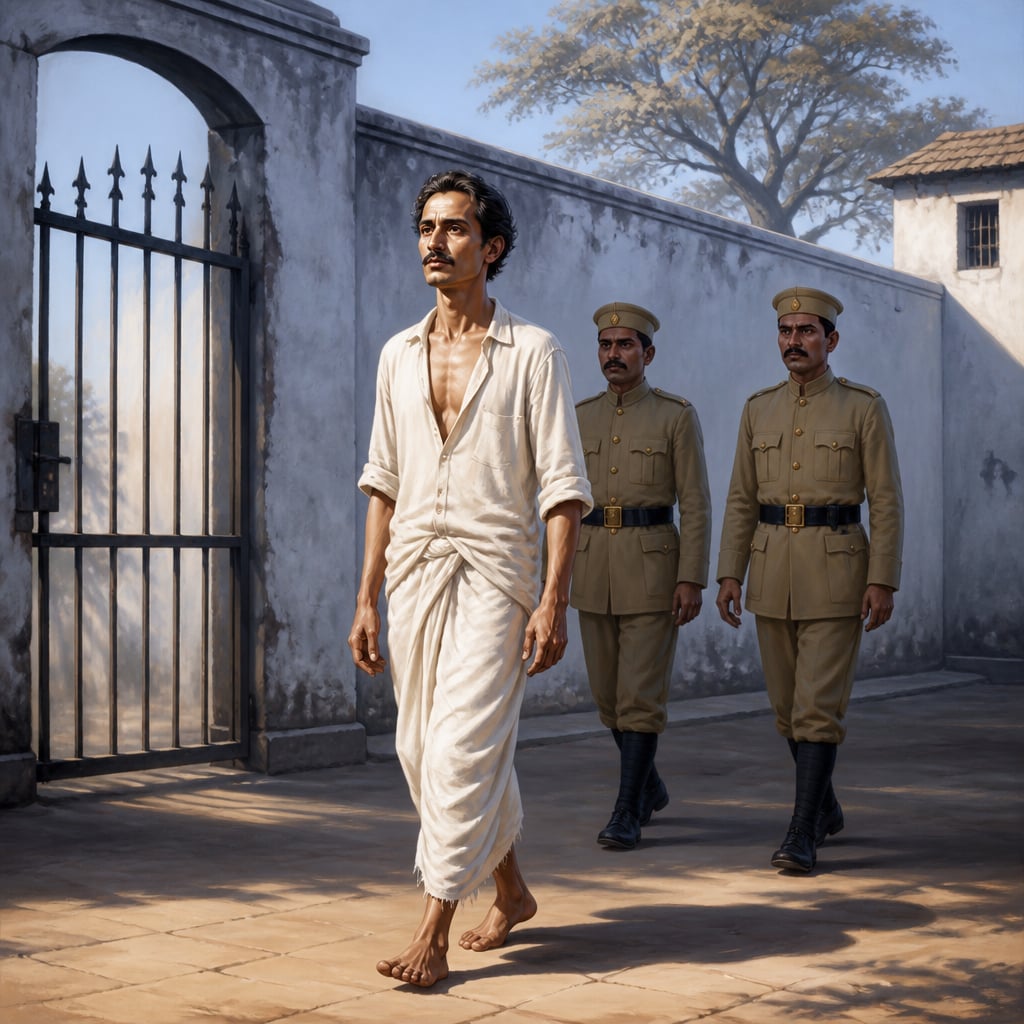
It is the morning of 10 February 1916, inside Mandalay Jail in Upper Burma. The cold season is ending and the yard is already bright. A man of thirty-three is walking across it under guard. He is thin, he has been in custody since August, and for most of that time he was held in the fort on the other side of the city.
His name is Sohan Lal Pathak. He is a schoolteacher from Patti, a small town in Punjab, about two thousand kilometres from this yard. He has been convicted of conspiring to turn the Indian regiments in Burma against the government.
The thing worth knowing about this morning is what happened before it. He had been offered his life. The offer was the usual one: say you regret it, ask the government's pardon in writing, and the sentence goes away. Men had taken that offer before him and men would take it after him. It was not a trap and it was not dishonourable. It was simply a door.
He did not go through it. The reason he gave, in the accounts the Ghadar movement kept of him, was that the apology was owed in the other direction. This lesson is about how a village schoolmaster ended up two thousand kilometres from home with that choice in front of him. It is also about how far the rising of 1915 actually reached.
The Teacher Who Resigned
Sohan Lal was born on 7 January 1883 at Patti, the son of Pandit Chanda Ram. The family was not well off. He was a good student and won scholarships, but the money ran out and he took a clerk's job in the Irrigation Department instead of finishing his studies.
He came back to education by the side door. He trained at the Normal Training School in Lahore, the government's teacher-training institution, and qualified as a schoolmaster. That was a settled career. A trained teacher in Punjab in 1907 had a salary, a pension and a place.