Ten Bombs in Meerut
A Marathi engineering student carried Bengal's bombs into a Punjabi regiment, and hanged for it at twenty-seven
On the night of 23 March 1915 the police took Vishnu Ganesh Pingle in the lines of the 12th Cavalry at Meerut, carrying ten bombs of the pattern used against Lord Hardinge in Delhi. He was a village boy from Talegaon Dhamdhere who went to the American Pacific coast to study engineering and joined Ghadar instead, then carried Bagha Jatin's letter of introduction to Rash Behari Bose. He was hanged at Lahore on 16 November 1915, the same morning as Kartar Singh Sarabha.
The Cavalry Lines at Meerut
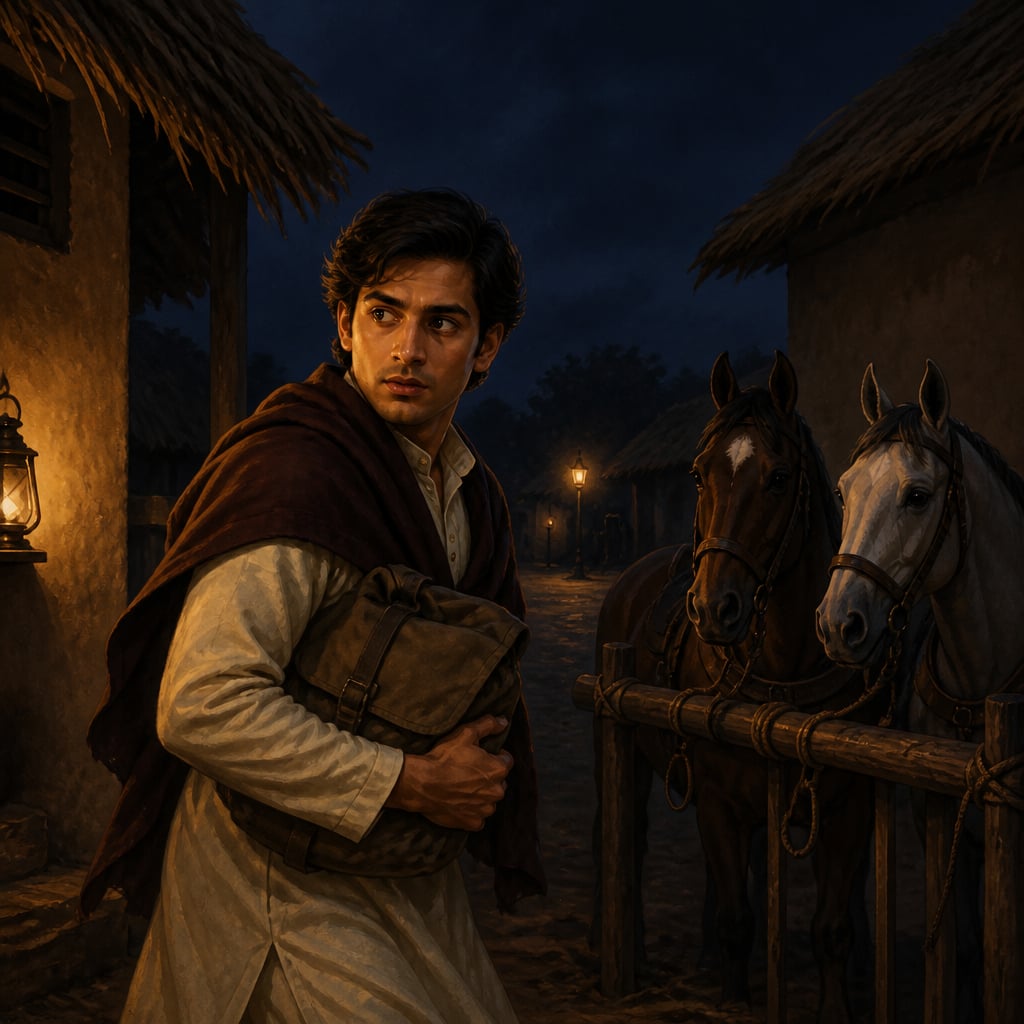
It is the night of 23 March 1915, in the lines of the 12th Cavalry at Meerut. The regiment's horses are picketed for the night. A man who is not a soldier is moving among the huts where the Indian troopers sleep.
He is twenty-seven. He is small, he speaks Marathi at home, and he does not speak Punjabi well. He is carrying ten bombs. The police report on his arrest describes them precisely. They are bombs "of the pattern used in the attempt to assassinate Lord Hardinge in Delhi." That is the bomb of 23 December 1912, the one this chapter opened with.
The police take him that night. His name is Vishnu Ganesh Pingle, and he was born in a village near Pune, about fifteen hundred kilometres from the cantonment where he is arrested.
That distance is the question this lesson answers. Why is a Marathi Brahmin boy from Talegaon Dhamdhere carrying Bengali-designed bombs into a Punjabi cavalry regiment in the United Provinces? The answer is that by March 1915 the rising had already failed, and Pingle was walking into the failure on purpose.
The Boy Who Wanted to Be an Engineer
Pingle was born on 2 January 1888 at Talegaon Dhamdhere, a village in Shirur taluka of Pune district. He was the youngest of nine children. His father was a man of modest means with nationalist sympathies.
He went to school in Pune and then at Talegaon, and he came of age in the years when the Swadeshi movement was at its loudest in Maharashtra. He wanted to build things. Before he left India he worked for a while at an alkali works in Bombay, and he tried his hand at a small handloom business.
Then he did what a certain kind of ambitious Indian boy did in those years. He left for America without telling most of his family, travelling east through Hong Kong. By 1912 he was enrolled in the College of Engineering on the Pacific coast of the United States, studying mechanical engineering.