Narrative Sovereignty
Film, Media, and Storytelling Rooted in Civilization
For two centuries, India's story has been told by others. British historians wrote the textbook version. Hollywood reduced five millennia of civilization to snake charmers and slums. Western media framed every Indian event through lenses ground in London and New York. The result was not just misrepresentation but something deeper: the loss of narrative sovereignty, a civilization's ability to define itself on its own terms. That sovereignty is now being reclaimed. In cinema, S.S. Rajamouli's Bahubali and RRR proved that Indian civilizational narratives can captivate global audiences without seeking Western validation. In digital media, an ecosystem of creators has broken legacy media's monopoly on Indian narrative. In publishing and gaming, Indian stories are reaching new generations in formats they consume. Japan's anime industry offers a powerful model: what began as a niche medium became a global cultural force through a self-reinforcing cycle of civilizational stories creating cultural pride, generating audience demand, attracting creative talent, and producing more stories. India's cycle is in its early stages, but the evidence is clear. The audience exists. The talent is emerging. The question is whether India will build the institutional depth to sustain this renaissance, or remain dependent on occasional breakthroughs by exceptional individuals.
The Narrated Civilization
For the better part of two centuries, India's story has been told by others. British colonial historians wrote the textbook version. Hollywood reduced five millennia of civilization to snake charmers, slums, and exotic mysticism. Western media organizations framed every Indian event through lenses ground in London, New York, and Geneva. Academic departments in Europe and America became the authoritative interpreters of Indian philosophy, religion, and social structure.
The result was not just misrepresentation. It was something deeper: the loss of narrative sovereignty.
Narrative sovereignty is a civilization's ability to define itself on its own terms, to tell its own story, in its own voice, through its own institutions. When that sovereignty is lost, a civilization does not just face bad press. It loses the ability to shape its own self-understanding. Its children grow up seeing their heritage through foreign eyes. Its intellectuals measure themselves by foreign standards. Its artists create for foreign approval.
India's narrative sovereignty was not lost by accident. It was systematically dismantled through three mechanisms that the earlier chapters of this course have documented.
Three Mechanisms of Narrative Capture
Mechanism 1: Academic Framing
Western Indology departments became the gatekeepers of 'serious' knowledge about India. From Max Mueller onward, the authority to interpret Hindu texts, Indian history, and civilizational structure was relocated to institutions outside India. Indian scholars who challenged these interpretations were dismissed as nationalists or fundamentalists. The peer review system, the journal ecosystem, and university hiring all reinforced Western frameworks as the default lens.
This was not passive. It was an institutional architecture designed to ensure that India's story would always be filtered through Western categories: 'caste system,' 'Brahmanical hegemony,' 'Hindu nationalism,' 'religious violence.' These categories became the mandatory starting point for any conversation about India in global spaces.
Mechanism 2: Media Gatekeeping
International wire services (Reuters, AP, AFP), global broadcasters (BBC, CNN), and prestige newspapers controlled how India appeared in the global information ecosystem. Their editorial choices shaped world opinion about India.
The pattern was consistent: cover India's poverty, not its space program. Cover caste violence, not temple culture. Cover 'Hindu-Muslim tensions,' not civilizational synthesis. Cover conversion as 'freedom of religion,' not as cultural destruction. The framing was so persistent that many Indians internalized it. English-language Indian media often adopted the same frames, seeking validation from the very institutions that set the narrative.
Mechanism 3: Entertainment Colonialism
Hollywood and Western entertainment portrayed India through a narrow set of tropes: the mystical guru, the impoverished village, the arranged marriage drama, the exotic backdrop for a white protagonist's journey. From Indiana Jones to Slumdog Millionaire, India existed in Western entertainment as scenery, not as a civilization with agency.
Even when the portrayal was sympathetic, the gaze remained external. India was something to be experienced by outsiders, explained by outsiders, and ultimately judged by outsiders. The civilization that produced the Ramayana, the Mahabharata, Kalidasa's Shakuntalam, and the Panchatantra, four of the most influential narrative traditions in human history, had become a passive subject in someone else's story.
The Narrative Sovereignty Framework
Reclaiming narrative sovereignty requires building capacity across four domains.
Domain 1: Civilizational Storytelling
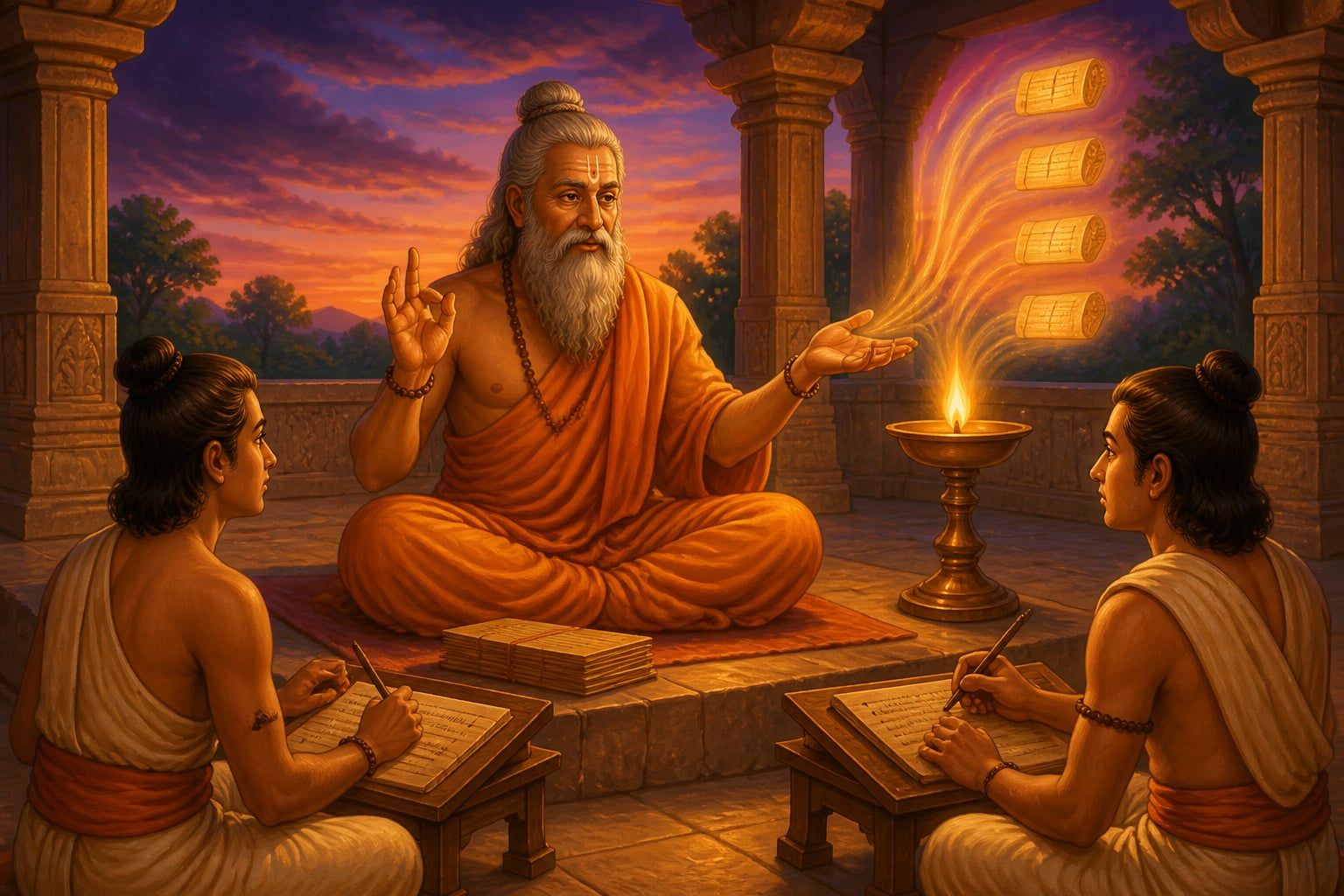
Stories are the most powerful vehicles for transmitting values, identity, and worldview. Civilizations that control their stories control their future. This means creating films, series, books, games, and digital content rooted in Indian civilizational frameworks. Not as propaganda, but as authentic artistic expression of a living tradition.
The key insight is that civilizational storytelling is not propaganda. Propaganda tells you what to think. Great storytelling shows you a world and lets you inhabit it. When the Ramayana tells the story of Rama's exile, it does not lecture about dharma. It puts you inside a world where dharma is the operating system, where every character's choices reveal what it means to live by principle. That is the difference between civilizational storytelling and state messaging.
Domain 2: Institutional Infrastructure
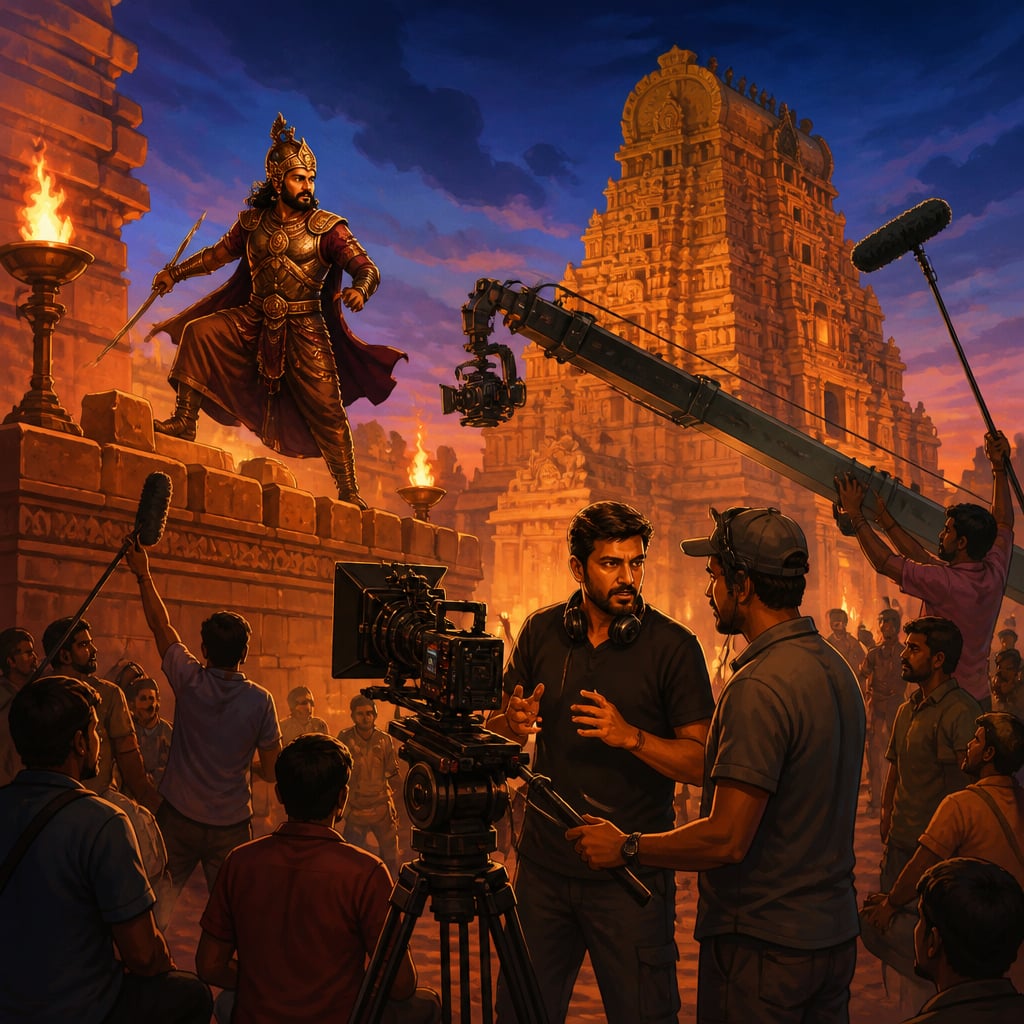
Narrative sovereignty requires institutions: studios, production houses, distribution networks, streaming platforms, publishing houses, and media organizations that operate from civilizational ground. Without institutional infrastructure, individual creative success remains dependent on platforms and gatekeepers that may not share civilizational interests.
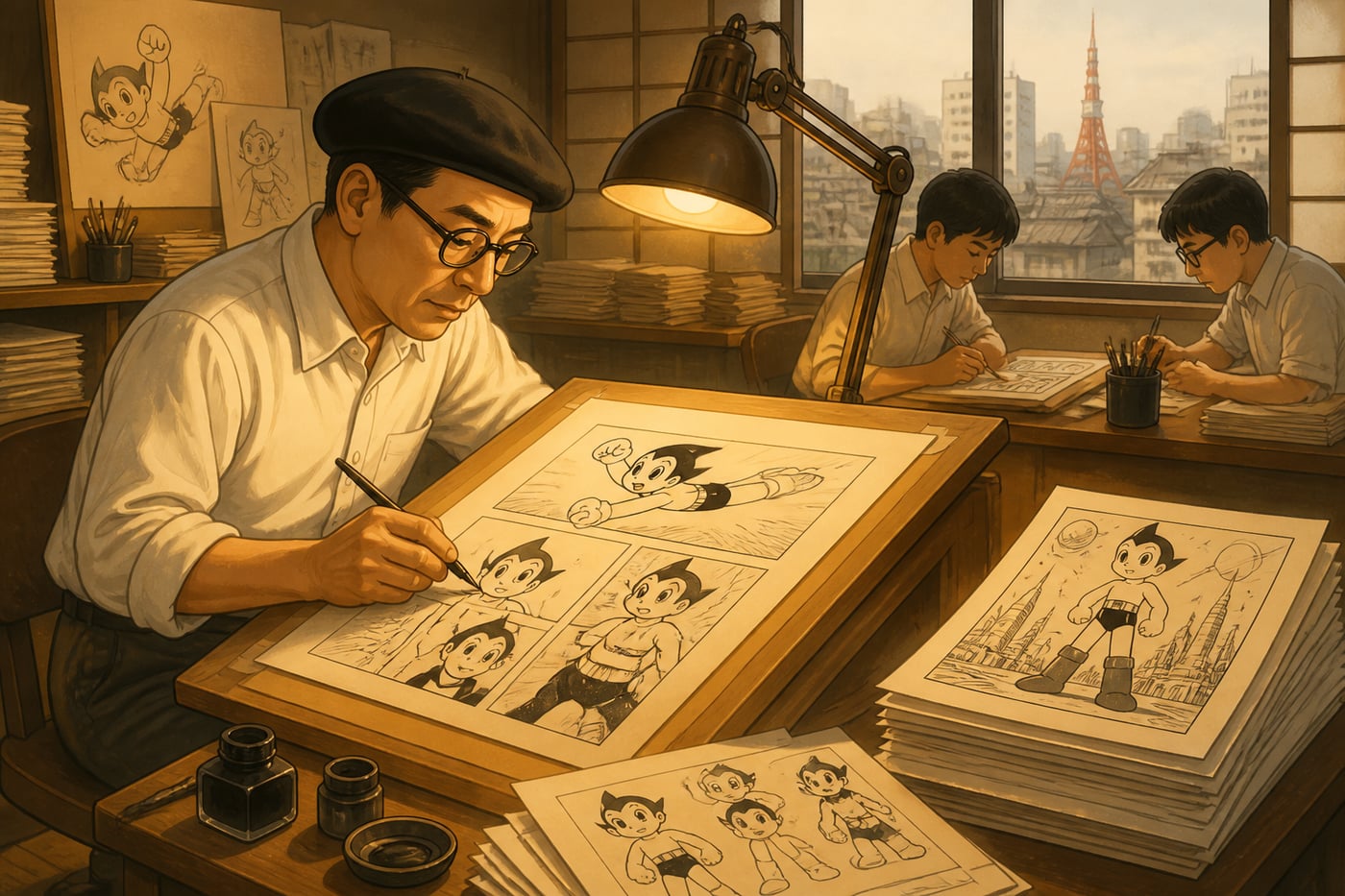
This is the lesson of Japan's anime industry and South Korea's K-Wave. Both succeeded not because of occasional genius but because they built institutional ecosystems that could sustain creative output at scale. Studios trained talent. Distribution networks reached global audiences. Government policy supported cultural export as a strategic priority. Individual brilliance was necessary but not sufficient. The infrastructure made it sustainable.
Domain 3: Digital Platforms and Distribution
The digital revolution has created an unprecedented opportunity for narrative sovereignty. Social media, YouTube, podcasting, streaming, and independent publishing have broken the legacy media monopoly. A creator with a phone can reach millions without permission from any gatekeeper. This is a civilizational opportunity of the first order.
But digital distribution is also fragile. The platforms themselves are controlled by foreign corporations whose content policies, algorithms, and moderation decisions can suppress civilizational content without explanation. True narrative sovereignty requires indigenous platforms and distribution infrastructure, not just indigenous content on foreign platforms.
Domain 4: Global Projection
Narrative sovereignty is not just about talking to yourself. It is about projecting your civilizational story to the world. Japan did this through anime. Korea did it through K-drama and K-pop. India has the civilizational depth, the creative talent, and the diaspora reach to do it at a scale no other civilization can match. But global projection requires a civilizational confidence that India is still rebuilding. It requires telling Indian stories without first translating them into Western categories, without apologizing for their dharmic content, and without seeking approval from institutions that have spent two centuries getting India wrong.
From Being Narrated to Being the Narrator
The shift from narrated civilization to narrating civilization is already underway. It is happening across multiple domains simultaneously.
In cinema, a new generation of filmmakers is telling Indian stories from Indian ground. S.S. Rajamouli's Bahubali and RRR demonstrated that Indian civilizational narratives can captivate global audiences without a single concession to Western sensibility. Rishab Shetty's Kantara brought folk spirituality and land-based dharma to the screen with raw authenticity. These films did not seek Western validation. They told Indian stories in Indian terms and let the world come to them.
In digital media, an entire ecosystem of creators, podcasters, and independent journalists has broken legacy media's monopoly on Indian narrative. Topics that mainstream media refused to cover, from temple history to civilizational philosophy to the mechanics of Breaking India forces, now reach millions through digital platforms.
In publishing, a wave of authors is retelling Indian civilizational stories for modern audiences. From the Amar Chitra Katha tradition to contemporary retellings of the epics, Indian narratives are being made accessible to new generations in formats they consume.
In gaming and interactive media, Indian mythological and historical themes are beginning to appear in video games, AR/VR experiences, and interactive storytelling platforms. This is a frontier with enormous potential. The generation that grows up playing games set in Kurukshetra or Lanka will carry civilizational memory in ways no textbook can create.
The Mechanism: How Narrative Sovereignty Works
Narrative sovereignty operates through a reinforcing cycle:
Civilizational stories create cultural pride which generates audience demand which attracts creative talent and investment which produces more civilizational stories of higher quality.
This cycle, once ignited, is self-sustaining. Japan's anime industry demonstrates this. What began as a niche medium in the 1960s became a global cultural force because each generation of anime inspired the next generation of creators, who pushed the medium further, attracted larger audiences, and funded more ambitious productions.
India's cycle is in its early stages. The Bahubali phenomenon showed that the audience exists. RRR proved that global audiences will respond. Kantara demonstrated that even regional, deeply rooted stories have universal appeal. The infrastructure is being built. The talent is emerging. The audience is ready.
The question is whether India will build the institutional depth to sustain this cycle, or whether it will remain dependent on occasional breakthroughs by exceptional individuals.
Entertainment as Civilizational Education
The most important function of narrative sovereignty is not global projection. It is internal civilizational education.
Most Indians learn about their civilization not from textbooks or temple visits but from stories: films, series, comics, social media, and conversations that reference these stories. When the dominant stories portray Indian civilization as backward, oppressive, or irrelevant, an entire generation absorbs that message unconsciously. When the dominant stories portray Indian civilization as profound, living, and worth defending, the same generation absorbs that message instead.
This is why entertainment is not a luxury in civilizational terms. It is infrastructure. A civilization that does not tell its own stories to its own children will lose those children to someone else's story.
The Ramayana and Mahabharata understood this principle. They are not religious texts in the narrow sense. They are civilizational operating systems delivered through storytelling. Every village, every family, every generation received its values, its models of behavior, its understanding of dharma through these narratives. The medium was entertainment. The function was civilizational transmission.
Modern narrative sovereignty is the digital-age continuation of this ancient principle. The medium has changed from campfire recitation to cinema screens and smartphone feeds. The function has not. A civilization that masters the new mediums of storytelling while staying rooted in its civilizational ground will not just survive. It will define the next century's global cultural conversation.
India has done this before. The Ramayana traveled across Southeast Asia not through armies but through storytellers. The Panchatantra became the world's most translated non-religious text not through conquest but through the sheer quality of its narratives. Indian civilizational storytelling once shaped half the world's imagination.
The question is not whether India can do it again. The question is whether this generation will build the institutions, platforms, and creative ecosystems to make it happen at the scale the digital age demands.
Case studies
Japan's Anime Soft Power: How a Civilization Encoded Its Soul in Popular Culture
In the aftermath of World War II, Japan faced not only physical destruction but a deep civilizational crisis. Western occupation, imposed constitutional changes, and cultural humiliation threatened to sever the Japanese people from their Shinto spirituality, bushido ethics, and ancestral identity. Yet within two decades, Japan began one of the most remarkable cultural counteroffensives in modern history, not through political rhetoric but through storytelling. Osamu Tezuka's Astro Boy debuted in 1963, becoming the first anime broadcast on television and reaching audiences across Asia and beyond. This was not an isolated act of genius. The Japanese government, publishers, studios, and educational institutions built an interlocking ecosystem that nurtured manga and anime as legitimate art forms and cultural exports. By the 1980s, Studio Ghibli under Hayao Miyazaki was producing films like My Neighbor Totoro and Princess Mononoke that embedded Shinto concepts of kami (spirits inhabiting nature), reverence for ancestors, the sacredness of forests and rivers, and the tension between modernity and tradition. These films never preached. They simply inhabited a Japanese civilizational worldview so naturally that global audiences absorbed it without resistance. The 'Cool Japan' strategy, formalized in the 2000s, provided government funding, trade support, and diplomatic channels for cultural export. Anime conventions now operate in over 60 countries. Japanese storytelling taught the world concepts like honor, duty to community, spiritual ecology, and the dignity of craft. The entire arc, from postwar humiliation to global cultural influence, took roughly 50 years of sustained institutional commitment.
The dharmic tradition recognizes that culture is the carrier wave of civilization. The Natya Shastra, composed over two thousand years ago, understood performance arts not as entertainment but as a means of transmitting dharma, rasa (aesthetic emotion), and civilizational memory. Japan's anime strategy mirrors this ancient insight. Just as temple sculptures, folk theater, and kathas carried Indian civilizational values across generations without formal schooling, anime carried Shinto and Buddhist values across the globe without missionary activity. The Bhagavad Gita teaches that action aligned with one's svadharma (innate nature and duty) produces results that transcend individual effort. Japan acted from its civilizational svadharma. It did not try to imitate Hollywood or copy Western storytelling conventions. Instead, it refined its own aesthetic traditions, its own visual grammar, its own narrative structures rooted in Japanese soil. This is the principle of cultural authenticity as strength. When a civilization tells stories from its own ground, the stories carry an unmistakable vitality that borrowed frameworks can never replicate.
Japan's anime and manga industry became the most successful cultural export operation of the late 20th and early 21st centuries. Anime reached every inhabited continent, with dedicated fanbases from Brazil to Egypt to Russia. Global audiences internalized Japanese concepts of honor, nature reverence, ancestral duty, and spiritual worldview through characters and stories rather than through lectures or textbooks. The economic returns were enormous, but the civilizational returns were even greater. Japan, a nation of 125 million people, shaped the imaginative landscape of billions. Shinto ideas about spirits in nature, Buddhist concepts of impermanence, and samurai ethics of discipline entered global popular culture as 'cool' rather than foreign. The institutional ecosystem proved self-sustaining: manga magazines fed anime studios, anime drove merchandise and tourism, tourism reinforced cultural pride, and cultural pride produced the next generation of creators.
Narrative sovereignty requires institutional ecosystems, not isolated individual brilliance. A civilization that wants to project its worldview globally must build interconnected systems of creation, distribution, funding, and talent development. Japan did not wait for a single visionary filmmaker to save its culture. It built the infrastructure that made thousands of creators possible. For India, the lesson is clear: the occasional blockbuster is not enough. What is needed is a sustained ecosystem that nurtures storytellers rooted in Indian civilizational consciousness, funds their work, distributes it globally, and creates feedback loops that inspire the next generation.
Japan's anime model is now studied by Indian cultural strategists seeking to build a comparable soft-power ecosystem. India's mythology, with the Mahabharata and Ramayana alone offering more narrative material than all of Greek mythology combined, represents an untapped reservoir for global cultural projection through animation and gaming.
Japan's anime industry generates over $25 billion annually in global revenue, and anime content is consumed in virtually every country on Earth, making it arguably the most successful civilizational soft-power project of the modern era.
The Bahubali-RRR-Kantara Wave: Indian Cinema Reclaims Civilizational Storytelling
For decades, mainstream Indian cinema, particularly Bollywood, operated within a framework that increasingly borrowed from Western storytelling formulas. Romance plots mirrored Hollywood structures, villains were generic, and civilizational themes were either absent or treated as quaint backdrop. Then S.S. Rajamouli's Bahubali: The Beginning (2015) and Bahubali: The Conclusion (2017) shattered every assumption about what Indian audiences wanted. Built entirely around dharmic archetypes, the films depicted righteous kingship, a mother's sacrifice and unyielding resolve, devotion as a source of strength, and the cosmic battle between dharma and adharma. Bahubali became the first Indian film to gross over 1,000 crore rupees, proving that civilizational storytelling had massive commercial viability. Five years later, Rajamouli's RRR (2022) told the story of two real anti-colonial freedom fighters, Alluri Sitarama Raju and Komaram Bheem, through a narrative that was unapologetically Indian in its emotional grammar. The film's song 'Naatu Naatu' won the Academy Award for Best Original Song, and the film received standing ovations at international screenings. That same year, Rishab Shetty's Kantara emerged from the Tulu-speaking region of Karnataka. Rooted in the Bhoota Kola folk tradition, it depicted the sacred relationship between land, community, and ancestral spirits. A film in Kannada about a hyper-local folk practice became a national and international phenomenon. None of these films sought Western validation as their starting point. They told stories from Indian civilizational ground and let the world come to them.
These films, perhaps unconsciously, returned to the storytelling principles encoded in India's own aesthetic tradition. The Natya Shastra describes the purpose of performance as the evocation of rasa, the distilled emotional essence that connects the audience to universal truths through particular stories. Bahubali evoked vira rasa (heroism) and karuna rasa (compassion) through archetypes drawn directly from the Ramayana and Mahabharata traditions. The righteous prince in exile, the devoted mother, the loyal companion, the tyrant who must be overthrown: these are not Rajamouli's inventions but civilizational patterns that have resonated across Indian culture for millennia. Kantara went even deeper, into the pre-textual layer of Indian civilization where the sacred is not abstract theology but lived relationship with land, ancestors, and local deities. The dharmic principle at work is that authentic stories rooted in lived tradition carry a shakti (power) that manufactured narratives cannot replicate.
The combined impact of these films marked a decisive shift in Indian cinema's relationship with its own civilization. Bahubali proved the commercial model, demonstrating that Indian audiences were hungry for stories told in Indian aesthetic and moral frameworks. RRR proved the global model, showing that Indian civilizational storytelling could captivate international audiences without diluting its Indianness. Kantara proved the depth model, showing that even hyper-local folk traditions could become nationally and globally resonant when presented with authenticity and conviction. Together, these films catalyzed a broader movement. Filmmakers across Indian language industries began exploring mythological, historical, and folk narratives with new confidence. The conversation shifted from 'Can Indian stories compete globally?' to 'Indian stories have always been global. We just stopped telling them.'
Civilizational confidence in storytelling is self-validating. When filmmakers stopped asking whether Indian stories could work and simply told them with full conviction, audiences responded with overwhelming support both domestically and internationally. The deeper principle is that a civilization's narrative sovereignty begins with the refusal to seek external validation. Bahubali did not test well with Western focus groups before production. RRR was not designed to win an Oscar. Kantara was not made for an international market. Each film was made from within Indian civilizational consciousness, for audiences who shared or could be drawn into that consciousness. The validation followed the authenticity, not the other way around.
The commercial success of Bahubali, RRR, and Kantara has triggered a wave of civilizationally rooted Indian films. Producers who once avoided dharmic themes now actively seek them, proving that narrative sovereignty becomes self-reinforcing once the commercial viability is demonstrated.
S.S. Rajamouli's Bahubali 2: The Conclusion (2017) grossed over 1,800 crore rupees worldwide, making it the highest-grossing Indian film at the time, while RRR's 'Naatu Naatu' became the first song from an Indian film to win the Academy Award for Best Original Song in 2023.
Reflection
- What stories, films, or media do you regularly consume, and how many of them reflect your own civilizational worldview versus someone else's narrative about your civilization?
- When a civilization loses the ability to tell its own stories and is instead narrated by others, what exactly is lost, and can it ever be fully recovered?
- How does one distinguish between authentic civilizational storytelling that naturally resonates across cultures and propaganda that merely wraps ideology in mythological aesthetics?