Civilizational Literacy
Teaching Civilizational History Accessibly, Not Elitistly
A civilization's survival depends not on the depth of its heritage but on how many of its people can access, articulate, and transmit that heritage. This lesson examines how Israel built civilizational consciousness in one generation, how Anant Pai's Amar Chitra Katha proved that stories outperform scholarship for mass education, and how NCERT textbooks systematically erased civilizational knowledge from Indian classrooms. The antidote is clear: build the delivery system.
See It Today: How Israel Built a Civilization-Conscious Nation in One Generation
In 1948, Israel had a problem that India faces today. Millions of Jews from 70 countries, speaking dozens of languages, with wildly different cultural backgrounds, needed to become a single civilization-conscious nation. Many of them knew more about European history than their own civilizational heritage. The ancient language of their civilization, Hebrew, was a liturgical relic that nobody used for buying groceries or arguing politics.
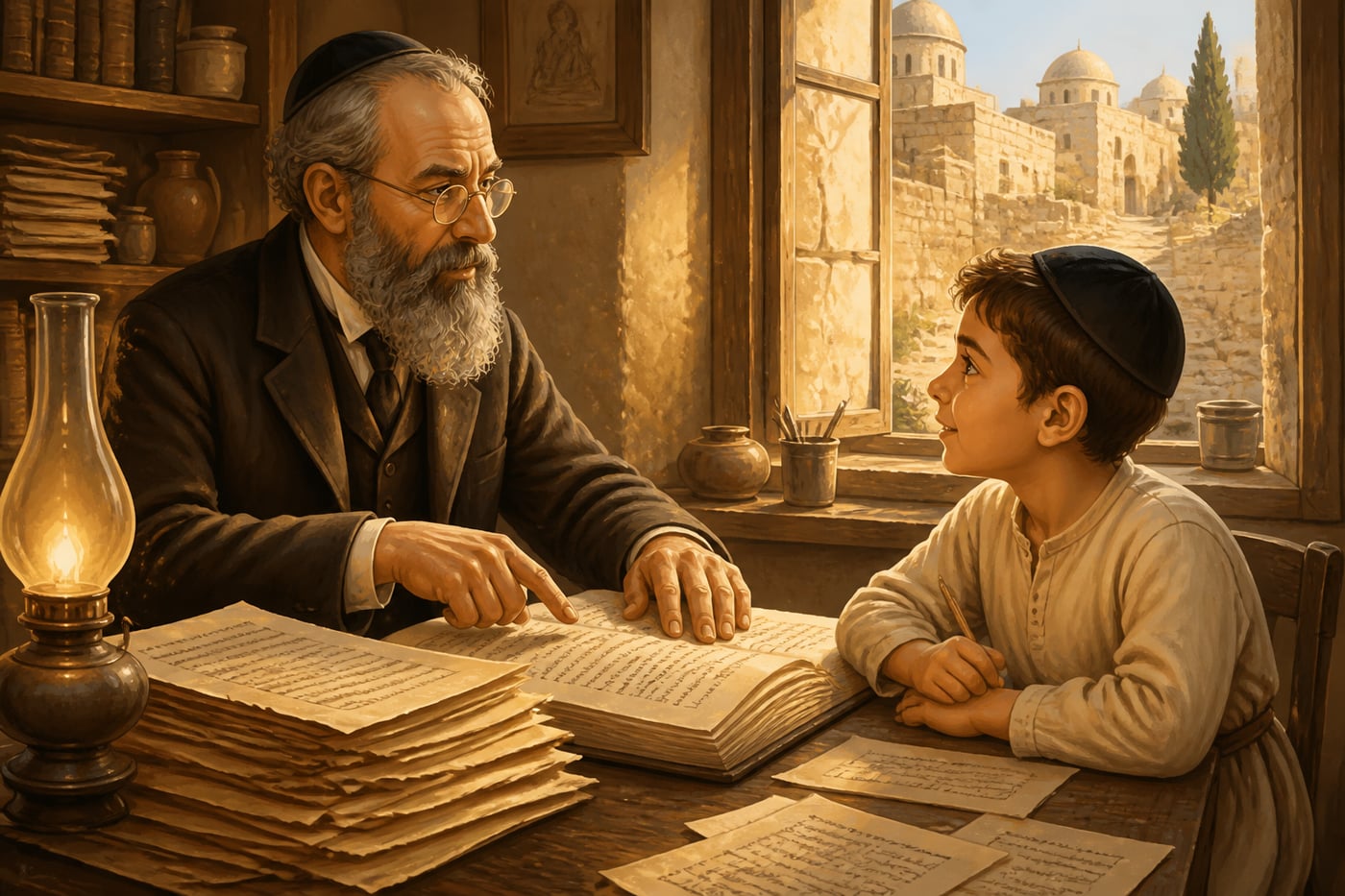
Seventy-five years later, every Israeli child can read the Torah in its original language. Every 18-year-old has visited Masada, the Dead Sea scrolls, and the Holocaust memorial at Yad Vashem. Every diaspora Jewish youth is offered a free 10-day trip to Israel through the Birthright program, which has brought over 800,000 young people to experience their civilizational homeland since 1999.
Israel did not achieve this by accident. It built a systematic civilizational literacy infrastructure. The Ulpan system teaches Hebrew immersion to every new immigrant. The school curriculum weaves civilizational history into every subject. National service creates shared civilizational experience. Museums, memorials, and pilgrimage sites are not tourism attractions but civilizational education centers.
The result is a population where civilizational consciousness is not the preserve of scholars or the religiously devout. A secular Israeli software engineer in Tel Aviv knows more about Jewish civilizational history than most Indian professionals know about their own. Not because Israelis are smarter. Because Israel invested in making civilizational knowledge accessible, systematic, and normal.
India has a deeper civilizational heritage, a richer philosophical tradition, and a more diverse cultural tapestry. What it lacks is the delivery system. The knowledge exists. The accessibility does not.
The Mechanism: The Five Pillars of Civilizational Literacy
Civilizational literacy is not about memorizing dates or reciting shlokas. It is the capacity of ordinary citizens to understand, articulate, and defend their civilizational heritage in everyday life. A civilization is literate about itself when a college student can explain why Diwali matters beyond "festival of lights," when a software engineer can articulate the difference between dharma and religion, when a taxi driver in Varanasi knows that his city is older than Athens, Rome, and Jerusalem.
The absence of this literacy is not a personal failing. It is a systemic one. And systems problems require systems solutions.
Pillar 1: Accessible Language
The single biggest barrier to civilizational literacy in India is language. The vast majority of India's civilizational knowledge is locked in Sanskrit, classical Tamil, Pali, and Prakrit texts that fewer than 0.01% of the population can read. Compare this with Israel, where the Hebrew revival movement, started by Eliezer Ben-Yehuda in the 1880s, deliberately modernized an ancient language to make it a living medium for daily life.
India does not need every citizen to learn Sanskrit. But it needs civilizational knowledge translated, interpreted, and communicated in the 22 scheduled languages and the dozens of regional languages that Indians actually speak. The Arthashastra should be as accessible in Hindi, Tamil, Telugu, and Bengali as the Bhagavad Gita has become through ISKCON's mass translations.
Pillar 2: Story-First, Not Scholar-First
Anant Pai understood something that India's academic establishment never did. Civilizational knowledge spreads through stories, not lectures. When he launched Amar Chitra Katha in 1967, he was responding to a specific crisis: Indian children could name Greek gods but not their own. His solution was not to write scholarly papers about this problem. It was to tell stories.
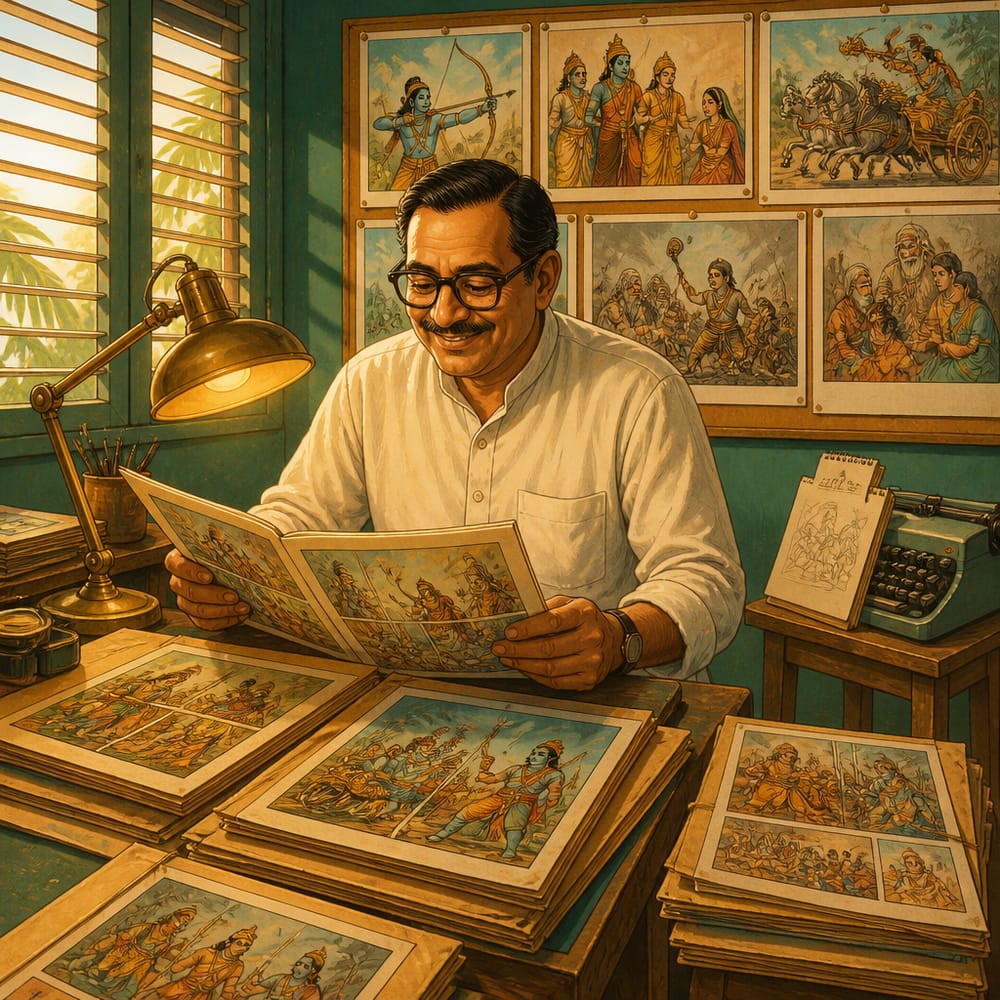
Over 440 titles and 100 million copies later, Amar Chitra Katha had done more for civilizational literacy than every university Sanskrit department combined. The lesson is structural: knowledge packaged as stories, comics, films, games, and experiences reaches millions. Knowledge packaged as academic papers reaches dozens.
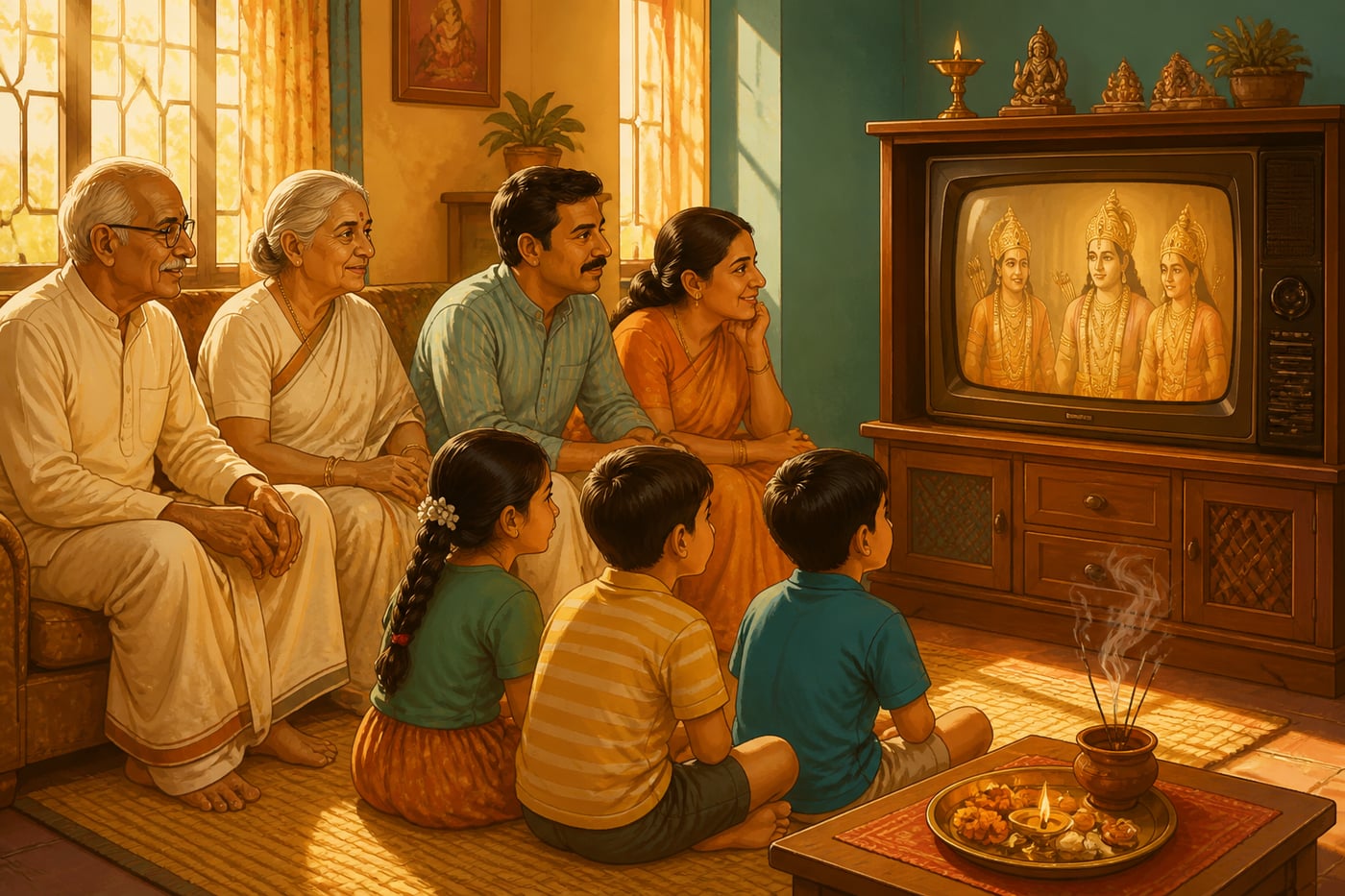
Ramanand Sagar's Ramayana on Doordarshan in 1987-88 demonstrated the same principle at television scale. Eighty to one hundred million viewers watched each episode. Streets emptied. For the first time since independence, an entire generation shared a civilizational narrative experience simultaneously.
The mechanism is clear: civilizational literacy scales through storytelling, not scholarship. Scholarship produces the knowledge. Storytelling delivers it.
Pillar 3: Institutional Infrastructure
Individual initiatives like Amar Chitra Katha are necessary but insufficient. Civilizational literacy at national scale requires institutional infrastructure: curricula, teacher training, content production pipelines, and cultural institutions designed for education rather than tourism.
Israel's model works because it is institutional. The Ulpan is a government-funded institution. Birthright is a foundation-backed institution. The school curriculum is a state-mandated institution. Individual passion created these, but institutional infrastructure sustains them across generations.
India's civilizational education currently depends on individual passion projects with no institutional backing. When Anant Pai retired, Amar Chitra Katha's impact diminished. When Doordarshan lost its monopoly, no equivalent civilizational storytelling replaced it. Without institutional infrastructure, each initiative dies with its founder.
Pillar 4: Decolonized Frameworks
The most insidious barrier to civilizational literacy is not ignorance. It is the frameworks through which Indians have been taught to view their own civilization.
NCERT textbooks, for decades, presented Indian civilization through a colonial lens: the Aryan Invasion as settled fact, Mughal-era destruction sanitized as "syncretism," Vedic mathematics absent, temple traditions ignored, and the entire pre-colonial civilizational achievement compressed into a few pages between lengthy treatments of Mughal administration and British governance.
This is not accidental absence. It is epistemic displacement. When the framework through which you learn your own history is designed by those who colonized you, the knowledge you receive is filtered through their priorities. You learn what they considered important about you, not what you consider important about yourself.
Civilizational literacy requires not just adding content but replacing frameworks. The question is not "what additional facts should we teach about India?" It is "whose framework are we using to organize knowledge about India?"
Pillar 5: Digital Democratization
The most promising development in civilizational literacy is the digital revolution's capacity to bypass gatekeepers. When a single YouTube lecture on the Arthashastra can reach 2 million viewers, when a podcast explaining Panini's grammar can trend on social media, when an Instagram reel about temple architecture can go viral, the traditional gatekeepers of civilizational knowledge (universities, textbook boards, publishing houses) lose their monopoly.
Digital platforms have already created more civilizational literacy in India in the last decade than formal education created in the previous seven decades. The challenge now is quality, curation, and depth. Viral clips create awareness. Sustained civilizational literacy requires structured learning pathways that build from awareness to understanding to articulation.
The Pattern: The Amar Chitra Katha Revolution and the NCERT Counter-Revolution
In 1967, a quiz show on Doordarshan asked Indian children to identify figures from Indian mythology. They could not. The same children could name the Greek gods with ease. Anant Pai, watching from the audience, was stunned. Not by the children's ignorance, but by the system that had produced it. Indian schools taught Indian children more about European history and Greek mythology than about their own civilizational heritage.
Pai's response was practical, not academic. He created Amar Chitra Katha: comic books that told the stories of the Ramayana, Mahabharata, Shivaji, Rani Lakshmibai, Chanakya, and hundreds of other civilizational narratives in a format that children actually wanted to read. He did not wait for curriculum reform. He did not petition the education ministry. He built a parallel delivery system.
The impact was massive. Between 1967 and the early 2000s, Amar Chitra Katha became the single most influential source of civilizational knowledge for Indian children. Over 100 million copies sold across dozens of languages. For millions of Indians born between 1970 and 2000, their knowledge of the Mahabharata, of Shivaji, of Chandragupta Maurya came not from school textbooks but from Anant Pai's comics.
But while Pai was building civilizational literacy from below, the NCERT textbook system was dismantling it from above. Over successive decades, particularly during the 1970s-2000s, NCERT textbooks underwent a systematic epistemic cleansing. The process was not dramatic. It was bureaucratic.
Vedic mathematics disappeared from science curricula. The civilizational achievements of the Gupta period were compressed. Temple destruction during medieval invasions was either omitted or framed in sanitized language. The pre-colonial economic history, which showed India producing roughly 25% of global GDP per Angus Maddison's research, was absent. The Aryan Invasion Theory was presented as settled science decades after scholars had begun questioning it. Hindu philosophical traditions received cursory treatment while Mughal administrative systems received detailed chapters.
The result was a two-track system. Formal education produced Indians who knew the names of Mughal emperors but not the philosophical traditions of their own civilization. Informal channels like Amar Chitra Katha, family storytelling, and temple visits provided whatever civilizational literacy survived.
This pattern is not uniquely Indian. Colonial and post-colonial education systems across Africa and Asia systematically replaced indigenous civilizational narratives with colonial frameworks. What makes India's case distinctive is the scale: the world's oldest continuous civilization producing graduates who cannot articulate the basic principles of dharma, who do not know the difference between shruti and smriti, and who have never read a single verse of the texts that shaped their civilization.
The NCERT counter-revolution succeeded not through censorship but through replacement. You do not need to ban the Arthashastra if you simply never teach it. You do not need to argue against Vedic mathematics if you ensure it never appears in the syllabus. Absence is the most effective form of erasure.
Dharmic Wisdom: Vidya as Liberation, Not Gatekeeping
The Upanishadic tradition draws a sharp distinction between Vidya (knowledge that liberates) and Avidya (ignorance that binds). The Mundaka Upanishad further distinguishes between Para Vidya (higher knowledge of the ultimate reality) and Apara Vidya (knowledge of the world, sciences, arts).
What is remarkable about the dharmic tradition is its insistence that knowledge must be accessible. The Guru-Shishya Parampara was not an elite club. It was a delivery system. The guru's dharma was to transmit knowledge to anyone capable of receiving it, regardless of social station. Satyakama Jabala, of unknown parentage, was accepted by Sage Gautama precisely because his commitment to truth, not his family name, qualified him.
The Bhagavad Gita itself is the supreme example of civilizational knowledge made accessible. Arjuna is not a Brahmin scholar. He is a Kshatriya warrior in crisis. Krishna does not lecture him in philosophical jargon. He meets Arjuna where he is, using metaphors from archery, fire, water, and warfare. The most profound philosophical text in Indian civilization is structured as an accessible conversation, not an academic treatise.
The Arthashastra echoes this principle. Kautilya insists that a well-governed state requires an educated citizenry, not merely educated rulers. His Vidya-samuddesa (classification of knowledge systems) includes not just Vedic learning but practical sciences, economics, agriculture, and governance. Knowledge for Kautilya was civilizational infrastructure, not elite ornament.
The gatekeeping of civilizational knowledge in modern India is therefore a violation of the tradition itself. When dharmic philosophy is locked behind academic jargon, when Sanskrit texts are treated as museum pieces rather than living wisdom, when civilizational education is available only to those who seek it out through personal effort, the tradition of accessible Vidya is being betrayed by those who claim to protect it.
The Defense: Building India's Civilizational Literacy at Scale
If Israel could build a civilization-conscious nation from a scattered diaspora in one generation, India, with its unbroken civilizational continuity, can do the same. But it requires deliberate infrastructure, not wishful thinking.
Individual Level: Become a Civilizational Literate
Start with yourself. Read at least one primary text from your civilizational heritage: the Bhagavad Gita, the Arthashastra, the Thirukkural, the Yoga Sutras, the Panchatantra. Read it in translation if Sanskrit is not accessible. The goal is not scholarly mastery but civilizational familiarity. You should be able to explain the basic framework of dharma, artha, kama, moksha to anyone who asks, in plain language. If you cannot explain your civilization's core principles in two minutes, you are not yet civilizationally literate.
Then become a transmitter. Share what you learn. Tell the stories. Explain the concepts. Civilizational literacy spreads through conversations, not curricula. Every dinner table discussion about the Mahabharata, every bedtime story from the Panchatantra, every explanation of why a festival matters beyond the rituals is an act of civilizational transmission.
Community Level: Build Local Civilizational Education
Organize study circles that make civilizational knowledge accessible in your community. Not lectures by experts, but participatory learning where ordinary people engage with primary texts together. The Israeli model of community-based Hebrew learning (Ulpan) works because it is peer-led, practical, and embedded in daily life.
Support and create content that makes civilizational knowledge accessible. If you are a writer, write accessible civilizational content. If you are a filmmaker, tell civilizational stories. If you are a teacher, supplement textbooks with primary sources. If you are a parent, ensure your children know their civilizational heritage before they leave home.
Fund and support vernacular translations of key texts. The Bhagavad Gita is available in most Indian languages. The Arthashastra, the Yoga Sutras, the Upanishads, and the Thirukkural should be equally available, in accessible modern language, not archaic translations that require a dictionary.
Institutional Level: Demand Civilizational Curriculum
Push for civilizational content in school curricula. Not religious instruction, but civilizational literacy. Every Indian student should graduate knowing the basic principles of dharmic philosophy, the major civilizational achievements in science and mathematics, the architectural and artistic traditions, and the philosophical diversity within Indian civilization. This is not Hindu education. It is Indian civilizational education, encompassing the full diversity of traditions that constitute Bharatiya Sabhyata.
Support the creation of civilizational literacy institutions: museums that educate rather than merely display, cultural centers that teach rather than merely perform, digital platforms that build structured learning pathways rather than viral clips. The goal is institutional infrastructure that survives beyond any individual champion.
Most critically, demand framework change, not just content addition. Adding a chapter on Vedic mathematics to an otherwise colonial curriculum does not create civilizational literacy. It creates a cosmetic patch. The framework itself, the organizing logic through which Indian history and civilization is taught, must be decolonized. Indians must learn Indian civilization through Indian frameworks, not as a subsection of world history organized by Western periodization.
The civilization is not lost. It is untransmitted. The knowledge exists in texts, temples, traditions, and living practices. What is missing is the delivery system that makes this knowledge accessible to every Indian, in every language, through every medium. Building that delivery system is the first act of the Indian Renaissance.
Case studies
Israel: Building a Civilization-Conscious Nation in One Generation
In 1948, Israel faced an extraordinary challenge: unifying a scattered diaspora speaking dozens of languages into a civilization-conscious nation. The solution was systematic civilizational education at every level. Birthright Israel, launched in 1999, offered free 10-day trips to Israel for diaspora Jewish youth, eventually sending over 800,000 participants. The Ulpan program provided government-funded Hebrew immersion for every immigrant. Mandatory civilizational history became a cornerstone of school curricula, with Yad Vashem serving as a national narrative anchor visited by virtually every Israeli student. Behind all of this stood the legacy of Eliezer Ben-Yehuda, who began reviving Hebrew in the 1880s, transforming a liturgical language used only in prayer into a living tongue. Within a single generation, Israel took immigrants from 70+ countries and produced a population with deep civilizational self-awareness, shared language, and historical consciousness.
Kautilya's Arthashastra treated an educated citizenry as foundational national strength, not a luxury. His Vidya-samuddesa (classification of knowledge systems) insisted that Anvikshiki (philosophy and critical inquiry), Trayi (civilizational traditions), Varta (economics), and Dandaniti (governance) were civilizational infrastructure, not optional electives. Israel implemented precisely what Kautilya prescribed: knowledge systems as state priority. The Ulpan program mirrors the Gurukul principle of immersive learning. Birthright mirrors Tirtha-yatra, the civilizational practice of pilgrimage as identity formation. Israel understood that a people disconnected from their language and land lose civilizational coherence. Kautilya would have recognized their strategy instantly.
A secular Israeli software engineer today knows more about Jewish civilizational history than most Indian professionals know about their own. Hebrew went from a dead language to a living medium for over 9 million speakers. Israel ranks among the world's most civilization-conscious nations despite being one of the youngest.
Civilizational literacy does not happen organically in the modern world. It requires deliberate, funded, systematic delivery systems. Israel proves that even a scattered diaspora can become civilization-conscious within one generation if the infrastructure exists.
India's challenge runs directly parallel. A civilization with unbroken continuity of 5,000+ years suffers from broken transmission. India has deeper heritage, more texts, more traditions, and more living practitioners than Israel. What India lacks is the delivery system. No equivalent of Birthright exists for diaspora Indians. No Ulpan-style immersion teaches Sanskrit or classical languages to returning Indians. The content exists. The infrastructure does not.
Birthright Israel's longitudinal studies show participants are 46% more likely to feel 'very much' connected to Israel and 23% more likely to marry within the Jewish community, demonstrating that even a 10-day civilizational immersion permanently shifts identity formation.
Anant Pai and the Comic Book Revolution: 100 Million Copies of Civilizational Literacy
In 1967, Anant Pai watched a quiz show on Doordarshan where Indian children correctly named Greek gods like Zeus and Hermes but stumbled when asked about figures from the Ramayana and Mahabharata. That moment crystallized a crisis: Indian children were culturally literate about every civilization except their own. Pai's response was Amar Chitra Katha (Immortal Picture Stories), launched in 1969. Over the following decades, the series grew to 440+ titles covering the Ramayana, Mahabharata, Shivaji, Rani Lakshmibai, Chanakya, Aryabhata, Vikramaditya, and hundreds of other figures and narratives. Over 100 million copies were sold across 20+ Indian languages. Pai received no government funding. This was a purely private initiative driven by one man's conviction that civilizational knowledge could be made accessible without being dumbed down.
Pai embodied the Guru-Shishya Parampara adapted for mass culture. He grasped what the Bhagavad Gita demonstrates in its very structure: Krishna teaches Arjuna not through abstract academic lectures but through metaphors drawn from Arjuna's own world. Archery, fire, water, the banyan tree. The Gita meets the student where the student stands. Pai applied the same principle. Children were reading comics, not academic texts. Rather than lamenting this, he placed Chandragupta Maurya, Adi Shankaracharya, and Savitri inside the medium children already loved. This is Upaya (skillful means) applied to civilizational education.
For millions of Indians born between 1970 and 2000, Amar Chitra Katha was the primary source of civilizational knowledge. More Indians learned about Chandragupta Maurya, Prithviraj Chauhan, and the Pandavas from Pai's comics than from any university course. Pai proved that one individual with the right format could accomplish what entire education ministries had failed to do.
Civilizational literacy scales when it follows the principle of story-first, not scholar-first. Meeting people where they are, rather than where academics wish they were, remains the most effective method for mass knowledge transmission.
Pai's model is even more relevant in the age of YouTube, Instagram Reels, and podcasts. The principle holds: civilizational content must compete in the formats people actually consume. India needs a hundred Anant Pais working across digital media. The gap today is not content creation but accessible, engaging, scalable delivery. Whoever builds the 'Amar Chitra Katha of the smartphone era' will shape civilizational literacy for the next generation.
Despite zero government support and competing against Western comics like Archie and Superman in the Indian market, Amar Chitra Katha sold over 100 million copies, making it one of the largest comic book series in world history by total circulation.
The Silent Erasure: How India's Textbooks Taught Indians to Forget
Over successive decades from the 1970s through the 2000s, NCERT textbooks underwent systematic epistemic displacement. Vedic mathematics disappeared from science curricula entirely. The civilizational achievements of the Gupta period, often called India's Golden Age, were compressed into a few paragraphs. Temple destruction during medieval invasions was either omitted or euphemized as 'cultural encounters.' Pre-colonial economic history showing India at roughly 25% of global GDP (per Angus Maddison's data) was absent from economics textbooks. The Aryan Migration Theory was presented as settled science despite ongoing archaeological and genetic debate. Hindu philosophical traditions received cursory treatment, while Mughal administrative systems received detailed, multi-chapter coverage. The Arthashastra, Yoga Sutras, and Thirukkural were absent from standard curricula. Students studied European Enlightenment thinkers but never encountered Nyaya logic or Vaisheshika atomism.
The Mundaka Upanishad distinguishes between Para Vidya (higher, liberating knowledge) and Apara Vidya (practical, worldly knowledge). NCERT's approach created a third category that might be called anti-Vidya: knowledge frameworks actively designed to disconnect Indians from their civilizational identity. This is the epistemic equivalent of Bheda (the strategy of division from the Arthashastra). Instead of dividing communities physically, you divide them from their own heritage intellectually. Kautilya warned that a kingdom whose people do not know their own Shastra is vulnerable to conquest from within. The textbook erasure accomplished precisely this: producing a ruling class alienated from its own civilizational foundations.
Generations of Indians graduated knowing the names and dates of Mughal emperors but unable to articulate basic principles of dharma, artha, kama, and moksha. The world's oldest continuous civilization produced university graduates who had never read a single verse from the Upanishads, Gita, or Thirukkural. The texts that shaped their civilization were treated as religious artifacts rather than intellectual heritage.
Controlling a civilization's textbooks is more effective than controlling its territory. Epistemic erasure across two generations can accomplish what centuries of physical invasion could not: making a people strangers to their own heritage.
The National Education Policy (NEP) 2020 attempts curriculum reform, introducing Indian Knowledge Systems as a formal academic category. However, institutional resistance remains significant. The underlying framework of Western periodization (Ancient, Medieval, Modern) and colonial-era categories (Hindu period, Muslim period, British period) persists largely intact. Adding content back into a fundamentally foreign framework is necessary but insufficient. True civilizational literacy requires rethinking the framework itself.
A 2019 study by the Centre for Civil Society found that Indian school textbooks devoted an average of 6 times more pages to Mughal administration than to the combined contributions of the Maurya, Gupta, Chola, and Vijayanagara empires, despite the latter spanning over 2,000 years of civilizational achievement.
Reflection
- How much of your own civilizational heritage can you articulate? If someone asked you to explain dharma, artha, kama, moksha in two minutes, could you? What does this gap reveal about the education system that shaped you?
- Why has India, the world's oldest continuous civilization, produced generations who know more about Western philosophy than their own? Is this a failure of the tradition itself, or of the transmission system?
- Is civilizational literacy compatible with critical thinking? Can you teach people pride in their heritage without creating blind nationalism? Where is the line between civilizational confidence and civilizational chauvinism?