The Lamp at the End
Aarti, Deeparadhana, Bhajans, and the Neural Theatre of the Closing Lamp
Why the camphor flame circled five times before the deity, the row of lamps lit at dusk, and the bhajan sung in slow chorus are not decorative add-ons to a puja but the engineered closing protocol of the entire devotional act. The Aihole inscription documents royal aarti by 634 CE. Benson at Harvard in 1975 and Cahn and Polich in 2006 vindicated the underlying neurology. The same flame and bhajan now sell as Chopra Center trataka workshops at five hundred dollars a session, with the deity and the community deleted.
The Brass Plate at Sandhya
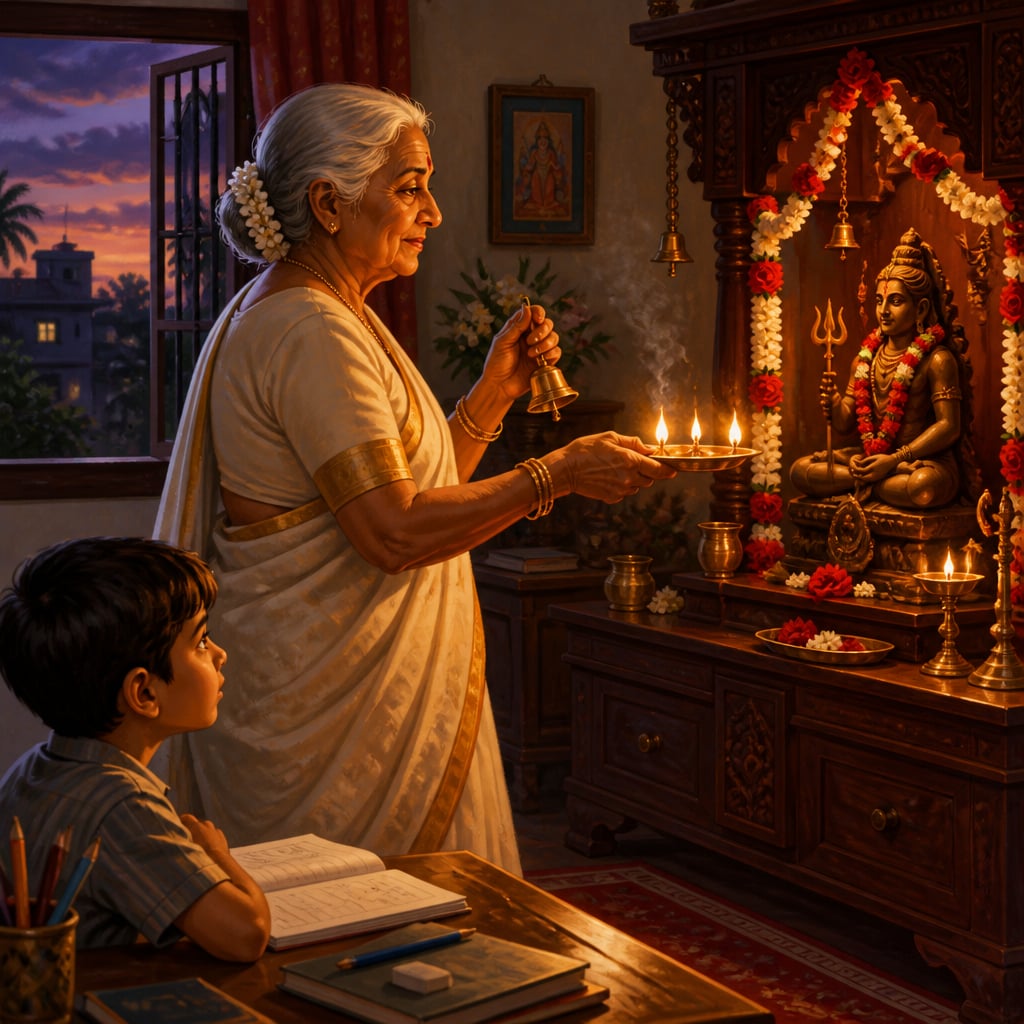
In a small flat in Erode, Tamil Nadu, on a Friday evening in November 1996, a grandmother named Saraswati Patti is preparing the evening aarti. She is sixty-eight years old and has performed this ritual at the same hour, at the same brass shelf, in the same direction for forty-three years. Her grandson Karthik, age nine, is sitting cross-legged on the floor behind her with his geography homework half-finished.
The sun has just set. The flat smells of jasmine, sambrani smoke, and the rice cooking in the next room. Patti opens the small steel cupboard above the puja shelf, takes out a five-wick brass lamp called a panchaarti, dips each cotton wick in ghee, and lights them one at a time from a single match. Then she lifts a small block of camphor with a pair of brass tongs, lights it, and sets it on a separate plate. The camphor crackles and flares blue. The five ghee flames burn steady and yellow.
Patti rings a small brass bell with her left hand. With her right hand, she begins to circle the camphor flame in front of the framed picture of Venkateshwara at the centre of the shelf. She circles it three times at the feet, two times at the navel, one time at the chest, one time at the face, seven times around the whole image. Her voice, low and unhurried, has begun to sing.
Karpura gauram karunaavataaram, samsaarasaaram bhujagendrahaaram.
Karthik puts down his pencil. He has heard this song six evenings a week for as long as he has been able to hear. He does not know what the Sanskrit means. He does not need to. His shoulders have already dropped a half inch. His breathing has slowed. He is not paying attention to his homework, but he is not anxious about it either. The flat, which had felt jangly five minutes earlier, has settled into a quiet rhythm that is older than anyone in the room.