Brahmagupta-Kṛti: Brāhma-sphuṭa-siddhānta - Algebra Meets Astronomy
The 628 CE book that tested old numbers against the sky, and built algebra to do it
In 628 CE, at thirty, Brahmagupta signed a siddhānta that set out to correct the worn-out astronomy of his day. Learn why a book about planets needed the pulverizer, negative numbers and zero, how it described the Earth pulling things towards itself, and how its methods travelled to Baghdad and on to Fibonacci's Europe.
A Signature at Thirty
In the Śaka year 550, which is 628 CE, an astronomer in the city of Bhillamāla reached the last chapter of a very long book. Bhillamāla is today the small town of Bhinmal, in the dry Jalore country of southern Rajasthan. The book ran to twenty-four chapters and roughly a thousand verses. Its author was thirty years old.
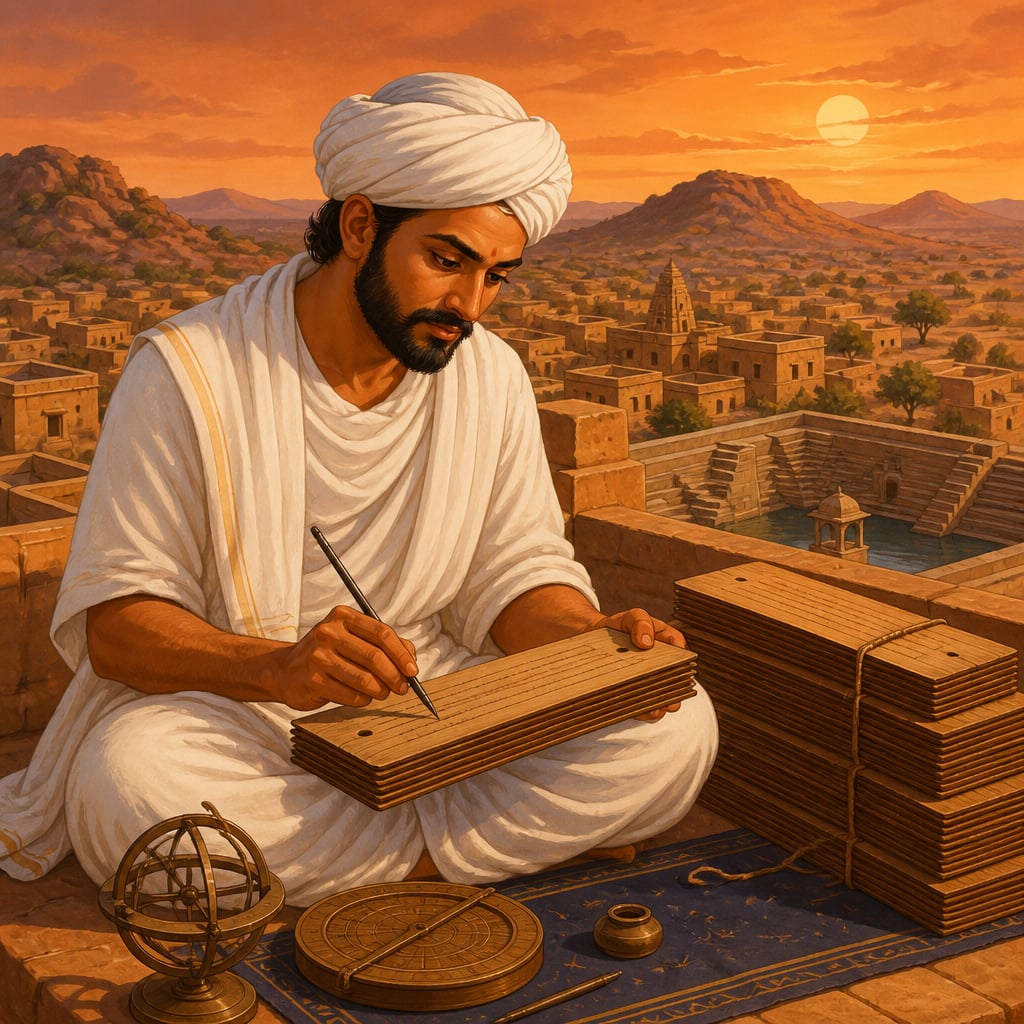
We do not know the room he worked in. We can picture it: stacks of finished leaves, the scratch of a pen, and a nalikā, the hollow sighting tube his own verses tell readers to use when they check the planets against the sky. What we do know, because he wrote it down, is how he signed off.
श्रीचापवंशतिलके श्रीव्याघ्रमुखे नृपे शकनृपाणाम्। पञ्चाशत्संयुक्तैर्वर्षशतैः पञ्चभिरतीतैः॥ ब्राह्मस्फुटसिद्धान्तः सज्जनगणितज्ञगोलवित्प्रीत्यै। त्रिंशद्वर्षेण कृतो जिष्णुसुतब्रह्मगुप्तेन॥
śrī-cāpa-vaṃśa-tilake śrī-vyāghramukhe nṛpe śaka-nṛpāṇām pañcāśat-saṃyuktair varṣa-śataiḥ pañcabhir atītaiḥ brāhma-sphuṭa-siddhāntaḥ saj-jana-gaṇita-jña-gola-vit-prītyai triṃśad-varṣeṇa kṛto jiṣṇu-suta-brahmaguptena
In the reign of the glorious Vyāghramukha, jewel of the Cāpa line, when five hundred and fifty years of the Śaka kings had passed, the Brāhma-sphuṭa-siddhānta was made, for the joy of good people, of mathematicians and of those who know the sphere, by Brahmagupta, son of Jiṣṇu, at the age of thirty.
Brāhma-sphuṭa-siddhānta 24.7-8
The name was Brahmagupta, and the stakes were high. Inside the book, a whole chapter took apart the work of earlier astronomers, including Āryabhaṭa, the most respected name in the field. If a young man's numbers failed at the next eclipse, everyone would know. So what did he find wrong with the best astronomy of his age, and why did he need a new kind of mathematics to fix it?
"Worn Out by Great Time"
The title answers the first question. Brāhma points to the old astronomy said to come from Brahmā, the Paitāmaha tradition. Sphuṭa means made clear, made accurate. In his second verse, Brahmagupta says exactly what he is doing.