Tithi: The Lunar Day System
A 'day' measured not by the Sun but by the Moon's dance with it, a unit that can be skipped or doubled
Why does a Hindu festival sometimes fall on a 'wrong' day, or a date get skipped entirely? Because it runs on the tithi, a lunar day measured by the Moon pulling 12° ahead of the Sun, not by the Sun's own day. Learn this ancient unit, why tithis are lost and doubled, and how it still sets the date of most festivals.
The Festival on the 'Wrong' Day
A family sits with the almanac, planning the Ekādaśī fast. The trouble is that the almanac and the wall calendar do not agree. The tithi they want, the eleventh, does not fill a whole day. It begins in the afternoon of one date and ends in the morning of the next, so which day is the fast? And glancing down the month, they find something stranger: one tithi is missing altogether, skipped, as if a day of the lunar month had simply vanished. Elsewhere, a tithi repeats, the same number falling on two days in a row.
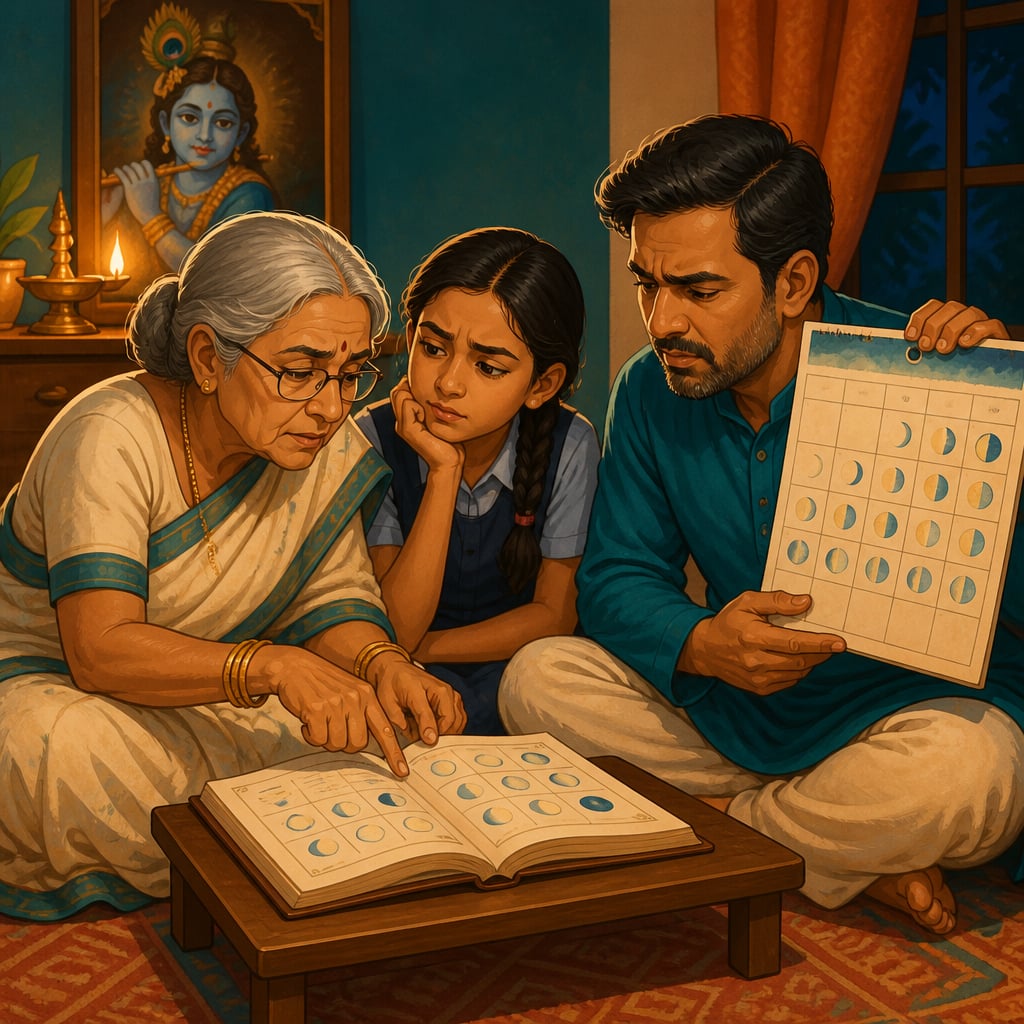
None of this is an error. It is the nature of the tithi, the lunar day, which is a completely different kind of day from the one the Sun gives us. The tithi is the master unit of the Indian calendar, the beat to which most festivals are set, and it does not march in step with the civil day at all. This lesson is about what a tithi really is, why it can be lost or doubled, and why the tradition built its sacred time on this restless lunar unit rather than the steady solar one.
The Moon Pulling Ahead
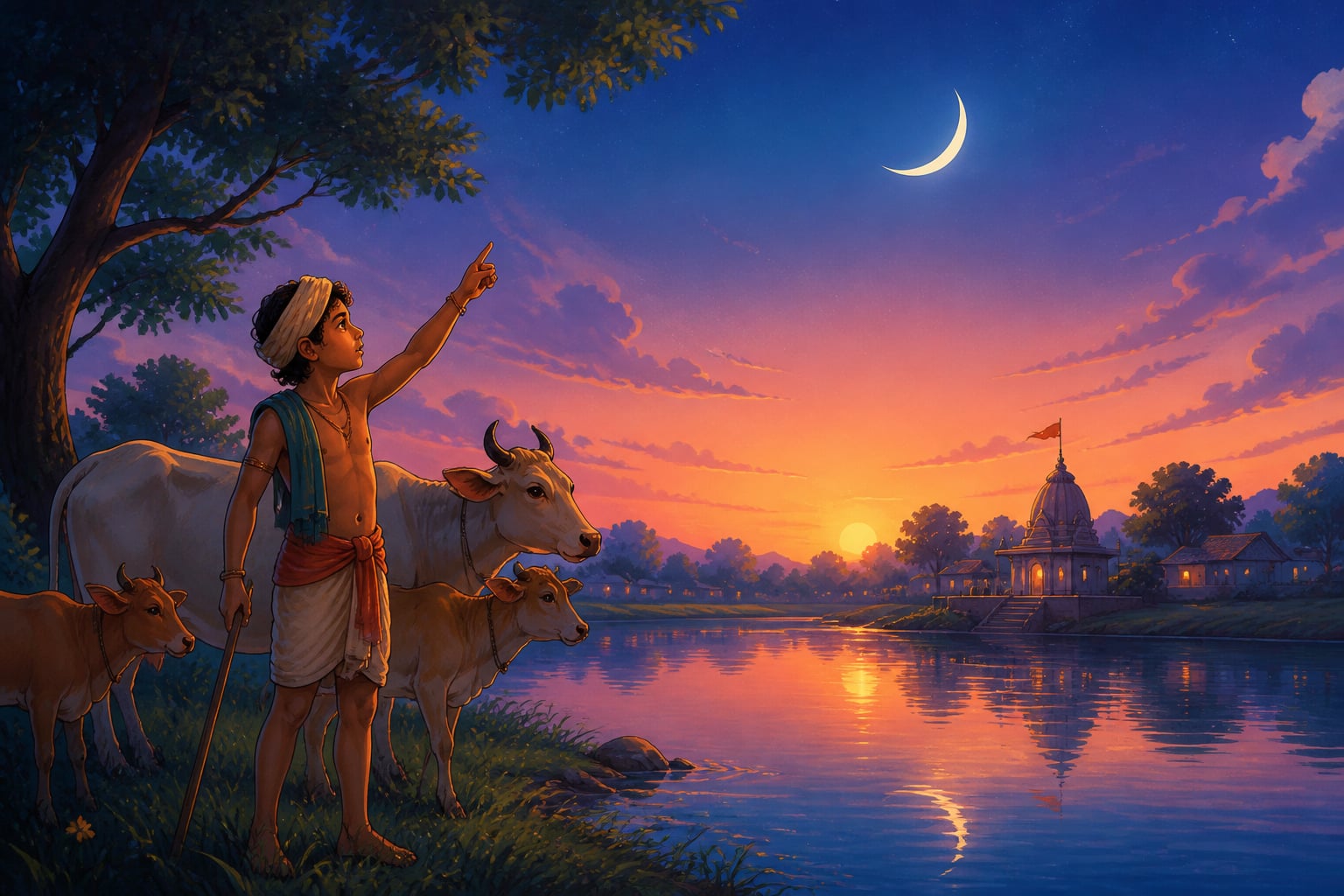
Start at the new moon. There, the Sun and the Moon stand together in the sky, setting out from the same point. Over the following days the faster Moon pulls ahead of the Sun, and its angle from the Sun, its elongation, steadily grows. A tithi is defined as the time the Moon takes to gain exactly 12 degrees on the Sun. Since a full circle is 360 degrees, there are exactly 30 tithis from one new moon to the next, filling the lunar month.
The month splits into two pakṣas, fortnights of fifteen tithis each. The bright fortnight (śukla-pakṣa) runs from new moon to full, as the Moon waxes; the dark fortnight (kṛṣṇa-pakṣa) runs from full back to new, as it wanes. Every tithi has a name and a number within its fortnight, and the great markers, amāvāsyā (new moon) and pūrṇimā (full moon), are simply the tithis that end as the elongation returns to zero and reaches 180 degrees.