Kāla: The Indian Conception of Time
A time both beginningless and precisely measured, spanning the blink of an eye to billions of years
The same tradition that measured a fraction of a second also counted the days of Brahmā in billions of years, and called time both beginningless and exactly measurable. Learn the Indian conception of kāla: a vast, cyclic deep-time framework anchored, always, to the motion of the heavens.
The Two Directions of Time
Hold two numbers in your mind at once. The Indian tradition measured time downward to the truṭi, an interval so brief it is a tiny fraction of a single second, the time, in one image, that a needle takes to pierce a lotus petal. And it measured time upward to the kalpa, in its cosmology a single day in the life of the creator Brahmā, lasting 4.32 billion years. One tradition, one framework, reaching from the blink of an eye to a span of billions of years.
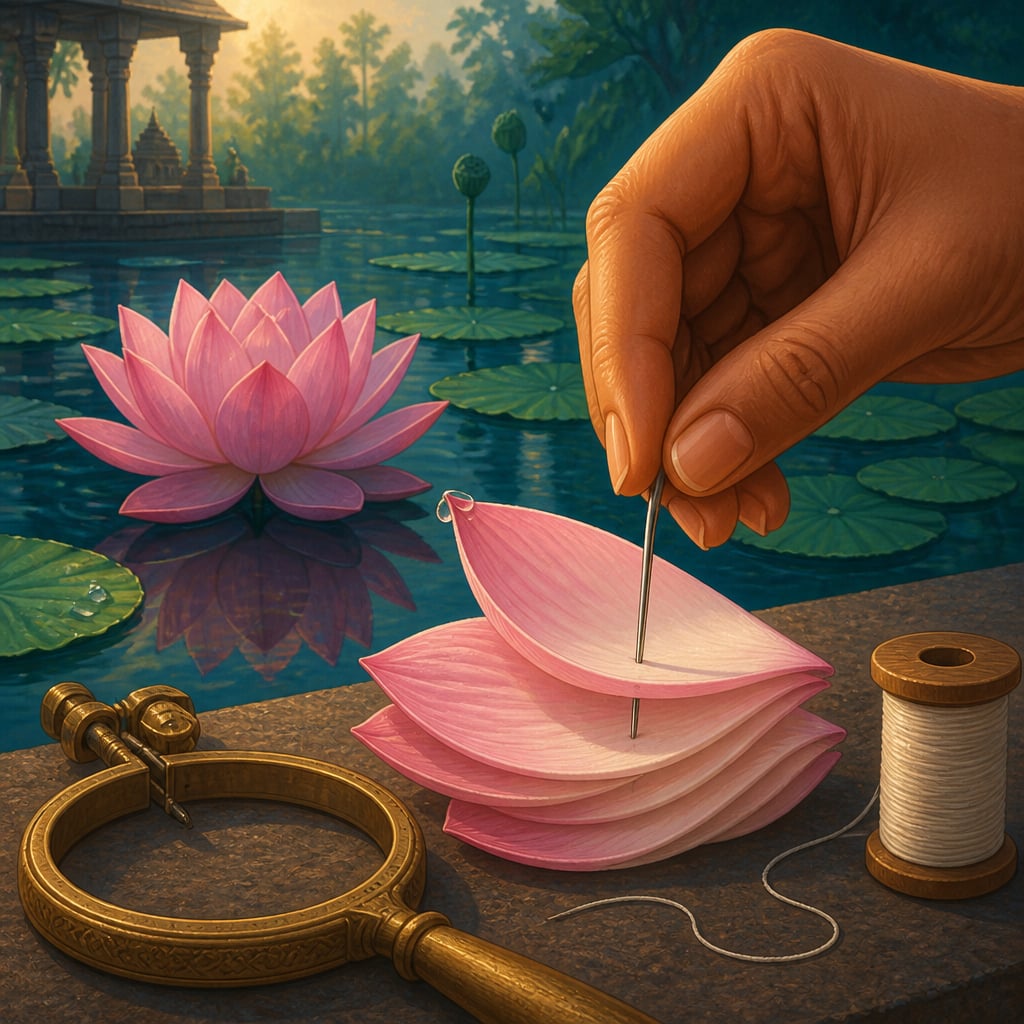
Few traditions reached both ends of that scale. The Indian imagination held both, and did something stranger still: it called time kāla, and said in the same breath that kāla is without beginning or end, and yet is measured, exactly, by the turning of the sky. This lesson is about that conception, the deep, cyclic, and precisely reckoned Indian idea of time on which the whole calendar rests.
Beginningless, and Yet Measured
Āryabhaṭa caught the paradox in a single verse.
युगवर्षमासदिवसाः समं प्रवृत्तास्तु चैत्रशुक्लादेः। कालोऽयमनाद्यन्तो ग्रहभैरनुमीयते क्षेत्रे॥
yuga-varṣa-māsa-divasāḥ samaṃ pravṛttās tu caitra-śuklādeḥ kālo 'yam anādyanto graha-bhair anumīyate kṣetre
The yuga, the year, the month, and the day all set out together from the beginning of the bright fortnight of Caitra. This time, without beginning or end, is measured by the planets and stars in space.
Āryabhaṭīya, Kālakriyāpāda 11
Read the two halves against each other. The first line gives a reckoning epoch: a fixed starting line, the bright fortnight of Caitra, from which the astronomer counts the yuga, the year, the month, and the day, all beginning together like runners at a gun. The second line lifts the gaze: kāla itself, kālo 'yam anādyantaḥ, is without beginning or end. Time as a whole did not start; it has no edge. What starts is only our count of it.