Saṃvatsara: Year Cycles and Era Systems
Sixty named years from Jupiter, eras that only count up, and why a date carved in stone can be a riddle
India counts its years two ways at once: a cycle of sixty named years, the saṃvatsara, set by Jupiter's slow walk around the zodiac, and eras like the Vikrama and Śaka that count upward from a fixed start. Follow a year-number carved at Girnar in 150 CE, the honest story behind the famous eras, Rome's two calendar resets, and the Śaka-based national calendar India adopted in 1957.
Year Seventy-Two at Girnar
In the month of Mārgaśīrṣa, as winter came to Saurashtra, a storm broke over the hills of Girnar, near modern Junagadh in Gujarat. The rain did not stop. The rivers Palāśinī and Suvarṇasikatā rose in flood and tore at the banks. Then the great dam of the Sudarśana lake, built for the farmers of the plain, gave way.
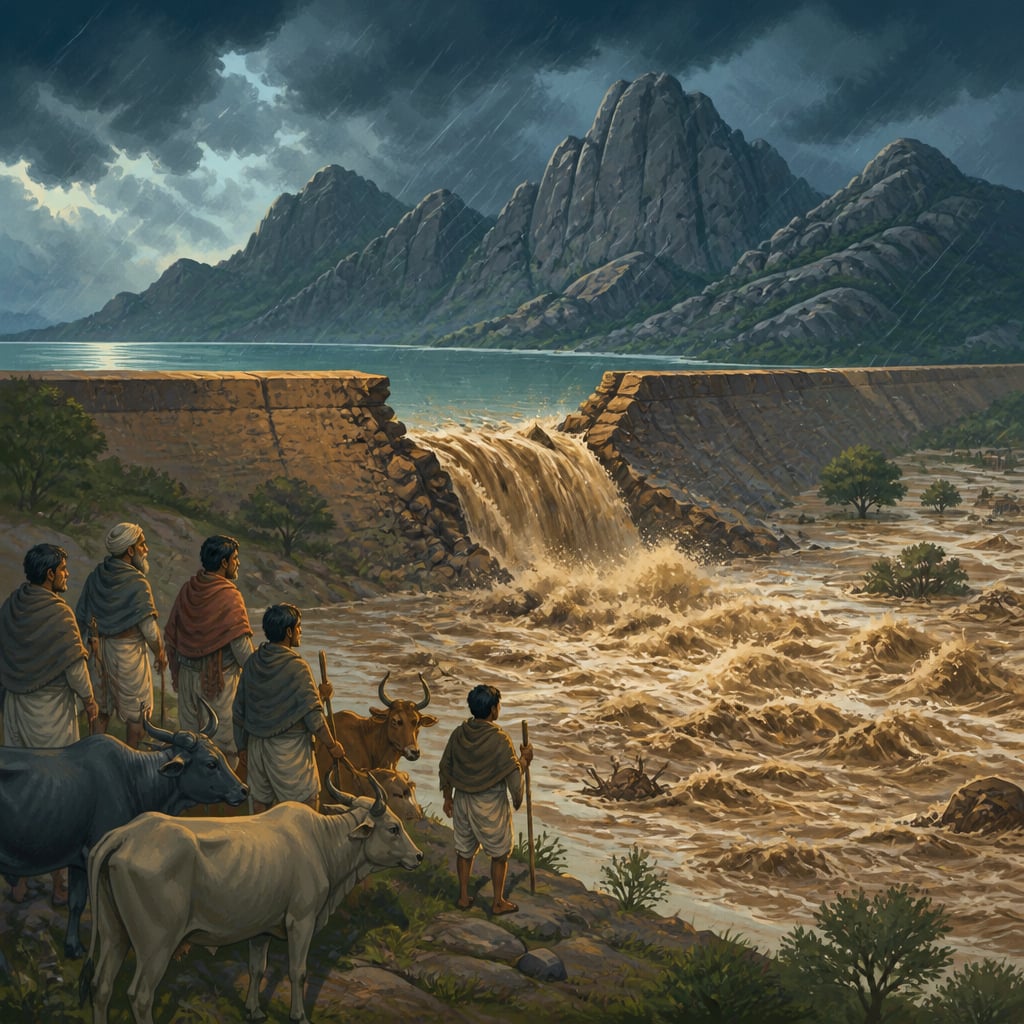
The breach was huge. The record gives it as 420 cubits long, 420 wide and 75 deep. The water that had fed the fields for more than four hundred years rushed out, and the lake turned into a dry, sandy waste.
The ruler of the region was Rudradāman, a king of the Western Kṣatrapa line who ruled from Ujjain. His governor Suviśākha rebuilt the dam, three times stronger than before. Then the story was carved in Sanskrit on a great granite boulder by the road, the same rock that already carried the edicts of Aśoka. The carvers cut the date into the stone: the year seventy-two.
Here is the puzzle. Seventy-two years from what? The rock does not say. A date is only a number until you know where the count begins. Historians today read it as year 72 of the era later called Śaka, which makes it 150 CE. How India counted its years, and why a number carved in stone can be a riddle, is the story of this lesson.
Two Ways to Count Years
India kept two kinds of year-count side by side, and still does.
- A cycle. Sixty years, each with its own name, repeating forever. A year in this cycle is a saṃvatsara.
- A line. An era, or saṃvat: a count that starts from one fixed year and only goes up. Year 72, year 1948, year 2083.
A cycle tells you what kind of year you are in. A line tells you how far you are from a fixed start. A grandmother in Karnataka may say she was born in the year Plava, while the letter on her table carries a Śaka date. Both are true at once.