The Lathi at Dhaka
How a chemistry demonstrator's lathi yard in Dacca became Bengal's largest secret society, and how the Raj removed him without a trial
In 1903 Pulin Behari Das, a demonstrator at Dacca College, opened a stick-fighting yard in Tikatuli. Out of it grew the Dacca Anushilan Samiti, more than five hundred branches strong, with a ladder of vows that took a boy from village lathi play to a revolver. After the shooting at Goalundo and the Barrah dacoity of June 1908, the government deported him to Montgomery jail under Regulation III with no charge and no trial, and his conviction in the Dacca Conspiracy Case followed in 1911.
The Yard at Tikatuli
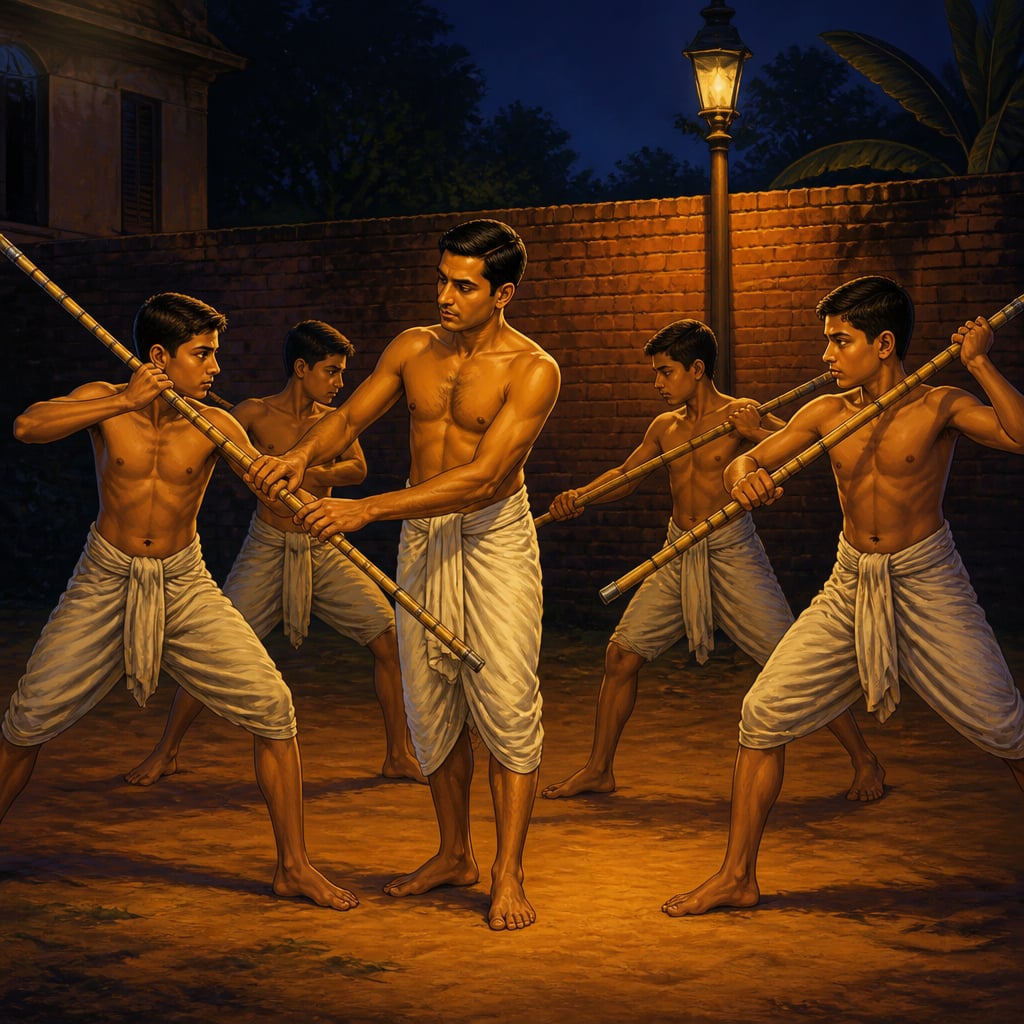
It is 1903, in the Tikatuli quarter of Dacca, and a young man has cleared a patch of ground behind a house into an akhara, a training yard. His name is Pulin Behari Das. He is twenty-six. By day he works at Dacca College as a demonstrator, the man who sets up the apparatus and shows the experiments to the chemistry students.
By evening he is holding a bamboo stick. The lathi is six to eight feet of male bamboo, sometimes ringed with iron at the ends. It is heavy in the hands. Swung fast, it hums. Boys stand in pairs on the packed earth, hitting and blocking, and the sound of bamboo on bamboo carries over the wall.
There is nothing illegal about any of this. Lathi play, lathi khela, is an old Bengal sport. Landlords kept lathials, professional stick men, to guard their grain and settle their quarrels. There is a Bengali proverb about it: whoever holds the lathi keeps the buffalo.
Pulin was already good. In 1905 he went and trained under a famous lathial named Murtaza to get better. What he built in that yard would grow into the largest secret society in Bengal, with hundreds of branches and something between fifteen and twenty thousand members. And in December 1908 the government would remove him from Bengal without charging him with anything at all.
Eighty Men in a Room
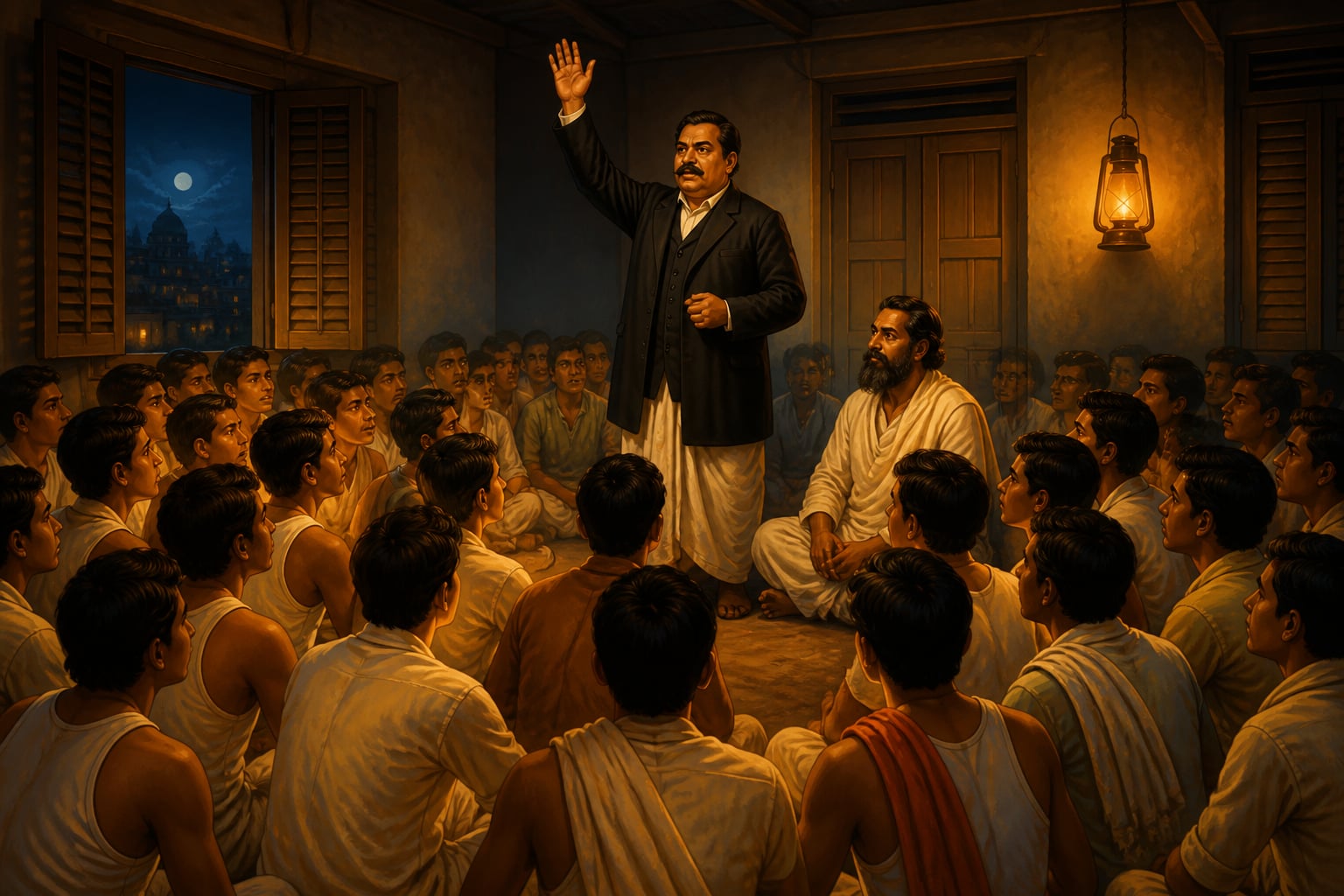
In November 1905, the month after Bengal was partitioned, two men came to Dacca to speak. One was Bipin Chandra Pal, the swadeshi orator. The other was Pramathanath Mitra, the Calcutta barrister who had started the first Anushilan Samiti in 1902. They asked for volunteers.
About eighty young men answered. Pulin Behari Das, who lived in the Wari neighbourhood of the city, was put in charge of the East Bengal side of the work. He formally opened the Dacca branch as its own society, and most accounts date that to October 1906. Some date the whole thing from Pal and Mitra's visit in November 1905. Both dates are in the record and the year of the founding is genuinely uncertain.