Rakhi on the Ganga
16 October 1905: the rakhis on the bathing steps, and the samitis that turned swadeshi anger into an underground
On 16 October 1905, the day Bengal was split in two, Rabindranath Tagore had Calcutta bathe in the Ganga and tie rakhis on strangers' wrists. This scene-setter lays out what grew under the Swadeshi movement instead: Sarala Devi's akharas of 1902, the Anushilan Samiti, the Bhawani Mandir pamphlet, the Jugantar weekly, Pulin Behari Das at Dhaka, and the garden at Muraripukur that ended in the Alipore trial. Aurobindo is named as context and the chapter moves on to the people who did the work.
The Morning Bengal Was Cut in Two
It is the morning of Monday, 16 October 1905. In the lanes off the Ganga at Calcutta, nobody has lit a cooking fire. The day has been declared a day of mourning, and mourning in a Bengali household means arandhan, no cooking, no hot food, no meal. Shops are shut. Children are out of school.
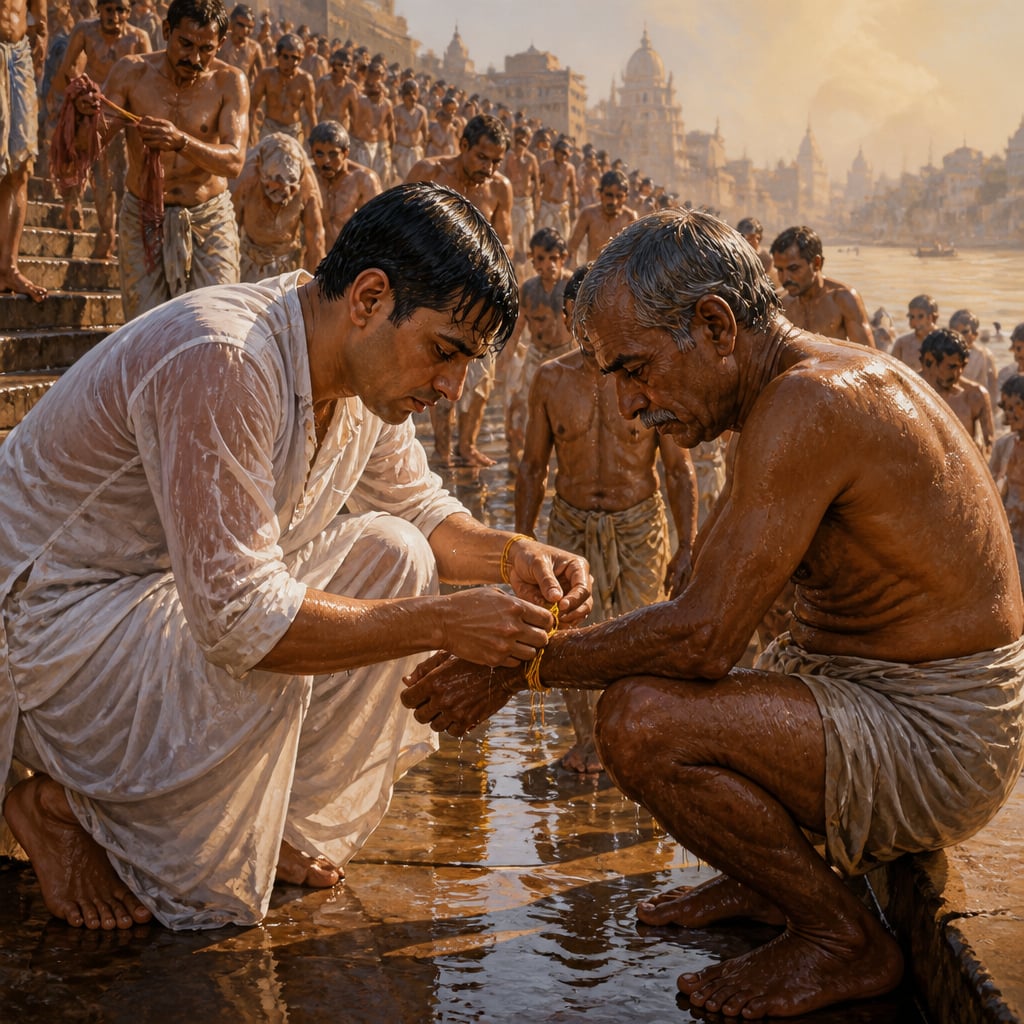
By the river the crowd is enormous. Men in dhotis walk down the bathing steps, dip in the water, and come back up with wet clothes sticking to them. Then they start tying threads on each other's wrists. Yellow thread, the kind a sister ties on a brother's wrist at Raksha Bandhan. Strangers are tying them on strangers. Hindus tie them on Muslims. Clerks tie them on labourers.
The idea was Rabindranath Tagore's. At a meeting in Akrur Dutta Lane on 27 September he had proposed that the day the province was split, Bengalis should observe it by making themselves brothers in public. He wrote a song for it, Banglar Mati, Banglar Jal, the soil of Bengal, the water of Bengal, and led the singing himself. The procession walked from the bathing steps through the streets, and Tagore tied rakhis on Muslim clerics on the way.
বাংলার মাটি, বাংলার জল, বাংলার বায়ু, বাংলার ফল
banglar maṭi, banglar jol, banglar bayu, banglar phol
The soil of Bengal, the water of Bengal, the air of Bengal, the fruit of Bengal.
Rabindranath Tagore, written for 16 October 1905
Notice what the song does not do. It names no enemy and promises no victory. It asks for a blessing on the land, its water and its harvest. That was the whole of the argument at the bathing steps.
The order took effect anyway. Bengal was now two provinces.