The Garden at Muraripukur
Barin Ghose built the Maniktala bomb factory, then wrote a confession trying to hang alone for all of it
Barindra Kumar Ghose, Aurobindo's younger brother, started the Jugantar paper and ran the garden at Muraripukur where the Alipore bombs were made. Arrested there on 2 May 1908, he confessed in his own hand to take the whole blame himself, and gave up his legal right to be tried as a European. Sentenced to death and then to transportation for life, he served eleven years in the Cellular Jail, came home in 1920, and spent nearly forty years as a journalist.
The Garden Before Dawn
It is the early morning of Saturday, 2 May 1908. A walled garden sits at the northern edge of Calcutta, on Muraripukur Road in Maniktala, at number 32 by most accounts. Mango trees. A pond. A low brick house and a mud hut behind it, and about a dozen young men asleep on the floor inside.
The garden belongs to the family of Barindra Kumar Ghose. He is twenty-eight. For two years he has run the place as what he himself called an ashram, a monastery for boys who meant to fight the Empire. They wake before light, sit for meditation, read the Gita, learn wrestling and stick-fighting, and study the history of other people's revolutions. In the shed at the back they make bombs.
Two mornings earlier, two boys sent from this garden had thrown one of those bombs at a carriage in Muzaffarpur, four hundred miles away. They killed two Englishwomen who were not the target. The police have spent thirty-six hours working out where the bomb came from.
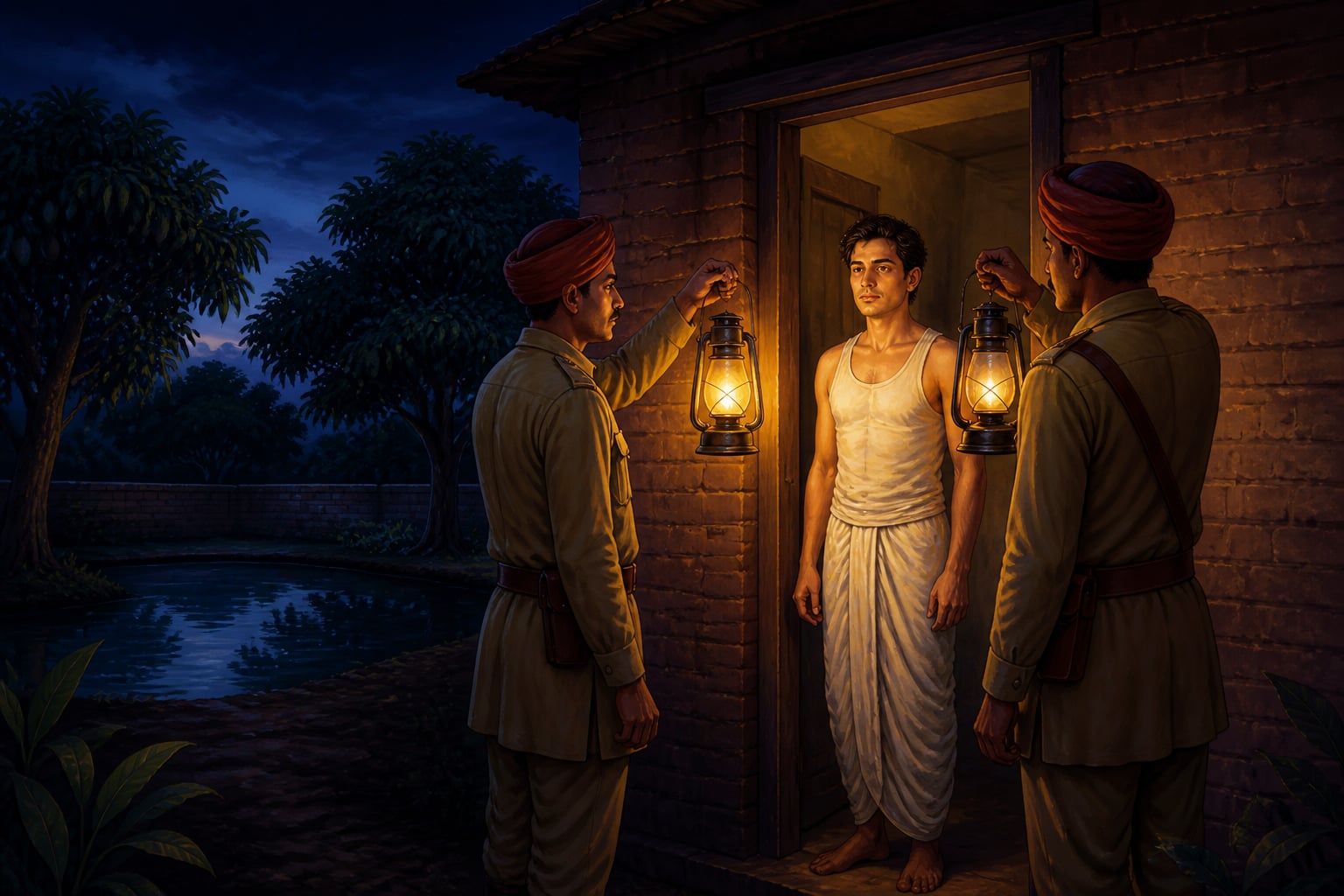
Now the gate opens. Officers come in with lanterns and take everyone in the garden. Barin does not run and does not fight. Within a year he will be sentenced to hang, and he will spend most of that year trying to make sure he is the only one who does.
Aurobindo's Brother
Barindra Kumar Ghose was born on 5 January 1880 at Croydon, near London, where his father had sent the family. He was brought to India at the age of one. He was the youngest of the brothers; Aurobindo Ghose, fourteen years older, was the one the family expected things of, and the one who got them.
That accident of birthplace mattered later, in a courtroom, in a way nobody in the family could have guessed.