The Raja of Surapur
A British officer raised him, a horoscope predicted his end, and he was dead in British custody at twenty-three
Venkatappa Nayaka IV of Surapur grew up under Philip Meadows Taylor, the British political agent who ran his state through his childhood. In 1853 he took power and refused the dewan the British wanted; by the winter of 1857 he was sending agents to the Peshwa's side and hiring Arabs and Rohillas. A British column took Surapur on 9 February 1858, the Nizam's minister Salar Jung handed him over, and he died of a gunshot in custody later that year, recorded as suicide and disputed in Karnataka ever since.
The Horoscope on Taylor's Desk
It is 1842, in a hill bungalow above the town of Surapur, in what is now Yadgir district of Karnataka. The rains have just stopped. A British officer named Philip Meadows Taylor sits in a room with four walls and twenty-seven doors, a house he built so that every wall had a way out. He has been in Surapur a year. The old raja, Krishnappa Nayaka, is dead. The state is in the hands of a court that fights itself.
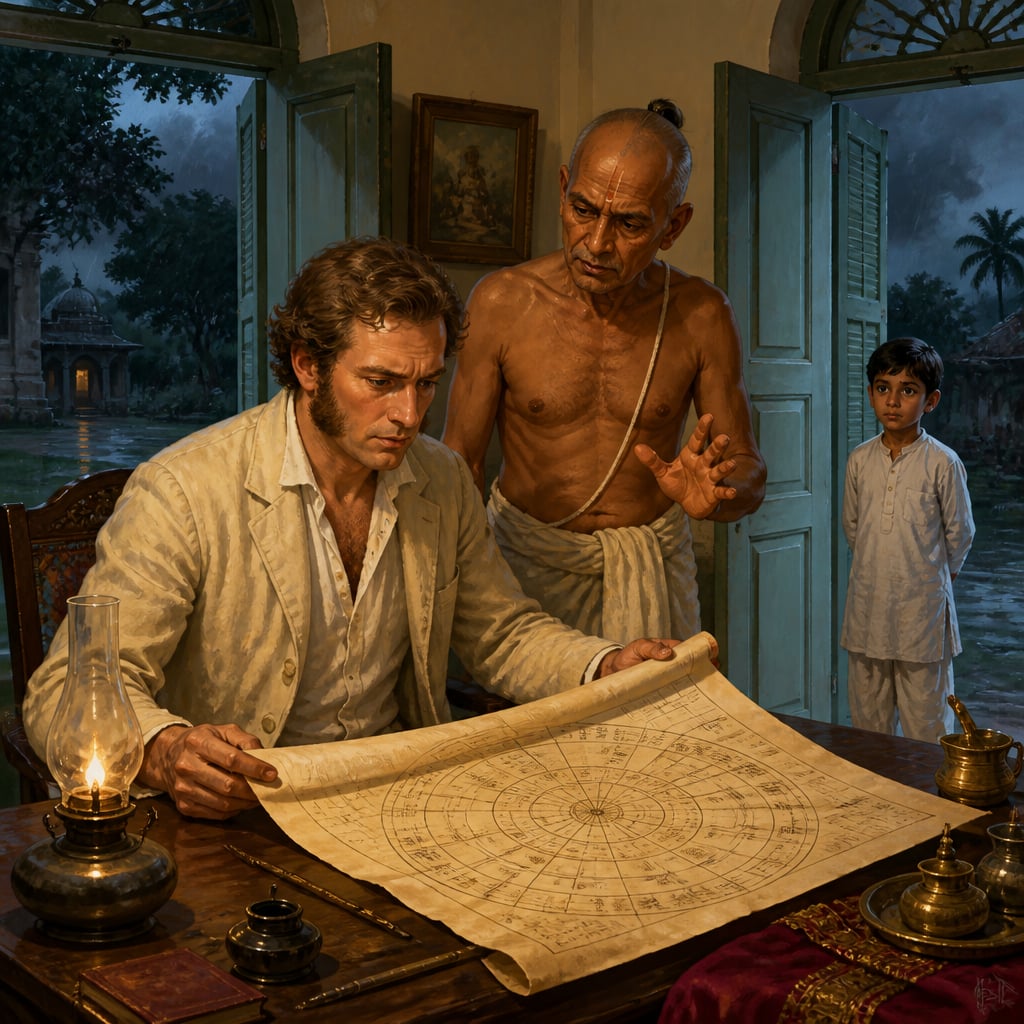
A pandit brings Taylor the horoscope of the dead raja's small son. The boy is about eight. Taylor is now, in effect, his guardian. The pandit reads the chart and says the child will die in his twenty-fourth year, and that the state will be taken from his family.
Taylor writes it down and thinks nothing of it. He is a practical man who is building roads and water tanks and a police force. He will teach the boy English, ride with him, and let the boy call him Appa, father. For twelve years the two are close enough that the British records read almost like a family album.
Sixteen years later Taylor will stand in front of the Governor General's office begging for this boy's life. The pandit will have been right about everything.
Who the Nayakas of Surapur Were
Surapur, also spelled Shorapur, sat on the plateau between the Bhima and the Krishna. It was a small state under the Nizam of Hyderabad, and through the Nizam it came under the British, who held the real power in the Deccan by the 1850s.
The ruling family were Bedars, sometimes written Berad, a community of hunters, trackers and soldiers spread across the Kannada and Marathi country. They had held these hills since the seventeenth century, when they fought Aurangzeb's armies from the same rocks. Bedar men were recruited as infantry by every power in the Deccan because they could shoot and they knew the ground.