Nargund
Babasaheb of Nargund was disarming himself on schedule until he heard who his new political agent was
Bhaskar Rao Bhave, Babasaheb of Nargund, had been refused the right to adopt an heir and ordered to surrender his guns, and he was complying, until the Company handed his district to Charles Manson of the hated Inam Commission. On 27 May 1858 he declared war, and the next night his men killed Manson at a temple near Surebhan. Nargund fell within five days; he was captured near Torgal, tried at Belgaum on 11 June and hanged on 12 June 1858.
The Guns Turn Back

It is around 25 May 1858, in the hill town of Nargund in what is now Gadag district, Karnataka. A line of bullock carts is a few miles out on the road to Dharwar. The carts are carrying cannon. They belong to Bhaskar Rao Bhave, called Babasaheb, the chief of Nargund, and he has spent weeks agreeing to give them up.
Then a rider brings news from Belgaum. The British officer who had handled Nargund with patience, George Berkeley Seton-Karr, has been moved. His replacement as political agent for the Southern Maratha Country is Charles Manson. Manson has spent years on the Inam Commission. That is the tribunal which had been taking land from chiefs like Babasaheb for six years.
Babasaheb sends the carts an order. Bring the guns back.
He also sends a letter to his half-brother, the chief of Ramdrug. One line of it survives in the Bombay records: "I had rather die than be arrested as Jamkhandi was." Manson had arrested his friend the chief of Jamkhandi a few weeks earlier. Babasaheb was certain he was next.
Eighteen days later he was hanged at Belgaum. What happened in between is a lesson about fear, and about how a man who had complied for a year decided in one afternoon that he would not comply again.
What the Company Had Taken From Him
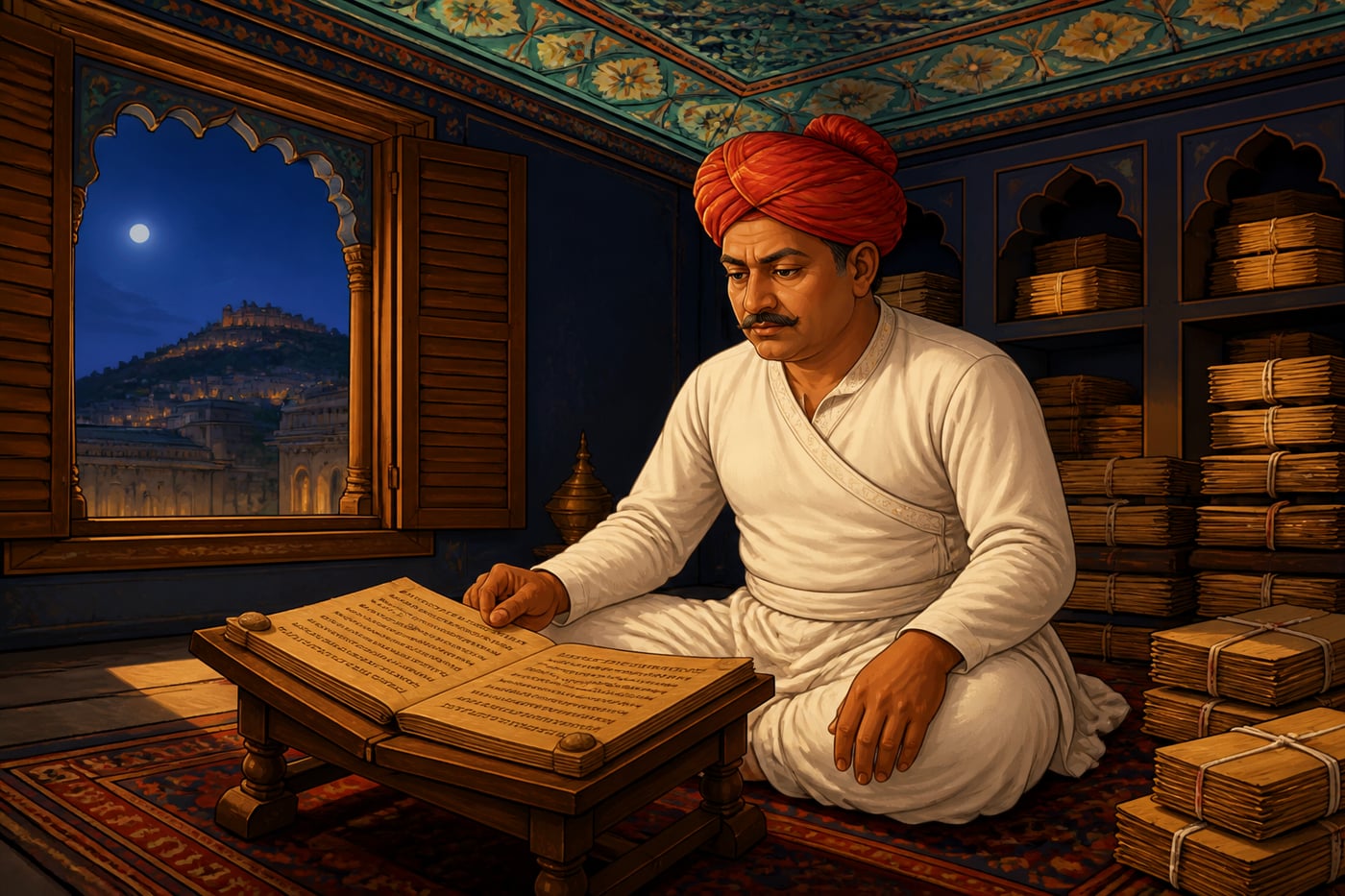
Babasaheb came to Nargund in 1842. The Bhave family had held the place as a jagir since the time of the Peshwas, and by all accounts he ran it well. He also read. The one long feature written about his house, the Raj Wade, records a large collection of Sanskrit works kept there. It is a strange detail to find in the story of a man remembered for a beheading.