The Dewan of Jorhat
Assam's first tea planter wrote from Calcutta in 1857 to put an Ahom prince back on the throne, and a letter handed to the wrong man cost him his life
Maniram Dutta Barua, the Ahom court's officer turned tea company dewan, was the first Indian to plant tea as a business, and the industry he helped build ruined him. In 1857 he wrote from Calcutta to raise the sepoys at Dibrugarh and Golaghat and crown Kandarpeswar Singha king of Assam. One letter reached the district's chief police officer by mistake, and on 26 February 1858 Maniram and his lieutenant Piyali Barua were hanged in public at Jorhat.
The Wrong Hands at Jorhat
It is the middle of August 1857 in Jorhat, in upper Assam. A messenger is carrying a letter. It has come up the Brahmaputra from Calcutta, more than a thousand kilometres, addressed to a man named Piyali Barua. The letter is meant to reach the young Ahom prince Kandarpeswar Singha. It is about soldiers, dates and a throne.
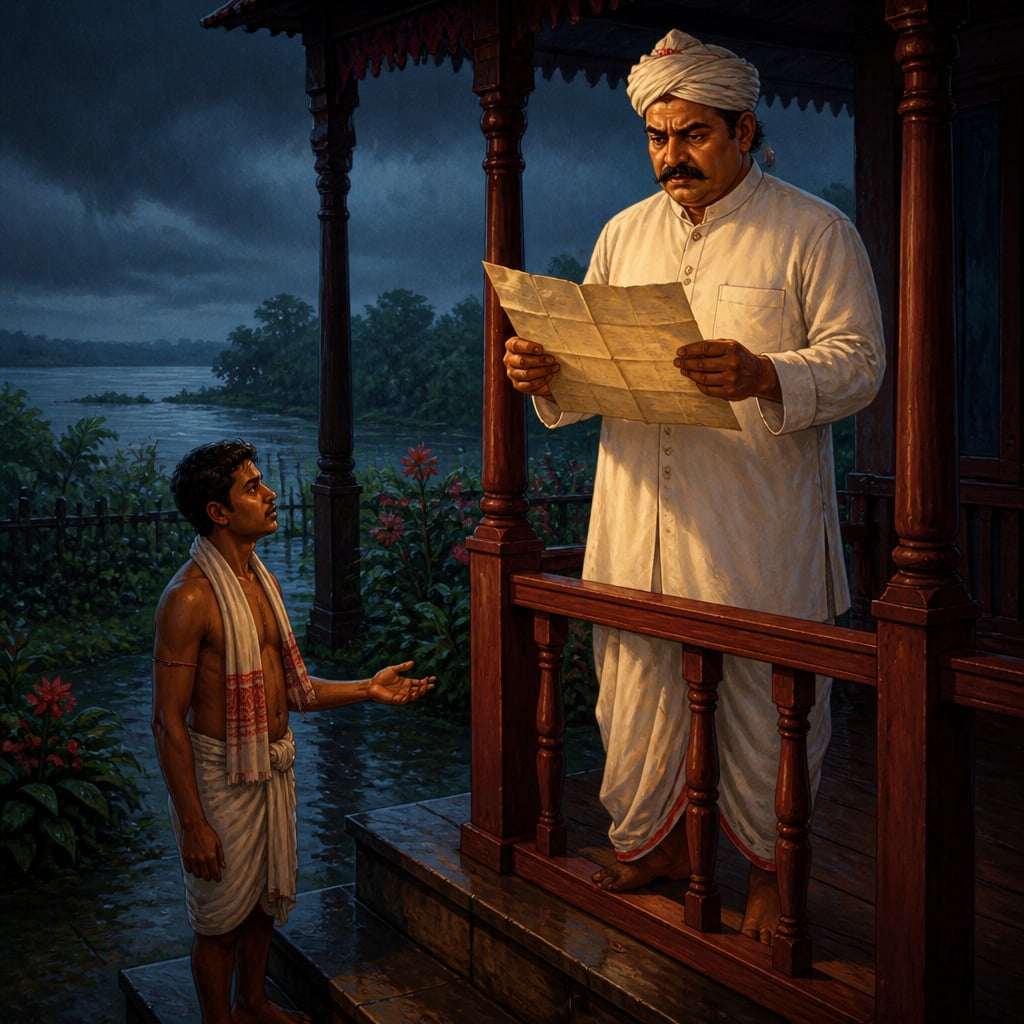
The messenger hands it to the wrong man. It goes instead to Haranath Parbatia Barua, the sadar daroga, the chief police officer of the district. He reads it. He takes it straight to his British officers.
The man who wrote that letter had been building this for three months and did not yet know it was over. His name was Maniram Dutta Barua, and Assam called him Maniram Dewan. He was fifty years old. He had been the Ahom court's officer, then the British tea company's manager, and then the first Indian in history to plant tea as a business. Now he was in Calcutta writing to Jorhat about a rising.
Six months later he was hanged. What is strange is not that he tried. It is who he was when he tried.
The Man Who Changed Sides Twice
Maniram was born on 17 April 1806 at Charing, in Sibsagar district. His family had served the Ahom kings, the dynasty that had ruled Assam for six hundred years until the Burmese invasions and then the British ended it. When the Company took the province in 1826, Maniram did what his family had always done. He served the government that existed.
He served it very well. By 1828 he was tehsildar and sheristadar, a revenue and record officer, at Rangpur. In 1839 the Assam Company, the first tea company in India, hired him as its dewan (its chief Indian officer and manager) at Nazira. He was paid 200 rupees a month, which was a large salary for an Indian employee then.