Sixteen, and Wanted
A girl of sixteen inherited a movement from a man the British had hanged, and paid fourteen years in prison for it
When the British hanged Haipou Jadonang in 1931, the Heraka movement in the Naga hills passed to Gaidinliu, his kinswoman, who was sixteen. She told the Zeliangrong villages to pay no tax and give no labour, was captured at Pulomi in October 1932, and spent fourteen years in jail. The title Rani was not hers by birth or claim: Jawaharlal Nehru printed it in 1937, and it stuck.
The Stockade at Pulomi
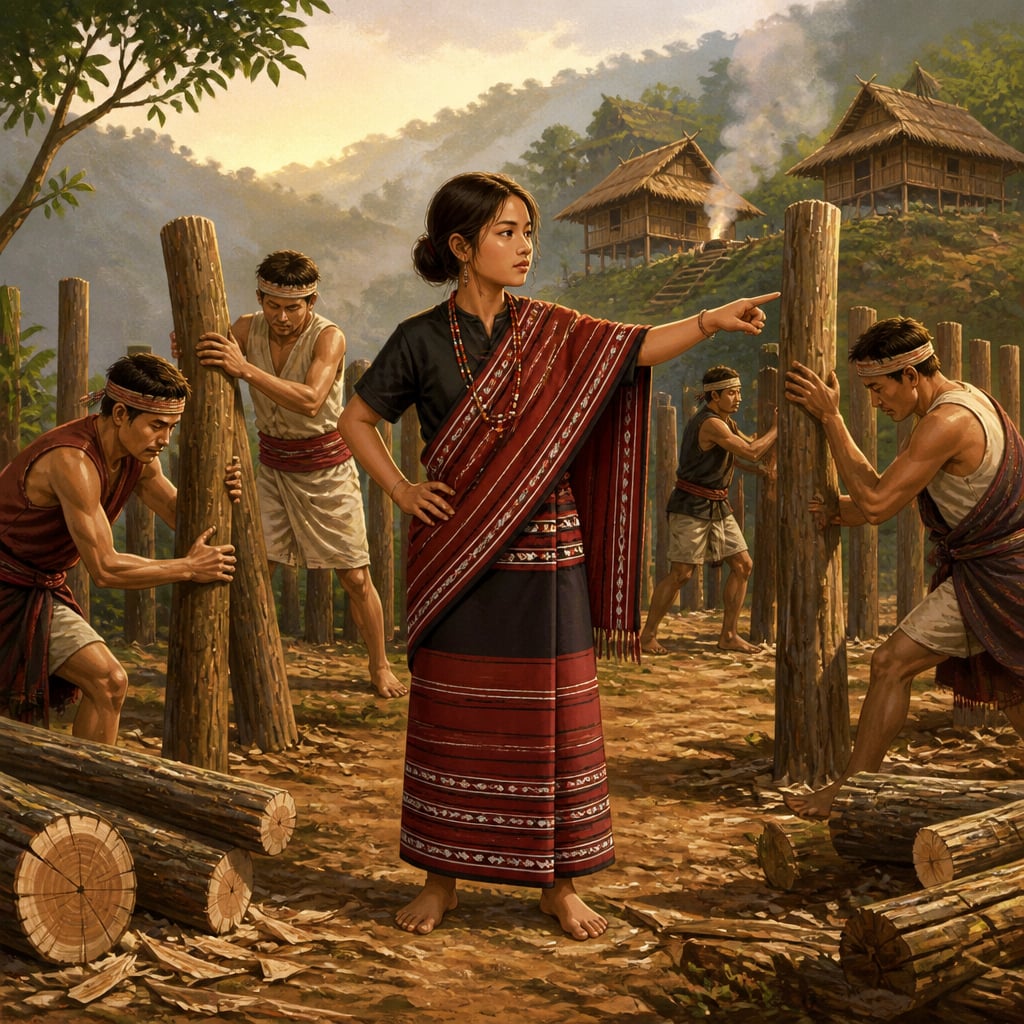
It is the morning of 17 October 1932, in the Naga hills, in a village called Pulomi. Men are cutting logs and sinking them upright into the ground. They are building a wooden stockade, a fence of posts, around the house where their leader is staying. The air smells of cut timber and woodsmoke. Nobody has slept much.
The leader is a girl of sixteen. Her name is Gaidinliu. She is from the Rongmei tribe, one of three tribes that call themselves the Zeliangrong, and she has been running from the British for a year. The government has put a price on her head: five hundred rupees, and ten years without tax for any village that gives her up.
The stockade is not finished when the soldiers arrive. Assam Rifles, under a Captain MacDonald, come at the village without warning. There is no long fight. By the end of the day Gaidinliu is a prisoner, and she will be one for the next fourteen years.
Here is the part worth holding on to. She did not choose this fight. It was handed to her, in a jail, by a man who had one month left to live.
The Man Who Handed It Over
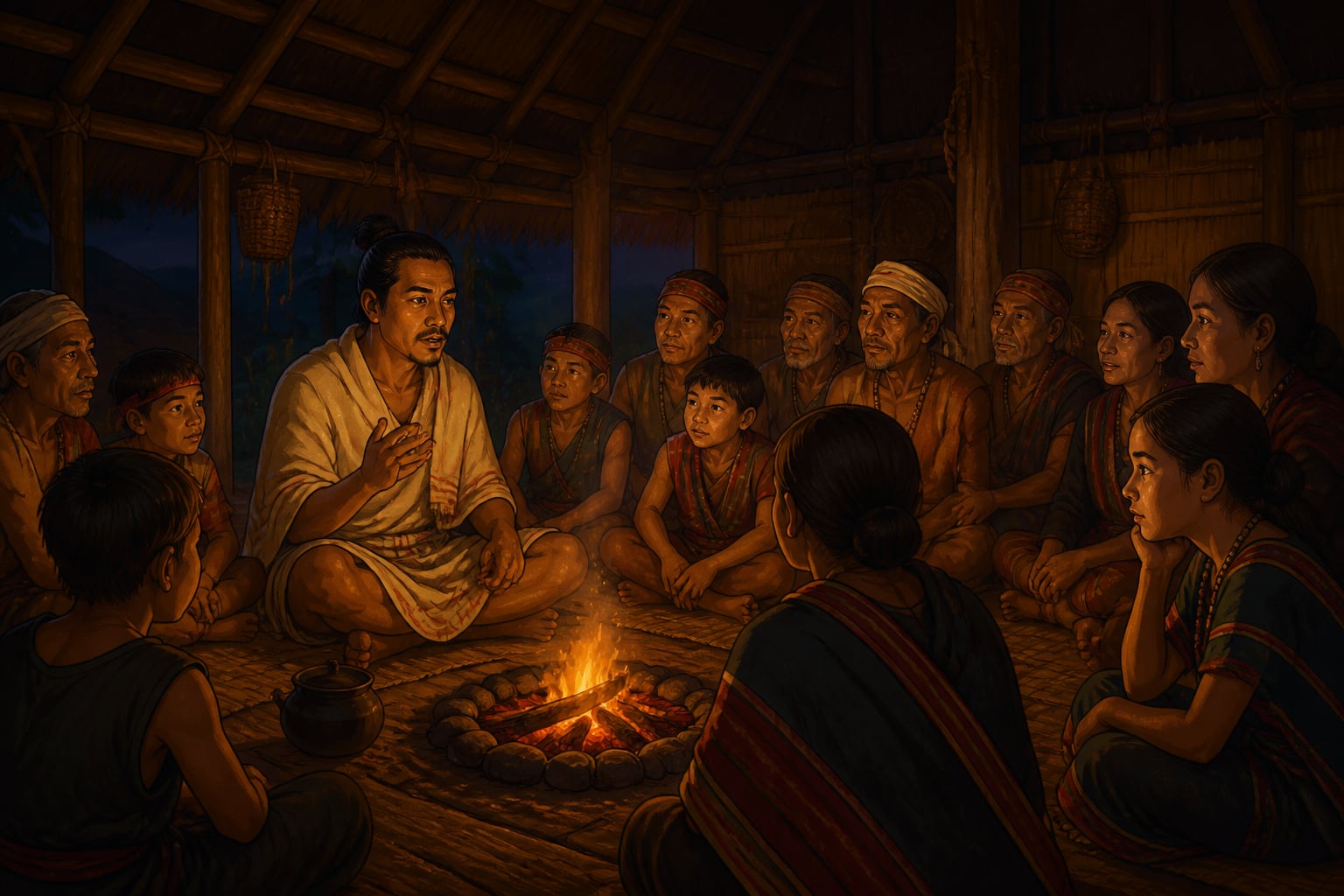
The movement was not hers first. It belonged to Haipou Jadonang, her older kinsman from the same hills. In the 1920s Jadonang began preaching a reform of the old Zeliangrong religion. He taught the worship of one supreme god, Tingkao Ragwang. He cut back the heavy animal sacrifices that were emptying poor households. Mission schools were spreading fast, and he called the people back to their own practice. The movement came to be called Heraka, which means pure.
It did not stay a religious matter. Jadonang told the Zeliangrong to stop paying the house tax and to stop supplying free labour to British officers. In a hill district ruled by a handful of officials and a few hundred rifles, that was the whole game. A religion that told villages to say no was a political problem.