Tokyo, 1942
Thirty years in a Tokyo bakery, a bomb thrown at a Viceroy, and the day an old man gave his army away
Rash Behari Bose threw a bomb at the Viceroy in 1912, set the Ghadar date in 1915, and then spent thirty years in Japan building the next army. This scene-setter follows him from the Nakamuraya bakery to the Bangkok conference of June 1942, to the afternoon in Singapore when he handed the Indian National Army to a younger man. It maps the five fighters this chapter follows.
The Bakery on the Shinjuku Corner
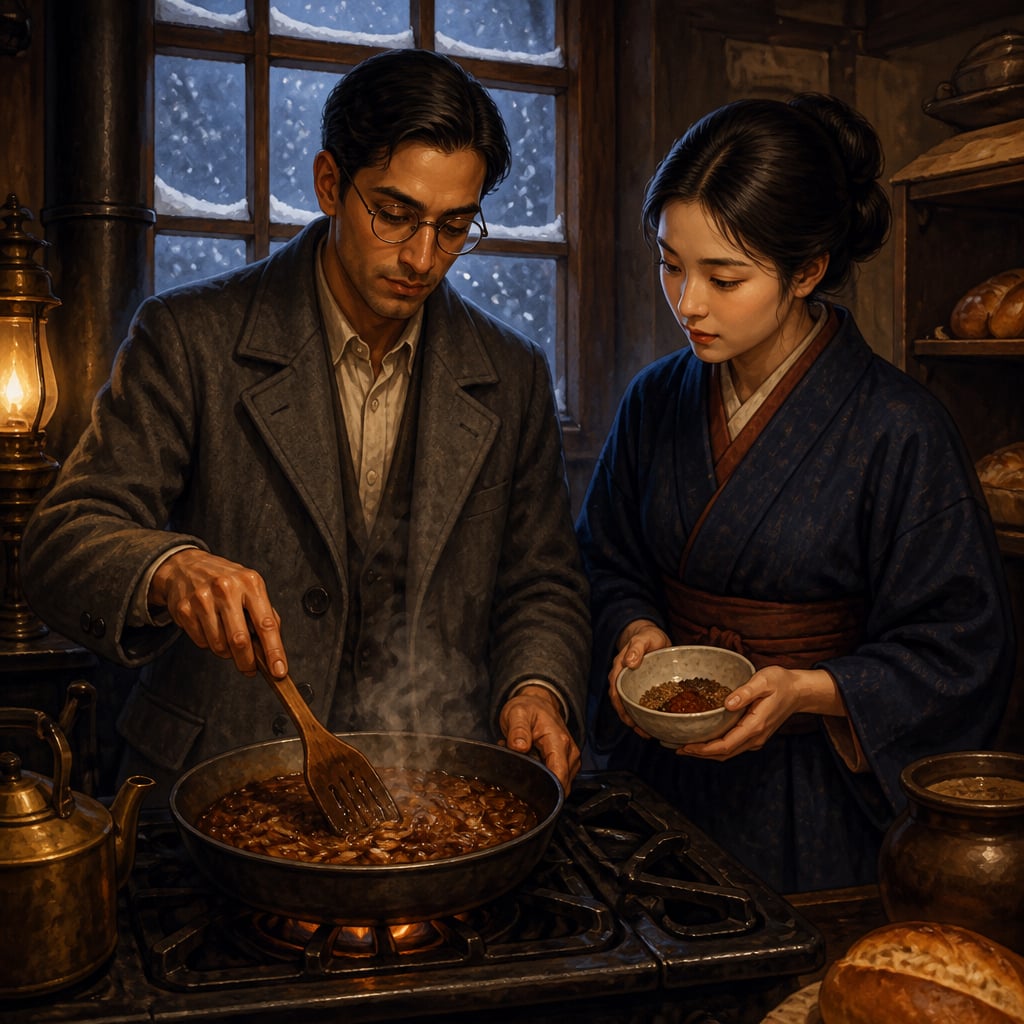
It is the winter of 1918, in a bakery called Nakamuraya on a busy corner in Shinjuku, Tokyo. A thin Bengali man in a borrowed overcoat is teaching the owner's daughter how to fry onions until they go dark. The smell of cumin and ghee is coming out of a Japanese kitchen for the first time. The shop sells sweet buns and cream puffs. Soon it will also sell a plate of rice and curry that costs eight times what the buns cost, and Tokyo will queue for it.
The man is Rash Behari Bose. He is thirty-two. Three years earlier he was the most wanted revolutionary in British India, with a price on his head for throwing a bomb at the Viceroy of India. He has been in Japan since June 1915, under a false name, moving between safe houses while British diplomats demanded his arrest and the Japanese police looked for him.
He is about to marry the girl he is teaching, Toshiko Soma, whose father hid him. He will take Japanese citizenship. He will spend the next twenty-seven years in a country where he is a curiosity, a cook, a writer of pamphlets nobody in India reads.
He will also spend them building an army.
That is the part almost nobody in India knows. The soldiers who marched on Imphal in 1944 under Subhas Chandra Bose did not appear out of nowhere. Somebody assembled the pieces, in a foreign language, over three decades, and then handed the whole thing to a younger man and stepped aside. This chapter is about the five people who came out of that second war. This lesson is about the board they were placed on.
What He Did Before He Ran
On 23 December 1912, the new Viceroy, Lord Hardinge, was riding an elephant into Delhi in a state procession. Delhi was being made the capital of British India, and the whole city was out to watch. A bomb was thrown from an upper window on Chandni Chowk. Hardinge was badly wounded. His attendant was killed.