Talapatram

The Four Scholars and the Lion

Four skilled brothers together bring a dead lion to life, and it kills them all. Each did his part, so who among them was guilty of their deaths?

Four brothers, each master of one magic skill, find a lion's bones and rebuild it step by step: flesh, skin, limbs, and finally life. The revived lion kills all four. Each contributed, so who is guilty of their deaths? The answer is not all of them, and not none. You judge first, then the king does.

The Burning Ground

The corpse was in the tree again. The king went up for it, bound it fast, and shouldered it back onto the ash. The Vetala settled behind his ear and opened a new run of tales with a strange one.

The Four Who Made a Lion
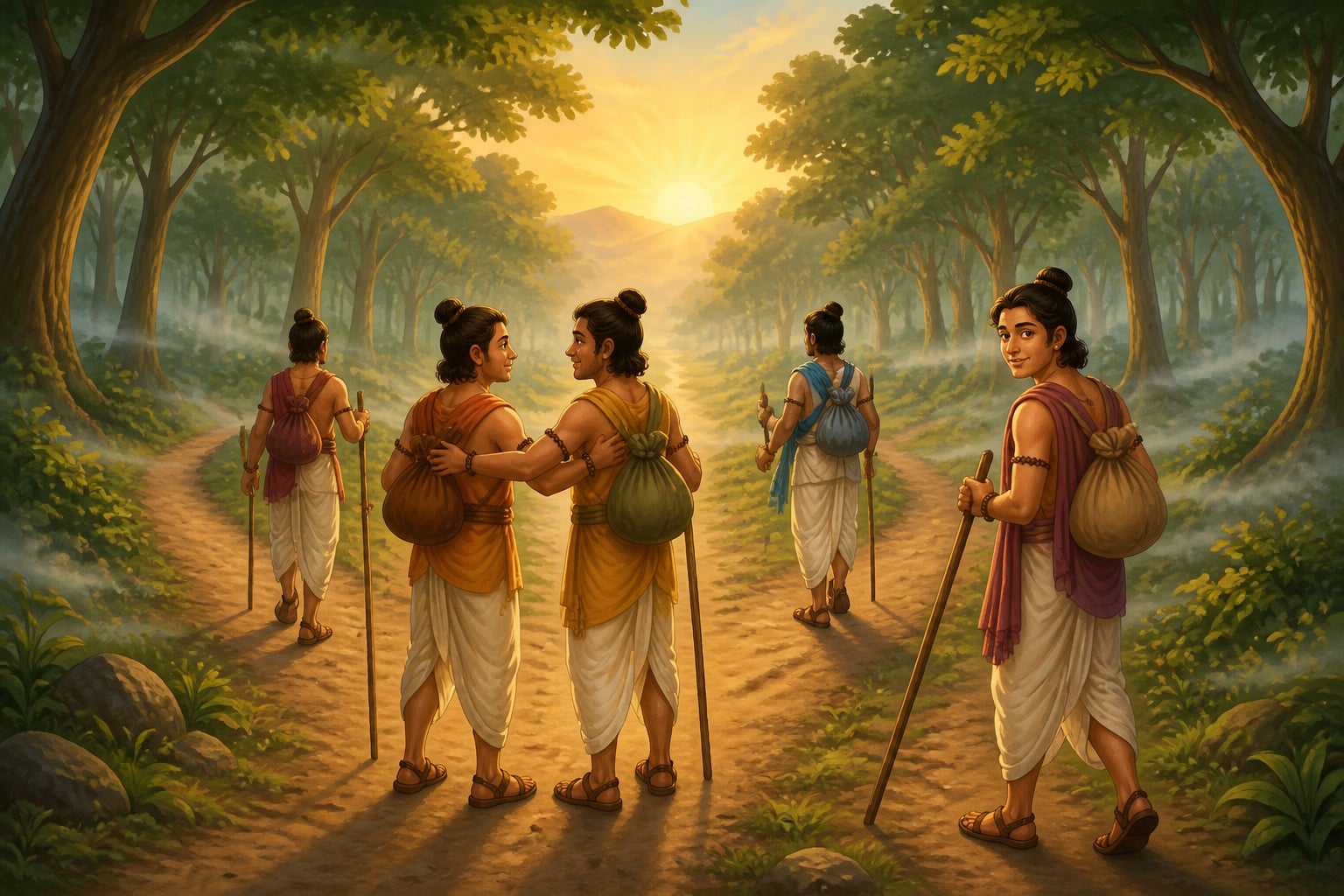
Four brothers part ways to learn their crafts

Four brothers, the sons of a brahman named Vishnusvamin, were left orphaned and neglected by their relatives. So they agreed to go out into the world, each in a different direction, and each to master some rare power, and then to meet again. And when they met, each had learned one strange and wonderful skill.

The first could take any scrap of bone and grow upon it the flesh of the creature it had belonged to. The second could clothe that flesh in its proper skin and hair. The third could shape its limbs. And the fourth could give the finished body life.
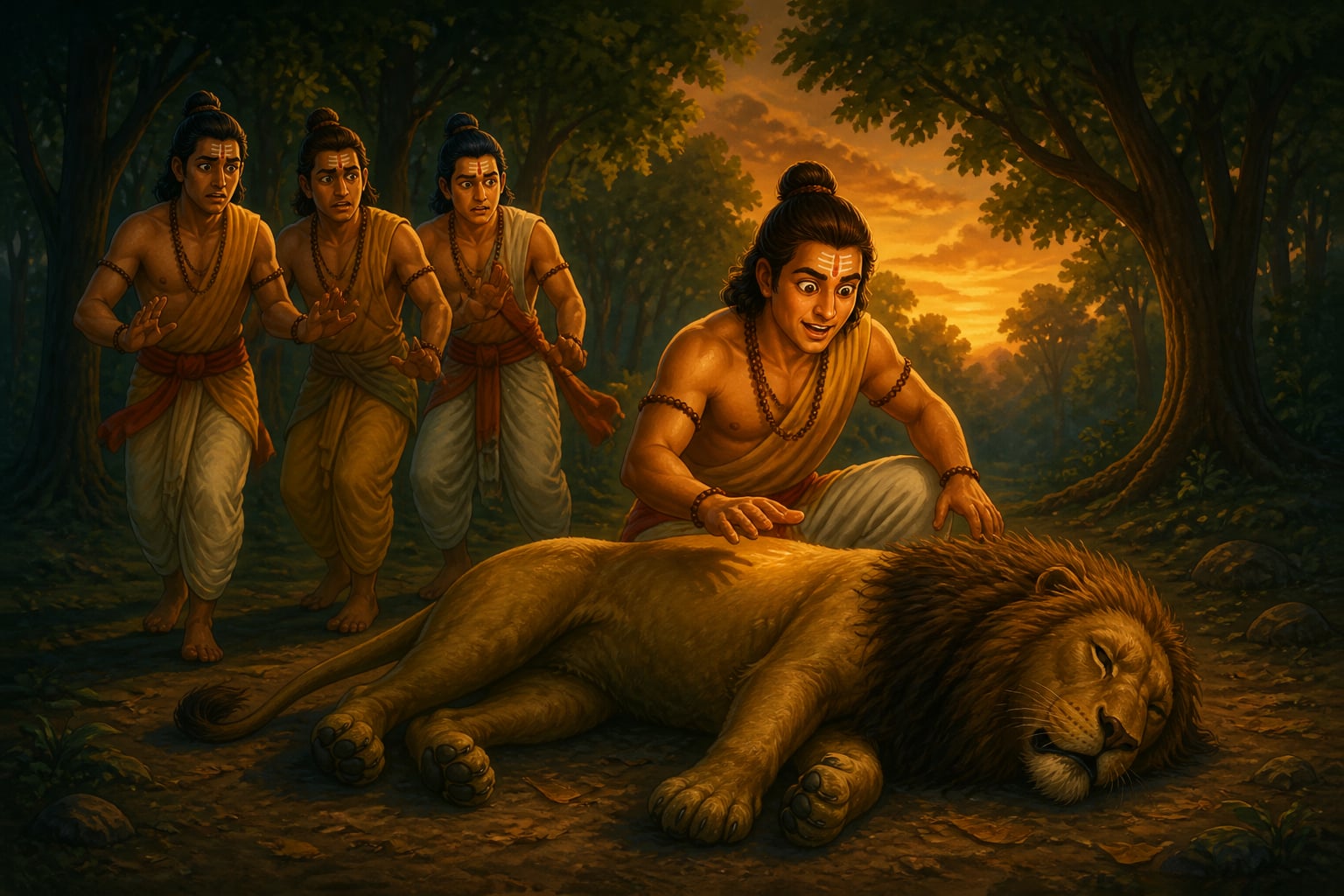
The fourth brother's hand hovers over the lion

Eager to show one another what they could do, they went into the forest and found a bit of bone lying on the ground, not knowing what animal it had come from. The first made flesh grow upon it. The second gave it skin and hair. The third formed its limbs. And now there lay before them, plain for anyone to see, the shape of a lion, whole and perfect, and lacking only breath. Then the fourth brother, to crown their display, breathed life into it.
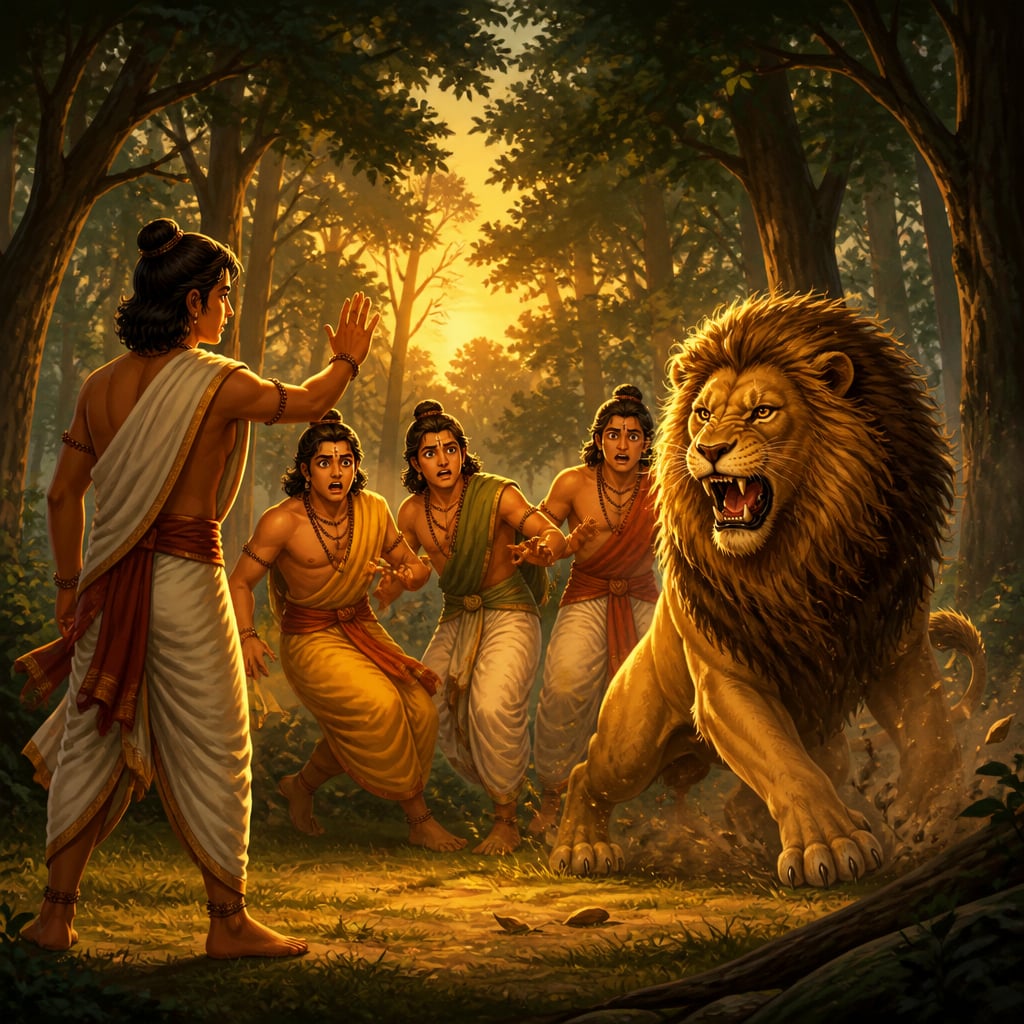
Four brothers watch their lion rise to life

The lion woke. It rose up on its four legs, shook out its great mane, and fell upon the four who had made it, and killed them all.

The Betaal's Riddle

"So, king," said the Vetala. "Four brothers made a lion between them, and it killed all four. Now tell me, which of them was guilty of their deaths? Each did his part. Each lent his skill. Where does the fault lie?

Answer, if you know. You know the rules."

You Be the Judge

Stop here, before the king speaks. Four men, four skills, one lion, four bodies. The easy answer is that they were all equally to blame, or all equally foolish; they built the thing together, and together they died of it. But the king does not split the blame four ways. He finds one man guilty and sets the other three free. Which one, and why?

Vikram's Verdict

"The one who gave it life," said Vikramaditya. "He alone was guilty. The other three go free.

"Here is the reason. The first three worked in the dark. A scrap of bone, and one clothed it in flesh, one in skin and hair, one shaped its limbs, and not a single one of them knew, as he did his part, what animal he was making. They were building blind. You cannot hold a man guilty for a danger he had no way of seeing, and so their ignorance clears them.

"But by the time the fourth brother took his turn, everything had changed. The body was finished but for the last breath, and it lay there in plain view: unmistakably a lion, a beast that anyone alive can see is death on four legs. He was the only one of the four who acted with his eyes open. He saw exactly what it was, and he gave it life regardless, to crown the display of their skill. The danger that had been hidden from the others was laid out plainly before him, and he chose to wake it. The guilt of all four deaths is his, and his alone."

The corpse was gone from his shoulder, back to the branch.

The Dharma

This verdict draws a line that matters more than almost any other in the weighing of blame, and it draws it exactly where knowledge enters. The first three did dangerous work, and it killed them, and still they carry no guilt, because they could not see what they were doing. The fourth did the same kind of work, one more step in the same sequence, and he carries all the guilt, because by his turn the danger was plain, and he acted anyway.

Awareness is what turns a contribution into a culpability. Real and unavoidable ignorance exempts; but the moment you can see where a thing is heading, and you push it forward regardless, the outcome becomes yours. And notice what moved the fourth brother: not need, not malice, but darpa, the wish to show off, to set the final flourish on the group's cleverness. The most dangerous acts are often not the wicked ones but the vain ones, done to display a skill, with the warning in plain sight and pride shouting it down.

The old poets put it in a single line: do not do any deed rashly, for want of discernment is the home of the greatest calamities. The fourth brother had discernment enough to see that it was a lion. What he lacked was the discernment to stop.

In Your World

When something goes badly wrong through many hands, we tend to do one of two things, and both are mistakes. We spread the blame evenly across everyone who touched it, or we pin it on whoever is most visible or most junior. The king shows a better way. Ask instead: at the decisive moment, who could actually see where this was going? The blame belongs there, with the person who held the full picture and moved ahead anyway, not with the ones working blind on their own small piece.

And turn it on yourself, for that is the more useful half. Often you will be one of the first three brothers, doing your part without seeing the whole, and for that you are not to blame. But sometimes you will be the fourth. Sometimes the danger will be plainly visible, the lion already lying there complete, and everything in you will still want to add the final touch, to prove that you can, to finish the clever thing you started. That is the moment to put your skill down. The measure of real judgment is not whether you can do the impressive thing. It is whether you can see the lion, and choose not to wake it.

Reflection

  • You judged the four before the king spoke. Did you spread the blame across all of them, or did you look for the one who could actually see what he was doing?
  • In a failure you were part of, who actually held the full picture at the decisive moment? Did the blame land there, or on someone more visible or more junior?
  • Where have you, or someone you know, pushed ahead with something risky mainly to show what you could do, ignoring a warning you could already see?

More in The Finest Distinctions

All lessons in The Finest Distinctions ยท Vikram & Betaal ebook course