The Flag at Stuttgart
Madame Bhikaji Cama at Stuttgart, 22 August 1907: the first flag of a free India raised abroad, and the apology she refused for thirty years
On 22 August 1907 Bhikaji Cama, a Parsi from Bombay who had nursed plague patients in 1896, unfurled a flag of Indian independence before a thousand delegates at the Socialist Congress in Stuttgart. From Paris she was the underground's treasurer, funding Bande Mataram and Madan's Talwar and moving revolvers in book covers and toys. She came home in November 1935 only after signing a promise to hold no meetings, and died in Bombay on 13 August 1936.
The Woman Who Stood Up at Stuttgart
It is 22 August 1907, in a hall at Stuttgart in Germany. Nearly a thousand delegates from across the world are sitting through the long speeches of the Second International Socialist Congress. Somewhere among the Russian delegates is a man called Vladimir Lenin, still ten years away from his revolution.
A woman gets up to speak. She is forty-five, Parsi, from Bombay. She is wearing a sari with an embroidered border, the edge drawn over her head. Her name is Bhikaji Rustom Cama.
She speaks about famine, about taxes, about the money leaving India every year. Then she asks the hall to help free "one fifth of the whole human race." At the end she takes out a folded piece of silk and opens it.
"This flag is of Indian independence. Behold it is born. It is already sanctified by the blood of martyred Indian youths. I call upon you, gentlemen, to rise and salute this flag of Indian independence."
It is the first time a flag of a free India has been raised anywhere outside India. She has come a long way from a hospital ward in Bombay to reach this hall, and she has twenty-eight more years of exile ahead of her. The interesting part of her story is not the flag. It is the price she refused to pay to come home.
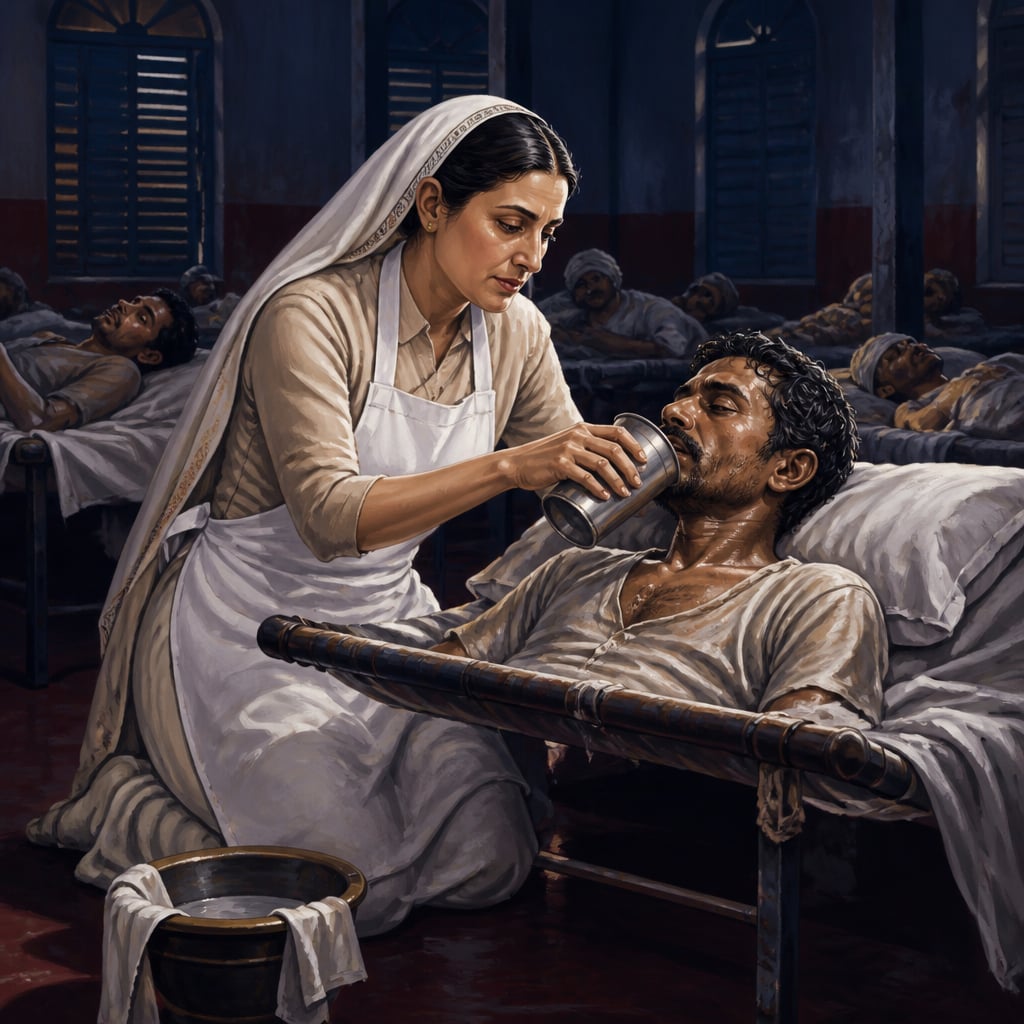
A White Apron in Bombay
Bhikaji Patel was born in Bombay on 24 September 1861, into a wealthy Parsi family. Her father Sorabji Framji Patel was a merchant and a lawyer. She was sent to school, she read newspapers, and by her twenties she was arguing politics with visiting Englishmen. She married Rustom Cama on 3 August 1885. It was not a happy marriage. His family were loyal to the British; she was heading the other way.