Ganeshkhind Road
The Chapekar brothers and 22 June 1897: the plague search parties, the wrong carriage, and the two years that hanged all three
On the night of Queen Victoria's Diamond Jubilee, 22 June 1897, Damodar and Balkrishna Chapekar shot the plague committee's chairman W.C. Rand and Lieutenant Ayerst on Ganeshkhind Road in Pune. Damodar's jail autobiography, seized and translated by the police, is why we know what the brothers did with that evening. Within two years all three brothers were hanged, the plague committee's methods had not changed, and the underground had learned that the pistol in the dark was not the answer.
The Culvert on Ganeshkhind Road
It is the night of Tuesday, 22 June 1897. Government House at Ganeshkhind, outside Pune, is lit up for Queen Victoria's Diamond Jubilee. Sixty years on the throne. There are fireworks over the grounds and carriages waiting in a line on the dark road outside.
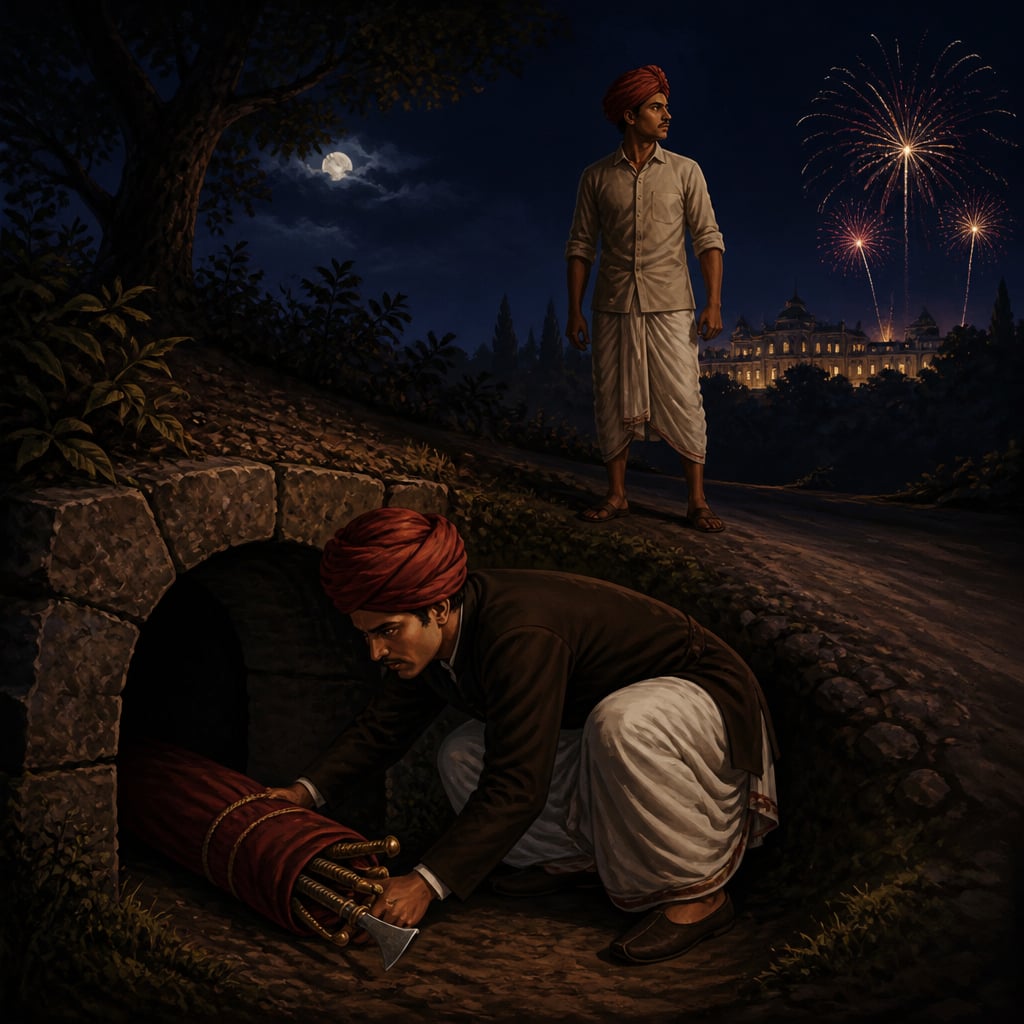
Two brothers have walked out along that road earlier in the evening. Damodar Hari Chapekar is twenty-seven. His brother Balkrishna is about twenty-four. They pick a spot beside a yellow bungalow on the road back to the city, where the carriages will have to slow. Damodar's own account, written later in jail, says they hid their weapons under a stone culvert near that bungalow before walking up to the Government House gate.
They have swords, pistols and a hatchet. They have chosen this night for one reason. The man they want will be at the party, and on the way home his carriage will pass this culvert.
His name is Walter Charles Rand. He is a civil servant, and since March he has been chairman of the Special Plague Committee of Pune.
Why Pune Wanted Rand Gone
The plague had reached Pune in 1896. It came off the ships at Bombay and moved inland along the railway, and it killed fast. Nobody yet knew that the fleas on rats carried it. The government's answer was force.
Rand's committee was given soldiers, several hundred of them, mostly British troops. They went house to house through the city. What the city remembered was not the medicine. It was the method:
- Soldiers entering homes in boots, including the kitchen and the puja room, where outdoor shoes never go
- Women examined for plague swellings by British soldiers and orderlies, in front of their families
- Household goods dragged out and burned, roofs opened up, whole streets limewashed
- The sick carried off to segregation camps that people believed nobody came back from