Nashik, 21 December 1909
Anant Kanhere, seventeen, shoots Collector Jackson at a farewell play, and the Nasik case traces the pistol back to Highgate
On 21 December 1909 Anant Laxman Kanhere, seventeen, shot A.M.T. Jackson, the Collector of Nashik, at a farewell play in the Vijayanand theatre. The Browning pistol was one of twenty carried from India House to Bombay in a cook's trunk, and the Nasik Conspiracy Case that followed destroyed Abhinav Bharat. Kanhere, Krishnaji Karve and Vinayak Deshpande were hanged at Thane on 19 April 1910. Babarao Savarkar, transported for life a year before his brother, had asked for those pistols to be kept away from Nashik.
The Farewell Play
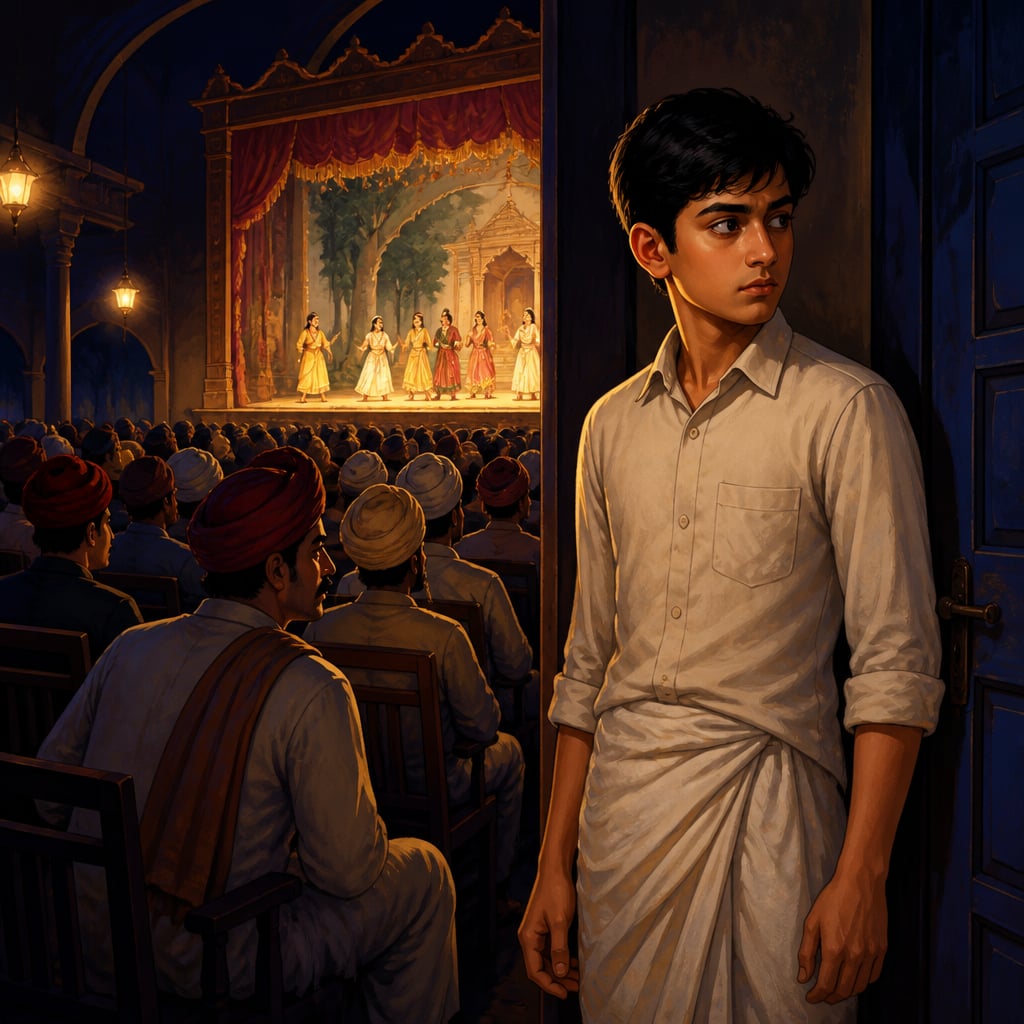
It is Tuesday, 21 December 1909, early evening, at the Vijayanand theatre in Nashik. The Kirloskar Natak Mandali is about to put on Sangeet Sharada, a musical play, and the young Bal Gandharva is playing the girl Sharada. The hall is filling. The occasion is a farewell. The Collector of Nashik has been promoted to Bombay, and the town has arranged this evening in his honour.
Near the door stands a boy in ordinary clothes. He is seventeen. He arrived from Aurangabad on the afternoon train and came to the theatre from a room where handlooms are worked. In his clothes he has a Browning pistol, loaded for him a few hours earlier. In his pocket there is also a packet of poison and a sheet of paper he copied out that evening in another man's hand. The heading on it is three words: murder for murder.
His name is Anant Laxman Kanhere. He has been shown the Collector twice, at the office, so that he will not shoot the wrong man. He has been taken twice at dawn to an empty spot outside the town and taught how to hold the pistol.
A.M.T. Jackson comes in. Kanhere steps forward and fires four shots. Jackson dies at once. Hands take hold of the boy, the poison is never used, and by the end of that night he has made a statement to the police.
The man he killed read Sanskrit and Marathi, wrote on Indian history and folklore, and was called Pandit Jackson by people in the town. The boy who killed him had never met him. What connects them is a parcel of pistols, a set of oaths and a court record that survives in full. This lesson follows all three, and it does not make the shot look easy or clean.