The Long War of Tatya Tope
Kanpur in winter, Gwalior in June, then ten months and four provinces that no British column could close
Tatya Tope commanded Nana Sahib's forces at Kanpur, drove a British general into his own entrenchment in November 1857, and after Jhansi, Kalpi and Gwalior lost every fixed place he held. From June 1858 to April 1859 he ran a war with no base at all, across Malwa, Gujarat and Rajputana, with six British columns hunting him at once. He was taken asleep in the Paron forest on 7 April 1859 after Man Singh of Narwar was bought, and hanged at Sipri eleven days later. Mardan Singh of Banpur, who fought beside him and lost his state, is carried inside this lesson.
The Sleeping Camp at Paron
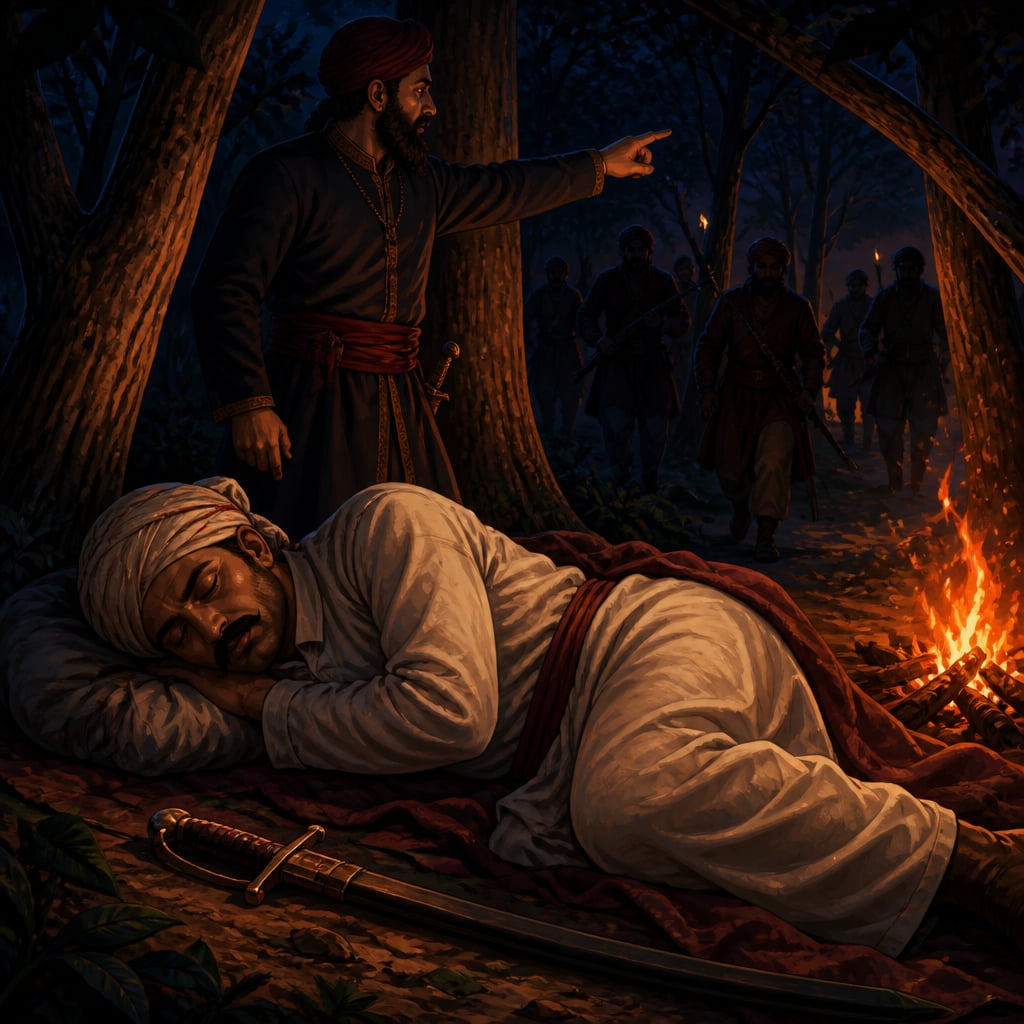
It is the night of 7 April 1859, in the Paron forest, in the broken country south west of Gwalior. A man of forty five is asleep in a small camp under the trees. He has a few followers left, some horses, and no army. Two years ago he commanded twenty thousand men and forty guns.
Around the camp, soldiers move in without a shot. They have been guided there by the man who gave him shelter, Man Singh, the Raja of Narwar, who has been promised his position back. The sleeping man is woken, bound, and taken away. His name is Ramachandra Panduranga Yewalkar, and everyone in central India calls him Tatya Tope.
Eleven days later he will be hanged at Sipri, the town we now call Shivpuri. What makes him worth a lesson is not the hanging. It is the ten months before it. From June 1858 to April 1859 he had no fort, no treasury and no fixed army. In those ten months he kept six British columns chasing him across four provinces, and never once let them pin him down. The Raj could beat him in every battle. It could not find him.
Bithur, Kanpur, and the Winter Counter Attack
Tatya was born in 1814 at Yeola, near Nasik, and grew up in the household of Nana Sahib at Bithur, near Kanpur. The Company had refused Nana Sahib the pension it had paid his adoptive father, the last Peshwa. Tatya was not a soldier by training. He was the man who ran things.
When Kanpur rose in June 1857 he was there. By November he was doing something no other 1857 commander managed. He took a beaten cause and mounted a planned counter attack, in winter, against an army that had already won.