Northeast India and the Insurgency Industry
The Church-Separatism Nexus and Ethnic Identity Weaponization
Northeast India's insurgencies were not spontaneous tribal rebellions. They were systematically engineered through three converging forces: missionary networks that converted ethnic pride into separatist ideology, Chinese and Pakistani state actors who armed and trained insurgent groups through Myanmar corridors, and academic frameworks that reframed tribal distinctiveness as racial incompatibility with India. This lesson maps the insurgency industry's architecture and its antidotes.
See It Today: The Map That Tells the Story
Pull up a religious demographics map of Northeast India and overlay it with a map of insurgency hotspots from 1950 to 2010. The correlation is striking. Nagaland, where Baptist missionaries converted over 87% of the population, produced the longest-running insurgency in Indian history. Mizoram, where Presbyterian missionaries achieved near-total conversion, saw a full-scale separatist war from 1966 to 1986. Manipur's hill districts, where Christian conversion rates are highest, are the epicenters of ethnic separatism. Tripura's NLFT explicitly mandated Baptist conversion as a condition of tribal membership.
This is not coincidence. It is architecture.
Northeast India represents the most concentrated example of faultline engineering on Indian soil. Three forces converge here with surgical precision: missionary networks that built the institutional infrastructure for separatism, foreign state actors (primarily China and Pakistan) that provided the weapons and training, and an academic-activist ecosystem that manufactured the ideological justification. Each force is potent alone. Together, they created an insurgency industry that has consumed over 50,000 lives and billions of rupees in six decades.
The Church-Separatism Nexus: Nagaland as Ground Zero
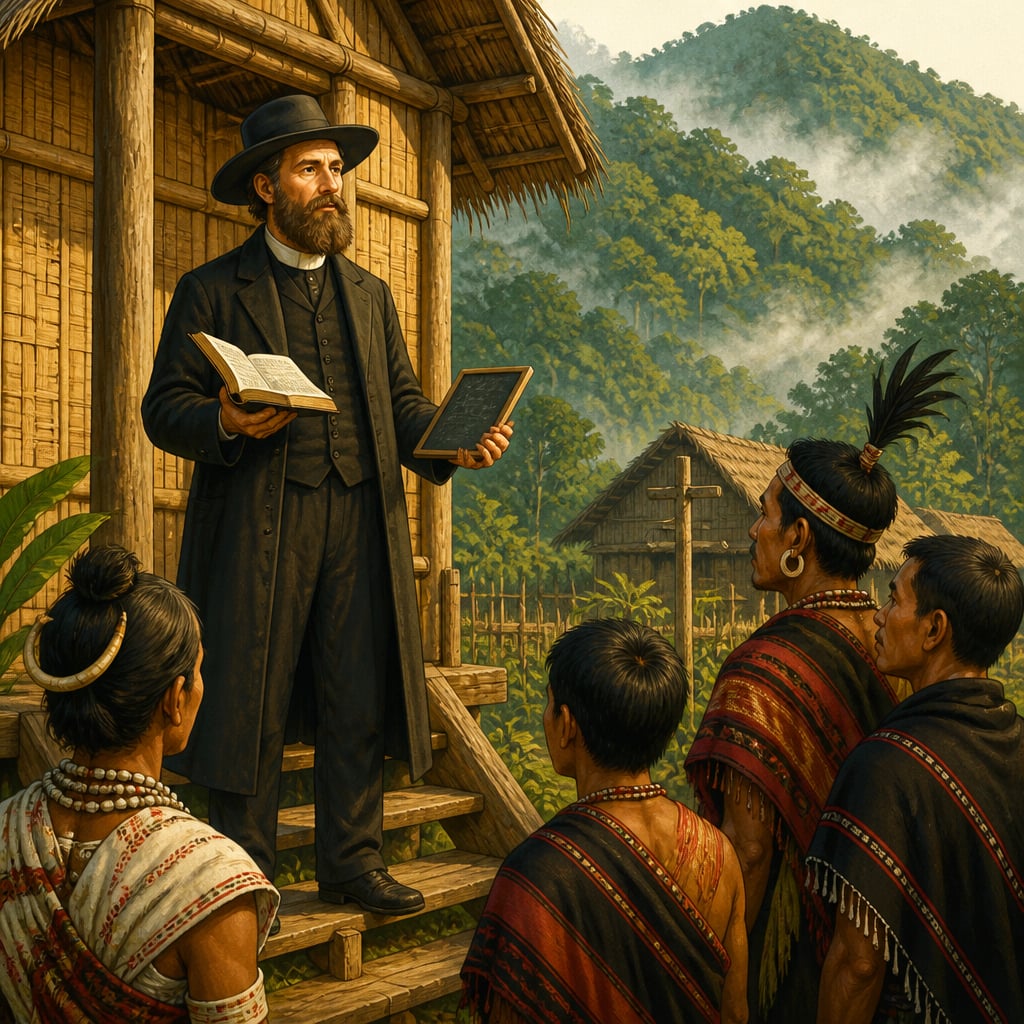
The story begins in 1872, when American Baptist missionary E.W. Clark arrived in the Naga Hills. What followed was not merely religious conversion. It was civilizational re-engineering.
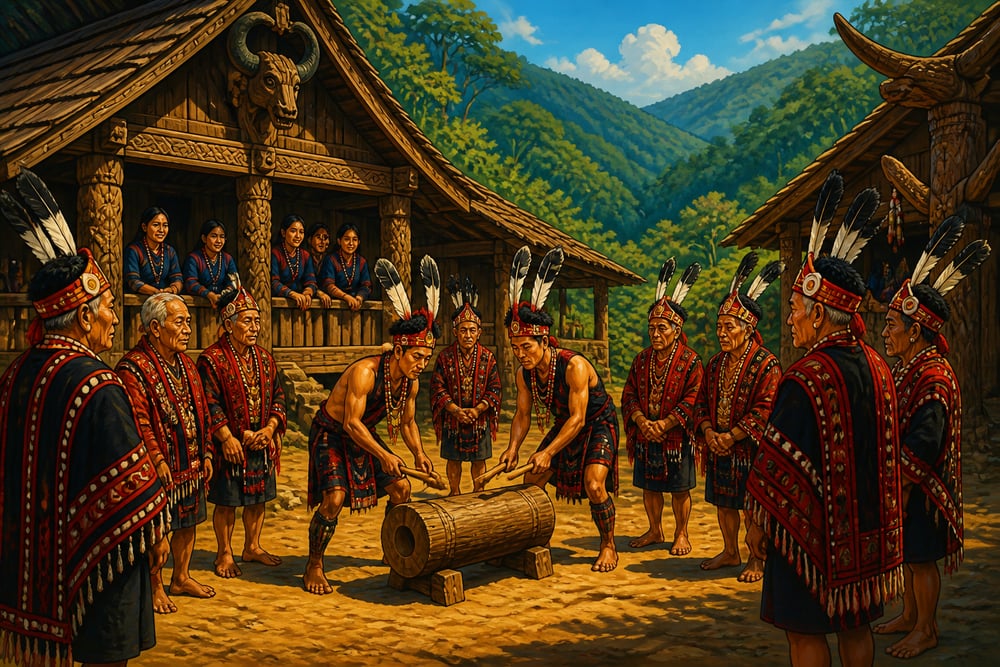
The Naga tribes had practiced animist traditions deeply connected to the land, ancestor worship, and inter-tribal customs for centuries. These traditions, while diverse across the sixteen major Naga tribes, shared common civilizational threads with broader Indic culture: reverence for nature, ancestor veneration, ritual sacrifice, and community governance through councils of elders.
Baptist missionaries systematically dismantled this framework. Traditional practices were labeled "savage" and "demonic." Converts were required to abandon ancestral rituals, destroy sacred objects, and sever ties with non-converted family members. Mission schools, the only modern education available, taught in English, used Western curricula, and embedded a specific worldview: that Nagas were a distinct people with no civilizational connection to India.
This is the critical mechanism. The missionaries did not just change what Nagas believed. They changed who Nagas believed they were. A Naga who had understood himself as part of a broader hill-plains civilizational continuum was re-educated to see himself as fundamentally different from, and oppressed by, "Hindu India."
By Indian independence in 1947, roughly 50% of Nagas had converted to Christianity. The Naga National Council (NNC), led by A.Z. Phizo, declared Naga independence on August 14, 1947, one day before India's own independence. Phizo's rhetoric was explicitly civilizational: Nagas were a Christian people who could not belong to a Hindu nation.
The insurgency that followed was sustained by church infrastructure at every level. Baptist churches served as communication networks, community organizing platforms, and fundraising centers. Church leaders provided moral legitimacy to the armed struggle. When the NNC splintered, the National Socialist Council of Nagaland (NSCN) carried forward the same church-state fusion. The NSCN(I-M) faction, led by Isak Chishi Swu and Thuingaleng Muivah, explicitly envisioned "Nagalim" as a Christian sovereign state.
The pattern is precise: missionary education created a new identity, that identity generated separatist politics, separatist politics required armed insurgency, and the church provided the institutional infrastructure for all three stages.
The Arms Pipeline: China's Northeast Strategy
Separatist ideology needs weapons. In Northeast India, those weapons came primarily through a corridor that ran from southern China through Myanmar's Sagaing Division and into India's border regions.
China's involvement in Northeast Indian insurgency began in the early 1960s, driven by the 1962 Sino-Indian War and Mao Zedong's broader strategy of supporting "wars of national liberation" to destabilize non-communist neighbors. The mechanism was systematic.
Naga insurgent leaders, including Thuingaleng Muivah, traveled to China's Yunnan province for military training. The People's Liberation Army provided weapons, explosives, and tactical instruction. Training camps operated in Yunnan through the late 1960s and 1970s. Chinese instructors taught guerrilla warfare, ambush tactics, and political mobilization.
The pipeline did not serve Nagas alone. ULFA (United Liberation Front of Assam) operatives received Chinese training. The People's Liberation Army of Manipur (distinct from China's PLA) maintained contacts with Chinese intelligence. The People's Revolutionary Party of Kangleipak (PREPAK) sourced weapons through the same Myanmar corridor.
Myanmar's ungoverned border regions were the crucial link. The 1,643-kilometer India-Myanmar border runs through dense jungle and mountainous terrain with minimal infrastructure. Myanmar's own ethnic insurgencies (Kachin Independence Army, Chin National Front) created zones of lawlessness where Indian insurgent groups could maintain camps, store weapons, and train recruits with effective impunity.
Pakistan's ISI added a second pipeline. Using Bangladesh as a staging ground, particularly during periods of BNP-Jamaat governance sympathetic to Islamist and anti-India causes, the ISI funneled arms and funds to ULFA, NSCN, and other Northeast groups. The 2004 Chittagong arms haul, which intercepted ten truckloads of weapons including 1,500 submachine guns, 840 rocket launchers, and 300 rifles, exposed the scale of this operation. The consignment was destined for ULFA through a network that linked ISI, Bangladeshi intelligence, and ULFA's external leadership.
The geopolitical logic is straightforward. China wanted to keep India destabilized along its northeastern border to prevent India from projecting power in Southeast Asia. Pakistan wanted to open a second front beyond Kashmir. Both found willing proxies in insurgent groups whose separatist ideology aligned with their strategic interests. The church-created separatist identity provided the human material. China and Pakistan provided the military material.
Ethnic Distinctiveness Weaponized: The Bodo Escalation Ladder
The Bodo movement in Assam illustrates a different but equally instructive pattern: how genuine cultural grievances are systematically escalated from legitimate assertion to weaponized separatism.
The Bodos are the largest plains tribal group in Assam, with a population of approximately 1.5 million. Their grievances were real. Assamese-language dominance in education and administration marginalized Bodo language and culture. Economic development bypassed tribal areas. Land alienation through migration (both from other Indian states and from Bangladesh) threatened Bodo demographic security.
These are legitimate issues that any democracy should address through policy. What happened instead was escalation through four distinct stages.
Stage 1: Cultural assertion (1960s-70s). The All Bodo Students' Union (ABSU) demanded recognition of the Bodo language in Devanagari script, Bodo-medium schools, and cultural autonomy. These were reasonable demands within the Indian constitutional framework.
Stage 2: Political mobilization (1980s). Under Upendra Nath Brahma, ABSU launched the "Divide Assam Fifty-Fifty" movement, demanding a separate Bodoland state. The demand shifted from cultural recognition to territorial sovereignty. External actors began providing ideological support: the framing of Bodos as an "indigenous people" colonized by Assamese settlers drew from Western indigenous rights frameworks that had little connection to actual Bodo history.
Stage 3: Armed insurgency (1990s). The Bodo Liberation Tigers (BLT) and National Democratic Front of Boroland (NDFB) took up arms. The NDFB established links with NSCN, receiving training and weapons through the Myanmar corridor. Church influence entered the Bodo movement at this stage, with conversion activity accelerating in conflict-affected areas. The NDFB's Ranjan Daimary had documented contacts with ISI and Bangladeshi networks.
Stage 4: Ethnic violence as tool (2000s-2010s). The Bodo insurgency produced waves of ethnic violence, most devastatingly the 2012 Bodo-Muslim clashes that displaced over 400,000 people and the 2014 Bodo-Adivasi massacres. Violence that began as separatist insurgency devolved into communal bloodshed that served no one's interests except those who benefited from Indian instability.
The escalation ladder is the mechanism. At each stage, external actors pushed the movement further from policy solutions and closer to civilizational fracture. Genuine grievances were not addressed through democratic means but instead channeled into separatist frameworks designed by actors whose interests had nothing to do with Bodo welfare.
The Bodo Accord of 2020, which created the Bodoland Territorial Region within Assam, represents a partial resolution. It addressed territorial autonomy and cultural recognition within the Indian framework. But the damage of the escalation, the thousands of lives lost, the ethnic cleansing, the generational trauma, cannot be undone.
The Manufactured Incompatibility
The deepest weapon in the insurgency industry's arsenal is the claim that Northeast India is fundamentally incompatible with the rest of India. This claim operates at multiple levels.
Racial framing. Academic literature categorizes Northeast Indians as "Mongoloid" (a term now rejected by physical anthropologists) to establish racial separateness from "Aryan" or "Dravidian" India. This racial taxonomy, borrowed from 19th-century European anthropology, ignores centuries of cultural, linguistic, and genetic exchange between hill and plains populations.
Religious framing. The church-separatism nexus frames the conflict as "Christian tribes versus Hindu India." This erases the pre-Christian traditions of Northeast peoples, which shared significant commonalities with broader Indic practices: nature worship, ancestor veneration, oral epic traditions, and community ritual.
Colonial administrative framing. The British deliberately isolated Northeast India through the Inner Line Permit system (1873) and the "Excluded" and "Partially Excluded" areas classification. This administrative separation, designed to prevent Indian nationalist influence from reaching the hills, created a bureaucratic faultline that outlasted colonial rule.
Each framing works to sever the civilizational connections between Northeast India and the rest of Bharat. The reality these framings obscure is that the Naga Morung (youth dormitory) tradition mirrors the gurukula system. Khasi matrilineal society reflects patterns found across India. Manipuri Ras Lila is one of the most refined expressions of Vaishnavite dance tradition. The Ahom kingdom's adoption of Hindu practices demonstrates voluntary civilizational integration, not colonial imposition.
The insurgency industry requires manufactured incompatibility to function. If Northeast peoples see themselves as part of Indian civilization, with distinct and valued regional expressions, the separatist project loses its ideological foundation. This is why the identity war matters more than the arms pipeline. You can cut off weapons. You cannot easily reverse a generation of miseducation.

The Antidote: Development, Integration, and Civilizational Reconnection
Northeast India's trajectory has shifted significantly since the early 2000s, and dramatically since 2014. Several factors contributed.
Infrastructure as integration. Roads, railways, air connectivity, and digital infrastructure have done more to counter separatism than any military operation. When a Naga student can reach Delhi in hours rather than days, when a Mizo entrepreneur can access national markets, the "separate nation" argument loses practical appeal. The Bogibeel Bridge, the Dhola-Sadiya Bridge, and ongoing rail projects are physical stitches in a civilizational fabric.
Ceasefire and dialogue. The NSCN(I-M) ceasefire of 1997 and subsequent peace talks, the Bodo Accord of 2020, and multiple smaller agreements demonstrate that political solutions within the Indian framework are possible.
Act East Policy. Repositioning Northeast India from a security periphery to a gateway to Southeast Asia transforms the region's self-perception from marginalized frontier to strategic asset.
Cultural reconnection. The revival of pre-Christian traditions among some Naga and Mizo communities, the recognition of tribal festivals as national heritage, and academic work documenting the civilizational connections between Northeast and mainland India all contribute to undermining the manufactured incompatibility thesis.
The lesson from Northeast India is that the insurgency industry can be defeated, but only through a combination of security (cutting arms pipelines), development (addressing genuine grievances), and civilizational reconnection (demonstrating that diversity within civilization is India's strength, not its weakness). Military force alone cannot defeat a faultline. You must also heal the fracture that made the faultline exploitable.
Case studies
Nagaland: How Baptist Infrastructure Became Separatist Infrastructure
In 1872, American Baptist missionary E.W. Clark arrived in the Naga Hills. Over the next seventy-five years, Baptist missions built schools, hospitals, and community halls across the Naga territories, converting roughly 50% of Nagas by 1947 and over 87% by 2000. These institutions taught Nagas in English using Western curricula that embedded a specific worldview: that Nagas were a distinct people with no civilizational connection to India. On August 14, 1947, one day before Indian independence, the Naga National Council under A.Z. Phizo declared Naga independence, explicitly framing Nagas as a Christian people who could not belong to a Hindu nation. The insurgency that followed lasted over six decades.
The Arthashastra's Bheda principle operated through institutional capture rather than direct military intervention. Baptist missionaries followed the five-step weaponization process: identify (tribal distinctiveness), amplify (label traditional practices as 'savage'), rigidify (create a new Christian-Naga identity through mission schools), fund (church infrastructure provided organizational capacity), and provide ideology ('Christian nation' framework that made reconciliation with India seem impossible). Kautilya would recognize this as Bheda executed through the epistemological and ontological domains simultaneously.
The NSCN(I-M) faction, led by Isak Chishi Swu and Thuingaleng Muivah, carried forward the church-state fusion for decades, envisioning 'Nagalim' as a Christian sovereign state. The 1997 ceasefire and subsequent peace talks have moved toward resolution within the Indian framework, but the identity displacement caused by over a century of missionary education remains a generational challenge.
Institutional infrastructure is identity infrastructure. Whoever controls schools, hospitals, and community spaces controls the civilizational self-understanding of the next generation. The conversion was never just religious. It was civilizational.
The Nagaland pattern repeats wherever mission schools are the only source of modern education in tribal areas. The antidote is not banning mission schools but building alternative institutions that provide modern education while strengthening rather than severing civilizational identity.
Nagaland's Christian population grew from near zero in 1872 to approximately 88% by 2011. The Naga insurgency, beginning in 1947, is the longest-running insurgency in Indian history, spanning over seven decades before significant ceasefire progress.
China's Northeast Arms Pipeline: State-Level Civilizational Warfare
Following the 1962 Sino-Indian War, China systematically armed and trained Northeast Indian insurgent groups as part of Mao Zedong's strategy of supporting 'wars of national liberation.' Naga insurgent leader Thuingaleng Muivah traveled to China's Yunnan province for military training. The People's Liberation Army provided weapons, explosives, and tactical instruction through training camps that operated in Yunnan through the late 1960s and 1970s. The pipeline extended beyond Nagas: ULFA, the PLA of Manipur, and PREPAK all received Chinese support through Myanmar's ungoverned Sagaing Division. Pakistan's ISI added a parallel pipeline via Bangladesh, exposed dramatically by the 2004 Chittagong arms haul that intercepted ten truckloads of weapons destined for ULFA.
Kautilya's Mandala theory identifies the natural strategic dynamic: the neighbor is the likely adversary, and the neighbor's neighbor is the likely ally. China, as India's northern neighbor and rival, followed textbook Kautilyan strategy by supporting India's internal enemies. The Arthashastra explicitly discusses Parapaksha-kshobhana (agitating the enemy's allies and subjects) as a standard strategic operation. What makes this case distinctive is the coordination between two hostile neighbors, China and Pakistan, creating a pincer of proxy warfare.
The arms pipeline sustained insurgencies that might otherwise have exhausted themselves. By the 2000s, improved India-China relations, Myanmar's own military operations against border insurgents, and India's diplomatic pressure on Bangladesh significantly degraded the pipeline. The 2015 cross-border surgical strike into Myanmar targeting insurgent camps signaled India's willingness to act beyond its borders.
Separatist ideology without weapons is a political movement. Add an arms pipeline from hostile state actors, and it becomes an insurgency industry. Cutting the supply lines is as important as addressing the grievances that create demand.
The China pipeline model demonstrates how great powers use proxy warfare to destabilize rivals without direct confrontation. Understanding this pattern is essential for any civilization that shares borders with strategic competitors.
The 2004 Chittagong arms haul intercepted 1,500 submachine guns, 840 rocket launchers, 300 rifles, 2,000 grenades, and 25,000 rounds of ammunition in a single shipment. The ISI-Bangladesh-ULFA network had been operating for years before this interception.
The Bodo Escalation Ladder: From Cultural Pride to Armed Separatism
The Bodos, Assam's largest plains tribal group with approximately 1.5 million people, had legitimate grievances: Assamese-language dominance marginalized Bodo culture, economic development bypassed tribal areas, and migration threatened demographic security. In the 1960s-70s, the All Bodo Students' Union (ABSU) demanded language recognition and cultural autonomy, reasonable demands within India's constitutional framework. By the 1980s, under Upendra Nath Brahma, demands escalated to 'Divide Assam Fifty-Fifty.' By the 1990s, the Bodo Liberation Tigers and National Democratic Front of Boroland took up armed insurgency, establishing links with NSCN and ISI-Bangladesh networks. By the 2000s-2010s, ethnic violence displaced over 400,000 people.
The Bodo case illustrates the Arthashastra's warning about the consequences of ignoring Prakrti-kopa (popular discontent). Kautilya teaches that a wise ruler addresses legitimate grievances through Sama (conciliation) and Dana (concessions) before they escalate to require Danda (force). The Indian state's failure to address Bodo cultural and economic demands at Stage 1 created the vacuum that external actors exploited at Stages 2-4. Each stage of escalation reduced the options available for peaceful resolution.
The Bodo Accord of 2020 created the Bodoland Territorial Region within Assam, addressing territorial autonomy and cultural recognition within the Indian framework. The accord demonstrates that political solutions are possible even after decades of violence. But the cost, thousands of lives lost, ethnic cleansing, and generational trauma, could have been avoided had grievances been addressed at Stage 1.
Genuine grievances are the fuel that insurgency industries exploit. Address the grievances early through democratic means, and you remove the fuel. Ignore them, and external actors will weaponize them into civilizational fractures.
The escalation ladder pattern is visible in multiple contexts globally. Movements begin with legitimate demands, get frustrated by state indifference, attract external sponsorship, and escalate beyond their originators' control. The pattern is predictable, which means it is preventable.
The 2012 Bodo-Muslim clashes displaced over 400,000 people in Assam. The Bodo Accord of 2020 came after five decades of escalating conflict, three armed groups, and multiple ethnic violence cycles, all originating from cultural demands that could have been addressed through policy in the 1960s.
Reflection
- Think about a community, region, or group you belong to that has genuine grievances against a larger system. How would you distinguish between addressing those grievances through democratic means versus allowing them to be weaponized by actors whose interests have nothing to do with your welfare?
- Why do you think identity displacement through education proved more powerful and durable than military force in creating Northeast India's insurgencies? What does this tell us about where civilizational battles are truly won or lost?
- Krishna's teaching on Svadharma warns against abandoning one's own path for another's. But what if a community's Svadharma included practices genuinely in need of reform? How does one distinguish between organic internal reform and externally imposed civilizational displacement?