BRI vs IMEC: Modern Silk Road Alternatives

The New Great Game for Trade Connectivity

Compare China's Belt and Road Initiative with India's connectivity projects and the IMEC corridor, understanding how ancient trade route patterns shape modern geopolitical competition.

Two Visions of Connectivity
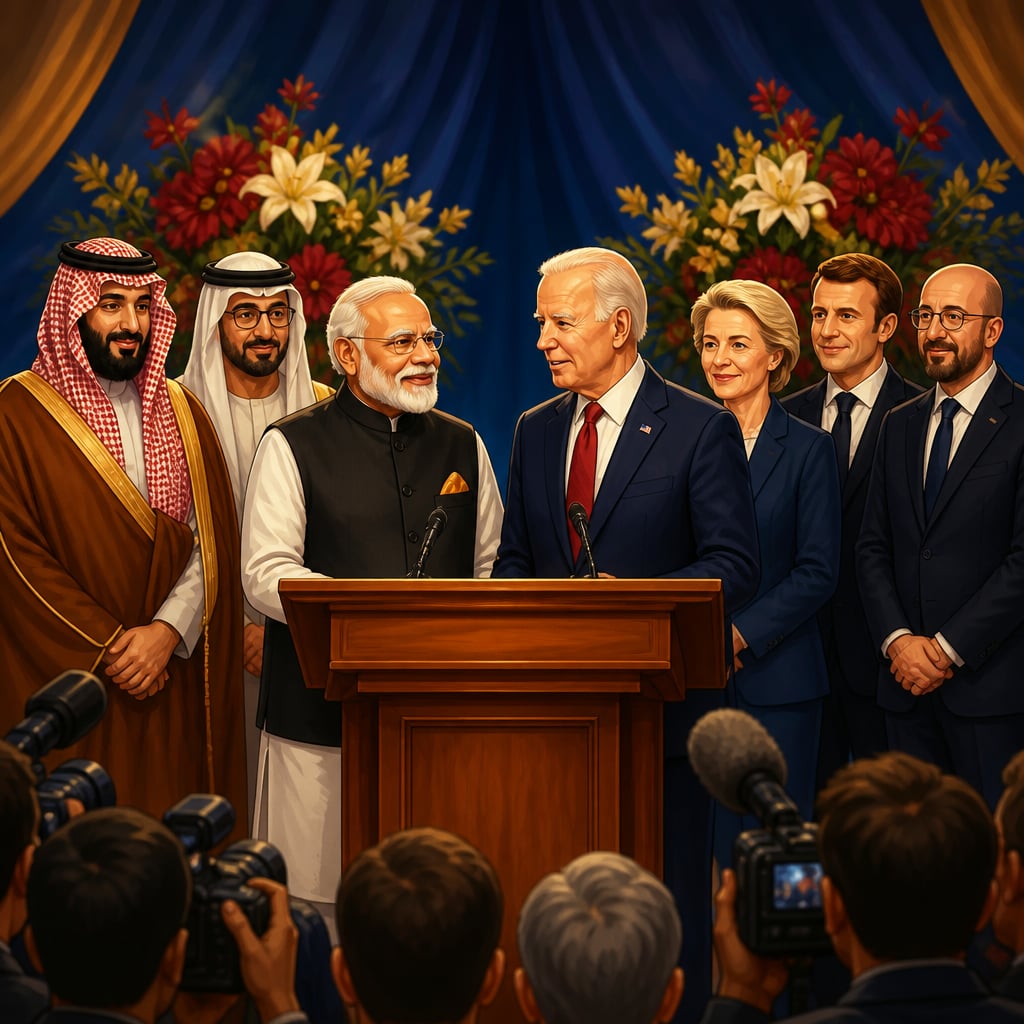
PM Modi and US President announcing IMEC at the G20

In September 2023, at the G20 summit in New Delhi, Prime Minister Modi and US President Biden stood together to announce the India-Middle East-Europe Economic Corridor (IMEC). The message was clear: a new trade route would connect India to Europe through the Middle East, offering an alternative to existing pathways, particularly China's Belt and Road Initiative.

The announcement marked a pivotal moment in what scholars call the "New Great Game", the competition to control Eurasian connectivity that echoes 19th-century imperial rivalries. But this time, the competition is over infrastructure and investment, not territory and armies.

The ancient Silk Road has been reborn, twice. Understanding both versions reveals how geography, economics, and geopolitics intertwine.

China's Belt and Road Initiative (BRI)
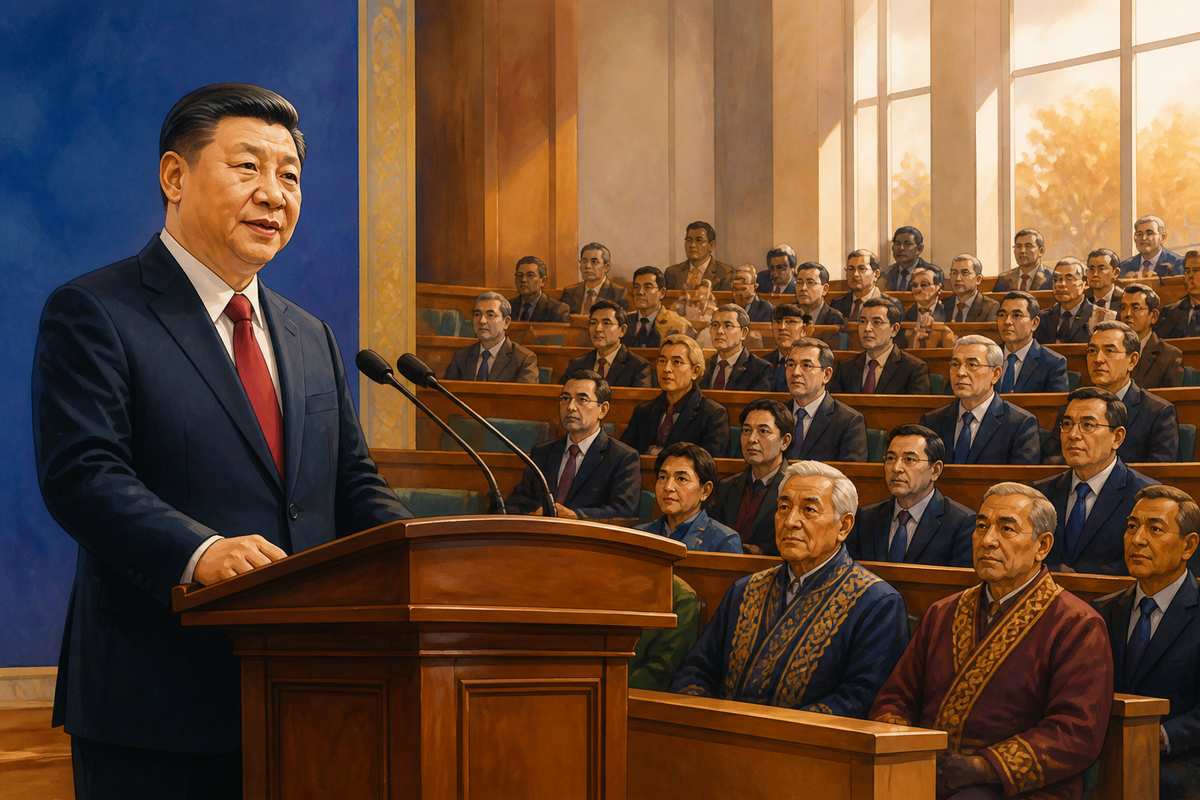
Xi Jinping unveiling the Belt and Road Initiative in Astana

Xi Jinping unveiled the Belt and Road Initiative in 2013 with a speech at Kazakhstan's Nazarbayev University. The initiative's name invokes the ancient Silk Road, deliberately connecting modern China to the glory of Han and Tang Dynasty commerce.

The BRI has two components:

The Silk Road Economic Belt (land routes): Railways, highways, and pipelines connecting China to Europe through Central Asia. Key projects include the China-Pakistan Economic Corridor (CPEC), the China-Central Asia-West Asia Corridor, and the New Eurasian Land Bridge.

The 21st Century Maritime Silk Road (sea routes): Port investments from Southeast Asia through the Indian Ocean to Africa and the Mediterranean. Key ports include Gwadar (Pakistan), Hambantota (Sri Lanka), Piraeus (Greece), and dozens of others.

By 2023, BRI had expanded to include 150+ countries with total investments estimated at $1 trillion+. It's history's largest infrastructure initiative.

The Strategic Logic of BRI

Why would China invest trillions in infrastructure across dozens of countries? The answers reveal strategic thinking with ancient echoes:

Export Overcapacity: China's construction industry needed new markets after domestic infrastructure buildout slowed. BRI provided outlets for Chinese steel, cement, and construction expertise.

Resource Security: Many BRI projects connect China to energy and mineral sources. Pipelines from Central Asia, railways from Africa, these reduce China's dependence on maritime routes that pass through waters patrolled by the US Navy.

The Malacca Dilemma: 80% of China's oil imports pass through the narrow Malacca Strait, which US forces could blockade in a crisis. BRI's land routes and alternative ports reduce this vulnerability.

Debt Diplomacy: Critics argue that BRI loans create dependence. When Sri Lanka couldn't repay loans for Hambantota Port, China gained a 99-year lease. Similar dynamics have played out in multiple countries.

Yuan Internationalization: BRI loans often require use of Chinese currency, gradually expanding the yuan's role in global trade, challenging US dollar dominance.

India's Counter: The IMEC Vision

The India-Middle East-Europe Economic Corridor (IMEC) announced in 2023 offers an alternative connectivity vision:

The Eastern Corridor: India to UAE via shipping The Northern Corridor: UAE to Europe via Saudi Arabia, Jordan, and Israel (rail)

IMEC's advantages over existing routes:

IMEC's geopolitical logic directly counters BRI:

India's Own Connectivity Initiatives

IMEC complements India's broader connectivity strategy:

International North-South Transport Corridor (INSTC): Connects India to Russia and Europe through Iran, a 7,200 km multimodal route reducing transit time from 40 days (current sea route) to 14 days.

Indian-operated Chabahar Port loading containers in Iran

Chabahar Port (Iran): India's answer to China's Gwadar, providing access to Afghanistan and Central Asia without Pakistan.

India-Myanmar-Thailand Trilateral Highway: Connecting India to ASEAN through road infrastructure, enabling "Act East" policy.

PM Gati Shakti: Rs 100+ lakh crore domestic infrastructure plan creating the internal connectivity that enables external trade.

Ancient Patterns, Modern Competition

The BRI vs IMEC competition echoes ancient Silk Road dynamics:

Junction Control: Just as the Kushan Empire prospered by controlling Silk Road convergence points, modern powers seek to control infrastructure junctions. China's String of Pearls ports, India's counter-investments, both seek junction positioning.

Alternative Routes: Ancient merchants developed alternative routes when primary paths became blocked or expensive. BRI and IMEC offer competing alternatives for Eurasian connectivity.

Value Addition vs. Transit: India's historical strength was value-addition, processing raw silk into finished goods. IMEC positions India similarly: not just transit point but manufacturing hub adding value to goods flowing between Asia and Europe.

Trust Infrastructure: Ancient trade flourished where trust infrastructure (guilds, sarayas) created reliability. Today's competition partly involves which system countries trust more, Chinese state capitalism or democratic partnerships.

The Debt Question

BRI's critics point to debt problems:

BRI's defenders note:

The truth lies somewhere between: BRI has delivered real infrastructure but on terms that benefit China; alternatives exist but are less advanced.

What Success Looks Like

For BRI, success means:

For IMEC, success means:

Both visions can partially succeed, they serve different markets and needs. But competition for influence will continue.

India's Strategic Position

India's geography creates both vulnerability and opportunity:

Vulnerability: BRI's encirclement strategy (CPEC through Pakistan, String of Pearls ports) threatens to isolate India from continental connectivity.

Opportunity: India is the only large economy that can offer an alternative to BRI. Without India, IMEC is just a route; with India, it's a manufacturing corridor.

Historical Echo: Ancient India prospered as the "indispensable" economy, the source of goods everyone wanted. Modern India seeks similar positioning: the manufacturing hub that makes connectivity valuable.

External Affairs Minister S. Jaishankar frames it clearly: "Connectivity is not just about physical infrastructure but about who controls the rules of the road."

Your Turn

The competition between BRI and IMEC will shape the global economy for decades. The outcomes affect where goods are made, how they move, which currencies dominate, and which values prevail in international commerce.

Ancient patterns recur: powers compete to control trade routes; geography determines which routes are viable; trust infrastructure determines which routes merchants choose; value-addition determines which hubs prosper.

As a citizen, worker, or investor, understanding these dynamics helps you anticipate shifts, in supply chains, job markets, and investment opportunities. The New Great Game will have winners and losers. Where do you want to be positioned?

Infrastructure as strategic asset, investments that create dependencies providing leverage beyond their commercial returns.

Modern scholars like Parag Khanna ('Connectography') argue that connectivity is the new power. Control of infrastructure may matter more than military strength in the 21st century.

India's geographic position makes it indispensable for any India Ocean connectivity. IMEC leverages this, India isn't just a user but a necessary node.

China's BRI investments exceed $1 trillion across 150+ countries. This infrastructure creates dependencies that translate into political influence, as Sri Lanka's Hambantota case demonstrates.

Competition and choice, alternatives reduce dependency and improve terms for users.

Economic theory emphasizes that monopoly power creates inefficiency and exploitation. Competition forces providers to offer better terms. The same applies to infrastructure.

Verses

मार्गस्य स्वामित्वं शक्तिः।

mārgasya svāmitvaṃ śaktiḥ |

Control of routes is power.

Infrastructure control creates dependencies. China's BRI and India's IMEC both seek the strategic leverage that route control provides, economic influence backed by physical infrastructure.

Arthashastra, Book 7, Chapter 1 (L.N. Rangarajan)

कर्मण्येवाधिकारस्ते मा फलेषु कदाचन।

karmaṇy-evādhikāras te mā phaleṣu kadācana |

Your right is to action alone, never to its fruits.

Process focus beats outcome focus. Countries that build genuinely useful infrastructure will succeed regardless of rivals' actions. Both BRI and IMEC will be judged by what they deliver, not what they promise.

Bhagavad Gita, Chapter 2, Verse 47 (Swami Sivananda)

Key figures

Zhang Qian

Chinese diplomat and explorer who opened the original Silk Road during the Han Dynasty. His missions to Central Asia (138-126 BCE and 119 BCE) established the trade routes that Xi Jinping's BRI explicitly invokes. · 164-113 BCE

S. Jaishankar

India's External Affairs Minister who has articulated India's connectivity strategy and the vision behind IMEC and other India-led initiatives. · Contemporary (b. 1955)

Halford Mackinder

British geographer and geostrategist who formulated the 'Heartland Theory' in 1904, arguing that control of Central Eurasia ('the World Island') would enable global dominance. · 1861-1947

Case studies

Chabahar vs Gwadar: The Port War for Central Asian Access

In 2016, India signed a landmark agreement with Iran to develop Chabahar Port, just 72 nautical miles from China's flagship BRI project: Gwadar Port in Pakistan. The two ports represent competing visions for connecting Central Asia to global markets. **Gwadar Port** (China-Pakistan): Part of the $62 billion China-Pakistan Economic Corridor (CPEC), Gwadar gives China a warm-water port on the Arabian Sea, reducing dependence on the Malacca Strait. Goods could travel overland from Kashgar to Gwadar, bypassing thousands of nautical miles. For Pakistan, CPEC promised infrastructure investment and economic development; for China, it provided strategic access and reduced maritime vulnerability. **Chabahar Port** (India-Iran): India's counter-investment offers landlocked Afghanistan and Central Asia an alternative to Pakistani routes. From Chabahar, goods can move to Afghanistan via the 900 km Chabahar-Zahedan railway (under construction), then north to Turkmenistan, Uzbekistan, and beyond. For India, Chabahar bypasses Pakistan entirely, breaking the 'connectivity chokehold' that geography and politics created.

The Chabahar-Gwadar competition illustrates the Arthashastra's mandala theory in action. Pakistan is India's immediate rival (ari); Afghanistan and Iran are the 'enemies of the enemy' (mitra). By developing infrastructure in states beyond the hostile neighbor, India creates connectivity that bypasses the block. The dharmic dimension: both projects claim to serve regional development, but their strategic implications differ. Gwadar is explicitly positioned within China's military-civil fusion strategy, the port could serve naval vessels as well as cargo ships. Chabahar, developed under sanctions-era constraints, has remained primarily commercial. The Arthashastra teaches that infrastructure should serve 'hitam' (welfare) not merely 'shakti' (power). Chabahar's value lies in enabling Afghan trade and Central Asian connectivity, genuinely useful functions. Gwadar's value to China lies primarily in strategic positioning. The dharmic test: which infrastructure creates more widespread prosperity?

By 2024, Chabahar had handled over 4 million tons of cargo and become Afghanistan's primary non-Pakistani trade route. When the Taliban took power in 2021, Chabahar remained operational, the port's value transcended political changes because it served genuine economic needs. Gwadar, despite far larger investment, has struggled. Local Baloch protests, security concerns, and limited economic activity beyond the port have constrained development. The city lacks the industrial hinterland that successful ports require. China's investment has created infrastructure without yet creating prosperity. The contrast reveals a key insight: infrastructure succeeds when it enables existing demand, not when it tries to create demand through supply. Chabahar succeeded because Afghan and Iranian traders needed it. Gwadar struggles because the economic rationale, despite the strategic value, remains unclear.

Strategic infrastructure must serve genuine economic needs to succeed. Chabahar works because it solves real connectivity problems for Afghanistan and Central Asia. Gwadar's strategic value to China doesn't automatically translate into economic success. The lesson for infrastructure competition: build what people need, not what maps make impressive.

The Chabahar-Gwadar competition mirrors the broader pattern of port rivalry seen in Piraeus vs. Trieste, Djibouti vs. Berbera, and Hambantota vs. Trincomalee. In each case, the port that serves genuine commercial demand outperforms the one built primarily for strategic signaling.

India's Chabahar investment of ~$500 million has enabled 4+ million tons of cargo transit. China's Gwadar investment exceeds $1 billion but handles far less commercial traffic. Cost-effectiveness matters: Chabahar demonstrates that strategic infrastructure needn't be expensive to be effective.

Venice vs Genoa: Medieval Trade Wars and the Lesson for BRI vs IMEC

For three centuries (11th-14th CE), Venice and Genoa waged intermittent war for control of Mediterranean trade, particularly the lucrative routes connecting Europe to Asian goods. Both were Italian maritime republics; both depended on Eastern trade; both understood that controlling trade routes meant controlling wealth. **Venice** dominated the Eastern Mediterranean. Its merchants had privileged positions in Constantinople, Alexandria, and the Levantine ports. When the Fourth Crusade captured Constantinople in 1204, Venice literally redirected the crusade to eliminate its commercial competitor, the Byzantine Empire. **Genoa** responded by developing alternative routes. When Venice controlled the Black Sea's southern ports, Genoa established bases on the northern coast (Crimea). When Venice dominated Alexandria, Genoa cultivated Persian Gulf routes through Tabriz. The Genoese strategy: if you can't beat the incumbent, create alternatives. The two republics fought four major wars (1256-1381), exhausting themselves in competition. Meanwhile, the Ottoman Turks, caring nothing for either republic's claims, eventually conquered the very routes both were fighting over.

The Venice-Genoa rivalry illuminates BRI vs IMEC dynamics. Like Venice, China has established the dominant position, BRI's $1+ trillion investment creates facts on the ground that alternatives must work around. Like Genoa, the IMEC coalition responds by developing routes that bypass Chinese-controlled infrastructure. But the medieval case offers warnings. Venice and Genoa's mutual exhaustion created opportunity for the Ottomans, a third power that neither had adequately considered. Who might be the 'Ottoman' in modern connectivity competition? Perhaps no single power, but the aggregate effect of climate change, technological disruption, or political instability could render both BRI and IMEC investments obsolete. The dharmic lesson: competition can become so consuming that competitors lose sight of larger shifts. Both Venice and Genoa fought for control of routes that would soon be bypassed entirely (by Portuguese voyages around Africa). Are BRI and IMEC fighting for control of routes that technology might soon make irrelevant?

Venice 'won' the medieval competition, Genoa declined after its 1380 defeat at Chioggia. But Venice's victory was pyrrhic. Within a century, Portuguese voyages around Africa had bypassed the Mediterranean entirely. Venice's hard-won monopoly over Eastern trade became worthless when competitors found alternative routes. The lesson proved enduring: no trade position is permanent. Venice's infrastructure investments, the ports, the treaties, the merchant networks, couldn't survive a fundamental shift in trade geography. The Portuguese didn't defeat Venice militarily; they made Venice irrelevant by changing the game. Applied to BRI vs IMEC: both initiatives assume that physical infrastructure connecting Asia to Europe will remain valuable. But digital trade, 3D printing reducing need for physical goods movement, or energy transitions reducing oil trade could fundamentally alter what 'connectivity' means. The medieval lesson: invest in adaptability, not just position.

Trade route competition can blind competitors to larger disruptions. Venice and Genoa fought for Mediterranean control while the Atlantic opening made that control worthless. Modern connectivity investments should build adaptability, not just secure current positions. The question isn't just 'who wins BRI vs IMEC?' but 'what happens when the game changes?'

Venice and Genoa's Mediterranean rivalry, which blinded both to the Atlantic disruption, warns modern infrastructure planners about technological shifts. Today's container shipping corridors could face similar disruption from Arctic routes opened by climate change or from digital manufacturing reducing physical trade volumes.

Venice's population fell from 190,000 (1340) to 100,000 (1500) as Atlantic trade bypassed the Mediterranean. Massive infrastructure investments couldn't prevent decline when fundamental trade patterns shifted. Modern infrastructure investors should note: position is not permanent.

Historical context

2013 - Present

India initially stood apart from BRI (refusing to join the first BRI forum in 2017) due to CPEC passing through disputed Kashmir territory. This created space for India to develop alternative connectivity visions.

The US has struggled to offer BRI alternatives. The 'Build Back Better World' initiative announced in 2021 has yet to deploy significant capital. IMEC is the most concrete alternative proposed.

BRI has signed up 150+ countries with $1+ trillion in investments. IMEC is announced but not yet built. The competition is between Chinese execution and democratic partnership appeal.

The winner of BRI vs IMEC competition will shape global trade for decades, affecting supply chains, currencies, and political alignments that touch every economy.

Living traditions

Reflection

More in The Silk Road & Central Asian Trade

All lessons in The Silk Road & Central Asian Trade · Trade Routes of Ancient Bharat course