Relevance in 2026 and Beyond
Chola Maritime Principles for India's Indo-Pacific Century
How the Chola maritime empire's principles of naval power, strategic partnerships, and oceanic commerce provide a practical blueprint for India's emergence as an Indo-Pacific leader, from QUAD diplomacy to port infrastructure to shipbuilding sovereignty.
The Modern Hook
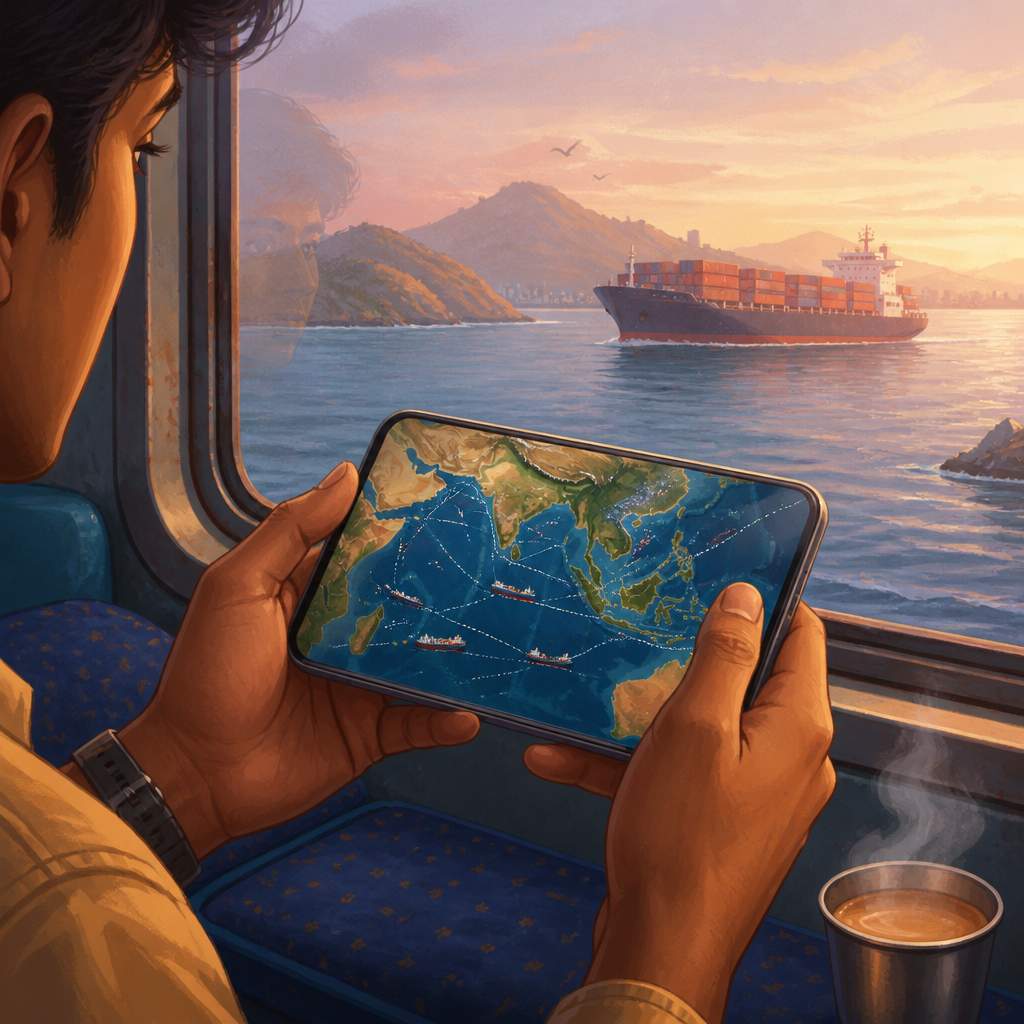
Your smartphone depends on it. The fuel in your vehicle requires it. The medicines in your cabinet traveled through it. Eighty percent of global trade, ₹800 lakh crore worth, moves across oceans. Yet most Indians think of their nation as continental, defined by the Himalayas and the Gangetic plains. Meanwhile, China has built the world's largest navy, operates ports in Pakistan, Sri Lanka, and Myanmar, and is systematically encircling India through the sea. Should you care? And if so, what exactly should India do about it?
The Modern Challenge
The numbers tell a concerning story. China's navy now operates over 370 ships, more than the United States. Chinese companies control or operate ports from Hambantota (Sri Lanka) to Gwadar (Pakistan) to Kyaukpyu (Myanmar). The String of Pearls strategy has created potential chokepoints around India's maritime perimeter. In the Red Sea, Houthi attacks disrupted 12% of global trade in early 2024, demonstrating how vulnerable maritime commerce remains to determined adversaries.
India's response has been reactive rather than strategic. The 2019 Pulwama crisis revealed air power limitations. The 2020 Galwan clash exposed continental vulnerabilities. But the maritime domain, where India actually holds geographic advantages, remains underdeveloped. Indian shipyards struggle to meet Navy requirements. Major ports lag global competitors in efficiency. The merchant marine has declined from 40% of India's trade to barely 7%.
Yet this pessimism misses something crucial. A thousand years ago, an Indian power dominated these same waters. The Cholas built the most powerful navy in the medieval world, controlled the Malacca Strait, and created a maritime commercial network stretching from the Maldives to Cambodia. They faced similar challenges, competing powers, distant sea lanes, the need to balance commercial and military objectives. Their solutions worked. Could they work again?
The Ancient Insight
This chapter revealed six interconnected Chola principles that enabled their maritime dominance:
Nau-Sainya Integration: The Cholas never separated commercial shipping from naval power. Their merchant vessels could be requisitioned as troop transports; their naval escorts protected trade routes. Trade revenues funded the navy; naval power secured trade. This virtuous cycle generated resources that continental powers couldn't match.
Chokepoint Control: Rajendra Chola understood that whoever controlled the Malacca Strait controlled Asia's commerce. His 1025 expedition wasn't territorial conquest, it was strategic positioning. The Cholas occupied chokepoints, taxed passage, and denied rivals access to lucrative routes.
Alliance Architecture: The Cholas cultivated partnerships, with Chinese traders, Southeast Asian kingdoms, even former rivals. They understood that no single power could police the entire Indian Ocean. Networks of allies multiplied effective capability.
Technology Sovereignty: Chola shipyards produced vessels designed for Indian Ocean conditions, not imported designs. Their Mara-Maram ships could carry hundreds of warriors across open ocean. Indigenous capability meant strategic independence.
Port Infrastructure: The Chola coast featured purpose-built ports with drydocks, warehouses, and customs facilities. Kaveripattinam, Nagapattinam, and Mahabalipuram served as nodes in a connected network. Infrastructure enabled commerce; commerce funded more infrastructure.
Long-term Vision: The Chola maritime system wasn't built in a decade, it evolved over two centuries of sustained investment. Rajaraja laid foundations; Rajendra expanded; successors maintained. Strategic patience created lasting advantage.

The Bridge
These principles aren't historical curiosities, they're strategic imperatives India is finally, belatedly, rediscovering.
Personal Finance: The Chola concept of Artha-Sainya integration, commercial prosperity funding security capability, applies to household finances. Emergency funds aren't idle money; they're the 'naval reserve' that enables you to take calculated career risks. The lesson: build financial resilience before pursuing aggressive growth, just as the Cholas built merchant wealth before military expeditions.
Business Strategy: The Sagarmala project's logic mirrors Chola port network thinking, multiple specialized ports rather than one mega-hub. Adani Ports' strategy of acquiring Mundra, Hazira, Dhamra, and Vizhinjam replicates Chola network effects. For entrepreneurs, the lesson is clear: control nodes in value chains rather than competing across entire industries. The Cholas didn't try to grow all the spices, they controlled the maritime routes that spices traveled.
Leadership: Rajendra Chola's expedition planning offers a masterclass in strategic delegation. He empowered naval commanders with operational autonomy while maintaining strategic direction. Modern managers face identical challenges: how to delegate execution without losing coherent strategy. Rajendra's solution, clear objectives, trusted subordinates, accountability through results, remains sound.
Policy Application: The QUAD alliance embodies Chola Mitra-Mandala thinking. India-Japan-US-Australia cooperation creates exactly the networked presence that Chola strategists would recognize. The Malabar exercises develop interoperability; infrastructure initiatives counter Chinese financing; maritime domain awareness sharing multiplies intelligence capability. These aren't Western concepts imposed on India, they're Indian strategic traditions recovered after colonial disruption.
Addressing Skepticism
Three objections deserve honest response:
"The Cholas had different technology, their lessons don't apply to satellite-guided missiles." Technology changes; geography doesn't. The Malacca Strait's strategic importance is unchanged since the 11th century. Chokepoint control, alliance networks, and commercial-military integration remain valid regardless of weapons systems. The principles transfer even if specific tactics don't.
"India can't afford naval expansion when it has poverty to address." The Cholas would find this argument puzzling. Maritime commerce created their prosperity, it didn't compete with it. Modern India's economic growth depends on secure sea lanes for energy imports and manufactured exports. Naval investment isn't a luxury; it's an enabler of the economic growth that addresses poverty.
"This sounds like aggressive militarism dressed up as ancient wisdom." The Cholas weren't pacifists, but neither were they mindless aggressors. Their 1025 Srivijaya expedition came after decades of diplomatic engagement failed. They sought partnership before confrontation, commerce before conquest. Modern India's maritime strategy can be assertive without being aggressive, defending freedom of navigation benefits all trading nations, including China.
Call to Practice
Three actions emerge from Chola wisdom:
For citizens: Support maritime awareness. Follow developments at Vizhinjam, Chabahar, and the Andaman bases. Understand that India's prosperity depends on oceanic engagement. The continental mindset, obsessing over land borders while ignoring sea lanes, serves neither security nor prosperity.
For professionals: Consider how network thinking applies to your field. The Cholas didn't dominate by being best at everything, they controlled critical nodes. Identify the 'chokepoints' in your industry and position accordingly.
For the nation: Sustain the maritime renaissance. Sagarmala, indigenous aircraft carriers, QUAD partnerships, these represent recovered Chola wisdom. But one generation of effort won't suffice. The Cholas built over two centuries. India's Indo-Pacific century requires similar strategic patience, sustained across political cycles, until maritime capability becomes institutional rather than personal.