Uddhava Gita: Varnashrama and Siddhi (Part 3)
Society and spiritual powers
Krishna explains the varnashrama system and its purpose in facilitating spiritual growth. He describes the eight mystic siddhis (perfections) available through yoga, but cautions that these powers can become obstacles. Focus on the Lord remains paramount.
The Divine Social Order
As the Uddhava Gita continues, Krishna turns from the paths of yoga to the practical organization of human society. Uddhava, ever curious, asks how spirituality can be woven into the fabric of daily life across all stages and stations. Krishna's response reveals the varnashrama dharma, a system designed not for social hierarchy, but for spiritual elevation.
The Four Varnas: Duties According to Nature
Krishna explains that the four varnas, Brahmana, Kshatriya, Vaishya, and Shudra, arise from the three gunas (modes of nature) and one's inherent qualities and inclinations. This is not a system of birth-based privilege but of aptitude-based responsibility.
The Brahmana is characterized by serenity, self-control, austerity, purity, tolerance, and dedication to spiritual knowledge. Their dharma is to study, teach, perform worship, and guide society in matters of righteousness. They live simply, accepting what comes, their minds fixed on the Eternal.
The Kshatriya embodies courage, strength, determination, resourcefulness, and unwillingness to flee from battle. They protect dharma, administer justice, and defend the weak. Their glory lies not in conquest but in righteous governance.
The Vaishya possesses the qualities of enterprise, pragmatism, and stewardship. They engage in agriculture, cow protection, trade, and commerce, generating prosperity while practicing generosity. Their wealth serves society.
The Shudra contributes through service and skilled labor, supporting the other varnas in their duties. Their devotion through work is as sacred as the Brahmana's meditation.
Krishna emphasizes: one's varna is determined by guna (quality) and karma (action), not janma (birth). A person displaying brahmanic qualities, regardless of birth, is a Brahmana. This revolutionary teaching challenges the corrupted interpretation of caste.
The Four Ashramas: Stages of Life
Complementing the varnas are the four ashramas, stages designed to systematically guide the soul toward liberation:
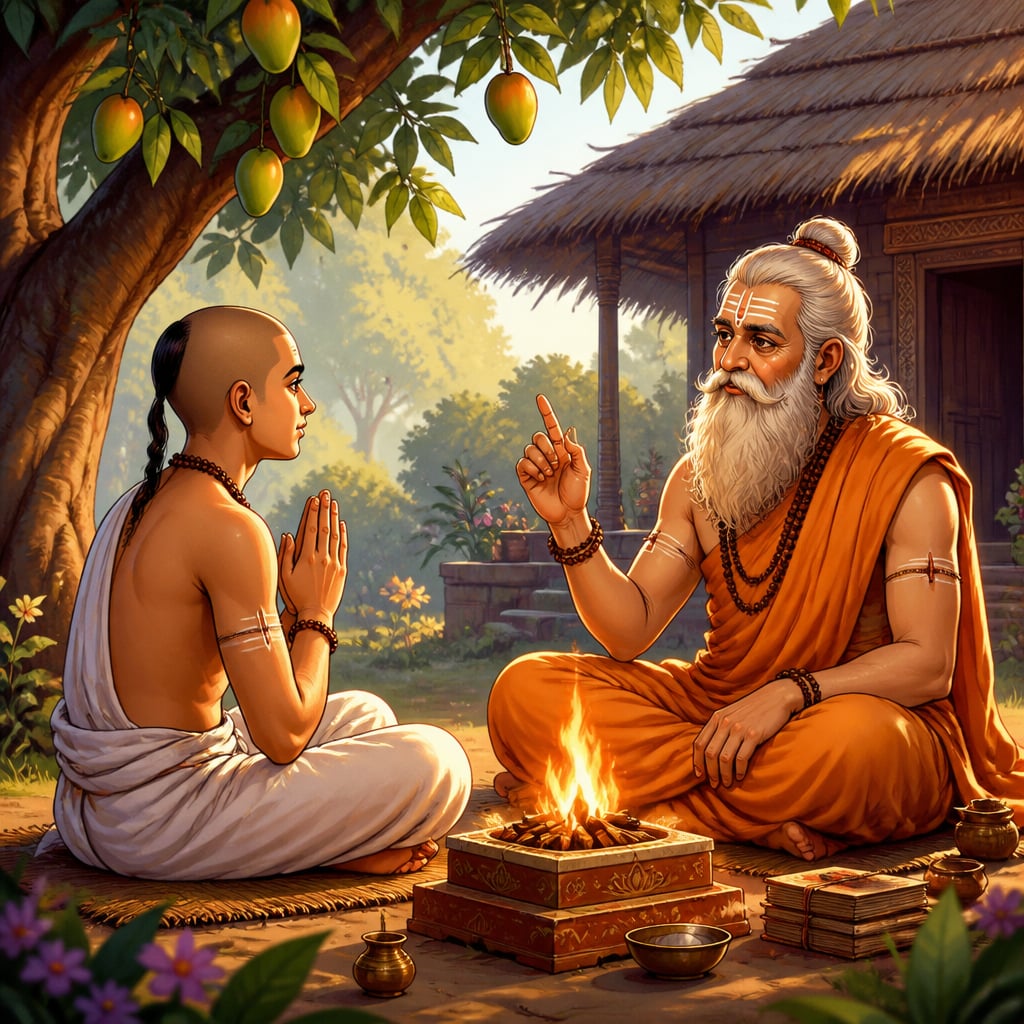
Brahmacharya (student life): The young person lives with a guru, learning scriptures, practicing celibacy, and developing character. This foundation of discipline and knowledge prepares one for all subsequent stages.
Grihastha (householder life): After completing studies, one marries, raises children, earns livelihood, and fulfills worldly duties. The householder supports all other ashramas through charity and hospitality. This is the only ashrama that generates wealth.
Vanaprastha (retired life): Having fulfilled family responsibilities, one gradually withdraws from worldly affairs, retreating to simpler living, increased spiritual practice, and preparation for the final stage.
Sannyasa (renounced life): Complete dedication to spiritual realization, wandering without attachment, dependent on divine providence, focused solely on liberation and the welfare of all beings.
The Eight Mystic Siddhis
Uddhava then inquires about the mystic perfections that yogis attain. Krishna describes the ashta siddhis, eight supernatural powers that manifest through advanced yoga practice:

Anima: The ability to become infinitesimally small, even atomic in size
Mahima: The power to become infinitely large, expanding beyond normal limits
Laghima: Becoming lighter than air, capable of levitation
Prapti: The ability to obtain anything desired, to reach anywhere instantly
Prakamya: Fulfillment of any desire, irresistible will
Ishitva: Lordship over material nature, controlling the elements
Vashitva: The power to control other beings
Kamavasayita: The ability to assume any form, to enjoy any pleasure
Krishna also describes ten secondary siddhis: freedom from hunger and thirst, distant hearing, distant seeing, instant travel, assuming any form, entering others' bodies, dying at will, witnessing celestial activities, perfect accomplishment, and unobstructed command.
The Danger of Powers
Having described these extraordinary abilities, Krishna issues a profound warning. These siddhis, while real and attainable, are actually obstacles on the path to Him. The yogi who becomes fascinated by supernatural powers loses sight of the ultimate goal, pure love of God.

"These mystic perfections," Krishna declares, "are available to those who practice yoga. But for one who has taken shelter of Me, what use are these powers? I offer Myself to such a devotee."
The siddhis are like toys offered to children, fascinating but ultimately distracting. The mature spiritual aspirant recognizes that even the power to create universes is nothing compared to a moment of pure devotion. What need has a devotee for mystical powers when the Master of all powers is their friend?
Krishna recalls the story of how great yogis with tremendous siddhis remained bound in samsara because they became attached to their powers. Meanwhile, simple devotees with no supernatural abilities attained liberation through pure love alone.
Integration of Dharma and Devotion
The genius of Krishna's teaching lies in integrating social duty with spiritual aspiration. Varnashrama is not meant to divide but to organize, each person serving according to their nature while progressing toward the same ultimate goal.
A Brahmana teaching scripture, a Kshatriya protecting the innocent, a Vaishya trading honestly, a Shudra serving devotedly, all can be paths to liberation when performed as worship of the Lord. The specific action matters less than the consciousness behind it.
"Whatever you do, whatever you eat, whatever you offer or give away, and whatever austerities you perform, do that as an offering to Me," Krishna teaches. This transforms mundane work into yoga.
The True Purpose
Uddhava begins to understand that both the social system and the mystic powers serve a singular purpose: to eventually lead the soul beyond all systems and powers to simple, pure devotion. Varnashrama is a ladder to be climbed and left behind. Siddhis are signposts indicating progress but not the destination.
The truly liberated soul transcends varna, ashrama, and even yogic attainments. They live in the world but are not of it, acting for the welfare of all while resting in eternal consciousness. Such a person may appear as a Brahmana, a king, or even a beggar, external designations matter not when the heart has found its home in the Divine.
Krishna's message rings clear: use the social structures and yogic practices as aids, not ends. Let them serve your spiritual evolution but never bind your identity to them. You are not a Brahmana or Shudra, you are an eternal soul, temporarily playing a role in the cosmic drama, journeying home to the Lord.
Living traditions
- Ashrama Dharma Observance: The tradition of marking life transitions through ceremonies (upanayana, vivaha, vanaprastha diksha, sannyasa) continues in traditional families
Reflection
- If supernatural powers could be obstacles to spiritual growth, what lesser attachments in your life might be playing a similar distracting role?
- How can you transform your daily work and responsibilities into offerings to the Divine, regardless of how mundane they might seem?
- The teaching that quality determines varna, not birth, was revolutionary. What modern assumptions about people based on their background might you need to examine?