Relevance in 2026 and Beyond
Skanda 11 wisdom for today
What can the 24 gurus teach about learning from life? How does Uddhava Gita guide modern seekers? From the mystic powers' dangers to pure devotion's glory - discover how Skanda 11's profound philosophy illuminates the spiritual path today.
Ancient Wisdom for the Modern Seeker
We have journeyed through Skanda 11, from the curse that began the end to Krishna's departure that marked a new beginning. Now we step back to ask: what does this ancient scripture offer to someone living in 2026? The answer is: everything. The Uddhava Gita and its surrounding narrative address the deepest questions of human existence with a clarity that transcends time.
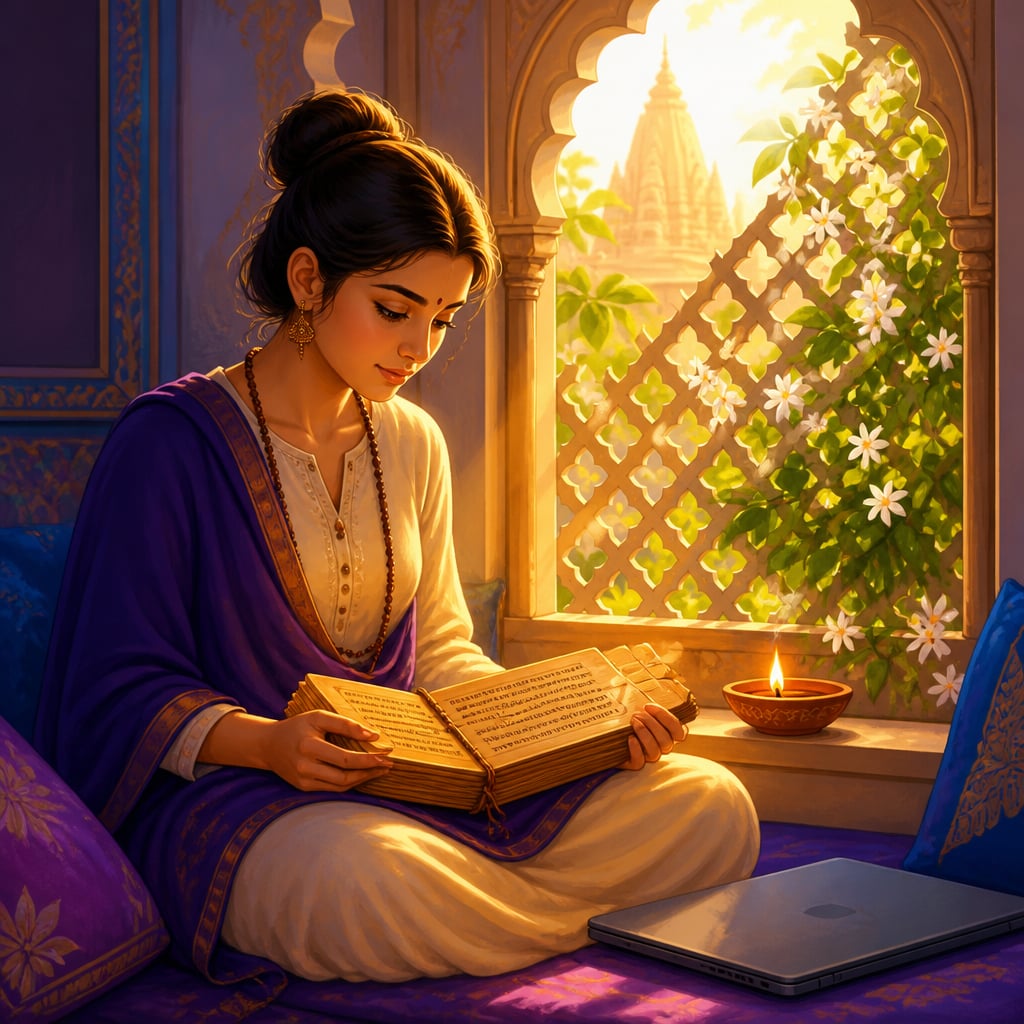
The 24 Gurus: Learning in the Information Age
The Avadhuta Brahmana's teaching about learning from 24 unconventional gurus has never been more relevant. In an age drowning in information but starving for wisdom, his approach offers a radical alternative.
The Problem: We have unprecedented access to knowledge, entire libraries in our pockets, lectures from world experts a click away, AI systems that can answer any question. Yet wisdom seems scarcer than ever. Depression, anxiety, and existential confusion are epidemic despite our educational achievements.
The Solution: The Avadhuta shows that wisdom comes not from accumulating more information but from learning to see clearly what is already before us. The earth teaches patience. The ocean teaches depth beneath surface turbulence. The moth warns against attraction to what destroys us.
Practical Application: Begin each day by consciously choosing one "guru" from your environment:
- Stuck in traffic? Learn from the river, finding flow around obstacles
- Dealing with criticism? Learn from the tree, remaining rooted despite winds
- Tempted by distraction? Learn from the python, waiting for what truly nourishes
This transforms every moment into a spiritual classroom. The smartphone becomes less attractive when the entire world becomes your teacher.
Three Paths, One Destination
Krishna's teaching on karma, jnana, and bhakti yoga addresses the perennial question: how do I find my spiritual path? In 2026, with countless spiritual options available, from ancient traditions to modern wellness movements, this framework provides essential clarity.
Karma Yoga for the Active: If you're driven to work, to achieve, to make a difference, don't fight your nature. Transform it. Work not for personal gain but as service to the whole. Your career becomes sadhana when you see your actions as offerings. The entrepreneur serving genuine needs, the teacher shaping minds, the parent nurturing children, all can be karma yogis.
Jnana Yoga for the Intellectual: If you're driven by questions, by the need to understand, by philosophical inquiry, this is your path. But remember Krishna's warning: knowledge without transformation is a milkless cow. Let every insight change how you live. The scientist who sees the Divine in nature's laws, the philosopher who lives their conclusions, these are true jnanis.
Bhakti Yoga for the Emotional: If your heart naturally turns to love, to relationship, to feeling rather than thinking, bhakti is your way. Pour your emotional intensity into divine connection. The devotee who sees the Lord in every being, who serves with love, who prays with tears, this is bhakti's fruit.
Most of us are hybrids, combining elements of all three. The key is recognizing your predominant nature and building your practice around it while honoring the others.
The Danger of Modern Siddhis
Krishna's warning about mystic powers has a striking modern parallel. We have created technological "siddhis" that the ancient yogis would envy:
- Anima (becoming small): We project ourselves virtually into any space
- Mahima (becoming large): Our influence can span the globe instantly
- Prapti (obtaining anything): Same-day delivery brings almost anything to our door
- Vashitva (controlling others): Algorithms manipulate behavior at scale
Yet like the yogic siddhis, these powers have become obstacles to liberation. We're connected to everyone but intimate with few. We can obtain anything but appreciate nothing. We have infinite entertainment but declining happiness.
Krishna's teaching remains: powers are not the goal. Whether supernatural siddhis or technological capabilities, they serve spiritual evolution only when used with detachment and directed toward the Divine. The person who uses technology mindfully for genuine service is wiser than one who accumulates followers, likes, and virtual influence.
Maya in the Digital Age
Krishna's teaching on maya, the divine illusion, describes our condition with uncanny accuracy:
The three bodies have digital parallels:
- Gross body: our physical form
- Subtle body: our mental and emotional patterns
- Digital body: our online personas, social media profiles, and virtual identities
Many people now identify more with their digital bodies than their physical ones. They curate online images that bear little resemblance to their actual lives. The maya that once obscured self-knowledge now has an additional layer.
The solution remains the same: viveka, discrimination between the real and unreal. Who are you beneath all the layers? Not your job title, not your follower count, not your curated image, but the unchanging awareness that witnesses all these changing identities.
The witness consciousness that Krishna describes is accessible in any age. Put down the phone. Close the apps. Sit quietly. Ask: "Who is aware of all these thoughts and identities?" The answer cannot be put into words, but it can be recognized directly.
The Bhramara Gita's Teaching on Love
The Gopis' love-in-separation offers profound guidance for relationships in the modern world.
The Problem: We've commodified relationships. Dating apps turn people into products. Social media reduces love to performance. Genuine intimacy, messy, vulnerable, unglamorous, is avoided.
The Gopis' Teaching: Real love is not about possession or display. It deepens through challenge. It requires nothing from the beloved, not presence, not reciprocation, not even acknowledgment. It simply loves because loving is its nature.
This doesn't mean accepting mistreatment. It means loving from wholeness rather than neediness. When you don't need another person to complete you, you can love them freely. When you're not performing for an audience, you can love authentically.
Uddhava, with all his philosophical sophistication, bowed before village women whose love was unconditional. The most educated person of our time could learn the same lesson from anyone who loves without agenda.
Varnashrama for a Disrupted Society
Krishna's teaching on social organization seems challenging to apply when traditional structures have dissolved. Yet its core insight remains vital:
The Principle: People have different natures and abilities. A well-functioning society allows everyone to contribute according to their inherent qualities while progressing toward the same ultimate goal.
Modern Application:
- The knowledge workers (modern brahmanas) should prioritize wisdom over profit
- The leaders and defenders (modern kshatriyas) should protect the vulnerable
- The entrepreneurs and providers (modern vaishyas) should create genuine value
- The service providers (modern shudras) should be honored, not exploited
The failure to honor all types of work, the disdain for manual labor, the worship of "knowledge economy" jobs, creates societal imbalance. A plumber who serves with devotion is as spiritual as a priest who performs rituals with distracted mind.
The Revolutionary Element: Krishna says varna is determined by guna (quality) and karma (action), not by birth. In 2026, this teaching challenges both those who discriminate by birth and those who discriminate by degrees and credentials. What matters is who you actually are and what you actually do.
Krishna's Departure and Our Mortality
The most profound teaching of Skanda 11 is also the most personal: everything in this world, even the Lord's visible form, is temporary. How do we live with this knowledge?
Not with Denial: The modern approach is to distract ourselves from mortality, endless entertainment, youth-obsessed culture, medicalization of aging. But denial only increases the shock when reality intrudes.
Not with Despair: Nihilism, the conclusion that nothing matters because everything ends, is equally mistaken. Krishna's departure wasn't meaningless; it was the culmination of a purposeful mission.
With Sacred Urgency: Knowing that this life is limited gives it preciousness. Every moment becomes an opportunity that won't repeat. Every relationship becomes sacred because it won't last forever in this form.
With Eternal Perspective: Krishna didn't cease to exist, He returned to His eternal abode where His pastimes continue forever. The Bhagavatam invites us to participate in that eternal reality, not just observe it from outside.
Death is not the end but a transition. If we've oriented our hearts correctly, what seems like ending becomes beginning. The body falls away; the soul continues.
Your Personal Uddhava Gita
What did Uddhava take with him to Badrinath? Not books, they didn't have printing presses. Not recordings, they didn't have technology. He carried the teachings in his heart, in his transformed consciousness.
The same opportunity exists for you. The Uddhava Gita isn't a text to study and shelve. It's a living transmission to be absorbed and practiced. Its teachings should change:
- How you see yourself (not the body or mind, but eternal consciousness)
- How you relate to others (seeing the Divine in all)
- How you work (as offering, not accumulation)
- How you love (without grasping)
- How you live with uncertainty (trusting the cosmic purpose)
The Practice Continues
Krishna sent Uddhava to Badrinath, a place of practice, not a place of permanent residence. The teachings require a context for integration.

What is your Badrinath? It might be:
- A daily meditation practice
- A weekly study of scripture
- A community of like-minded seekers
- A pilgrimage to sacred sites
- A relationship with a living teacher
Without some structure for practice, the most profound teachings remain intellectual. With consistent practice, even simple teachings transform consciousness.
The Eternal Invitation
The Bhagavatam closes Skanda 11 with an extraordinary claim: Krishna may have withdrawn His visible form, but He remains accessible to those who seek Him sincerely. He lives in:
- The words of scripture, which are His verbal form
- The hearts of devotees, which are His dwelling place
- The sacred places, which hold His presence
- The divine name, which is not different from Him
- The moment of pure attention, where eternal meets temporal
In 2026, amidst artificial intelligence and virtual reality and unprecedented technological change, the same eternal reality awaits. The same divine love that answered Uddhava answers still. The same liberation that the Gopis found remains available.
You need not be born in a particular caste, educated in a particular system, or equipped with particular talents. You need only turn your heart toward the Divine with sincerity. As Krishna promised Uddhava: wherever you go, He is there. Whenever you think of Him, He is present.
The Uddhava Gita is complete. Your journey with these teachings begins now.
Living traditions
- Daily Bhagavatam Study: The practice of reading and reflecting on Bhagavatam verses daily, treating it as a living dialogue with Krishna
Reflection
- If you had to choose one teaching from Skanda 11 to actually practice, not just understand intellectually, which would it be? What would daily practice of this teaching look like?
- The Avadhuta found 24 gurus in his environment. What three 'gurus' in your daily life, people, situations, or phenomena, might have teachings for you right now?
- Krishna said all sincere paths lead to Him. How does this teaching affect any anxiety you might have about choosing the 'right' spiritual path?