Kāla Cakra: The Doṣa Clock Before Chronobiology
Ancient time-based physiology mapped onto modern circadian science
How Āyurveda mapped doṣa fluctuations to the 24-hour cycle millennia before Nobel Prize-winning circadian rhythm research (2017). Explores how ancient energy cycle mapping anticipated modern chronobiology.
The Clock They Couldn't See
In October 2017, three American scientists, Jeffrey Hall, Michael Rosbash, and Michael Young, received a phone call that would change their lives. The Nobel Committee was on the line, informing them they'd won the Prize in Physiology or Medicine. Their achievement? Discovering the molecular mechanisms that control circadian rhythms, the internal 24-hour clock that governs nearly every function in the human body.
The press releases celebrated this as a breakthrough that explained why we feel energetic at certain times and sluggish at others, why shift workers develop chronic diseases, why jet lag disrupts our entire physiology. What none of the press releases mentioned was that physicians in ancient India had mapped these same cycles, with remarkable precision, roughly 1,500 years earlier.
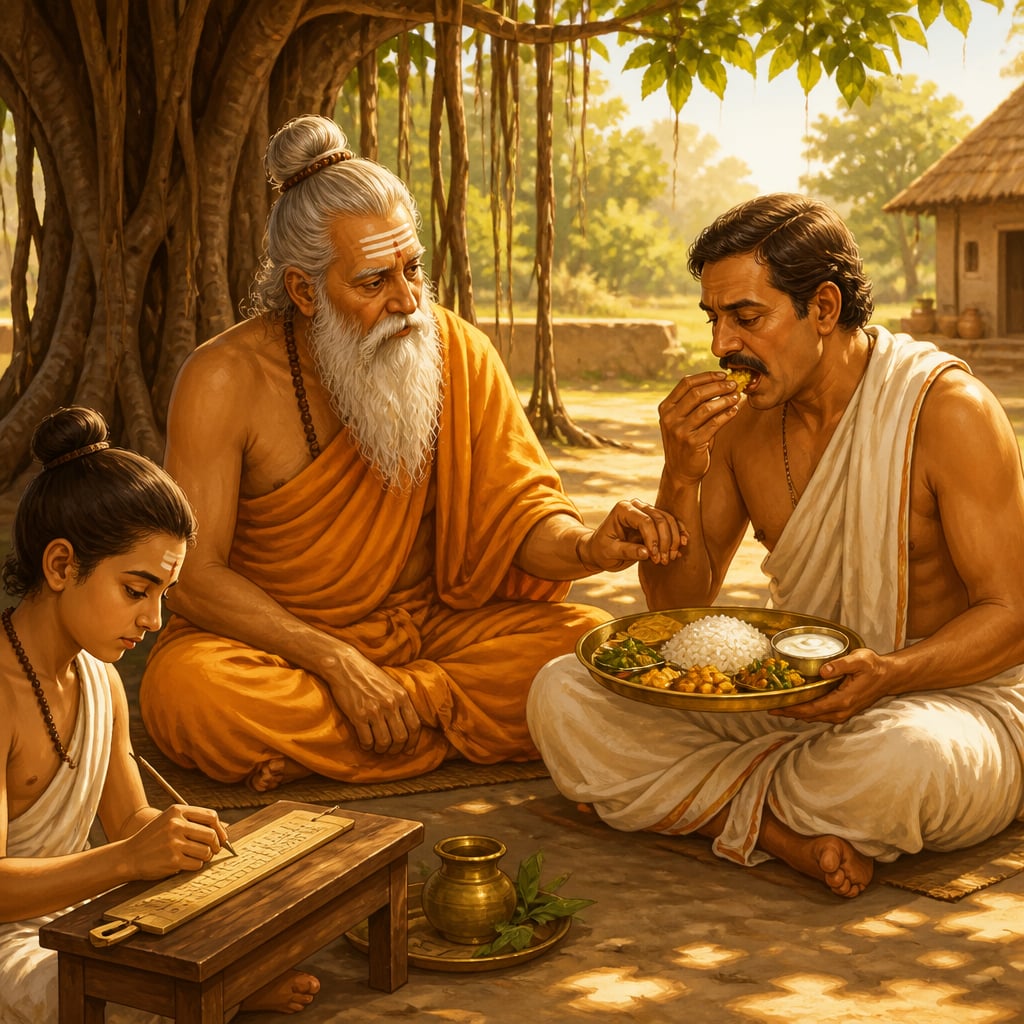
They called it Kāla Cakra, the Wheel of Time.
The Doṣa Clock: Āyurveda's Circadian Map
The Āyurvedic understanding begins with three fundamental energies called doṣas: Vāta (movement, air-space), Pitta (transformation, fire-water), and Kapha (structure, earth-water). These aren't abstract concepts, they're observable patterns governing everything from digestion to mental activity.
What makes the ancient system remarkable is its recognition that these doṣas don't remain constant throughout the day. They fluctuate in predictable cycles, creating what modern science would call chronobiological rhythms.
Here's the Āyurvedic clock:
Vāta Time (2-6 AM & 2-6 PM) The hours dominated by movement, lightness, and irregularity. Early morning Vāta time (2-6 AM) is when the body naturally lightens, dreams become vivid, and the nervous system is most active. Afternoon Vāta time (2-6 PM) brings mental agility but also scattered energy, the mid-afternoon slump that has fueled the global coffee industry.
Kapha Time (6-10 AM & 6-10 PM) The hours of heaviness, stability, and accumulation. Morning Kapha time (6-10 AM) explains why waking after 6 AM leaves you groggy, you've woken into the body's accumulation phase. Evening Kapha time (6-10 PM) is when the body prepares for rest, metabolism slows, and the natural urge for sleep emerges. Those who ignore this window and push past 10 PM often experience a second wind, they've crossed into Pitta time.
Pitta Time (10 AM-2 PM & 10 PM-2 AM) The hours of transformation, intensity, and metabolic fire. Midday Pitta time (10 AM-2 PM) is when digestive fire peaks, the reason every traditional culture eats the main meal at midday, not dinner. The overlooked Pitta time (10 PM-2 AM) is when the body performs internal cleansing and repair. Those still awake often feel hungry (the 'midnight snack' phenomenon) because Pitta governs metabolism, but this fire should be working on cellular renewal, not digesting pizza.
What the Nobel Scientists Found

The 2017 Nobel research revealed that virtually every cell in the body contains molecular clocks, genes called 'period' and 'timeless' that create feedback loops, rising and falling in predictable 24-hour cycles. These molecular rhythms govern hormone release, body temperature, cognitive performance, immune function, and cellular repair.
The parallels with Āyurvedic mapping are striking:
Body Temperature: Modern research shows core temperature drops to its lowest point around 4 AM (Vāta time in Āyurveda, the lightness, air-dominant period) and peaks around early evening. Āyurveda described this as the natural lightening during Vāta hours.
Digestive Capacity: Studies confirm that digestive enzyme secretion and gastric motility peak around midday, exactly when Āyurveda places maximum Pitta (digestive fire). The Nobel research explained the molecular 'why' behind what Āyurvedic physicians had observed for over a millennium.
Cellular Repair: Research shows that growth hormone secretion and cellular repair processes peak during early sleep hours (10 PM-2 AM), the second Pitta period in Āyurveda, when internal transformation should occur.
Cognitive Performance: Studies reveal that alertness, working memory, and reaction time peak in late morning, dip after lunch, and recover in late afternoon, matching the Pitta-to-Kapha-to-Vāta transition Āyurveda describes.
The ancient system mapped the phenomenology. Modern science revealed the mechanism. Both point to the same truth: we are not meant to function identically at all hours.
From Observation to Optimization
How did ancient physicians map these cycles without microscopes, gene sequencing, or controlled studies? Through what we might call systematic phenomenological observation over generations.
The method was simple but rigorous: observe the body's functions at different times. Note when hunger naturally arises. Track when the mind is sharp versus dull. Record when sleep comes easily and when it resists. Do this across thousands of patients over centuries, and patterns emerge.
The Aṣṭāṅga Hṛdaya, composed around the 7th century CE by Vāgbhaṭa, codified these observations into precise recommendations. Wake during Vāta time (before 6 AM) while the body is naturally light. Eat the main meal during Pitta time (midday) when digestion peaks. Wind down during evening Kapha time (before 10 PM) when the body gravitates toward rest.
These weren't arbitrary rules, they were pattern recognition refined over millennia.
The Modern Divorce: Living Against the Clock
The industrial revolution began humanity's systematic disconnection from natural time cycles. Electric light extended productive hours past sunset. Shift work required alertness when biology demanded sleep. Air travel created jet lag, the jarring experience of being in one time zone while your cells think you're in another.

Today, the average person:
- Wakes during Kapha time (after 6 AM), fighting grogginess
- Drinks coffee to override natural energy rhythms
- Eats a light, rushed breakfast during Kapha time when digestion is slow
- Works through the afternoon Vāta dip with more caffeine
- Consumes the largest meal at dinner during evening Kapha time when digestive fire is weakest
- Stays awake past 10 PM, activating Pitta energy that should be processing internally
- Struggles to fall asleep because they've missed the Kapha sleep window
- Sleeps poorly because eating late has diverted Pitta from repair to digestion
We call this modern life. Āyurveda would call it systematic self-disruption.
The Circadian Industry
The wellness market has noticed. A growing 'circadian wellness' industry now offers:
- Apps that track and optimize sleep timing
- Blue light blocking glasses for evening use
- Circadian lighting systems that adjust color temperature throughout the day
- Meal timing protocols emphasizing earlier eating
- Chronotype assessments to determine your 'optimal' schedule
Much of this is genuinely helpful. Blue light blocking glasses in the evening reduce melatonin suppression, a real physiological effect. Time-restricted eating aligned with circadian rhythms shows benefits in metabolic studies. The science is sound.
What's often missing is the recognition that these 'discoveries' describe what traditional cultures practiced for millennia, not because they understood molecular mechanisms, but because they observed the body's relationship with time and structured daily life accordingly.
What's Preserved and What's Lost
What modern chronobiology preserves:
- Scientific validation of time-based physiology
- Precise understanding of molecular mechanisms
- Quantifiable recommendations (lux levels for light exposure, optimal sleep windows, etc.)
- Medical applications for shift work disorders, jet lag, and circadian-related conditions
What modern approaches often miss:
- The doṣa framework that makes recommendations constitutional (what works for a Vāta person differs from a Kapha person)
- The integration with diet, activity, and mental state (Āyurveda never isolated 'sleep timing' from what you eat and how you spend your day)
- The seasonal variation (the doṣa clock shifts with seasons, a complexity modern protocols often ignore)
- The spiritual dimension (early morning Vāta time wasn't just about cortisol levels; it was considered optimal for meditation and spiritual practice)
The modern approach treats circadian rhythm as a biological feature to optimize. The traditional approach understood it as a relationship between the individual and cosmic cycles to harmonize with.
The Three Scientists and the Three Doṣas
There's a certain poetry in the Nobel recognition. Three scientists discovered the molecular clock. Three doṣas constitute the Āyurvedic clock. Both systems recognize that life unfolds in rhythms, that health requires alignment with these rhythms, and that ignoring them extracts a cost.
Jeffrey Hall, in his Nobel lecture, noted that circadian disruption is linked to obesity, diabetes, depression, bipolar disorder, and cancer. Ancient Āyurvedic texts warned that violating the natural rhythms (dinacaryā) leads to disease. Different language, same warning.
The Nobel Prize validated what traditional physicians knew experientially: we are not machines that can be run at any hour with equal efficiency. We are biological beings embedded in planetary rhythms, the rotation of earth creating day and night, the cycles of moon and sun, the rhythm of seasons.
Modern life has given us the power to override these rhythms with electricity, caffeine, and sheer will. The ancient wisdom and modern science agree: this power comes at a price.
Practicing with the Clock
Understanding the doṣa clock isn't about rigid scheduling, it's about working with rather than against your biology. Here's how the ancient wisdom applies:
Wake during Vāta time (before 6 AM): The body is naturally light. Rising during this window avoids the grogginess of waking into Kapha accumulation. If this feels impossible, it often indicates accumulated Kapha from lifestyle factors, something traditional Āyurveda would address through diet and evening routines.
Main meal at midday (Pitta time): When digestive fire peaks, the body can handle the largest meal. Many traditional cultures, Mediterranean, Indian, Latin American, evolved around large midday meals and light dinners. The modern pattern of light lunch/heavy dinner inverts biological logic.
Light dinner before 7 PM: Eating during evening Kapha time, when digestive fire wanes, creates āma (toxic accumulation from incomplete digestion). The later you eat, the more burden on a system preparing for rest.
Wind down by 9 PM, sleep by 10 PM: The Kapha sleep window (6-10 PM) offers natural drowsiness. Pushing past 10 PM into Pitta time often creates a second wind, you'll feel alert, perhaps hungry, but you've missed the optimal entry into sleep. The night-owl phenomenon isn't natural chronotype for most people; it's disrupted rhythm.
Honor the cycles, adjust for constitution: A Vāta-dominant person needs more sleep and regularity. A Kapha-dominant person can handle slightly less sleep but must avoid over-sleeping (which increases Kapha). A Pitta-dominant person runs hot and needs cooling evening routines. One clock, three constitutions, personalized application.
The executives buying circadian lighting systems and sleep trackers are reaching for something genuine. The ancient system offers both the map and a framework for individual application that modern protocols often lack.
Shift workers and frequent travelers can't always honor the doṣa clock, but they can minimize damage. Key principles: maintain meal timing even when sleep timing shifts (eat main meal at biological midday), prioritize the Pitta repair window even if it means napping, and use Kapha-building practices (warm oil massage, grounding foods) to counteract Vāta disruption from irregular schedules.
Restructuring meals around the doṣa clock often produces noticeable improvements in energy and digestion within days. Key shifts: make breakfast light (fruit, warm grain) during Kapha time when digestion is slow. Make lunch the largest meal (12-1 PM) during Pitta's peak. Make dinner light and early (before 7 PM) as Agni wanes. Many who implement this report better sleep, more stable energy, and improved digestion, the body responding to being fed when it's actually ready to digest.
Key figures
Vāgbhaṭa
Author of the Aṣṭāṅga Hṛdaya (Heart of Eight Branches), the most widely used Āyurvedic text for clinical practice. His systematic organization of daily and seasonal routines became the standard reference for Dinacaryā.
The Aṣṭāṅga Hṛdaya remains the primary text studied in Āyurvedic colleges today. Its practical organization, beginning each topic with the ideal routine before discussing pathology, established the preventive orientation central to Āyurveda.
Jeffrey Hall, Michael Rosbash & Michael Young
2017 Nobel Laureates in Physiology or Medicine for discoveries of molecular mechanisms controlling circadian rhythm. Their work revealed the 'period' and 'timeless' genes that create the cellular 24-hour clock.
By revealing the molecular machinery of circadian rhythm, they created a scientific framework for understanding time-based medicine. Their work has spawned new fields: chronopharmacology (timing medications to circadian rhythms), chronotherapy (timing treatments for optimal effect), and circadian medicine.
Dr. Vasant Lad
Founder of The Ayurvedic Institute in Albuquerque (1984), one of the first and most influential Āyurvedic schools in the West. Author of multiple foundational texts bringing classical teachings to Western audiences.
His Textbook of Ayurveda series and Ayurveda: The Science of Self-Healing have trained a generation of Western practitioners. His integration of traditional teachings with modern scientific understanding models how ancient wisdom can be transmitted without dilution.
Dr. Robert Svoboda
The first Westerner to graduate from an Āyurvedic medical college in India (Pune, 1980). Author of the Aghora trilogy and Prakriti: Your Ayurvedic Constitution, which introduced constitutional typing to Western audiences.
His writings demonstrate that Āyurveda is not a museum piece but a living science applicable to modern life. His work on constitution-specific routines, showing how a Vāta person's ideal day differs from a Kapha person's, adds the personalization dimension often missing in modern circadian protocols.
Case studies
The 2017 Nobel Prize: When Modern Science Confirmed Ancient Observation
On October 2, 2017, the Nobel Assembly announced that Jeffrey Hall, Michael Rosbash, and Michael Young would receive the Prize in Physiology or Medicine. Their discovery - the molecular mechanisms controlling circadian rhythm - explained something humans had observed for millennia but couldn't explain mechanistically. The story begins in 1984, when Hall and Rosbash at Brandeis University isolated the 'period' gene in fruit flies - a gene that seemed to control daily rhythms. They discovered that the protein encoded by this gene accumulated during night and degraded during day, creating a molecular oscillator. Michael Young at Rockefeller University discovered additional genes ('timeless' and 'doubletime') that interacted with period to create a precise 24-hour feedback loop. These weren't just fruit fly curiosities. The same genes and mechanisms were found in humans. We have 'clock genes' in virtually every cell - brain, liver, muscle, skin. These molecular clocks regulate hormone release, body temperature, metabolism, and cellular repair. The Nobel announcement came with a warning: 'Our wellbeing is affected when there is a temporary mismatch between our external environment and this internal biological clock, for example when we travel across several time zones and experience jet lag... There are also indications that chronic misalignment between our lifestyle and the rhythm dictated by our inner timekeeper is associated with increased risk for various diseases.' What the Nobel Committee described in 2017, Āyurvedic physicians had taught for over a millennium - violating natural rhythms creates disease. The ancient physicians couldn't see the 'period' gene or measure protein oscillation. But they observed the phenomena these mechanisms produce: energy fluctuations, digestive capacity changes, optimal and sub-optimal times for different activities. Their mapping was phenomenological rather than molecular. But it pointed to the same truth the Nobel research revealed: we are not machines that can run at any hour with equal efficiency.
Ashtanga Hridayam's Dinacharya (daily routine) chapter prescribes waking during Brahma Muhurta (approximately 96 minutes before sunrise), aligning the body's activities with the sun's cycle. The text describes how each time period (sandhya) has specific qualities that affect the doshas, creating a natural framework for what modern chronobiology calls circadian alignment.
The 2017 Nobel has spawned new fields - chronopharmacology (timing medications to body clocks), chronotherapy (timing treatments for optimal effect), circadian medicine. These fields are essentially formalizing what Āyurveda practiced under different names. Understanding this history helps modern practitioners locate themselves in a longer tradition and access the application wisdom traditional systems developed over centuries.
The Nobel Prize didn't invalidate traditional knowledge - it validated its observations while revealing mechanisms the ancients couldn't access. This pattern recurs throughout the Indian wellness traditions: modern science rediscovers what traditional systems mapped through different methods. The opportunity isn't to choose between ancient wisdom and modern science, but to integrate both - using scientific understanding to explain mechanisms while using traditional frameworks to guide application.
Circadian rhythm disruption is now linked to obesity, diabetes, depression, and cancer risk. The 2017 Nobel Prize validated what Ayurvedic dinacharya encoded in daily routine prescriptions: biological timing is not a lifestyle preference but a medical variable with measurable health consequences.
The 2017 Nobel Prize in Physiology was awarded for circadian rhythm research. A 2023 meta-analysis in Sleep Medicine Reviews covering 36 studies found that alignment with natural light-dark cycles reduced depression risk by 23% and improved metabolic health markers by 18%.
Historical context
Classical Āyurveda to Modern Chronobiology (c. 500 BCE - Present)
Living traditions
The Āyurvedic doṣa clock lives on in multiple forms: traditional practice in India and increasingly worldwide; modern 'circadian wellness' products that echo its principles without acknowledgment; chronotherapy and chronopharmacology in conventional medicine. The 2017 Nobel Prize has accelerated scientific interest in time-based health, creating opportunities for integration between ancient application wisdom and modern mechanistic understanding.
- Kerala Āyurvedic Health Centres: Traditional Āyurvedic centers in Kerala maintain classical Dinacaryā protocols. Patients follow strictly timed routines, waking before dawn, eating according to the doṣa clock, sleeping during Kapha time. The lived experience of rhythm-aligned living over days or weeks offers direct experience of principles that modern life rarely permits.
- The Ayurvedic Institute: Founded by Dr. Vasant Lad in 1984, this institute teaches classical Āyurveda to Western students. Their curriculum emphasizes Dinacaryā as foundational, students learn to align their own lives with doṣa rhythms before learning to prescribe for others. Programs range from introductory workshops to multi-year clinical training.
Reflection
- Consider your typical day: when do you wake, eat your meals, feel most energetic, and go to sleep? How does your pattern align with or diverge from the doṣa clock, Vāta (2-6), Kapha (6-10), Pitta (10-2)?
- The Nobel scientists discovered molecular clocks; the ancient physicians mapped the same cycles through observation. What does it mean that such different methods, gene sequencing versus multigenerational observation, arrived at compatible insights?
- Modern life has given us power to override circadian rhythms, electric light extends waking hours, caffeine masks fatigue, global travel ignores time zones. The Nobel research suggests health costs to this override. Is the solution to return to pre-industrial rhythms, or to use technology to mitigate the costs of our choices?