The One-Armed Editor
Sufi Amba Prasad, Moradabad to Shiraz: the one-handed satirist who took his fight to Persia and never came back
Amba Prasad was born without his right hand in Moradabad and spent nearly nine years in jail for what he printed. He joined Ajit Singh's Bharat Mata Society in Lahore in 1907, left India in 1909, and spent his last eight years in Persia, editing a journal at Shiraz and fighting the British alongside Persian tribesmen. He was captured in January 1917 and died under sentence of death; the accounts of how differ, and the lesson gives all of them. His grave is near the tomb of Saadi at Shiraz.
The Article of 14 July 1897
The paper is called the Jami-ul-ulam and it is printed in Moradabad. The issue is dated 14 July 1897. It carries an article with a long Urdu title, Azadi band hone se kabal namuna, roughly "a sample of what it was like before freedom ended."
The man who owns the paper, edits it and publishes it is the same man. He is thirty-five or thirty-six. His father was Gobind Prasad, a Kayasth of Moradabad. We know this because he said it himself, under oath, in a courtroom. His name is Amba Prasad.
He writes with one hand. He was born without his right hand, and never let anyone treat it as a sorrow. The story he told about it went like this. He had fought in the great rising of 1857 and lost the hand there. Then he came back so fast that God had not yet finished mending it.
The police impound the paper. The Sessions Court at Moradabad gives him eighteen months rigorous imprisonment for trying to stir up disloyalty. He pleads guilty, apologises, and appeals for mercy. On 14 December 1897 the Allahabad High Court throws the appeal out. The Chief Justice, John Edge, writes that eighteen months was "entirely inadequate".
That is the record. A one-handed editor in a small town asks a British court for mercy and is told he got off lightly. Twenty years later he would be dead in Persia, buried a few steps from one of the greatest poets in the Persian language. This lesson is how a man gets from one of those places to the other.
What a Small-Town Paper Could Do
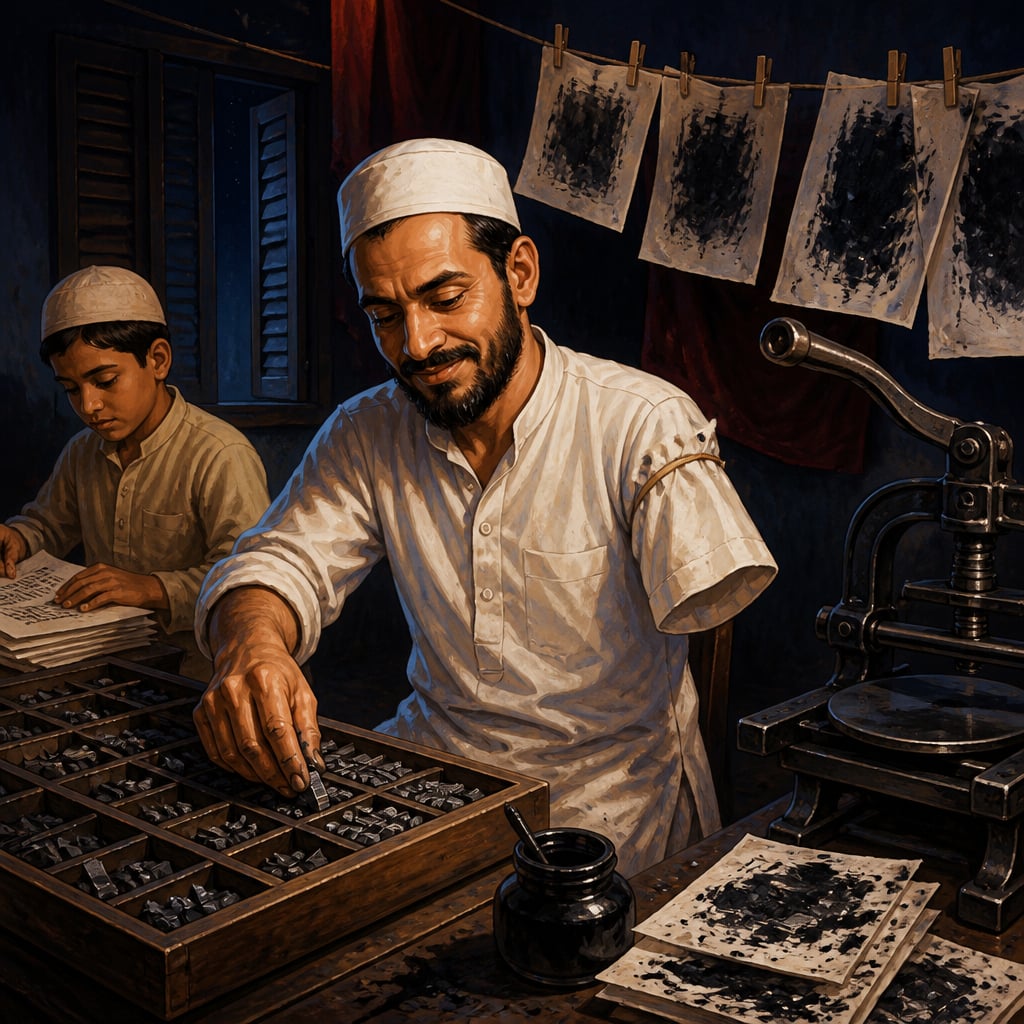
In the 1890s the Urdu and Hindi press of the United Provinces was the loudest thing in India that the Raj did not control. A press cost little. One man with a tray of type and a boy to fold sheets could run a weekly.