Mombi Burns
Chengjapao Doungel, the burning of Mombi, and two winters of war in the Manipur hills
On 17 October 1917 fifty sepoys burned the village of Mombi because its chief would not hand over men for the wartime Labour Corps. Chengjapao Doungel of Aisan, the Piba of the Thadou-Kuki clans, answered by calling the chiefs together, and Tintong of Laijang, Pache of Chassad and Ngulkhup of Mombi took the field with him. Two winters, six thousand troops and 126 burned villages later the chiefs surrendered and were interned at Sadiya. Kuki historians call it the Anglo-Kuki War.
The Morning Mombi Burned
It is the morning of 17 October 1917, on a ridge in the Chandel hills southeast of Imphal. The village of Mombi sits along the spine of the ridge. Houses of timber and thatch, granaries heavy with the rice just brought in, pigs under the raised floors. Fifty sepoys stand on the path below. Their officer is J. C. Higgins, President of the Manipur State Durbar, and he has run out of patience.
Higgins has come for men. Britain is three years into a war in Europe and wants labourers from the hills to dig and carry behind the trenches in France. The chief of Mombi, Ngulkhup, has been told to hand over recruits or take the punishment. He has not handed over recruits. He does not come down the path either.
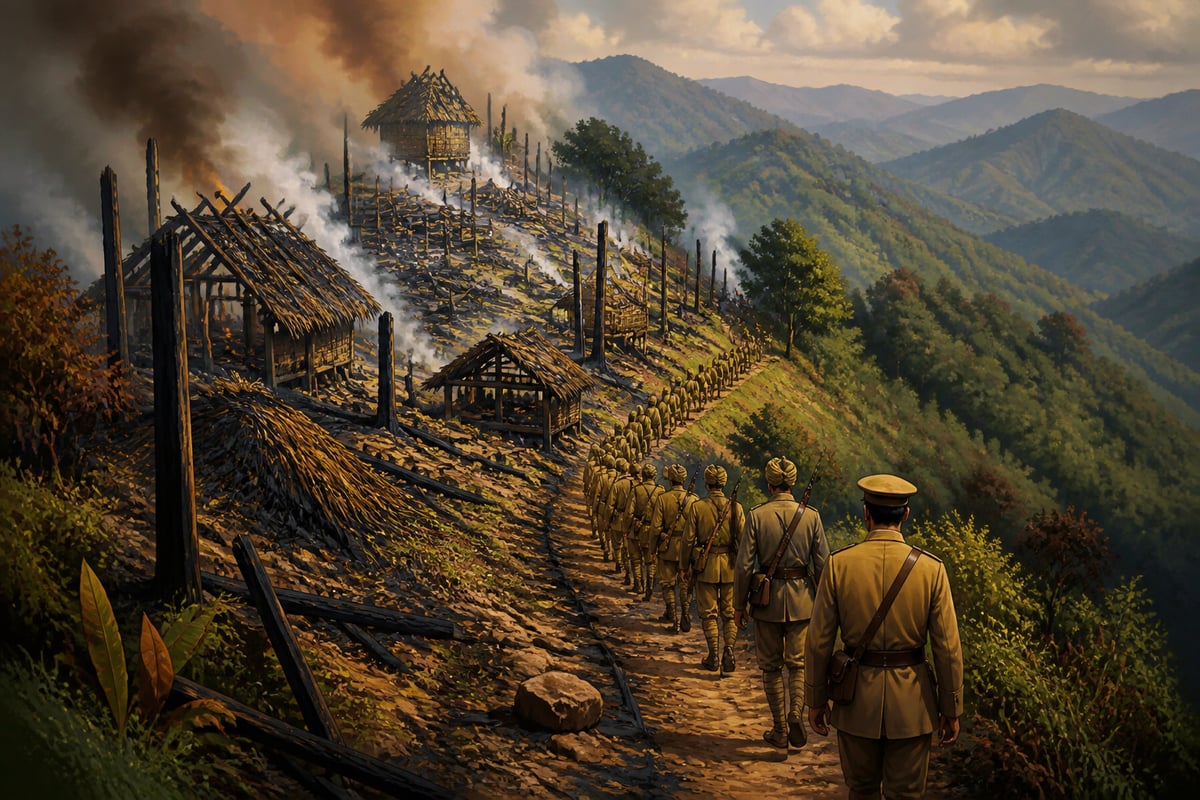
So Higgins gives the order, and by that afternoon Mombi is ash. The granaries go with the houses. Winter is six weeks away and the village has no roof and no rice.
The Raj expected this to end the matter. It had worked in these hills before. What it started instead was the longest campaign the British fought inside India between 1857 and 1942. The man who turned a burned village into a war lived seventy miles to the north, in a village called Aisan.
The Chief of Chiefs
His name was Chengjapao Doungel, chief of Aisan in the Sadar Hills, born in 1868. Among the Thadou-Kuki clans he held a title the British never properly understood. He was the Piba, the senior man of the senior line. His word settled what the clans would do together. British files called him the Kuki Raja, which made him sound like a king with a treasury. He was something harder to fight. He was the point at which forty or fifty independent chiefs agreed.