Two Days Early
Rajendra Nath Lahiri, the historian from Pabna who was hanged at Gonda before the announced date
On the morning of 17 December 1927, a jailer at Gonda district jail told Rajendra Nath Lahiri that he would hang that day, two days before the date on the warrant. Lahiri, a history student at Benares Hindu University who had been tried in two separate cases in two provinces, finished his exercises first. This lesson follows him from a Pabna house where the men were already in prison to the cell where the Raj decided it could not wait.
The Man Doing Push-Ups
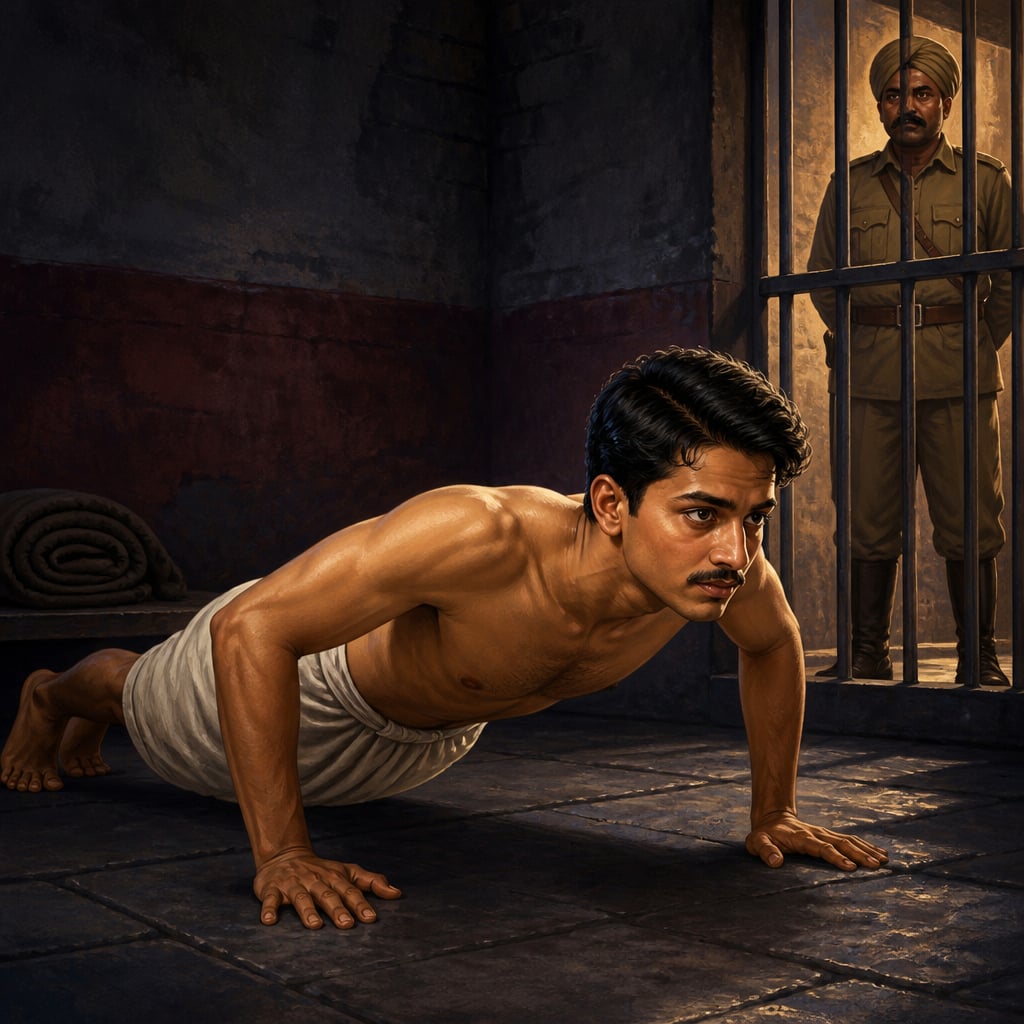
It is the morning of 17 December 1927, in a condemned cell at the district jail in Gonda, a small town in the United Provinces. The floor is cold. A man of twenty-six is on it, working through his exercises, the same set he has done every morning for two years of prison.
His name is Rajendra Nath Lahiri. He was an MA student of history at Benares Hindu University before he came here.
The jailer comes to the bars and watches him. The date on the warrant everyone has been told about is 19 December. That is two days away. The jailer has come to say that it is today.
Lahiri does not stop. That is the detail every account of this morning keeps, and it is the detail worth sitting with. A man is told he will hang within the hour, and he finishes his exercises first. The rest of this lesson is about why a young historian ended up on that floor, and what he thought he was doing.
The Boy from Pabna
Lahiri was born in 1901 at Mohanpur, in Pabna district of east Bengal, now in Bangladesh. His father, Kshiti Mohan Lahiri, and his elder brother were both in prison at the time for their work with the Anushilan Samiti, the old Bengal secret society.
Read that again. He was born into a house where the men were already in jail for this. He did not discover the movement at college. He was handed it at birth.
At about nine he was sent to his uncle's family in Varanasi, and he grew up there. He did well at school and went on to Benares Hindu University to read history. He was secretary of the university's health union. He wrote articles for Bengali journals. On paper he was exactly the kind of young man the Raj wanted: educated, mild, useful.