The Man Who Was Not on the Train
Thakur Roshan Singh, the farmer who trained the shooters, and the four different routes to one gallows
Thakur Roshan Singh was a farmer from Shahjahanpur who went to jail for a Non-cooperation procession in 1921, joined the Hindustan Republican Association in 1924, and taught its students how to shoot. Most accounts place him nowhere near the train at Kakori, yet he was hanged in the Kakori case at Naini jail on 19 December 1927, for a death during a raid at Bamrauli eight months before it. This lesson states that contest plainly and closes the chapter on the men who were not caught.
The Man at the Back of the Crowd
It is 1921, in Bareilly, and a procession is moving through the streets. The Non-cooperation Movement is a year old. Men who have left government jobs and boys who have left college are walking behind banners, and the district has banned exactly this. Somewhere in the crowd walks a farmer from Shahjahanpur named Roshan Singh. He is twenty-nine years old. He has come with volunteers he brought himself from his own district.
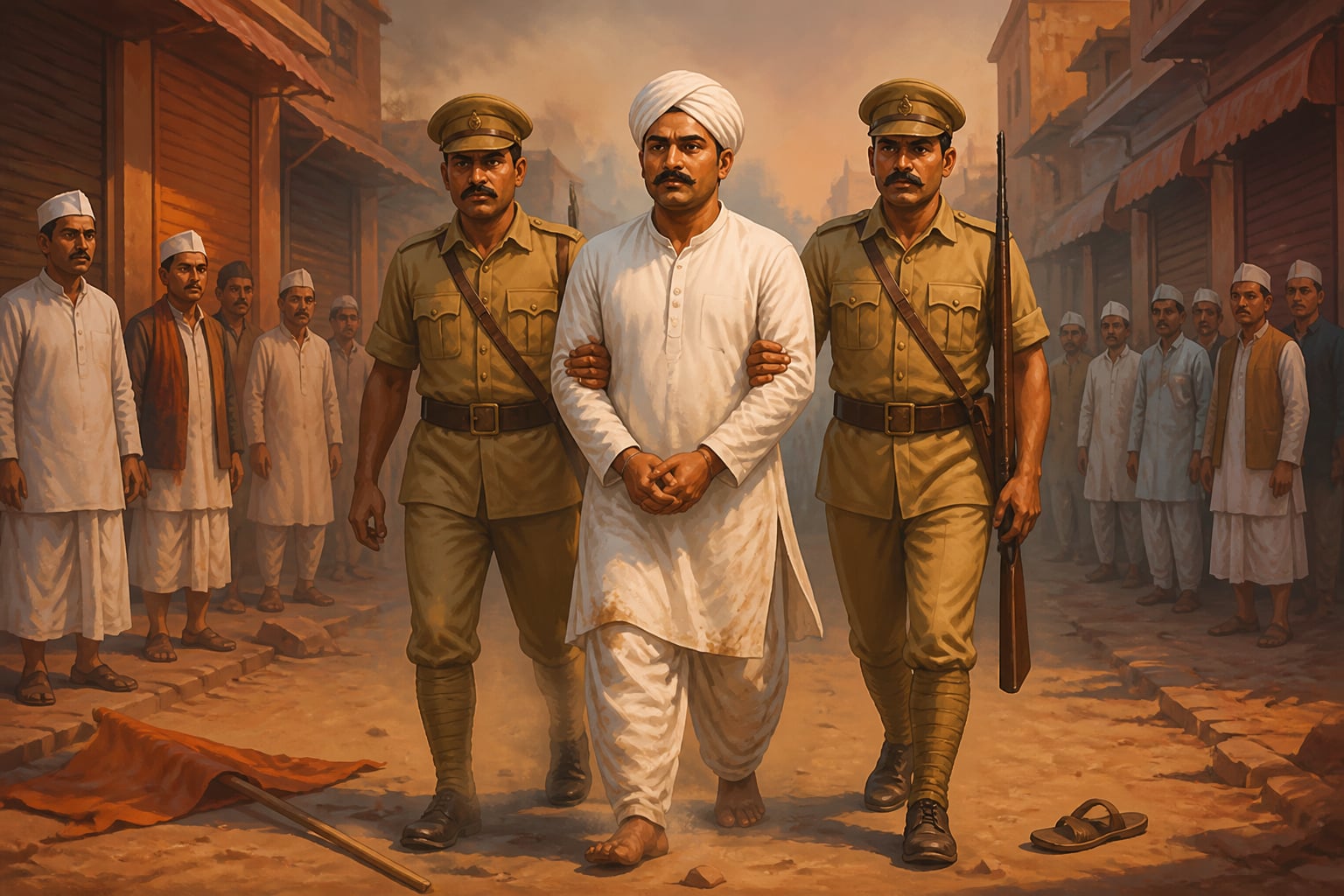
The police fire on the procession. Afterwards the arrests begin, and Roshan Singh is one of the men taken. He draws two years of rigorous imprisonment in Bareilly Central Jail. He is not a student, not a poet, not an organiser. He is a farmer with a good eye and a steady hand, and he has just learned what the open road costs.
Six years later he will be hanged for a murder at a robbery, in a case named after a train he was almost certainly nowhere near. This lesson is about how that happened, and why he never once asked to be let off it.
Who He Was Before Any of This
Roshan Singh was born on 22 January 1892 in the village of Nabada, in Shahjahanpur district of the United Provinces. His family were Rajputs who farmed. He grew up handling a gun the way village men of his district did, for crop-guarding and for shooting. He became very good at it.
That is the whole of his early record, and it matters more than it looks. Almost every other man in this chapter came to the underground through books. Sanyal came through a reading circle in Benares. Bismil came through the Arya Samaj and Urdu verse. Lahiri came through a university hostel. Roshan Singh came through a field.
He was also older than most of them. When he joined the Hindustan Republican Association in 1924, after his release from Bareilly, he was thirty-two. Bismil was twenty-seven. Azad was seventeen. Manmath Nath Gupta was about sixteen. Roshan Singh walked into a party of students and found himself the oldest man in the room.