The 8 Down at Kakori
Chauri Chaura, the HRA, and the twenty minutes that put four men on a gallows
On the evening of 9 August 1925, ten men stopped the 8 Down passenger train near Kakori and hammered open the guard's iron safe. This scene-setter lays out the board they were standing on: Chauri Chaura and the calling off of Non-cooperation, the Hindustan Republican Association founded in October 1924, and its manifesto The Revolutionary. A stray shot killed a passenger named Ahmed Ali, and that death turned a robbery into a hanging offence.
The Chain at Kakori
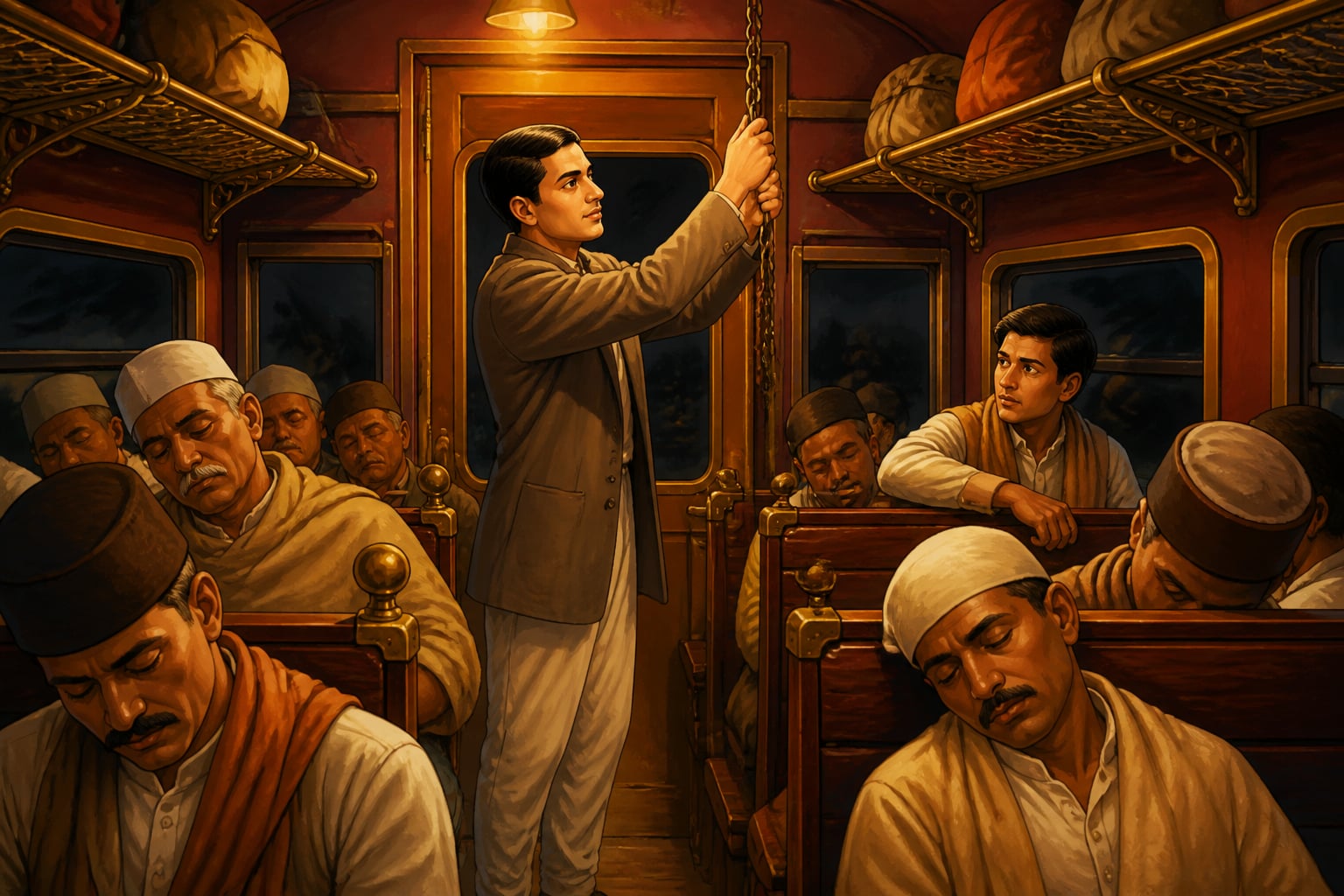
It is Sunday, 9 August 1925, a little after eight in the evening. The 8 Down passenger train from Saharanpur is running the last few miles into Lucknow. It has just left the small station of Kakori. Inside the second-class compartment, a young man reaches up and pulls the emergency chain.
Brakes bite. The train drags to a stop in open country, with fields on both sides and no platform anywhere. Ten men get down onto the track. Some carry Mauser pistols. They have bought second-class tickets like ordinary passengers, because that is how you get close to the guard's van.
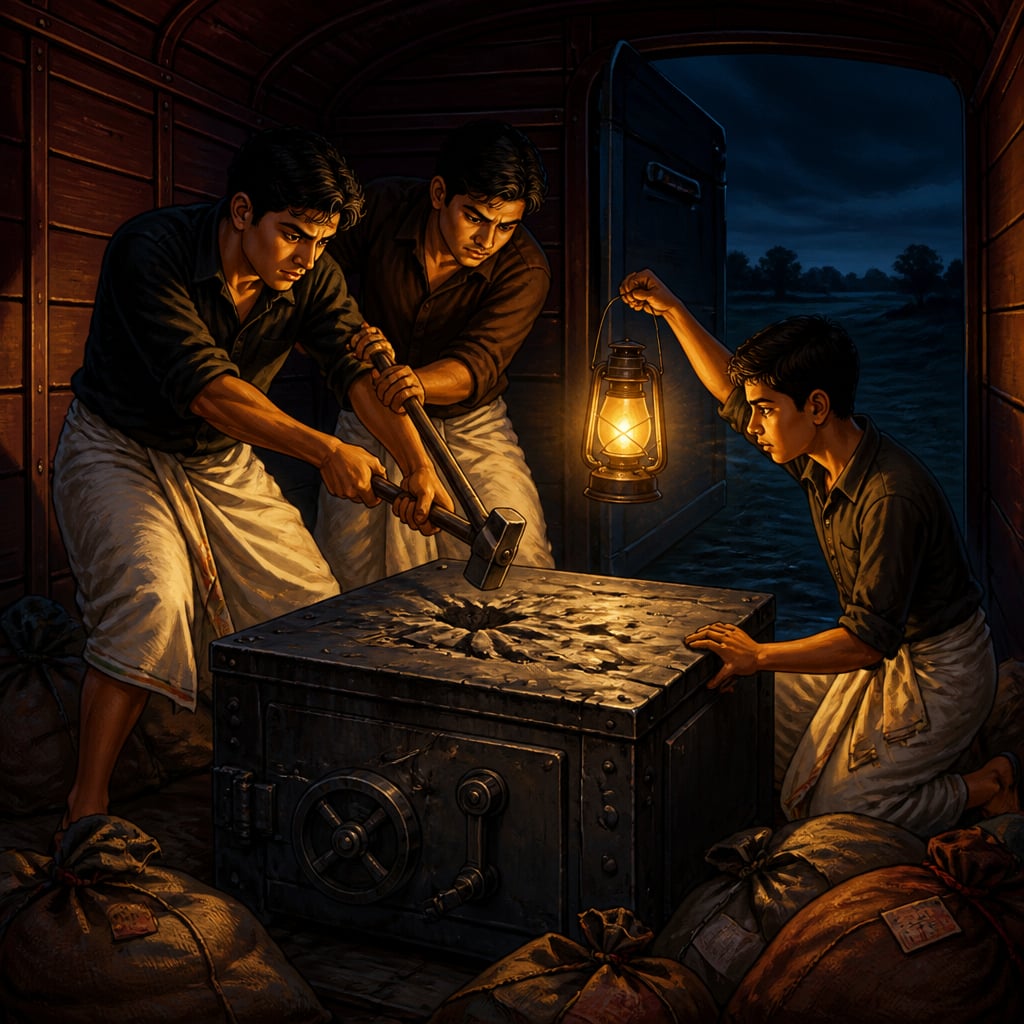
Two of them put the guard face down on the embankment. The rest go for the iron safe bolted into his van. They have no key and no dynamite. They have a hammer.
The safe is government money, collected from railway stations along the line and travelling to the treasury at Lucknow. The men hammering at it are not robbers. They are the Hindustan Republican Association, they are nine months old as a party, and they have run out of money to buy pistols with. What happens in the next twenty minutes will put four of them on a gallows.
How the Board Got Like This
To understand why ten educated young men were standing on a railway line with a hammer, go back three years.
On 4 February 1922, in a small town in Gorakhpur district called Chauri Chaura, a crowd of Non-cooperation volunteers was fired on by the police. The crowd turned, drove the police into their own station, and set it alight. Twenty-two policemen died.
Gandhi's answer was immediate. On 12 February, at Bardoli, the Congress Working Committee suspended the Non-cooperation Movement on his insistence. He believed a movement that could not stay non-violent under pressure had no right to continue. He fasted for five days. He was arrested a month later and sentenced to six years.