Two Schoolgirls in Comilla
Fifteen and fourteen, they walked into the District Magistrate's room at Comilla with a letter about a swimming club, and spent the next eight years in jail for what they did there
On 14 December 1931 Santi Ghose and Suniti Choudhury, schoolgirls of fifteen and fourteen, shot Charles Stevens, the District Magistrate of Tippera, in his own room at Comilla. The court gave them life rather than the gallows because of their ages, and both said they were disappointed. This lesson follows the school chain that recruited them, the trial, the eight years inside, and the fifty years each of them spent afterwards as a doctor and a legislator.
Ten in the Morning at the Magistrate's House
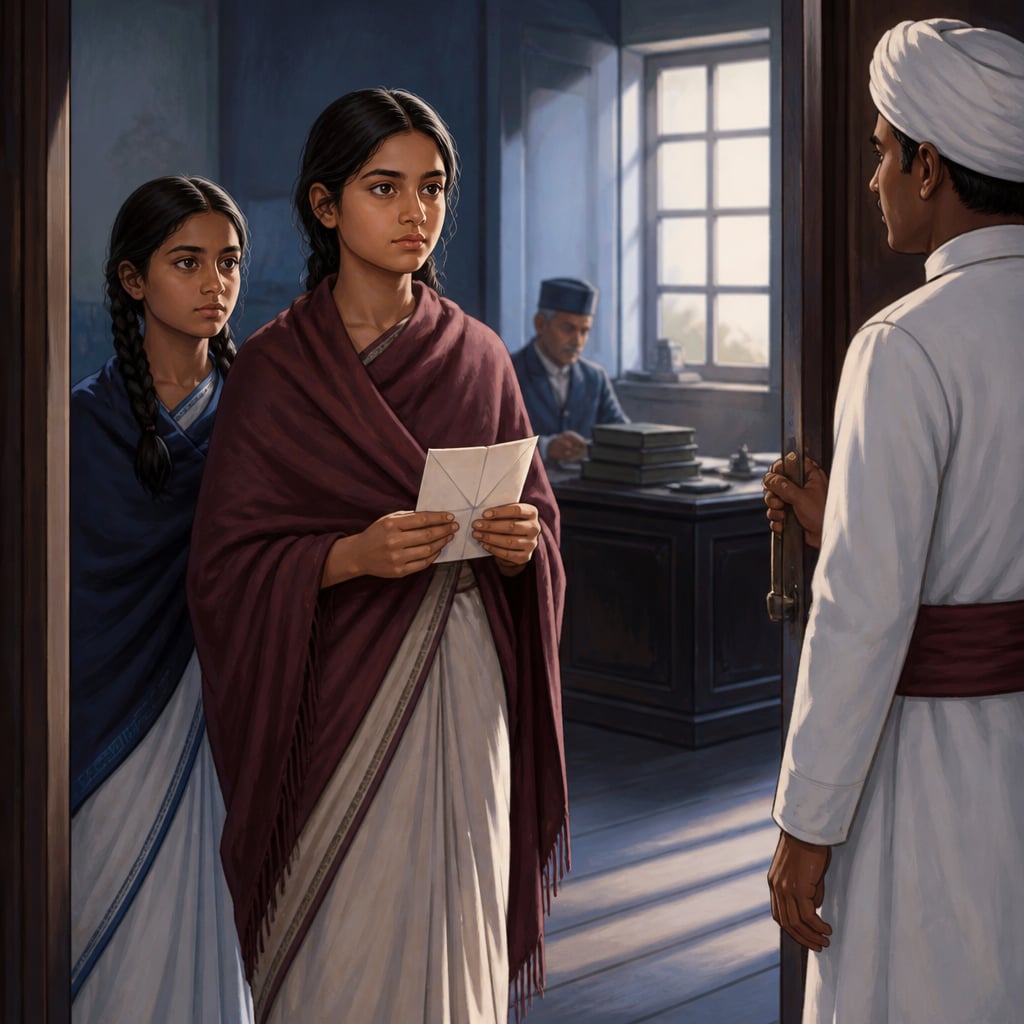
It is Monday, 14 December 1931, about ten in the morning. A carriage stops outside the house of the District Magistrate of Tippera, in the town of Comilla in east Bengal. Two schoolgirls get down. They are wearing shawls against the December cold, and they have a letter with them. It asks permission to hold a swimming competition for a girls' club.
The magistrate is Charles Geoffrey Buckland Stevens. He is the most powerful man in the district. For two years he has run the government's answer to Civil Disobedience here: arrests, orders, the police in the villages. The girls are shown in. He reads their letter.
The taller one is Santi Ghose. She is fifteen, and her father teaches philosophy at Victoria College in this town. The other is Suniti Choudhury. She is fourteen. Her father's government pension has been stopped and two of her elder brothers are in custody without trial.
Under the shawls are two small automatic pistols.
What happens in the next few seconds takes ten minutes to read about and ninety years to argue over. Stevens dies in his own room. The two girls do not run. They stand there until the police come. They then spend eight years explaining, first to a court and then to a jail, why a fourteen year old had a gun.
The Town, and Why It Was Ready
Comilla was a district town of the kind the Raj governed by one man. Tippera district had a magistrate, a police force, and a college. It also had something else: a memory.
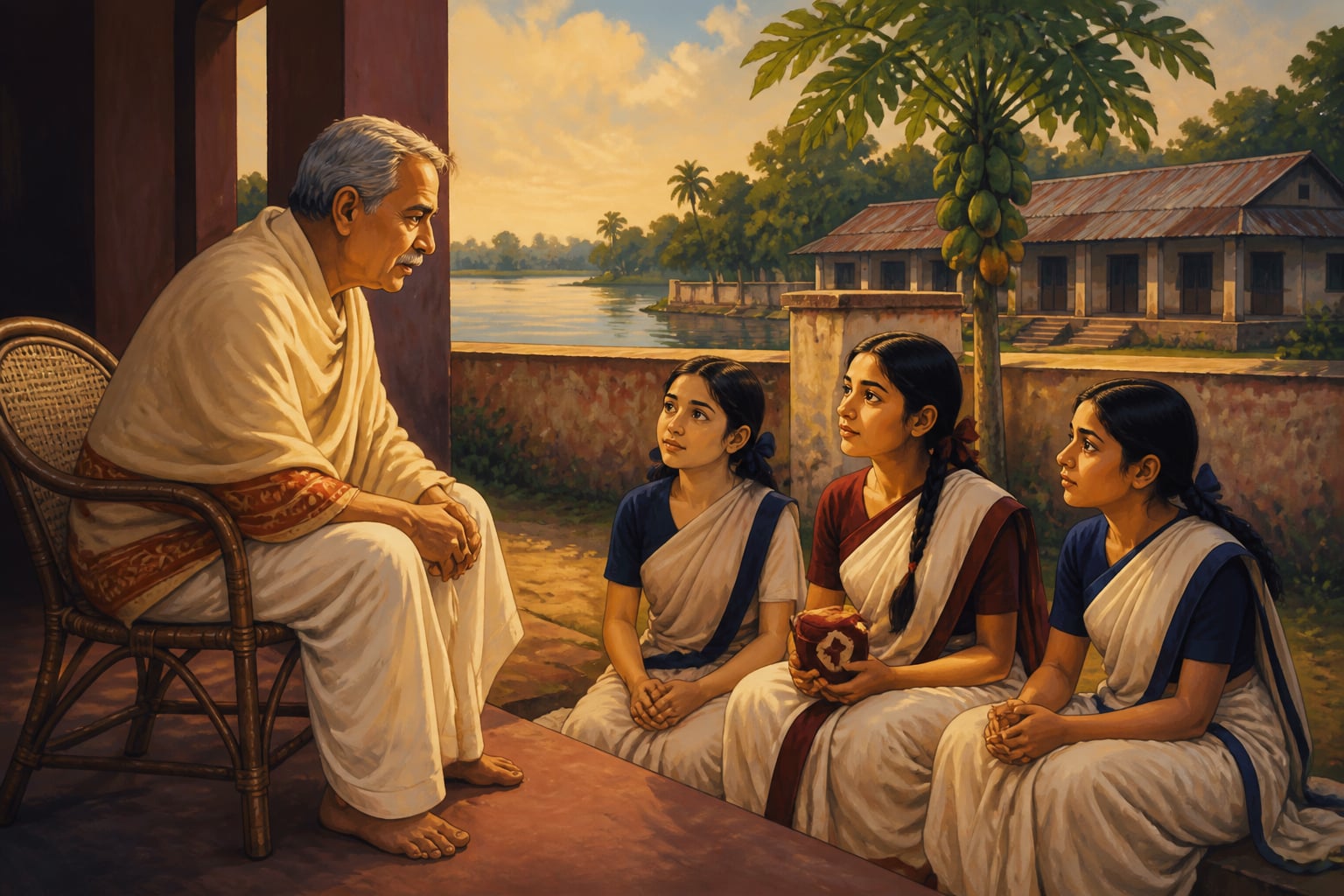
Ullaskar Dutta lived in Comilla. He had made bombs for the Alipore case of 1908 and been sentenced to death. The sentence was turned into transportation. He came back from the Andamans with his health gone and his name known in every house. Children in that town grew up knowing who the old man down the road was. That is not a metaphor for how the underground spread. That is literally how it spread.