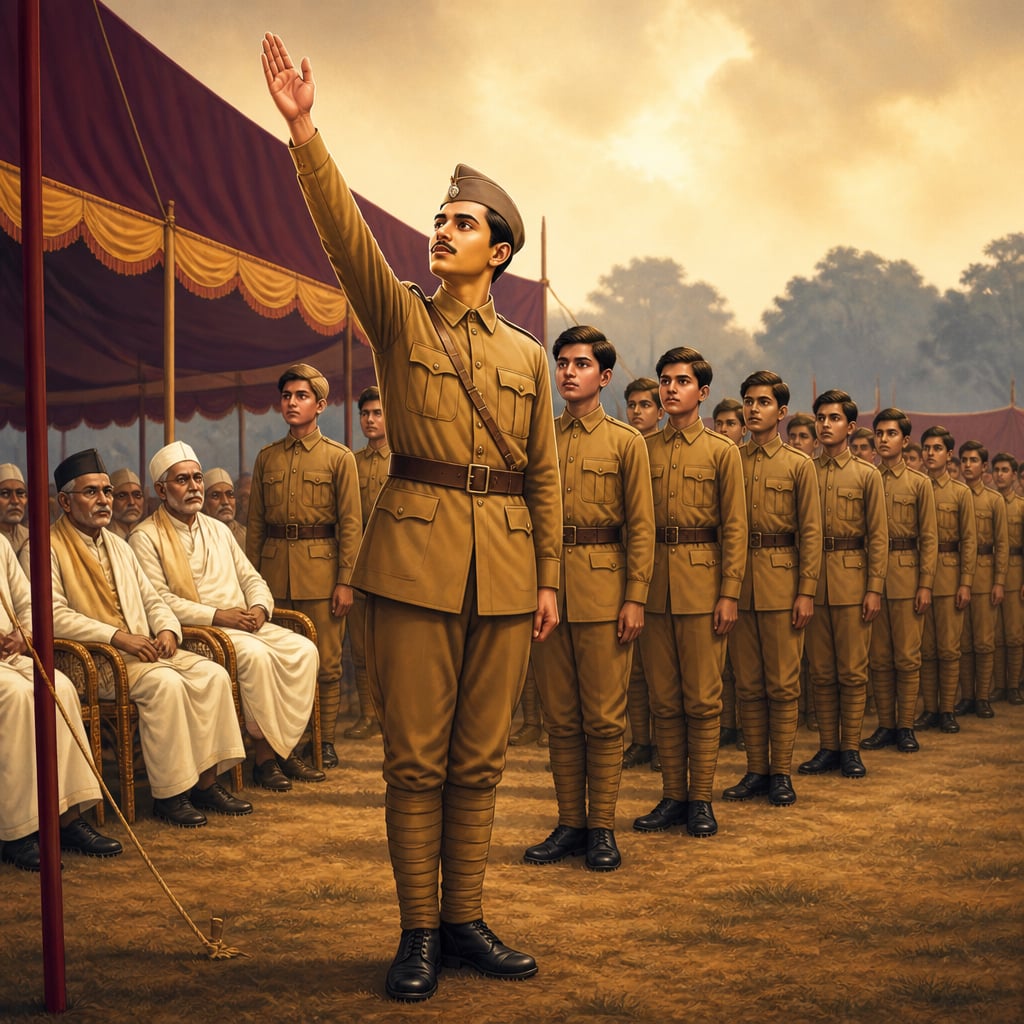
The Writers' Building Winter
Three young men in European dress walked into the Government of Bengal on 8 December 1930, and the wave that followed was the youngest Bengal had ever sent.
On 8 December 1930 Benoy Basu, Badal Gupta and Dinesh Gupta shot the Inspector General of Prisons inside the Writers' Building in Calcutta and died rather than be taken. This scene-setter maps the two years that followed: the Bengal Volunteers, the schoolgirls of Comilla, and Bina Das at her own convocation. It asks the question the chapter answers person by person, which is why Bengal's last armed wave was made almost entirely of teenagers.
The Corridor on the First Floor
It is Monday, 8 December 1930, late morning. Three young men walk up the steps of the Writers' Building in Calcutta, the long red block on Dalhousie Square where the Government of Bengal keeps its offices. They are dressed in European clothes: jackets, trousers, shoes. The clerks who pass them see three well dressed visitors with business upstairs.
Under the jackets are loaded revolvers.
The oldest is twenty two. His name is Benoy Basu, and four months ago he shot the Inspector General of Police in a hospital ward in Dacca. The second, Dinesh Gupta, is nineteen. The third is eighteen and everyone calls him Badal, which is his party name. His real name is Sudhir Gupta. He comes from a village near Dhaka. He joined the group two years ago, when he was sixteen.
They walk to the first floor and into the room of Lieutenant Colonel N. S. Simpson, the Inspector General of Prisons. Prisoners in Bengal jails had a particular name for the way they were handled under him, and the three young men have come because of it. They shoot him at his desk. Then, instead of running, they stay.
What follows is a gun battle in a government corridor, in the middle of a working day, in the heart of British Calcutta. It ends with all three of them dead or dying by their own hands. Nobody in that building expected this. That is the whole point of the next three years in Bengal, and the question worth holding is why the people doing it kept getting younger.
Who the Bengal Volunteers Were
The three men in the corridor belonged to the Bengal Volunteers, and the group's origin is one of the odder facts in this story. It began in the open, not underground.