The Prati Sarkar of Satara
The parallel government that ran village courts, grain and an army across some six hundred villages of Satara, from 1943 until it wound itself down in 1946
With a warrant out for him and a reward on his head, Nana Patil told the villages of Satara to stop going to the Raj's courts and bring their quarrels to his instead. The Prati Sarkar that grew out of that ran village courts, moved grain, fought the liquor trade and kept order through the Toofan Sena across roughly six hundred villages. It outlasted Tamluk by well over a year, and it ended not in defeat but because Indians finally had a government of their own.
The Man Who Would Not Stay in the Village
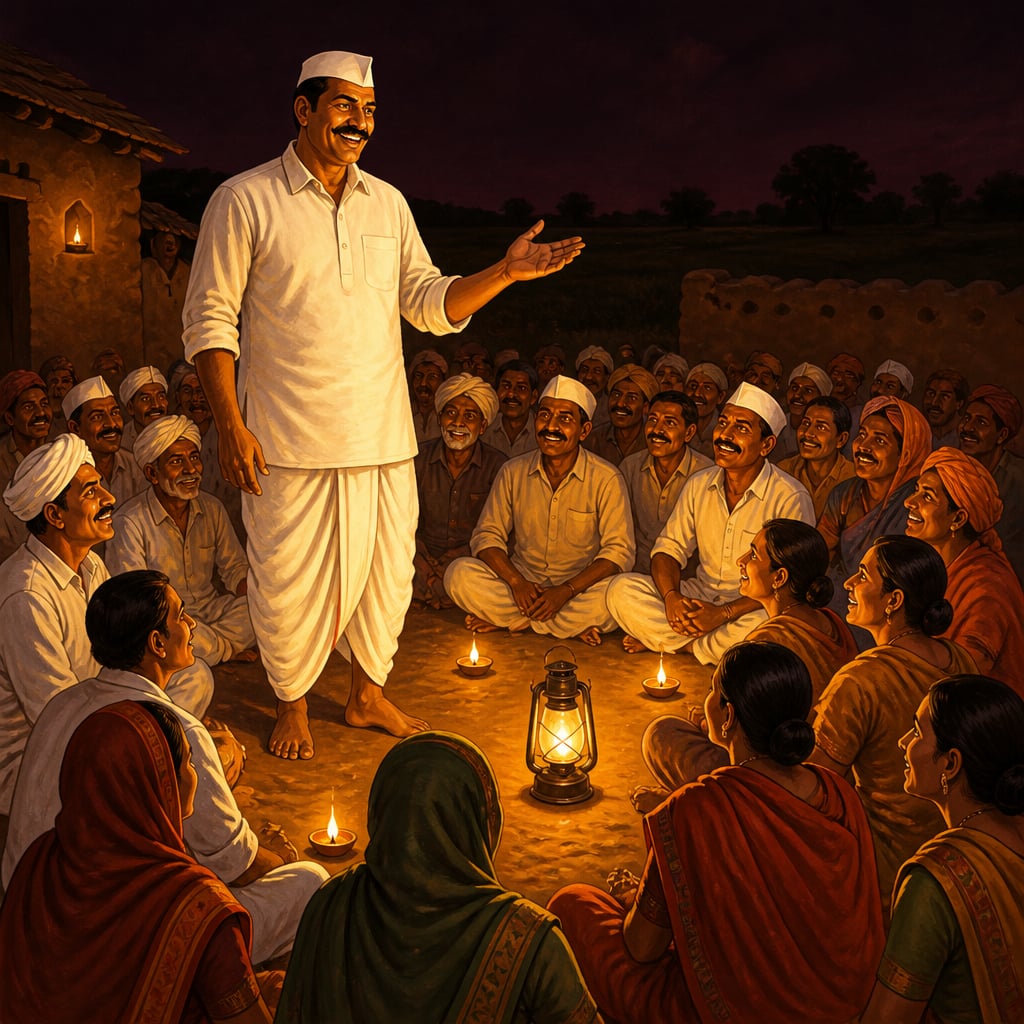
It is a night in the middle of 1943, in a village somewhere in the Satara district of western Maharashtra. A crowd has gathered in the dark, with lamps, because a man has come to speak. He is very tall, well over six feet, and he speaks a rough village Marathi that makes people laugh out loud.
He is not supposed to be here. There is a warrant out for him. There has been a warrant out for him since August 1942, and there is a reward on his head. Policemen are looking for him in four districts. He speaks anyway, and when he finishes he walks out into the fields and is gone before morning.
His name is Nana Patil. He is telling the villagers something simple and very difficult. Do not go to the government's courts. Do not pay the government's revenue. Do not go to the government's police. Bring your quarrels to us instead, and we will settle them.
Over the next three years the villages did exactly that. The thing they built was called the Prati Sarkar, the parallel government. It outlasted the Quit India movement that started it. It outlasted the Tamluk government in Bengal by well over a year. It did not stop until 1946. The question this lesson answers is not how it began. Rebellions are easy to begin. The question is how a government with no capital, no treasury from the state, and a wanted man at its head kept going for three years.
What 1942 Left Behind in Satara
The Quit India resolution passed in Bombay on 8 August 1942. By the early hours of 9 August, Gandhi and every senior Congress leader who could have given instructions was in jail. Chapter 4 of this book opens on that night. What follows in every lesson since is what districts did when nobody was left to tell them what to do.