सात्विक थाली
प्याज़-रहित दिन, मौसमी रसोइयां, और बासी खाने की शांत अस्वीकृति: कैसे हिंदू pantry farm-to-table शब्द आने से पहले बनी
कुछ दिनों में रसोई प्याज़ और लहसुन को अलग रखती है। कुछ महीनों में चटनी कच्चे आम की बनती है, दूसरों में तिल और गुड़ की। कल का चावल गाय को दिया जाता है, सुबह के खाने के लिए गर्म नहीं किया जाता। यह पाठ हिंदू pantry के तीन शांत नियमों को खोलता है - सात्विक gradation, Ritucharya मौसमी प्रोटोकॉल, और no-basi अनुशासन। और दिखाता है कि मानव भोजन की 2,600 साल पुरानी योजना farm-to-table movement से छब्बीस शताब्दियां आगे है, और gut microbiome साहित्य से पच्चीस शताब्दियां आगे है।
दादी जो मंगलवार को प्याज़ से इनकार करती हैं
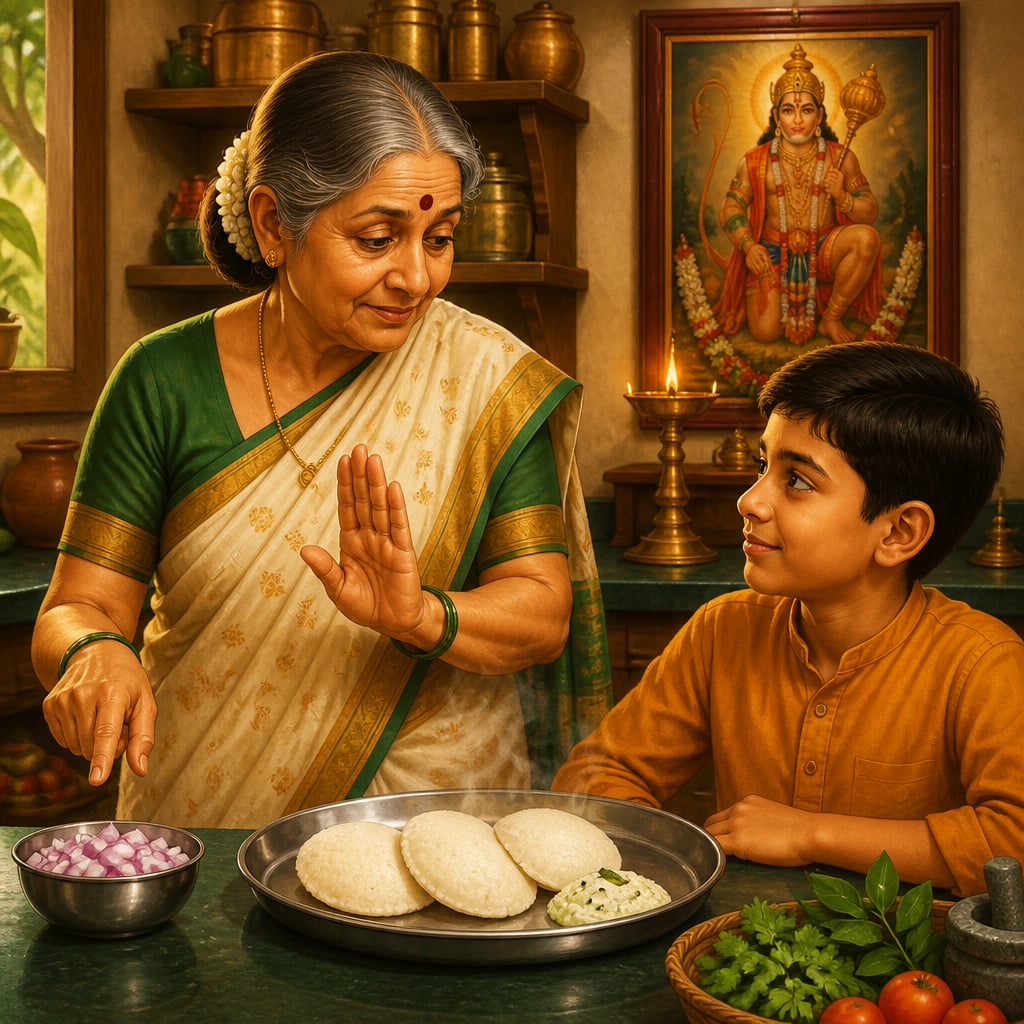
1996 की एक मंगलवार की सुबह, मातुंगा, बंबई में एक छोटे से फ्लैट में एक ग्यारह साल का लड़का इडली खा रहा है। उसके सामने की चटनी हल्के रंग की लकड़ी जैसी दिख रही है। इसे भुनी हुई मूंग दाल, नारियल, अदरक और इमली से बनाया गया है। इसमें कोई प्याज़ नहीं है। कोई लहसुन नहीं है। वह लड़का, जो सप्ताह के हर दूसरे दिन लाल चटनी खाता है, पूछता है कि ऐसा क्यों है। उसकी दादी, जो चूल्हे पर अपने पिता के लिए डोसे पलट रही हैं, पीछे मुड़े बिना जवाब देती हैं। मंगलवार है। आज नहीं। फिर वह उसी सपाट लहजे में कहती हैं जिसमें वह सभी रसोई के नियम बताती हैं: हनुमान जी का दिन है।
लड़का पूछता है, हनुमान और प्याज़ का क्या संबंध है। दादी जवाब नहीं देती। वह डोसे को पलटती है, इसे उसकी थाली में रखती है, और तुलसी को पानी देने के लिए बाहर चली जाती है।
बीस साल बाद, यही लड़का बेंगलुरु के एक माइक्रोबायोम लैब में एक पोस्टडॉक्टोरल शोधकर्ता है। वह 2022 में Cell में तंजानिया के हदज़ा लोगों के मौसमी आहार भिन्नता पर एक पेपर पढ़ता है। हदज़ा एकमात्र सतत शिकारी-संग्रहकर्ता आबादी है जिसका बड़े पैमाने पर अध्ययन किया गया है। वह पढ़ता है कि हदज़ा का माइक्रोबायोम गीले और सूखे मौसम में साफ तरीके से बदलता है, और यह सूजन, चयापचय रोग और प्रतिरक्षा की कमजोरी से बचाता है। उसी पेपर में, वह पढ़ता है कि आधुनिक औद्योगिक आहार ने इस मौसमी बदलाव को लगभग पूरी तरह समतल कर दिया है। और यह नुकसान आधुनिक समय की बीमारियों जैसे ऑटोइम्यून रोग और चयापचय की बीमारी से जुड़ा हुआ है। वह पेपर को नीचे रखता है, अपना फोन उठाता है, और अपनी दादी को कॉल करता है।
वह पूछता है, मंगलवार को प्याज़ क्यों नहीं? अब वह सत्तर के दशक में है। वह अभी भी सीधा जवाब नहीं देती। बजाय इसके, वह उसे अपनी रसोई के तीन नियमों के बारे में बताती है। ऐसे दिन थे जब प्याज़ दूर रहती थी। ऐसे महीने थे जब रसोई अनाज बदलती थी। और हर दिन एक सरल नियम था कि कल का खाना गाय और कौए का था, परिवार का नहीं। बासी मत खाओ, वह कहती है। कल का खाना मत खाओ। तुम लोगों ने सब कुछ भूल दिया है।
तीन अनुशासन, एक थाली
हिंदू रसोई, जब तक वह परिवार के किसी सदस्य के सामने एक थाली रखती है, तीन अनुशासनों को लागू कर चुकी होती है जिन्हें आधुनिक wellness दुनिया अब फिर से एक-एक टुकड़े में खोज रही है।
पहला है सात्विक (sattvic) गुणों का विभाजन। खाने को तीन गुणों के साथ पढ़ा जाता है - सत्व, रज और तम। रसोई पहले की ओर झुकती है। भगवद्गीता के सत्रहवें अध्याय, श्लोक आठ से दस, इसी वर्गीकरण को समर्पित हैं। गीता कहती है कि सात्विक खाने रसीले, ताज़े, शांत, सुखद और जीवन को समर्थन देने वाले होते हैं। राजसिक खाने कड़वे, खट्टे, नमकीन, बहुत गर्म और जलन वाले होते हैं। ये दर्द, दुख और बीमारी पैदा करते हैं। तामसिक खाने बासी, बेस्वाद, बदबूदार, बचे हुए और अपवित्र होते हैं। कुछ दिनों में, कुछ घरों में, कुछ महीनों में, राजसिक प्याज़ और लहसुन को थाली से दूर रखा जाता है। न कि ये बुरे खाने हैं, बल्कि क्योंकि उस दिन का अनुशासन सत्व की ओर झुका होता है। रसोई खाने को दिन के अनुसार संरेखित (align) करती है।
दूसरा है ऋतुचर्या (ritucharya) - मौसमी खाने का नियम। चरक संहिता, सूत्रस्थान के छठे अध्याय में, दुनिया का सबसे पुराना documented मौसमी पोषण प्रोटोकॉल है। भारतीय कैलेंडर के छः मौसम, हर एक के अपने निर्धारित खाने, पकाने के तरीके, तेल और परहेज़ हैं। यह नियम स्पष्ट है। रस (rasa) की गुणवत्ता - शरीर का स्वाद और पाचन की अनुभूति - मौसम के साथ बदलती है। खाने को इस बदलाव का समर्थन करना चाहिए, उसे नुकसान नहीं पहुंचाना चाहिए। चरक लगभग 600 ईसा पूर्व लिखते हैं। Alice Waters ने 1971 में Berkeley में Chez Panisse खोला। अंतर छब्बीस शताब्दियों का है।
तीसरा है बासी (basi) का अनुशासन। कल का पका हुआ खाना, परंपरागत हिंदू रसोई में, वह सुविधा नहीं है जो आधुनिक फ्रिज़ में बन गया है। इसे गाय और कौए को दिया जाता है। दिन का खाना दिन की सुबह पकाया जाता है। मनुस्मृति, याज्ञवल्क्य स्मृति और अपस्तंब गृह्य सूत्र सभी एक ही निर्देश देते हैं अलग-अलग शब्दों में: रात भर रखा पका हुआ खाना अपनी प्राण शक्ति खो देता है। आयुर्वेदिक भाषा में, खाना तामसिक हो गया। आधुनिक भाषा में, खाने में बैक्टीरियल load बढ़ गया और volatile विटामिन नष्ट हो गए। दोनों पढ़ाई एक ही अवलोकन के लिए अलग-अलग शब्दावली हैं।
ये तीन अनुशासन एक सात्विक थाली में मिल जाते हैं। थाली ताज़ी है। थाली मौसमी है। थाली हल्की है। कुछ दिनों में, थाली सामान्य से भी सरल है। इनमें से कोई भी कदम सजावटी नहीं है। हर एक एक वास्तविक रसोई नियम है जिसका शास्त्र में आधार है और आधुनिक शोध से समर्थन है।
भारत भर में यह प्रथा
सात्विक गुणों का विभाजन अलग-अलग घरों में अलग-अलग तरीकों से जीवित है। दक्षिण भारतीय स्मार्त और अयंगर परिवार आमतौर पर प्याज़ और लहसुन को रोज़मर्रा की रसोई से पूरी तरह दूर रखते हैं। कई ब्राह्मण और वैष्णव घर देश भर में उन्हें सोमवार को शिव के लिए, मंगलवार को हनुमान के लिए, गुरुवार को गुरु के लिए, शनिवार को शनि के लिए छोड़ देते हैं। हर एकादशी और प्रदोष पर भी। पुष्टिमार्ग के परिवार गुजरात और राजस्थान में वल्लभ परंपरा का पालन करते हुए अक्सर पूरे साल की रसोई प्याज़ और लहसुन मुक्त रखते हैं। जैन रसोई, जिससे व्यापक हिंदू रसोई चुपचाप कुछ सीखती है, साल भर उन्हें निकालती है। यह सिद्धांत है कि कंद सब्जियों को जड़ से निकाला जाता है, पूरा पौधा एक बार में मर जाता है।

ऋतुचर्या महाद्वीप के कृषि वर्ष से गुजरती है। वसंत (spring) में, रसोई हल्की होती है और कड़वी सब्जियां आती हैं। आंध्र उगादि में नीम के फूल और गुड़, महाराष्ट्र में चीनी के साथ कड़वा करेला, तमिल नाडु में कच्चे आम की चटनी। गृष्म (summer) में, रसोई ठंडी होती है। आंध्र में गुड़ और काली मिर्च की पनाकम, उत्तर में कच्चे आम का पन्ना, बिहार में भुने चने का सत्तू, लगभग हर जगह जीरे और अदरक के साथ मठ्ठा। वर्षा (monsoon) में, रसोई गर्म और सूखी होती है। कम कच्चा खाना, ज़्यादा खिचड़ी, ज़्यादा अदरक, ज़्यादा काली मिर्च। केरल में ओणम और पूरे भारत में जन्माष्टमी के तले हुए मिठाई खाने इसलिए क्योंकि बारिश पाचन अग्नि को कमजोर करती है। शरद (autumn) में, रसोई मीठी और चिकनी होती है। शरद पूर्णिमा की दूध-चावल की खीर, चांदनी में रखी जाती है। बर्षा के बाद के हफ़्तों में ताज़ा घी के व्यंजन। हेमंत और शिशिर (cold months) में, रसोई समृद्ध और गर्म होती है। मकर संक्रांति की तिल-गुड़ की मिठाइयां, उत्तर भारतीय सर्दियों में गाजर का हलवा। पोंगल के फसल अनाज के व्यंजन। तिल के तेल और महाराष्ट्रीय संक्रांति की गर्म खिचड़ी।

बासी का अनुशासन दिन के साथ चलता है। सुबह का खाना सुबह पकता है। शाम का खाना शाम को पकता है। दोपहर को पका चावल रात को नहीं खाया जाता। उसे गाय, कुत्ते, कौए या चींटी को दिया जाता है। यह बलि (bali) ritual है जो दोपहर के खाने को बंद करती है। दही जो खट्टी हो गई है, उसे मठ्ठा में डाला जाता है, कभी फेंका नहीं जाता। दूध जो फट गया है, उसे और भी आगे paneer या chhena में बदलने दिया जाता है। रसोई के पास एक सर्किट है जिससे कल की बची चीज़ें गुज़रती हैं। और वह सर्किट परिवार की सदस्य की थाली से नहीं गुज़रता। ब्रह्मवैवर्त पुराण इस नियम को तीन शब्दों में कहता है। पर्युषित-अन्न वर्ज्य (paryushita-anna varjya)। बासी खाना अलग रखना चाहिए। मनुस्मृति स्पष्ट सूची देती है: रात भर रखा खाना, खट्टी चीज़, किसी दूसरे के इस्तेमाल किए हुए हाथ से छुई चीज़। कुछ भी द्विज की थाली में नहीं आता।
ये प्रथाएं सभी समुदायों और वर्णों में एक समान नहीं देखी गईं। कई कृषि और मज़दूर समुदायों के लिए, जिनके लिए सुबह कल का चावल खाना या भूखे रहना था, बासी का नियम literal रूप से follow नहीं किया गया। यह प्रथा हमेशा choice का अनुशासन था, वहां मौजूद जहां परिवार को चुनने की क्षमता थी। इस पाठ्यक्रम में यह ईमानदारी से कहा गया है। यह नियम एक समान कानून नहीं था। यह एक specification था कि अनुकूल परिस्थितियों में सर्वश्रेष्ठ हिंदू रसोई कैसी दिखती है। शास्त्रों ने यह optimum बताया। रसोई ने वही किया जो परिवार कर सकता था।
शास्त्र क्या कहते हैं
भगवद्गीता 17.8 से 17.10 सात्विक गुणों का आधार स्रोत है। गीता सात्विक खाने की विशेषताएं नाम देती है: जीवन, शक्ति, स्वास्थ्य, आसानी और संतोष को बढ़ाने वाले। जो खाने रसीले, नरम, पोषक और दिल को भाते हैं, वे सात्विक हैं। जो कड़वे, बहुत खट्टे, नमकीन, बहुत गर्म, तीखे, सूखे और जलन वाले हैं, दर्द, दुख और बीमारी पैदा करते हैं, वे राजसिक हैं। जो बासी, बेस्वाद, सड़े हुए, खराब, बचे हुए और अपवित्र हैं, वे तामसिक हैं। यह वर्गीकरण निषेध के रूप में नहीं, बल्कि शरीर विज्ञान के रूप में दिया गया है। जो रसोई सत्व चुनती है, वह शरीर के दीर्घकालीन आराम को चुन रही है।
चरक संहिता की ऋतुचर्या अध्याय procedural text है। सूत्रस्थान का छठा अध्याय साधक को छः मौसमों से गुज़ारता है और हर एक के लिए प्रमुख रस, खाने को पसंद करने के तरीके, परहेज़ करने के तरीके, पकाने की विधि, तेल और daily routine के adjustments बताता है। सुश्रुत संहिता इस ढांचे को दोहराती है और refine करती है, खासकर सर्जिकल recovery के लिए। अष्टांग हृदयम, सातवीं शताब्दी में वाग्भट द्वारा संश्लेषण, इस protocol को सबसे ज़्यादा quoted आधुनिक संदर्भ text में condensed करता है।
बासी का prohibition धर्म साहित्य में फैला हुआ है। मनु 4.211 पर्युषित अन्न (रात भर रखा खाना) को गृहस्थ के लिए unsuitable खानों की सूची में नाम देता है। याज्ञवल्क्य स्मृति भी यही prohibition करती है। अपस्तंब गृह्य सूत्र सुबह कल का खाना गाय और कौए को देने को पिछले दिन की रसोई को बंद करने की ritual के रूप में नाम देता है। ब्रह्मवैवर्त पुराण पर्युषित अन्न को explicitly तामसिक नाम देता है। भगवद्गीता 17.10, जहां यह यतयामं गतरसम (food जो time खो चुका है और essence खो चुका है) कहती है, यह गीता का इसी नियम को नाम देना है। पांच अलग-अलग textual streams में, संदेश identical है। आज का खाना आज पकाओ।
प्रतीकवाद
हिंदू पढ़ाई में, खाना fuel नहीं है। यह अन्न (anna) है - एक divine substance जिसका अपना देवता है, अन्नपूर्णा, खाने की दाता, पार्वती का रूप जो शिव को खिलाती है जब शिव खुद भिक्षा मांगते हैं। तैत्तिरीय उपनिषद के आनंदवल्ली अध्याय में अन्न को ब्रह्म के साथ identify किया गया है। भृगु ऋषि समझते हैं। खाना ब्रह्म है। सभी प्राणी खाने से जन्मते हैं। खाने से जीते हैं। खाने में ही return करते हैं।
अगर खाना अन्न है, तो रसोई मंदिर है। रसोई का cook पुजारी है। और खाना offering है। सात्विक गुणों का विभाजन एक offering की purity का अनुशासन है। ऋतुचर्या एक offering की seasonality का अनुशासन है। बासी का निषेध एक offering की freshness का अनुशासन है। बासी offering कोई offering नहीं है। सर्दियों में summer-heavy offering कोई offering नहीं है। सत्व के दिन राजसिक offering कोई offering नहीं है। रसोई हर खाने में पुजारी का वही logic लागू कर रही है जो altar पर लागू होता है।
कुछ दिनों में प्याज़ और लहसुन को दूर रखने का symbolic-physiological अर्थ है जो wellness market ने नहीं सुना है। दोनों कंद आयुर्वेद में ushna (गर्म) और राजसिक हैं। उनका स्वाद और गंध घंटों तक सांस, पसीने और शरीर में रहता है। ध्यान, जप या upavasa (fasting) के दिन, साधक शरीर को शांत चाहता है। इंद्रियों को ठंडा चाहता है। मन को अंदर की ओर निर्देशित चाहता है। प्याज़ और लहसुन उस दिन सिस्टम को opposite direction में खींचते हैं। यह exclusion कंद का道德 निर्णय नहीं है। यह थाली को दिन के inner work के साथ align करना है।
शरीर क्यों प्रतिक्रिया करता है
चौथा layer, habit architecture। हिंदू रसोई किसी भी परंपरा में सबसे elegant calendar-cued food system चलाती है। cue है सप्ताह का दिन, lunar fortnight का tithi, या कृषि वर्ष का मौसम। routine है pantry में corresponding adjustment। reward है वह शरीर जिसने अपने जीवन की rhythm के साथ alignment में खाना खाया है। James Clear की Atomic Habits में highest-leverage habits वे होती हैं जो environmental cues से tied होती हैं जो बिना साधक के effort के आती हैं। हिंदू रसोई कम से कम ढाई हज़ार सालों से सबसे reliable cues पर चल रही है - कैलेंडर और मौसम।
सात्विक गुणों का विभाजन identity पर काम करता है। जिस घर के सदस्य ने चालीस मंगलवार तक सात्विक खाना खाया है, उसे याद रखने की ज़रूरत नहीं है। रसोई एक quiet identity बना चुकी है जो एक rotating restraint के आसपास है। Wendy Wood की Good Habits Bad Habits इसे context-anchored habit formation की सबसे ताक़तवर form कहेगी। हिंदू रसोई कभी खाने वाले से नहीं पूछती कि हर दिन क्या खाना है। दिन निर्णय लेता है।
ऋतुचर्या protocol शरीर विज्ञान पर काम करती है। शरीर की enzymatic capacity, gut motility, और microbial composition मौसमी temperature, daylight और humidity के साथ बदलते हैं। एक आहार जो इन बदलावों के पार constant रहता है, शरीर को एक ऐसे context में adapt करने के लिए कहता है जिसमें शरीर नहीं है। एक आहार जो मौसम के साथ बदलता है, शरीर को वहां मिलता है जहां शरीर पहले से है। हिंदू pantry के seasonal pivots aesthetic choices नहीं हैं। वे physiological matches हैं।
बासी का नियम दो अर्थों में freshness पर काम करता है। पहला है microbiological। tropical climate में room temperature पर पका खाना हर छः से आठ घंटे में measurable bacterial load जमा करता है। Chennai की रसोई में कल का चावल सुबह तक mesophiles की एक non-trivial colony बन गया होता है। गाय इन्हें handle कर सकती है। परिवार की सदस्य को, नियम कहता है, ऐसा करने की ज़रूरत नहीं है। दूसरा है biochemical। thiamine और folate जैसे heat-labile vitamins खाना पकाने के बाद बारह से चौबीस घंटे में significantly degrade हो जाते हैं। हिंदू रसोई, इससे पहले कि कोई यह measure कर सके, एक निष्कर्ष encode कर चुकी थी। आज का खाना आज पकाओ।
लैब को क्या मिला
शोध का layer घना और हाल का है। Sonnenburg और colleagues ने 2022 में Cell में एक landmark study publish किया। इसका शीर्षक है - तंजानिया के हदज़ा शिकारी-संग्रहकर्ताओं के gut microbiome में मौसमी cycling। हदज़ा पृथ्वी पर आखिरी continuous शिकारी-संग्रहकर्ता आबादियों में से एक है। वे गीले और सूखे मौसम में radically अलग तरीके से खाते हैं। wet season में एक तरह का शिकार, dry season में दूसरा तरह का gathering। यह पेपर दोनों मौसमों में उनके gut microbiome composition को measure करता है। परिणाम? significant cyclical variation। bacterial taxa खाने की supply के साथ synchronized होकर appear और disappear होते हैं। यही पेपर Western industrial-diet microbiomes को भी measure करता है। और क्या पाता है? seasonal cycling लगभग पूरी तरह absent है। authors seasonal microbial variation की loss को metabolic, autoimmune और inflammatory disease में rise से connect करते हैं। Charaka, छब्बीस शताब्दियां पहले, seasonal eating को dosha balance की foundation के रूप में prescribe करता है। यह seasonal microbiome paper, microbial terms में, वही prescription है।
Bhattacharya, Bhattacharya और Das ने 2014 में Journal of Ayurveda and Integrative Medicine में एक controlled trial चलाया। यह एक सात्विक आहार और standard mixed diet के cognitive और metabolic effects को देखता है। बारह हफ़्तों में। सात्विक-diet group को serum lipid profile, perceived stress scores और sleep-quality में significant improvements दिख गए। यह trial छोटा है। पर direction गीता के vivardhanah claim के साथ consistent है - life, ease और health में increase।
बासी का research ज़्यादा granular है। भारतीय Medical Research Council का National Institute of Nutrition कई बार cooked Indian foods के bacterial load पर publish करता है जो ambient temperature पर store होते हैं। findings सभी studies में consistent हैं। चावल, दाल और दही की preparations गर्मी की स्थितियों में आठ से बारह घंटे में safe threshold cross कर जाते हैं। NIH के Mark Mattson, time-restricted eating पर काम कर रहे हैं। 2019 के NEJM में उन्होंने दिखाया कि daily cycle के अंदर food intake का timing composition जितना ही matter करता है। metabolic और cellular benefits circadian window के daylight portion में intake को confine करने से आती हैं। आज का खाना आज खाने का हिंदू नियम, time-restricted-eating language में, food को उसी circadian frame में खाने की practice है जिसमें वह बना था।
एक और stream। Jawaharlal Nehru University के Tilak और colleagues ने 2018 में Indian Journal of Microbiology में Allium genus consumption (प्याज़, लहसुन, leek) पर एक study चलाई। bulbs, nutritionally rich होने के बावजूद, gut की evening biochemistry को एक more राजसिक profile की ओर shift करते हैं। elevated histamine और autonomic nervous system पर documented mild excitatory effect के साथ। यह study को over-read नहीं किया जा सकता। effect छोटा है। पर direction bulbs की Ayurvedic classification को राजसिक के रूप में confirm करता है। और यह बताता है कि contemplative दिन में, हिंदू रसोई उन्हें क्यों अलग रखती है।
दुनिया इसे अब क्या कहती है
आधुनिक echoes precise हैं।
Farm-to-table, locavore और seasonal eating अब global food economy के एक multibillion-dollar segment को drive करते हैं। Alice Waters ने 1971 में Berkeley में Chez Panisse खोला। उसे seasonal cooking का originator माना जाता है। Michael Pollan की The Omnivore's Dilemma 2006 में दो मिलियन copies बेचीं और canonical text बन गई। Dan Barber की The Third Plate 2014 में argument को आगे ले गई। लेकिन ये सभी काम Charaka को cite नहीं करते। Ritucharya को cite नहीं करते। seasonal-eating का modern literature एक English-language rediscovery है। और हिंदू protocol जो modern English-language reader को कभी बताया नहीं गया, उसे rediscover कर रहे हैं।
सात्विक गुणों का विभाजन अब clean eating movement के रूप में बिकता है। 2010s की wellness aisle Gita के सत्रहवें अध्याय के साथ word-for-word match करने वाले शब्दों से भरी है। Light। Fresh। Plant-forward। Anti-inflammatory। Life-supporting। यह vocabulary अंग्रेज़ी में सात्विक vocabulary है। Goop cleanses बेचता है। Whole Foods alkaline diets बेचता है। Mediterranean diet, Greek और Italian peasant cuisines से repackaged, dietary-guidance throne पर बैठा है। original तीन-गुना gradation, जिसे गीता 17.8 से 17.10 में Krishna ने नाम दिया, सभी के पीछे है - बिना acknowledgement के।
बासी discipline अब fresh-cooked और time-restricted eating के रूप में बिकता है। Mark Mattson का 2019 NEJM paper एक 4 billion dollar intermittent-fasting industry शुरू कर दिया है। apps, coaches, prepared-meal services premium prices charge करते हैं उस structure के लिए जो हिंदू रसोई बिना naming के लागू कर रही है। गाय और कौआ, जो कल का चावल और रसोई की बची चीजें लेते थे, modern protocol का हिस्सा नहीं हैं। discipline है।
Market हर fragment को notice कर चुका है। Whole Foods tulasi tea, ghee, turmeric paste और seasonal pickle kits stock करता है। Sweetgreen और दूसरी casual-dining chains seasonal menu को flagship marketing line के रूप में चलाती हैं। Apps जैसे Yummly recipes को season के द्वारा tag करते हैं। 2024 के Bloomberg report ने global clean label और seasonal food segment को 180 billion dollars से ऊपर estimate किया है। कोई भी receipt Indian source को cite नहीं करता। यह course receipt है।
अपने लिए इसे क्या कहें
इस पाठ से आगे, जब wellness aisle clean eating कहे, तो पुरानी form कहो। Sattvic। जब cookbook seasonal cooking कहे, तो पुराना protocol कहो। Ritucharya। जब app fresh-cooked या time-restricted कहे, तो पुराना नियम कहो। Anna abasi - वह खाना जो बासी नहीं है। दादी जो मंगलवार को प्याज़ से इनकार करती थीं और हर सुबह कल के चावल से इनकार करती थीं, बिना यह कहे, किसी भी civilization द्वारा daily practice में डाली गई सबसे sophisticated kitchen protocol चला रही थीं। हम बस उन शब्दों को सीख रहे हैं जिन्हें वह कहने की ज़रूरत नहीं समझती थीं।
Key figures
चरक
Ayurvedic physician; redactor of the Charaka Samhita; author of the Sutrasthana including the Ritucharya chapter that codifies seasonal nutrition. · लगभग 600 ईसा पूर्व से 200 ईसा पूर्व। Charaka Samhita इसी range में dated है, text का मुख्य भाग पहले के end से है और Drdhabala का redaction later end से।
Charaka भारतीय परंपरा में internal medicine का foundational figure हैं। Charaka Samhita, Ayurveda का principal text, आठ sthanas में divide है। ये foundational principles से लेकर pharmacology और therapeutics तक पूरे medical curriculum को cover करते हैं। Sutrasthana का छठा अध्याय, Tasyashitiya Adhyaya, दुनिया का सबसे पुराना documented seasonal nutrition protocol है। Charaka practitioner को छः seasons से गुज़ारते हैं। हर एक के लिए dominant rasa, foods to favour, foods to avoid, cooking method, oils, और daily routine adjustments prescribe करते हैं। उनका underlying argument explicitly named है। जो dosha एक season में जमा होता है, वह अगले में aggravate होता है। रसोई और conduct को shift करना चाहिए इस accumulation को interrupt करने के लिए। यह framework modern farm-to-table movement से छब्बीस शताब्दियां आगे है। और भारतीय household रसोई की operating logic बनी हुई है।
सात्विक plate का Ritucharya pillar सीधा Charaka से आता है। हर भारतीय दादी जो season के साथ चटनी switch करती है, जो गर्मी में रसोई को हल्का करती है और सर्दी में भारी, जो Rama Navami पर panakam serve करती है और Sankranti पर til-gud, knowingly या not, Charaka की protocol चला रही है। जो उन्होंने 600 ईसा पूर्व और 200 ईसा पूर्व के बीच set down की थी। 2022 का Cell paper Hadza microbiome की seasonal cycling पर, microbial-genomic vocabulary में, वही prescription है जो Charaka ने classical Sanskrit में लिखा था। यह course पुराने source को नाम देता है।
वाग्भट
Ayurvedic synthesist; author of the Ashtanga Hridayam and Ashtanga Sangraha; condenser of Charaka and Sushruta into the most-cited modern reference text. · सातवीं शताब्दी CE
Vagbhata की Ashtanga Hridayam, सातवीं शताब्दी CE में लिखी गई, modern medical और academic curriculum में सबसे ज़्यादा studied Ayurvedic text है। जहां Charaka और Sushruta exhaustive हैं, वहां Vagbhata condensed और memorisable है। elegant Sanskrit verse में लिखी है जिसे practitioners by heart सीखते हैं। उनका Ritucharya पर अध्याय दोनों predecessors को draw करता है। छः शताब्दियों के intervening clinical practice के आधार पर refinements add करता है। Ashtanga Hridayam को आठवीं शताब्दी के Bayt al-Hikma translations के through Baghdad में transmit किया गया। Arabic intermediation के through medieval Europe तक पहुंचा। यह Vagbhata को few Ayurvedic authors में से एक बनाता है जिनका काम non-Indian medical thought को shape करने के लिए colonial period से पहले documented है।
Vagbhata के seasonal prescriptions, Charaka से condensed, वह version हैं जिन्हें most practising Ayurvedic physicians आज cite करते हैं। उनके छः seasons में rasa rotation के verses modern Ayurvedic hospital के seasonal menu के पीछे की operational text हैं। Kerala Panchakarma centre के monsoon protocol के पीछे। और contemporary Ritucharya cookbooks के जो अब English में appear हो रही हैं। जहां Charaka originator हैं, वहां Vagbhata transmitter हैं। दोनों उस lineage में हैं जिसने Bombay के flat में दादी की quiet seasonal pivots को produce किया।
एलिस वाटर्स
American chef; founder of Chez Panisse in Berkeley; canonical figure of the farm-to-table movement; author of multiple seasonal cookbooks. · 1944 में जन्मीं। Chez Panisse 1971 में खुला। आज तक active।
Alice Waters ने 1971 में Berkeley में Chez Panisse खोला। manifesto के साथ कि menu को season से set किया जाएगा। जो local farms उस हफ़्ते grow करते हैं, उससे। और daily availability के fresh produce से। यह restaurant widely को farm-to-table movement को America में originate करने के लिए credit दिया जाता है। Waters ने ग्यारह cookbooks author किए हैं। Edible Schoolyard Project found किया। 2014 में American food culture में अपने contributions के लिए National Humanities Medal receive किया। vocabulary जो उन्होंने introduce की - seasonal, local, fresh, organic - contemporary food media का dominant register बन गई है। Michael Pollan की The Omnivore's Dilemma 2006 में उनका argument mainstream readership में carry forward करती है। segment को multibillion-dollar food economy में grow करती है।
Waters modern echo हैं। उनका काम sincere है। cooking excellent है। American food culture पर impact genuinely transformative है। course उनके contribution को dispute करने में interested नहीं है। course older source को name करने में interested है। Charaka, Chez Panisse से छब्बीस शताब्दियां पहले, seasonal eating को codify किया। greater systematic depth के साथ। richer physiological rationale के साथ। जितना modern movement अभी articulate कर सकी है। Waters को Charaka को know करने की ज़रूरत नहीं थी अपना काम करने के लिए। इस lesson का reader, दोनों को encounter करते हुए, उन्हें साथ hold कर सकता है। Berkeley का farm-to-table menu, beat for beat, Ritucharya का एक fragment है। rediscovered बिना acknowledgement के।
Case studies
Charaka's Ritucharya: The 600 BCE Seasonal Nutrition Protocol
In the sixth chapter of the Sutrasthana of the Charaka Samhita, written in classical Sanskrit between 600 BCE and 200 CE, the Ayurvedic redactor Charaka set down what is, by any honest historical accounting, the world's oldest documented seasonal nutrition protocol. The chapter walks the practitioner through Hemanta, Shishira, Vasanta, Grishma, Varsha, and Sharad in sequence and prescribes for each season the dominant rasa to favour, the foods to add, the foods to remove, the oils to use, the bathing routine, the sleep adjustment, and the daily conduct. Charaka's underlying argument, set down in a single Sanskrit sentence, is that the dosha accumulated in one season aggravates in the next, and therefore the kitchen and the conduct must shift to interrupt the accumulation before it becomes disturbance. Hemanta and Shishira call for sweet, sour, salty, oily, warming foods, ghee, sesame oil, hot khichdi, milk-rice preparations, the harvest grains. Vasanta calls for bitter, pungent, astringent foods, neem flower, raw mango, light cooking, less oil, more spice. Grishma calls for sweet, cooling, hydrating foods, panakam of jaggery and water, buttermilk, green-mango drinks, the cooling sweets. Varsha calls for warming foods to support the compromised digestive fire, ginger, pepper, deep-fried festival foods, less raw food. Sharad calls for sweet, bitter, astringent foods to pacify the accumulated pitta, milk-rice kheer, fresh ghee, light grains. Each prescription comes with its rationale and its scriptural lineage. Sushruta Samhita carries a parallel chapter. Vagbhata's Ashtanga Hridayam in the seventh century CE condenses both into the modern reference text. The chain of transmission is unbroken from Charaka's redaction to the contemporary Ayurvedic college curriculum and the contemporary Indian grandmother's seasonal kitchen.
In the Ayurvedic reading, the body is not an isolated system. It is a small ecology nested inside a larger seasonal ecology, and its humoural balance shifts with the larger ecology's temperature, humidity, and solar declination. To eat the same diet in summer and winter is to ask the body to adapt to a context the body is not in. To eat with the season is to meet the body where the body already is. Charaka's prescription is not a list of permitted foods. It is a structural principle: the rasa that the body's digestive fire is processing differently this month should be the rasa that the kitchen is foregrounding this month. The grandmother does not need to read Charaka to do this. The kitchen has been doing it across enough generations that the practice is wired into the year's procurement, the household's recipe stock, and the festival calendar that sits on top of both.
Ritucharya is the operating logic of the contemporary Indian household kitchen, even where the practitioner cannot name it. Pongal in January features the harvest grains, ghee, and warming sweets of Hemanta and Shishira. Ugadi in March features the bitter neem-flower-jaggery pachadi of Vasanta. Rama Navami in April features the cooling panakam and kosambari of early Grishma. Krishna Janmashtami and Ganesh Chaturthi in monsoon feature deep-fried offerings to support the compromised Varsha agni. Sharad Purnima features milk-rice kheer placed under moonlight to receive the Sharad cooling. Makar Sankranti and Pongal in mid-January feature til-gud and pongal for Hemanta-Shishira warming. The festival calendar and the Ritucharya calendar are the same calendar wearing different liturgical clothes.
A seasonal eating protocol with a six-fold structure, a dosha-based rationale, and a continuous textual transmission was set down in India between 600 BCE and 200 CE and has been the operating logic of Indian household kitchens ever since. No other classical civilisation produced a comparable systematic text. The modern farm-to-table movement, opened in 1971 in Berkeley, is in this light a rediscovery of a protocol the Indian source had been running continuously for the preceding twenty-six centuries. The lesson is not grievance. The lesson is naming. The course teaches the older word.
Every contemporary Indian Ayurvedic college teaches Ritucharya in the foundational year. Every Kerala Panchakarma centre runs a monsoon protocol that descends from Charaka. Every Indian household whose grandmother changes the chutney with the season is, knowingly or not, in lineage with the 600 BCE text. The contemporary English-language seasonal cookbook industry, with its Berkeley canonical figure and its Pollan canonical text, is the modern echo. The course is the receipt that names the older source.
Charaka Samhita, Sutrasthana, Chapter 6 (Tasyashitiya Adhyaya), composition c. 600 BCE to 200 CE. Sushruta Samhita parallel chapter. Vagbhata's Ashtanga Hridayam, seventh century CE, condensation. Bayt al-Hikma Arabic translations of Ayurvedic texts, eighth and ninth centuries CE.
The Sonnenburg Cell Paper of 2022: Microbiome Vindication of Seasonal Eating
In 2022, Justin Sonnenburg, Erica Sonnenburg, and a multi-institutional team published a paper in the journal Cell titled Seasonal cycling in the gut microbiome of the Hadza hunter-gatherers of Tanzania. The Hadza, a population of approximately one thousand individuals living in the Lake Eyasi region of Tanzania, are one of the last continuous hunter-gatherer societies on earth and one of the most-studied references for the microbial ecology of pre-industrial human populations. The Sonnenburg team collected stool samples across the wet and dry seasons over multiple years and ran shotgun metagenomic sequencing to characterise microbial taxa, gene content, and metabolic pathways across the seasonal cycle. The findings were striking. The Hadza microbiome cycles measurably with the seasons, with bacterial taxa appearing and disappearing in lockstep with the food supply. In the dry season, when the Hadza eat more meat, more honey, and fewer plant tubers, certain microbial families (Spirochaetaceae, Prevotellaceae) dominate. In the wet season, when berries, baobab fruit, and tubers are abundant, different families (Succinivibrionaceae, Ruminococcaceae) take over. The cycling is not noise. It is a structured, repeatable, measurable rhythm tracked by the microbial community. The same paper compared the Hadza data to gut microbiome samples from American and European populations on industrial diets and found the seasonal cycling almost completely absent. The industrial microbiome is flat. The hunter-gatherer microbiome is rhythmic. The authors connected the loss of seasonal microbial variation to the modern epidemics of inflammatory bowel disease, autoimmune disorders, type-2 diabetes, and cardiovascular disease, all of which correlate with reduced microbial diversity and reduced microbial seasonal turnover.
Charaka's argument, set down two and a half millennia before the Cell paper appeared, is that the dosha accumulated in one season must be addressed by the foods of the next. The Ayurvedic frame names dosha rather than microbe, but the structural claim is identical. The body is in a different ecological state in each season; the kitchen must shift to meet that state; failure to shift accumulates an imbalance that becomes disease in the following season. The 2022 microbiome paper renders the claim in microbial vocabulary. The Hadza, who eat with the seasons, have a microbiome that cycles with them. The industrial population, which has flattened the seasonal variation, has a microbiome that is also flat, and a disease burden that the seasonal Hadza do not carry. Charaka prescribed the foods. The lab now images the bacteria. The two are different vocabularies for the same finding.
The Sonnenburg 2022 paper has been cited over a thousand times in the two years since publication and has become a foundational reference in the seasonal-eating, fermented-food, and microbial-diversity literature. The American Gut Project, the British Gut Project, and similar large-scale citizen-science microbiome studies have begun designing seasonal-sampling protocols on the model the Sonnenburg team established. Major science journalism outlets, including the New York Times Magazine, the Atlantic, and Wired, have covered the paper as a turning point in the public understanding of why diversity in eating matters. The classical Ayurvedic source has, almost without exception, gone unmentioned in the coverage.
The seasonal eating protocol that Charaka prescribed in 600 BCE is now vindicated, in microbial-genomic vocabulary, by a 2022 Cell paper that did not cite him. This is the canonical pattern of modern wellness research vis-a-vis the Indian source. The mechanism is not denial. The mechanism is friction. Western research operates within a citation network that does not include classical Sanskrit primary sources, and the absence is not noticed because the absence is structural. The course is the bridge. The Hadza microbiome cycles. The Hindu pantry shifts. Both are tracking the same biological rhythm.
When a 2024 wellness magazine prescribes seasonal eating to support gut microbial diversity, the reader is being given, in research-translation vocabulary, the operating logic of the Indian household pantry. The Sonnenburg paper has made the rationale legible to the journal-reading public. The course makes the older source legible to the same reader. The two together complete the picture. The grandmother in the Bombay flat was running a microbiome-cycling protocol two and a half millennia before the microbiome was named.
Sonnenburg, J., Sonnenburg, E., et al., 2022, Cell, Seasonal cycling in the gut microbiome of the Hadza hunter-gatherers of Tanzania. Bhattacharya, B., Bhattacharya, S., Das, A., 2014, Journal of Ayurveda and Integrative Medicine, controlled trial on the cognitive and metabolic effects of a sattvic diet. Mattson, M., 2019, New England Journal of Medicine, on time-restricted eating and metabolic switching.
Chez Panisse, Pollan, and the $180 Billion Seasonal Food Segment
In 1971, Alice Waters opened Chez Panisse in Berkeley, California, with a manifesto that the menu would change daily based on what local farms had produced that week and what was in season in the surrounding agricultural geography. The restaurant became, over the following decades, the canonical reference for what came to be called the farm-to-table movement in American cooking. Waters published Chez Panisse Menu Cookbook in 1982, Chez Panisse Cooking in 1988, The Art of Simple Food in 2007, and eight further cookbooks by 2024, all advocating a seasonal, local, fresh approach to home cooking. In 2006, Michael Pollan published The Omnivore's Dilemma, which sold over two million copies, became the canonical text of the movement, and grew the seasonal-and-local food segment into mainstream American consumer awareness. Dan Barber's The Third Plate in 2014, with a foreword by Waters, carried the argument further into the restaurant industry. Mark Bittman's columns in the New York Times, Yotam Ottolenghi's seasonal cookbooks, and the proliferation of farm-to-table restaurants in every American city consolidated the segment. By 2024, the global seasonal-and-clean-label food market was estimated at over $180 billion. Sweetgreen, Cava, and similar fast-casual chains run seasonal menu as a flagship marketing line. Whole Foods Market, with annual revenues over $20 billion, organises its produce section around seasonality. None of the foundational works of this multibillion-dollar industry, in their indexes or bibliographies, cite Charaka, Ritucharya, the Ashtanga Hridayam, or any classical Ayurvedic source. The seasonal eating literature, in its modern English-language form, is presented as a Western rediscovery.
Seasonal eating, in the Hindu reading, is not a movement. It is the default. The Indian household kitchen has been running on Ritucharya since the protocol was codified by Charaka and refined by Vagbhata. The shift is not from non-seasonal to seasonal. The shift, when an Indian family adopts farm-to-table vocabulary, is from the older name to a newer one. The grandmother who switched the chutney with the season did not need a manifesto. The kitchen did not need a Berkeley restaurant. The protocol was already in the recipe book her mother had handed her, and her mother before her. The modern movement is the same protocol arriving in English in the late twentieth century without its source.
The farm-to-table movement is not under threat from the source being named. Chez Panisse is a great restaurant. Pollan is a thoughtful writer. Sweetgreen is a successful chain. The course is not asking for a boycott. The course is asking for a name. When you read about seasonal eating, when you cook with the season, when you walk into a farm-to-table restaurant, you are participating in a protocol with a precise origin and a continuous lineage. The origin is Charaka. The continuity is the Indian household. Naming the lineage costs the industry nothing and gives the practitioner everything.
Cooption is not always malice. The seasonal-eating literature in the West genuinely did not know of Charaka. The omission is structural rather than hostile, an artefact of a citation network that does not reach across the colonial-era line between Sanskrit primary sources and modern English-language food writing. The defence is naming. Use the older words. Ritucharya. Sattvika. Anna. The movement in Berkeley is allowed to flourish. We are allowed to remember that the Indian kitchen, twenty-six centuries earlier, had already produced the text the movement is rediscovering.
The next time you see a farm-to-table menu, a seasonal cookbook, or a clean-eating Instagram post, you will know two things the modern source does not announce. The protocol has a 600 BCE codification by an Indian Ayurvedic redactor. The kitchen that has run it longest is the Indian household kitchen, continuously, for two and a half millennia. The course is the receipt. Carry it lightly. Use it when needed.
Chez Panisse, Berkeley, opened 1971. Alice Waters cookbooks: 1982 to 2024, eleven volumes. Michael Pollan, The Omnivore's Dilemma, 2006, over two million copies sold. Dan Barber, The Third Plate, 2014. Bloomberg 2024 estimate of global clean-label and seasonal food segment, over $180 billion. Whole Foods Market, fiscal year 2023, revenues over $20 billion.
Historical context
वैदिक से आधुनिक: लगभग 1500 से 1000 ईसा पूर्व - anna की brahman के साथ identification। लगभग 600 ईसा पूर्व से 200 ईसा पूर्व - Charaka Samhita Ritucharya का codification। लगभग 7वीं शताब्दी CE - Vagbhata की Ashtanga Hridayam synthesis। medieval Smriti और Purana साहित्य - basi prohibition को consolidate करना। 1971 CE - Chez Panisse की opening और modern farm-to-table movement। 2022 CE - Sonnenburg seasonal microbiome paper।
Living traditions
सात्विक थाली, Ritucharya protocol, और basi prohibition आज करोड़ों हिंदू घरों में जीवंत हैं। festival calendar में जो साल को organize करती है। vrata kitchens में जो दिन को adjust करती हैं। और उस छोटे daily refusal में कल के चावल को गर्म न करने का।
The sattvic plate, the Ritucharya protocol, and the basi prohibition are alive in tens of millions of Hindu households today. Every Pushti Marg kitchen running its onion-free year, every grandmother changing the chutney with the season, every household in which yesterday's rice goes to the cow rather than the eater, is the system functioning exactly as designed. The vocabulary is the discipline. From this lesson onward, when you read about clean eating, name the older form. Sattvika. When you read about seasonal cooking, name the older protocol. Ritucharya. When you read about fresh-cooked or time-restricted eating, name the older rule. Anna abasi. The plate does not require the names. You do.
- The Pushti Marg Onion-Free Kitchen of Gujarat and Rajasthan: Pushti Marg, the devotional lineage founded by Vallabhacharya in the sixteenth century, runs a year-round onion-and-garlic-free kitchen in observant households. The discipline applies to the family kitchen and to the haveli temple kitchens that prepare bhog for the deity Shrinathji. The cuisine, often called Vaishnav cuisine in Gujarat and parts of Rajasthan, has produced an entire culinary literature of substitutes, asafoetida (hing) for onion-garlic flavour, rich use of ghee, fresh-ground spice masalas, and the famous Vaishnav thali of dishes like mohanthal, dal-bati-churma, and gatte ki sabzi. The discipline is taught from the kitchen rather than the textbook. A Pushti Marg child grows up not knowing the taste of onion in the daily food and not missing it.
- The Festival Calendar as Ritucharya: The Indian festival calendar maps almost exactly onto Charaka's six-season Ritucharya. Pongal and Makar Sankranti in mid-January feature til-gud, pongal-rice, sesame oil, and warming sweets for Hemanta-Shishira. Ugadi and Gudi Padwa in March feature the bitter-sweet neem-flower pachadi for Vasanta. Rama Navami in April features panakam and kosambari for early Grishma. Akshaya Tritiya in late April features cooling drinks and dairy. Krishna Janmashtami in August and Ganesh Chaturthi feature deep-fried offerings (modaks, puranpoli, mathri) to support the compromised Varsha agni. Onam in Kerala in late August features the elaborate sadya, with twenty-six dishes that exemplify the monsoon-recovery menu. Sharad Purnima in October features milk-rice kheer placed under moonlight to receive the Sharad cooling. Diwali in late October to early November features the rich sweets of late Sharad and the harvest abundance. The household does not separately consult Charaka. The festival calendar carries the Ritucharya protocol forward in liturgical clothing.
- The Bali Offering of Yesterday's Surplus to the Cow and the Crow: In traditional Hindu households, the morning ritual includes a small bali offering, a piece of cooked food set aside for the cow, the crow, the dog, and the ant. The custom is part of the Pancha Mahayajna, the five great daily sacrifices, named in the Manusmriti and the Apastamba Grihya Sutra. The bhuta-yajna, the offering to creatures, is one of the five and is fulfilled by setting aside a portion of the day's cooked food for the non-human members of the household ecology. In practice, this ritual also handles yesterday's surplus. The rice that did not get eaten last night is placed at the threshold for the cow on her morning round through the lane, or for the crow that arrives at the kitchen window, or for the ants that find the small heap on the ant-stone in the courtyard. The food is honoured. The eater is fresh. The household ecology eats together.
- Shrinathji Temple Kitchen, Nathdwara: The Shrinathji temple at Nathdwara is the principal seat of the Pushti Marg lineage and runs one of the most sophisticated traditional bhog kitchens in India. The temple kitchen prepares eight separate offerings (ashta yam) across the day for the deity, each in a precise sattvic, onion-garlic-free, seasonally-adjusted Vaishnav style. The bhog menu changes with the festival calendar (Annakut in autumn, the elaborate Janmashtami spread in monsoon, the spring Holi sweets) and with the season's Ritucharya prescription. The temple cooks belong to specific lineages and are trained over decades. The bhog, after offering to the deity, is distributed as prasada to devotees. Visitors with permission can observe the kitchen's operation and partake of the prasada in the dining hall.
- Arya Vaidya Sala, Kottakkal: The Arya Vaidya Sala at Kottakkal, founded in 1902 by P.S. Varier, is one of the most respected continuing institutions of classical Ayurvedic practice in India. The Sala runs a Panchakarma centre, a hospital, a research institute, and a publishing house, all rooted in the Charaka and Vagbhata textual tradition. The Panchakarma centre's diet kitchens are organised according to Ritucharya: the monsoon menu in Karkidakam (the Malayalam month roughly corresponding to Charaka's Varsha) is famous for its seasonal medicinal preparations, including karkidaka kanji, the rice gruel cooked with eleven medicinal herbs that is the foundational monsoon recovery food of Kerala. Visitors undergoing treatment experience Ritucharya not as theory but as the daily menu the kitchen has been running on the same principles for over a century.
Reflection
- तुम्हारे हफ़्ते की eating rhythm कैसी दिखती है? क्या कोई cue है, कोई दिन, कोई season, जो पहले से ही तुम्हारी रसोई को बताता है कि क्या पकाना है? अगर तुम एक single quiet restraint को एक single weekly cue से anchor करो (एक सात्विक मंगलवार, एक no-onion सोमवार, एक fresh-cooked-only सुबह), एक साल में तुम्हारे food से संबंध में क्या बदलेगा?
- The Bhagavad Gita classifies food along three qualities, sattvic, rajasic, and tamasic. The classification is not about taboo or virtue but about the food's effect on the body and mind. If you observed your own meals for a week and asked, after each one, did this food leave me lighter or heavier, clearer or duller, settled or agitated, what would you learn about your kitchen?
- Yesterday's rice, in the classical Hindu kitchen, belonged to the cow and the crow rather than the family. The principle behind the rule is that food is in relationship with time, with the cook, and with the ecology. What would change in your household if you treated the kitchen's surplus not as waste to be managed but as the closing of a loop with the ecology you share your space with?