Narasimha Rao: The Reformer PM
The Silent Revolutionary
P.V. Narasimha Rao took office with a minority government, no mandate for reform, and a collapsing economy. Yet this 70-year-old scholar, dismissed as a 'placeholder,' became the architect of India's economic transformation, implementing revolutionary changes while barely raising his voice. How did the quietest Prime Minister enact the loudest reforms?
The Man Nobody Expected
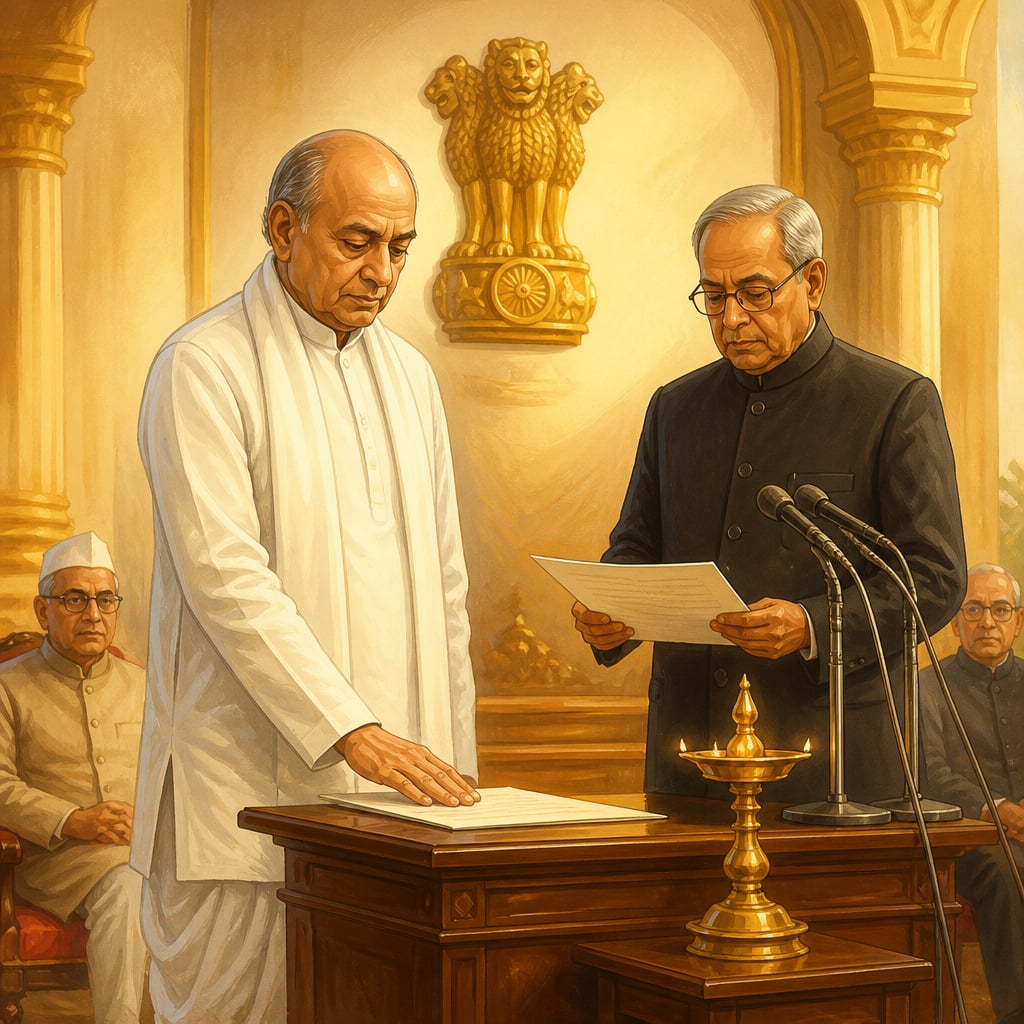
On June 21, 1991, Pamulaparti Venkata Narasimha Rao was sworn in as India's ninth Prime Minister. He was 69 years old, had announced his retirement from politics just weeks earlier, and led a Congress party devastated by the assassination of Rajiv Gandhi. His government commanded only 244 seats, short of the 272 needed for a majority.
The political establishment dismissed him as a 'stopgap', someone to warm the chair until a 'real' leader emerged. The newspapers called him 'Rao the Reluctant.' His own party expected him to fail.
Yet within three years, this quiet, scholarly man from Telangana would dismantle four decades of economic orthodoxy, transform India's relationship with the world, and set in motion changes whose effects are still unfolding today. He did it all without grand speeches, without confrontation, and often without his own party fully understanding what was happening.
This is the story of maunavrata (silent power), the ancient Indian understanding that the deepest transformations often come not from those who shout loudest, but from those who act most wisely.
The Wisdom of the Silent Leader
Rao's leadership style baffled Western observers accustomed to charismatic reformers. But it would have been instantly recognizable to Vidura, the wise counselor of the Mahabharata.
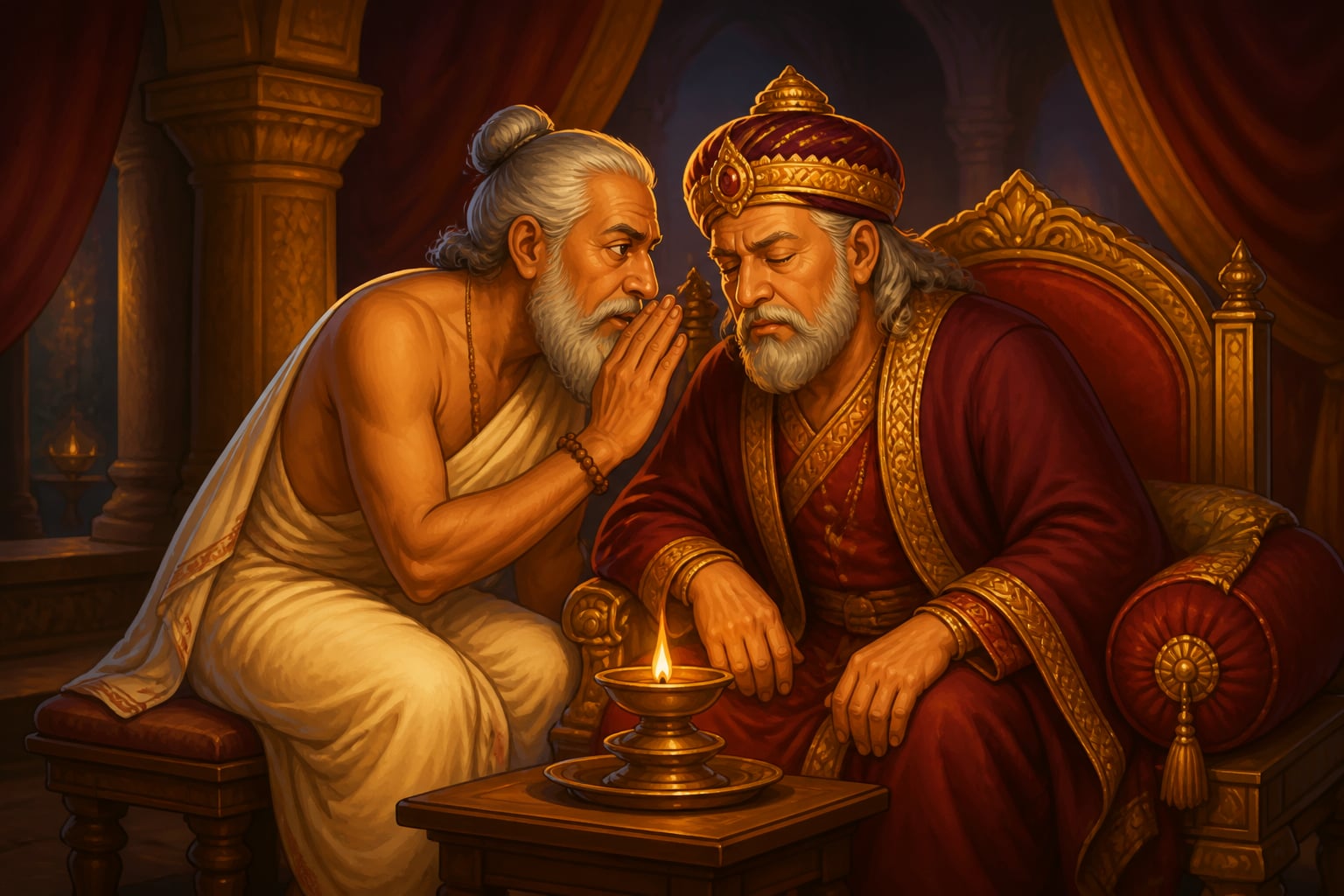
Vidura's counsel to King Dhritarashtra offers a blueprint for Rao's approach:
"मौनं सर्वार्थसाधनम्" Maunam sarvartha sadhanam "Silence accomplishes all purposes."
This wasn't silence born of weakness. It was strategic silence, the kind that allows enemies to underestimate you while you act. Rao understood that India's entrenched interests, powerful unions, protectionist industrialists, socialist ideologues in his own party, could block any reform they understood was coming.
So he moved quietly. The July 1991 budget, presented by Manmohan Singh, contained radical changes buried in technical language. Import licensing was 'rationalized', meaning abolished. Industrial licensing was 'simplified', meaning eliminated. Foreign investment was 'encouraged', meaning the doors were thrown open.
By the time opponents understood what had happened, it was already law.
The Art of Reform by Stealth
The Arthashastra teaches that a wise ruler knows when to act openly and when to move unseen:
"गूढः कार्यमारभेत" Gudhah karyam arabhet "Begin great works in secret."
Rao mastered this ancient principle. Consider how he privatized state enterprises, a political impossibility in 1991 India:
Never call it privatization. Rao used the term 'disinvestment', selling minority stakes while the government retained control. The substance was private capital entering state enterprises; the form preserved socialist optics.
Let others take credit. Manmohan Singh became the public face of reforms. The Finance Minister absorbed the criticism while Rao managed the politics behind the scenes.
Move incrementally. Rather than announce a grand liberalization, Rao issued changes as routine 'policy adjustments.' Each step was small enough to avoid triggering opposition; together, they transformed the economy.
Build coalitions quietly. Despite having no majority, Rao's government survived five years. He negotiated with regional parties, traded favors, and built issue-by-issue support, never forcing a direct confrontation.
Thiruvalluvar, the Tamil sage whose Thirukkural Rao knew intimately, had written:
"செயற்கை அறிந்தக் கடைத்தும் உலகத்து இயற்கை அறிந்து செயல்" Seyarkai arindhak kadaiththum ulagatthu iyarkai arindhu seyal "Though you know the art of action, act according to the nature of the world."
Rao understood that India's nature in 1991 was deeply suspicious of reform. So he reformed without calling it reform.
Global Perspectives: The Quiet Revolutionaries
Rao was not unique in history. Other leaders have transformed their nations through the same strategic patience.

Deng Xiaoping (1904-1997) faced a similar challenge in China after Mao's death. The Communist Party had built its legitimacy on socialist ideology. Deng could not openly embrace capitalism without destroying the party's credibility. His solution was brilliantly Raovian:
- He called markets 'socialism with Chinese characteristics'
- He described his approach as 'crossing the river by feeling the stones'
- He created Special Economic Zones where capitalism could flourish while officially remaining forbidden elsewhere
- He never directly criticized Mao, allowing the party to change while saving face
Lee Kuan Yew (1923-2015) of Singapore took a different but related approach. Facing a tiny, vulnerable nation, he built prosperity through ruthless pragmatism, attracting multinational corporations while maintaining social order. His philosophy: "What is theoretically right may not be practically possible."
| Leader | Challenge | Strategy | Lesson for Rao |
|---|---|---|---|
| Deng Xiaoping | Reform communist China without destroying party | 'Socialism with Chinese characteristics'; gradual opening | Reforms can proceed under old labels |
| Lee Kuan Yew | Build prosperity in tiny, resource-poor nation | Pragmatism over ideology; invite foreign capital | Economic success validates political choices |
| Rao | Reform socialist India with minority government | 'Reforms by stealth'; let crisis force change | Silence and incrementalism defeat entrenched opposition |
The Reforms Take Root
By 1996, when Rao left office, India had been transformed:
- Industrial licensing: Abolished for all but 18 industries (down from hundreds)
- Import tariffs: Slashed from 150% to 50%
- Foreign investment: Automatic approval up to 51% in priority sectors
- Rupee: Made convertible on current account
- Stock markets: SEBI established as independent regulator
These weren't just policy changes, they were the end of the License Raj, the system that had strangled Indian enterprise for four decades.
The results took time to show. GDP growth, which had averaged 3.5% for decades (the 'Hindu rate of growth'), began climbing. By 2005, it would cross 8%. By 2024, India would be the world's fifth-largest economy.
Rao didn't live to see India become a $4 trillion economy. He died in 2004, still underestimated, still controversial, his contribution still debated. But the transformation he began was irreversible.
Modern Resonance: Learning from the Silent Master
In 2014, Narendra Modi took office with a mandate Rao never had, a clear majority, a reform agenda, and public support for change. Yet Modi has cited Rao as a model for certain approaches:
- GST implementation (2017) used Rao-style coalition building, taking opposition states along through negotiation rather than confrontation
- Farm law reforms (2020-2021) showed what happens when the Raovian approach is abandoned, direct confrontation triggered resistance that forced withdrawal
- PLI schemes (Production Linked Incentives) quietly transformed manufacturing policy without ideological debate
The lesson is clear: in a diverse democracy like India, transformation often requires the wisdom of maunavrata, speaking softly while carrying out bold action.
Your Turn: The Power of Quiet Action
Rao's approach offers a personal lesson: dramatic change doesn't require dramatic announcements.
Think about changes you want to make in your life, health, finances, career, relationships. The instinct is to announce grand resolutions: "I'm going to transform my life!" These announcements often trigger resistance, from others who feel threatened, from parts of yourself that resist change.
The Raovian approach is different:
- Make small changes without fanfare
- Let results speak louder than intentions
- Build momentum gradually until change is irreversible
- Avoid triggering opposition by avoiding confrontation
Vidura would recognize this wisdom. So would Thiruvalluvar. And so would the quiet man from Karimnagar who changed India while barely raising his voice.
In the next lesson, we examine the reforms themselves, LPG: Liberalization, Privatization, Globalization, and what they actually changed in India's economic DNA.
John Kotter's change management theory emphasizes 'building a guiding coalition' and 'generating short-term wins' before announcing major change. The principle is similar: reduce resistance through incremental success rather than confrontational announcement.
Indian wisdom adds the dimension of maunavrata, disciplined silence as spiritual practice. Where Western change management is tactical, the Indian approach is rooted in deeper understanding: that ego (announcing intentions) often undermines action (achieving results).
Rao passed 32 major reform measures in his first year, more than the previous four decades combined. Most were implemented before public debate could crystallize opposition.
Context-dependent reform and institutional adaptation
Dani Rodrik's research on 'institutional pluralism' argues that successful reform requires local adaptation. The Washington Consensus failed because it ignored context; successful reformers (Rao, Deng) succeeded because they respected it.
Indian thought has always emphasized context (desh-kaal-patra: place, time, circumstance). The Thirukkural's practical wisdom, rooted in Tamil political realism, anticipates modern contingency theory by two millennia.
Key terms
- Maunavrata
- The vow of silence; strategic silence as a form of power; the discipline of accomplishing through restraint rather than proclamation
- Vinivesh
- Disinvestment; the sale of government stakes in public enterprises to private investors
- Alpamata Sarkar
- Minority government; a government that lacks majority support in the legislature and must build issue-by-issue coalitions
- Kramik Sudhar
- Gradual reform; incremental change as opposed to 'shock therapy' or radical overnight transformation
Key figures
P.V. Narasimha Rao
Prime Minister of India (1991-1996)
Narendra Modi
Prime Minister of India (2014-present)
Deng Xiaoping
Paramount Leader of China (1978-1989)
Case studies
Deng Xiaoping's China: The Original 'Reform by Stealth'
In 1978, Deng Xiaoping took effective control of China after the chaos of the Cultural Revolution. The Communist Party's legitimacy rested entirely on Maoist ideology, yet that ideology had produced famines, purges, and economic stagnation. Deng faced the same challenge Rao would face thirteen years later: how do you implement capitalism when your political legitimacy depends on rejecting it? Deng's solution was brilliant misdirection. He never repudiated Mao, instead, he declared that 'practice is the sole criterion of truth,' allowing experimentation while preserving ideological face. He created Special Economic Zones where capitalism could flourish, while officially maintaining that China remained socialist. He described his approach as 'crossing the river by feeling the stones', incremental experimentation rather than grand plans. The results were staggering: China's GDP grew from $150 billion in 1978 to $17 trillion today. 800 million people were lifted from poverty. And the Communist Party not only survived reform, it emerged stronger.
Deng's approach embodies the Arthashastra's counsel: 'Begin great works in secret.' He never announced he was bringing capitalism to China, he simply allowed experiments that proved successful, then expanded them. The dharmic insight is that **truth in labeling matters less than truth in outcome**. Deng called markets 'socialism with Chinese characteristics.' Rao called privatization 'disinvestment.' Both understood that ideological labels are tools, not truths. What matters is whether people's lives improve. Critique: Deng's approach also had costs. By never openly repudiating Maoism, he left ideological contradictions that persist today. Rao's more transparent approach, explaining reforms openly to Parliament, created a more honest political culture, even if it faced more immediate resistance.
China's economy grew from smaller than India's in 1980 to five times larger today. The Communist Party maintained power throughout, proving that economic liberalization need not lead to political liberalization (a lesson that challenges Western assumptions). For India, Deng's success created both model and pressure. When Rao took office in 1991, China's example showed that socialist parties could embrace markets without losing power, but also that India was falling behind. The competitive pressure from China was one factor pushing India toward reform.
Transformational leaders need not repudiate the past, they can reinterpret it. Deng didn't destroy Maoism; he redefined it. Rao didn't reject Nehruvian socialism; he 'updated' it for changed circumstances. This reframing reduces resistance and preserves institutional continuity.
Vietnam and Indonesia are applying the same gradualist reform strategy today, liberalizing sectors sequentially while maintaining political stability. India's own reform journey since 1991 follows Deng's template: never repudiate the past, just build something better alongside it.
China's GDP per capita: $156 (1978) → $12,500 (2024). India's: $270 (1991) → $2,500 (2024). Both grew dramatically after reform, but China's 13-year head start and faster pace produced a 5x gap that persists today.
Historical context
India's Minority Government Era and Global Liberalization Wave (1989-1996)
Rao's accession to power was accidental. He had announced retirement. The Congress party was in crisis after Rajiv's assassination. No one expected the quiet, scholarly Rao to last, or to accomplish anything significant. This underestimation became his greatest advantage: opponents didn't take him seriously until reforms were already law.
The early 1990s saw a global wave of economic liberalization. Russia attempted 'shock therapy' (rapid, simultaneous reforms) that caused economic collapse. Latin America followed Washington Consensus prescriptions with mixed results. India's gradualist approach, between shock therapy and stagnation, proved more successful than both extremes.
Rao's five-year government passed more economic legislation than the previous forty years combined. Yet his Congress party lost the 1996 election badly, partly due to corruption scandals, partly because the benefits of reform had not yet reached ordinary voters.
Understanding Rao's approach is essential for anyone trying to implement change in resistant environments. His methods, gradualism, coalition-building, strategic silence, work not just in national politics but in organizations, communities, and even personal transformation.
Reflection
- Vidura counsels that 'silence accomplishes all purposes.' Think of a time when you announced an intention loudly, and then failed to follow through. Now think of a time when you acted quietly and succeeded. What role did ego (the desire for recognition) play in each case? How might maunavrata, disciplined silence, change your approach to your current goals?
- Identify one change you want to make, in your career, health, relationships, or finances. Instead of announcing this goal, design a 'reform by stealth' approach: What small first step can you take this week without telling anyone? How can you build momentum through quiet action rather than public commitment?