Marwari-Parampara: Business Principles from Rajasthan
From Rajasthan to the World
How Marwari families built business empires through joint family structures, trust networks, and legendary frugality - principles that created India's most successful business community.
The Ledger That Changed Everything
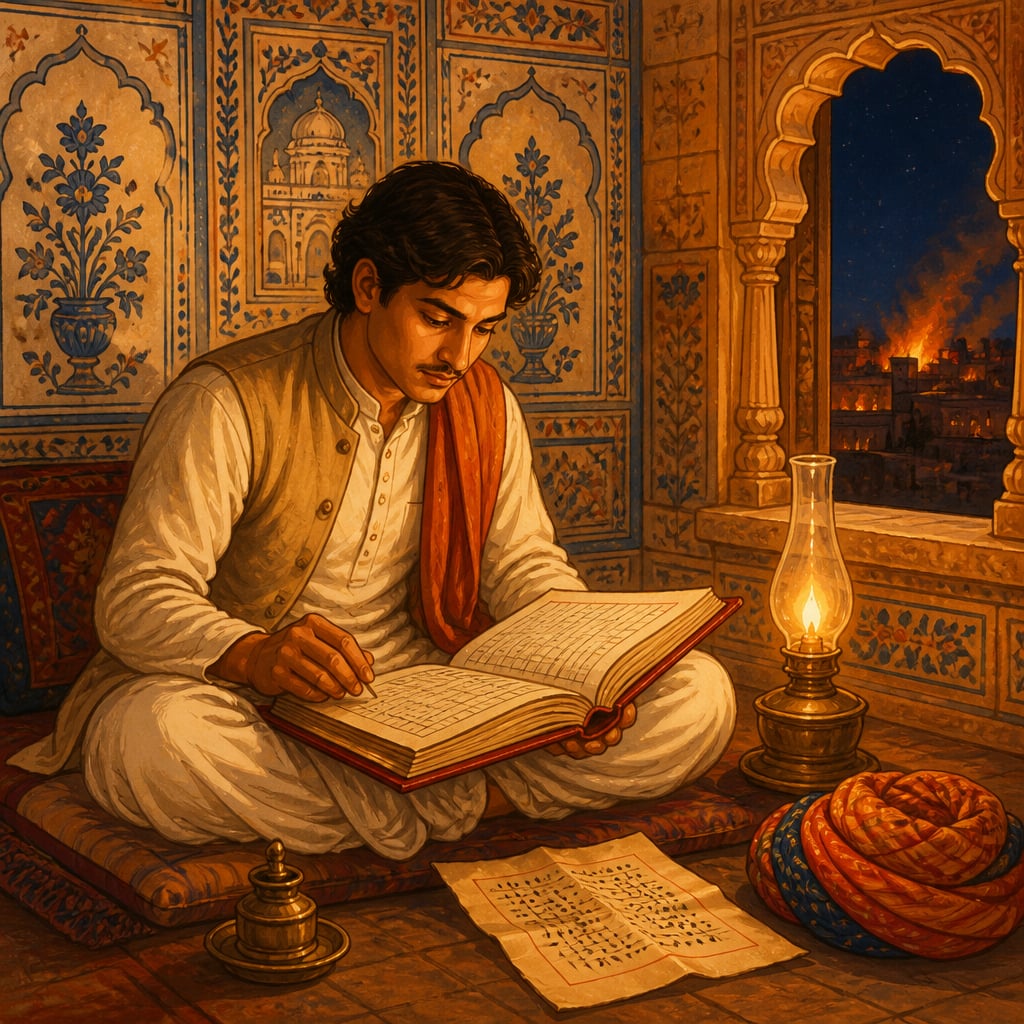
In 1857, as the flames of rebellion engulfed Calcutta, a young merchant named Nathmal Poddar sat in his haveli in Ramgarh, Shekhawati, studying a worn leather ledger. It wasn't his own - it belonged to his grandfather, who had walked 1,200 kilometers from this same village to Bengal sixty years earlier with nothing but 47 rupees and a letter of introduction to a distant cousin. That ledger documented every transaction, every partnership, every trust extended and honored. Three generations later, the Poddars controlled significant portions of Bengal's cloth trade.
"The money is not in the ledger," his father had told him. "The vishwasa (trust) is."
This was the Marwari way - a system of business so effective that by the early 20th century, communities from a few small towns in Rajasthan's Shekhawati region controlled an estimated 60% of India's wholesale trade.
The Desert That Forged Merchants
The Shekhawati region is an unlikely birthplace for India's most successful trading community. With annual rainfall barely crossing 400mm and rocky soil unsuitable for agriculture, the region offered its inhabitants a stark choice: migrate or starve.
But this apparent curse became a blessing. From the 17th century onward, young Marwari men began their pardesi (foreign land) journeys - walking hundreds of kilometers to Calcutta, Bombay, Madras, and eventually to every corner of India. They carried little money but something far more valuable: a system.
"Ghar ki murgi daal barabar" - The chicken at home is worth only lentils.
This Marwari proverb captures their philosophy: wealth created at home stagnates; true prosperity requires venturing into unknown markets.
The migration pattern was systematic. A young man would join a distant relative's business as an unpaid apprentice (gaddi-munim), learning everything from accounting to customer relations. After proving himself over 5-10 years, he would receive capital to start his own venture - always maintaining ties to the network back home.
The Marwari Code: Four Pillars of Empire
What transformed scattered migrants into India's dominant business community? Four interlocking principles:
1. Kutumbaka-Vishwasa: The Trust Network
Marwari business operated on a revolutionary credit system. A merchant in Calcutta could extend credit worth lakhs to a trader in Bombay based solely on family reputation. No collateral. No legal contracts. Just vishwasa.
"Naam mein daam hai" - There is wealth in your name (reputation).
This wasn't naive trust - it was enforced by the most powerful sanction imaginable: community ostracism. A single dishonored commitment meant permanent exclusion from the network. Your children couldn't marry. Your relatives wouldn't trade with you. Your name became worthless.
2. Kanjusi-Dharma: Sacred Frugality
Marwari frugality is legendary - and often misunderstood. This wasn't mere stinginess but a spiritual discipline. The Bhagavad Gita's teaching on aparigraha (non-possessiveness) was interpreted practically: live simply, reinvest profits, never consume your capital.

Ghanshyam Das Birla, who founded the Birla empire, reportedly wore the same dhoti for decades while controlling assets worth crores. This wasn't hypocrisy but philosophy: personal consumption is a leak in the system; capital must compound.
3. Vibhajana-Niti: Diversification as Survival
Marwari families rarely concentrated in single industries. The same family might trade in cloth, finance agriculture, invest in jute mills, and deal in opium (legal then) - simultaneously. This wasn't greed but survival wisdom from a desert people: never depend on a single monsoon.
4. Parivara-Kosh: The Joint Family Treasury
The Hindu Undivided Family (HUF) structure became the Marwari secret weapon. Multiple generations pooled capital, shared risk, and divided responsibilities. The eldest male (karta) managed funds, but all members contributed and benefited.
Global Perspectives on Family Business Dynasties
The Marwari model finds fascinating parallels across civilizations:
John D. Rockefeller (1839-1937) built Standard Oil on principles remarkably similar to Marwari philosophy. His famous frugality - recording every penny spent, avoiding personal debt, reinvesting 90% of profits - mirrors Marwari kanjusi-dharma. Rockefeller's children were raised to work and save, not to display wealth. "The poorest man I know," Rockefeller once said, "is the man who has nothing but money."
The Rothschild banking dynasty employed family trust networks across European capitals, with five brothers stationed in Frankfurt, London, Paris, Vienna, and Naples - strikingly similar to how Marwari families positioned members across Indian trading centers.
Max Weber, the German sociologist, studied how Protestant ethics enabled capitalism. He might have found an older example in Jain and Vaishnavite Marwaris, whose religious practices of non-violence, vegetarianism, and non-attachment paradoxically created aggressive wealth-builders who saw business as dharma, not sin.
| Western Thinker | Key Insight | Marwari Parallel |
|---|---|---|
| Weber | Protestant ethic enables capitalism | Jain/Vaishnavite ethics sanctify commerce |
| Rockefeller | Frugality compounds wealth | Kanjusi-dharma as spiritual practice |
| Rothschilds | Family network beats individual | Kutumbaka-kosh pooled capital system |
The key difference? Western dynasties often fragmented after 2-3 generations. Marwari families like the Birlas and Bajajs have maintained cohesion for 5+ generations.
Modern Resonance: The Adani Phenomenon
In 1988, a young Gujarati with Marwari trading instincts named Gautam Adani started a commodity trading firm with borrowed capital. Today, the Adani Group spans ports, power, airports, green energy, and data centers - a diversification strategy that would make any Shekhawati merchant proud.
Adani's approach reflects core Marwari principles:
- Trust Networks: Built relationships with global trading partners based on reliability
- Frugality: Known for modest personal lifestyle despite massive wealth
- Diversification: Never dependent on single sector - from coal to solar in one portfolio
- Family Structure: Sons integrated into different business verticals
When global short-sellers attacked in January 2023, Adani's response revealed another Marwari trait: dhairya (patience). Rather than panic, he methodically prepaid loans and demonstrated financial strength. The stock recovered. The empire held.

In 2025, Adani Enterprises announced India's largest green hydrogen project - a Rs. 50,000 crore bet that mirrors the Marwari philosophy of seeing opportunity where others see desert.
Your Turn: The Marwari Mirror
You don't need to be born Marwari to apply these principles. Ask yourself:
- Trust Audit: What is your naam worth? Could someone extend you credit based purely on your reputation?
- Frugality Check: What percentage of your income do you reinvest versus consume? The Marwari benchmark was 70-80% reinvestment.
- Diversification Scan: Are your skills, income sources, and investments spread across multiple "monsoons"?
The Marwaris didn't have natural advantages - no fertile land, no sea ports, no political power. They had only a system: trust, frugality, diversification, and family. That system turned desert towns into dynasties.
In the next lesson, we'll travel south to meet another legendary trading community - the Nattukottai Chettiars, who financed the development of Southeast Asia from their mansions in Tamil Nadu.
Social capital as financial capital; reputation as collateral
Modern economists like Robert Putnam study 'social capital' - the economic value of social networks. Credit agencies like CIBIL attempt to quantify trustworthiness through algorithms. The Marwari system achieved this through community memory.
The Marwari vishwasa system was self-enforcing without legal infrastructure. It reduced transaction costs dramatically - no lawyers, no courts, no contract enforcement. This allowed Marwari merchants to move faster and extend credit more widely than competitors reliant on formal institutions.
Studies estimate that informal credit systems in traditional Indian business reduced transaction costs by 15-30% compared to formal banking - a massive competitive advantage.
Portfolio diversification; risk management through asset allocation
Harry Markowitz won the Nobel Prize in 1990 for Modern Portfolio Theory, mathematically proving diversification reduces risk without proportionally reducing returns. The Marwaris practiced this for centuries without the math.
Key terms
- Vishwasa
- Trust, faith, confidence - the foundation of Marwari credit networks
- Kanjusi
- Frugality, thrift - living far below one's means to accumulate and compound capital
- Pardesi
- One who travels to foreign lands; the Marwari practice of strategic migration for business
- Gaddi-Munim
- The chief accountant/manager who sits on the 'gaddi' (seat of business); apprentice position in Marwari firms
Key figures
Nathmal Poddar
18th-19th Century
Gautam Adani
1962-present
John D. Rockefeller
1839-1937
Case studies
Adani Group: From Commodity Trading to Energy Transition
In January 2023, Hindenburg Research released a devastating report accusing the Adani Group of stock manipulation and accounting fraud. The Adani empire lost over $150 billion in market value within weeks. Analysts predicted collapse. Global investors fled. For any other business, this might have been terminal. But Gautam Adani's response revealed centuries-old Marwari business principles in action. Rather than panic selling or aggressive PR, Adani did something characteristically Marwari: he went quiet and focused on fundamentals. The group prepaid $2.65 billion in loans ahead of schedule, demonstrating cash reserves. Operations continued uninterrupted across all seven verticals. Family members maintained positions without public drama. By late 2024, Adani stocks had recovered most losses. The group won major contracts: Dharavi redevelopment, international airport operations, and most significantly, announced India's largest green hydrogen project at Rs. 50,000 crore.
Through the lens of Marwari dharmic economics, Adani's response exemplified several key principles: **Dhairya (Patience)**: Rather than reactive fire-fighting, maintain composure and let actions speak. **Vibhajana (Diversification)**: With seven distinct business verticals, no single sector attack could destroy the whole. When media focused on one company, others continued generating cash. **Vishwasa (Trust Networks)**: Adani's decades of reliable delivery to partners - banks, governments, customers - created reserves of goodwill that buffered the attack. **Kanjusi (Frugality)**: Years of conservative financial management meant cash reserves existed to prepay debt and demonstrate strength. Conventional Western crisis management would prescribe aggressive PR, legal action, and rapid restructuring. The Marwari approach: demonstrate reliability through action, maintain long-term focus, and trust that patient capital and patient reputation eventually prevail.
By December 2024, Adani Group had recovered approximately 80% of lost market value. More importantly, the group won several landmark contracts that competitors had expected to capture during the crisis: the $3 billion Dharavi redevelopment project, additional airport privatizations, and strategic partnerships with global players including a reported $500 million investment from GQG Partners. The green hydrogen commitment positions Adani at the center of India's energy transition - a classic Marwari pivot from traditional energy (coal) to future energy (green hydrogen) without abandoning existing cash-generating businesses.
The Adani case demonstrates that Marwari business principles - diversification, patient capital, trust networks, and operational focus over PR - remain effective crisis management strategies in the 21st century. When attacked, the Marwari response isn't to fight loudly but to build quietly.
Short-seller attacks have become a recurring feature of modern markets, from Hindenburg targeting Adani to Muddy Waters targeting Chinese companies. The Adani recovery playbook, rooted in operational fundamentals over PR firefighting, offers a template for any conglomerate facing reputational assault. The lesson is especially relevant as activist short-selling expands into emerging market equities.
The Adani Group recovered from $150 billion loss to add Rs. 50,000 crore in new investments within 18 months - faster than most companies recover from comparable reputational attacks.
Historical context
17th-20th Century
The Shekhawati region of Rajasthan, comprising towns like Jhunjhunu, Sikar, and Churu, was the origin of most Marwari trading families. Despite harsh conditions - annual rainfall under 400mm, rocky soil, frequent famines - the region produced India's most successful business community. The famous painted havelis of Shekhawati, built by prosperous merchants, still stand as testament to wealth earned elsewhere but invested at home.
The Marwari migration parallels other great trading diasporas: the Armenians who connected Mediterranean trade, the Jewish merchants of medieval Europe, and the Hakka Chinese across Southeast Asia. All shared characteristics: tight community bonds, trust-based credit networks, religious/cultural cohesion in foreign lands, and emphasis on education and capital accumulation.
By 1911, Marwaris controlled an estimated 60% of India's industrial assets despite comprising less than 1% of the population - a concentration of economic power unmatched by any other community in Indian history.
Understanding Marwari history explains why certain business practices - family ownership, trust-based credit, extreme frugality, geographic dispersion - remain central to Indian business culture. These aren't cultural curiosities but proven strategies for building wealth across generations in uncertain environments.
Reflection
- The Marwari system succeeded partly through community enforcement - trust-breakers faced social ostracism including marriage boycotts for their children. In an age of individual freedom and geographic mobility, what mechanisms can replace community-enforced trust? Is something lost when trust becomes algorithmic (credit scores) rather than social?
- Calculate your personal 'reinvestment rate' - what percentage of your income do you save/invest versus consume? The Marwari benchmark was 70-80% reinvestment. If your rate is significantly lower, identify three specific lifestyle changes that could raise it by 10% this year while maintaining quality of life.