Modern Chambers of Commerce: Ancient Roots
From Nagarasheth to Chamber President
How FICCI, CII, and new-age associations like iSpirt continue the ancient vanij-sangh tradition, organized business representation adapting to each era's challenges while preserving timeless organizational logic.
The Telegram from Firozabad
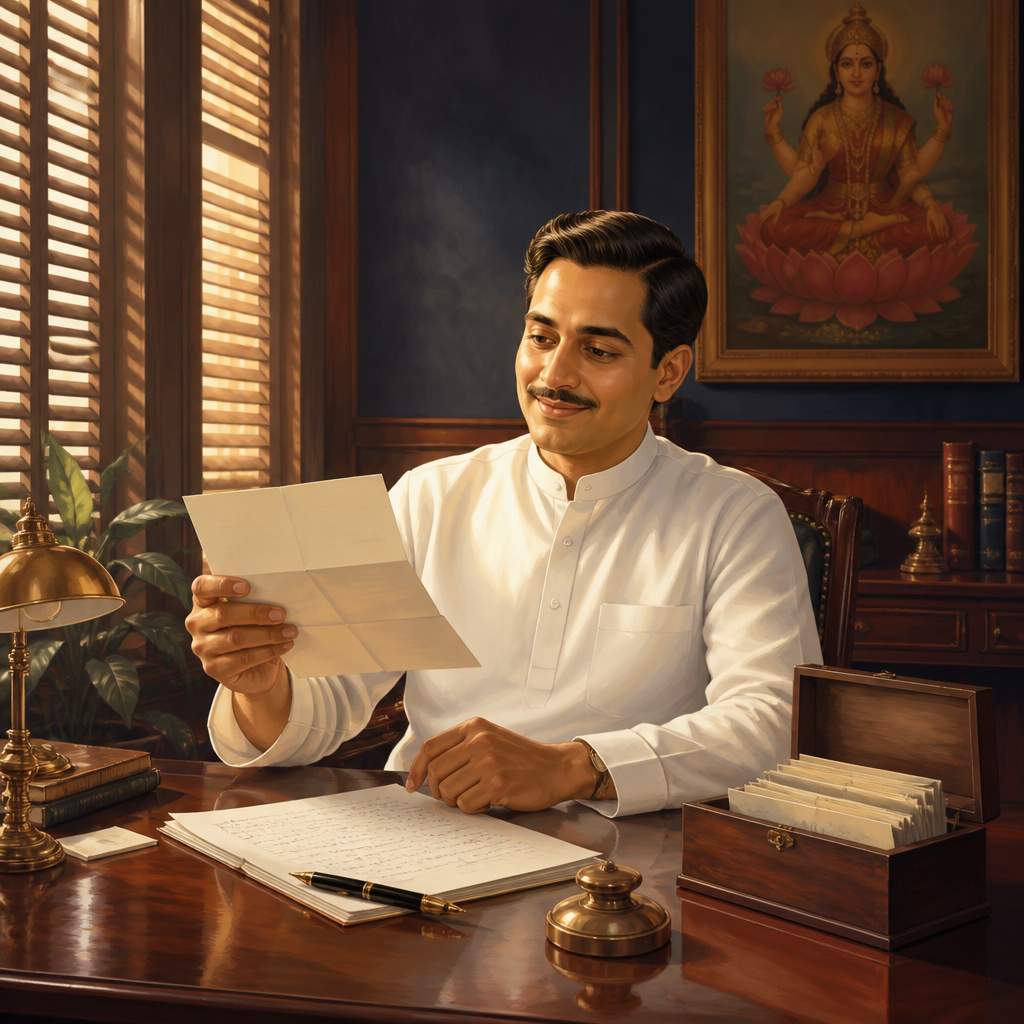
In March 1927, a telegram arrived at the Birla House in Calcutta. G.D. Birla, the industrialist, read it with interest. Indian merchants across the country were organizing. British commercial policies, tariffs that favored British goods, banking rules that marginalized Indian institutions, industrial regulations that hampered Indian growth, had finally united the fragmented merchant community.
Birla had been advocating for exactly this. Individual protests achieved nothing. British officials listened to their own chambers of commerce, the Calcutta Chamber, the Bengal Chamber, all representing British interests. Indian business had no equivalent voice.
On April 7, 1927, the Federation of Indian Chambers of Commerce and Industry (FICCI) was born. Its founders, Birla, Purushottamdas Thakurdas, Lalji Naranji, and others, explicitly invoked the vanij-sangh tradition. They weren't creating something new; they were reviving something ancient in modern form.
The Nagarasheth had returned, this time, as a federation.
FICCI: The National Vanij-Sangh
FICCI was designed as a modern vanij-sangh:
Collective Representation: Just as the Nagarasheth spoke for all merchants before the king, FICCI spoke for Indian business before the colonial government, and later, the independent Indian state.
Coordination Across Trades: Like vanij-sanghs that united multiple guilds, FICCI brought together chambers from different industries and regions into a national body.
Policy Advocacy: The Nagarasheth negotiated tariffs and trade terms; FICCI lobbied on taxation, industrial policy, and economic regulation.
Community Infrastructure: Vanij-sanghs funded temples and rest houses; FICCI established research foundations, training institutes, and business support services.
FICCI's founding vision was explicitly nationalist, giving Indian business a voice against British commercial dominance. But the organizational template was ancient Indian merchant collective action.
CII: Competition Creates Strength
If FICCI was the revival of the national vanij-sangh, the Confederation of Indian Industry (CII) represents a parallel evolution.
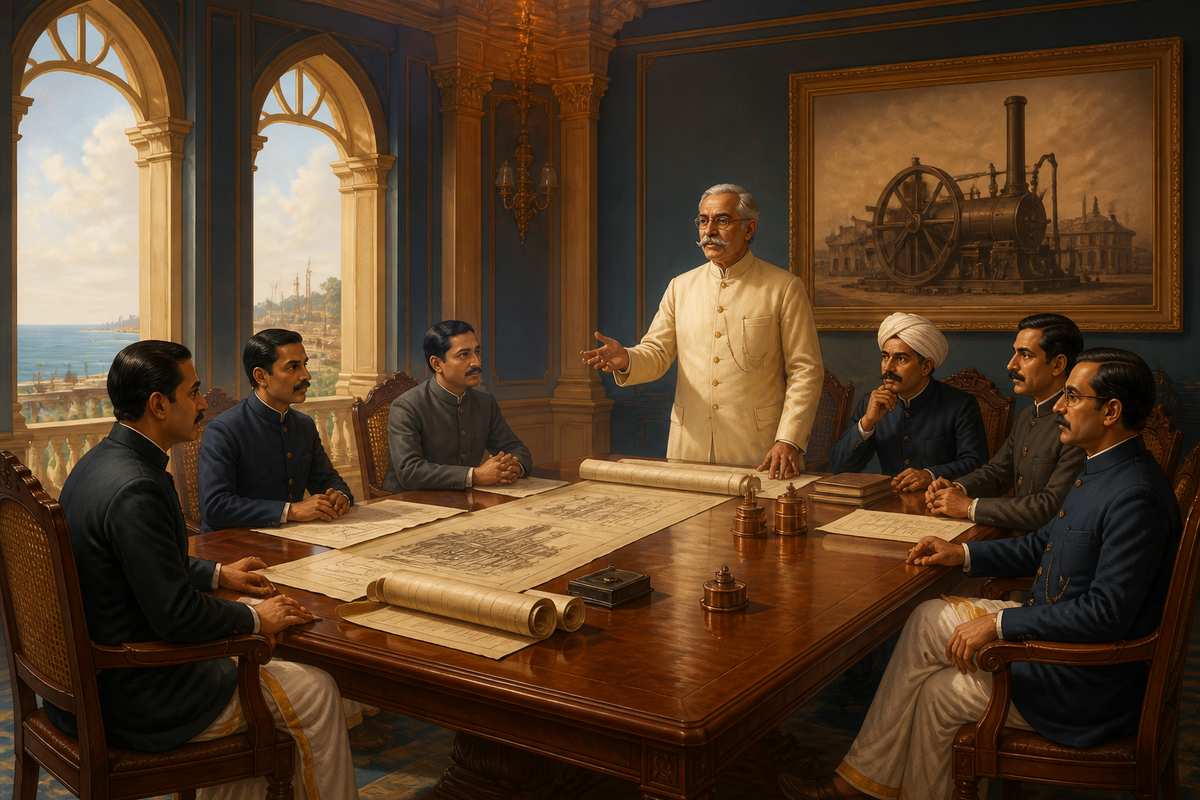
CII's origins trace to 1895, the Engineering and Iron Trades Association, founded to represent early Indian industrialists. It evolved through several names and structures before becoming CII in 1992.
Where FICCI originated from merchant communities, CII emerged from manufacturing industries. The organizations developed different characters:
FICCI: Traditionally stronger in trade, commerce, and traditional industries. Broader membership including smaller businesses. More connected to merchant community networks.
CII: Traditionally stronger in manufacturing, engineering, and modern industries. More corporate membership. Closer ties to multinational companies.
This isn't rivalry, it's functional specialization. Ancient vanij-sanghs had multiple overlapping organizations; modern India has FICCI and CII (and ASSOCHAM, PHD Chamber, and others). Competition keeps each effective; specialization serves different constituencies.
"Competition among chambers is healthy, it ensures none becomes complacent." , Industry analyst observation
The Functions Persist
Compare ancient vanij-sangh functions with modern chambers:
| Ancient Function | Vanij-Sangh Mechanism | Modern Chamber Mechanism |
|---|---|---|
| Representation | Nagarasheth before king | Chamber president before government |
| Policy Advocacy | Petitions, negotiations | Position papers, lobbying, consultations |
| Standard Setting | Guild codes, trade customs | Industry standards, best practice guides |
| Dispute Resolution | Panchayat, assembly arbitration | Arbitration services, mediation panels |
| Information Sharing | Merchant networks, assemblies | Research reports, conferences, databases |
| Networking | Festivals, trade gatherings | Annual summits, industry events |
| Training | Apprenticeship, guild education | Skill development programs, B-schools |
The technology changes, from inscribed copper plates to position papers, from messenger networks to email, but the functions are remarkably stable. Organized business needs voice, coordination, standards, dispute resolution, information, and networking. The vanij-sangh provided these; modern chambers provide these.
iSpirt: The Tech Vanij-Sangh

If FICCI and CII represent the traditional chamber model adapted for modern times, iSpirt (Indian Software Product Industry Round Table) represents something newer, a vanij-sangh for the digital economy.
Founded in 2013, iSpirt describes itself as a "think tank" and "voluntary industry body." Its members aren't just companies, they're software entrepreneurs and tech leaders who believe collective action can accelerate India's software product industry.
iSpirt's work embodies vanij-sangh principles in 21st-century form:
Public Digital Infrastructure: iSpirt conceived and advocated for India Stack, the digital infrastructure (Aadhaar, UPI, DigiLocker) that enables digital India. This is modern infrastructure investment, like vanij-sanghs funding trade routes and rest houses.
Policy Advocacy: From GST simplification for SaaS to data protection frameworks, iSpirt represents software product companies before government, the Nagarasheth function for tech.
Community Building: Through "PlayBooks" and mentorship programs, iSpirt builds the entrepreneur community, the guild training function adapted for startups.
Open Source Philosophy: iSpirt's work is largely open, shared freely for collective benefit. This echoes the vanij-sangh principle that industry infrastructure benefits from collective investment, not individual monopoly.
iSpirt demonstrates that the vanij-sangh model adapts to new industries. Tech entrepreneurs, like ancient merchants, discovered that collective action achieves what individual effort cannot.
Startup India: State Meets Sangha
Startup India, launched in 2016, represents the government recognizing what ancient kings recognized: organized business benefits the state.
The program provides:
- Tax exemptions for qualifying startups
- Simplified compliance requirements
- Funding support through Fund of Funds
- Mentorship and incubation networks
- Intellectual property support
But Startup India also requires organization. Startups must register, comply with definitions, and interact with government structures. This creates formalization pressure that pushes startups toward organization, joining associations, building networks, participating in collective activities.
The dynamic mirrors ancient patterns: kings recognized vanij-sanghs because organized commerce benefited the treasury; modern states support organized startups because organized innovation benefits the economy. The mutual dependency, state recognition creating business organization, organized business benefiting state, is ancient.
The Founders as Modern Nagarasheths
Consider the founders who built modern business representation:
G.D. Birla (FICCI): Like an ancient Nagarasheth, Birla combined personal business success with community leadership. He advised Gandhi and Nehru, shaped economic policy, built institutions (BITS, Birla temples), and represented Indian business interests at the highest levels. His wealth came from business; his influence came from representation.
Krishnamurthy (CII): As a transformative leader of CII (1992-1996), he reimagined what an industry association could be, proactive policy advocacy, thought leadership, and global engagement. He professionalized the chamber presidency.
Nandan Nilekani (iSpirt/India Stack): Co-founder of Infosys, architect of Aadhaar, and mentor to iSpirt. Nilekani represents the tech sector's Nagarasheth, using personal credibility to build collective infrastructure. UPI, DigiLocker, and India Stack emerged from his vision and iSpirt's collective action.
These leaders demonstrate the Nagarasheth pattern: individual success creates the credibility for collective representation. The position requires both personal achievement and community service.
Why Multiple Chambers?
India has not one but several major business associations:
- FICCI (Federation of Indian Chambers of Commerce and Industry)
- CII (Confederation of Indian Industry)
- ASSOCHAM (Associated Chambers of Commerce and Industry)
- PHD Chamber (Progress, Harmony and Development Chamber)
- NASSCOM (IT/BPO sector)
- iSpirt (Software products)
- Dozens of sector-specific associations
Is this fragmentation or healthy diversity?
The vanij-sangh tradition suggests: both. Ancient cities had multiple overlapping merchant organizations, by trade, by community, by function. This wasn't chaos; it was specialization. Different organizations served different purposes.
Modern India's multiple chambers serve different constituencies, specialize in different functions, and compete to serve members effectively. No single chamber can represent all business interests equally. Diversity creates coverage; competition creates quality.
The Global Dimension
Modern chambers operate globally in ways ancient vanij-sanghs pioneered:
International Representation: FICCI and CII engage with foreign governments, international organizations (WTO, World Bank), and foreign business associations. They represent Indian business globally, the Ainnurruvar model at modern scale.
Trade Facilitation: Chambers organize trade missions, buyer-seller meets, and international partnerships. They create the connections that trade requires, exactly what ancient merchant networks provided.
Standards Harmonization: Working with international standards bodies, Indian chambers help align Indian practices with global norms, modern equivalent of establishing common weights and measures.
Diplomatic Role: Chamber leaders often serve diplomatic functions, meeting foreign leaders, representing Indian interests, building bilateral relationships. The Nagarasheth met with foreign traders; modern chamber presidents meet with heads of state.
Your Turn
The telegram that sparked FICCI arrived almost a century ago. The organizational challenge it addressed, how to give business a collective voice, is timeless.
Today's entrepreneurs and professionals face the same question ancient merchants faced: work alone or organize? The evidence is clear: organized industries outperform fragmented ones. NASSCOM built India's IT industry collectively. iSpirt is building India's software product industry collectively. The ancient wisdom persists: sangha creates strength.
What associations do you belong to? Are you contributing or just consuming? The Nagarasheths who built FICCI, CII, and iSpirt didn't wait for others to act. They organized. They led. They built infrastructure that outlasted them.
The vanij-sangh tradition isn't history, it's a living practice. Every chamber meeting, every industry forum, every professional network continues what merchants in Arikamedu began millennia ago. The question is whether you're participating or watching from the sidelines.
Network effects and platform economics, infrastructure that enables others creates value greater than the investment.
Economists study platform businesses (Uber, Airbnb) that create value by connecting others. India Stack is a public platform, digital infrastructure enabling private innovation. This combines platform economics with public goods theory. The vanij-sangh tradition anticipated this: collective investment in trade infrastructure enabled individual trade success.
India Stack demonstrates the vanij-sangh principle at digital scale. Unlike Western digital infrastructure (largely private), India built public digital rails. This reflects the ancient understanding that some infrastructure must be collective. Private UPI apps compete; but the underlying infrastructure is shared.
UPI's collective infrastructure enables 12+ billion transactions monthly worth over Rs 18 lakh crore. No single company could have built this; collective action did. The vanij-sangh model created digital India's most valuable infrastructure.
Principal-agent theory and organizational legitimacy, representatives must maintain alignment with those they represent.
Political science studies interest group legitimacy: do lobbyists actually represent their claimed constituencies? Chambers face this challenge constantly, ensuring that policy positions reflect member interests, not leadership preferences. The Nagarasheth model required ongoing community accountability; modern chambers need similar mechanisms.
Verses
संगठितं वाणिज्यं राष्ट्रस्य शक्तिः।
saṅgaṭhitaṃ vāṇijyaṃ rāṣṭrasya śaktiḥ |
Organized commerce is the nation's strength.
Business organization creates positive externalities for the entire economy. When commerce is organized, standards exist, disputes resolve efficiently, voice is heard, transaction costs fall for everyone. The nation benefits from organized commerce beyond what individual businesses capture.
FICCI Constitution, Preamble, 1927 (Original English)
सामूहिकं सृजनं व्यक्तिगतात् श्रेष्ठम्।
sāmūhikaṃ sṛjanaṃ vyaktigatāt śreṣṭham |
Collective creation is superior to individual effort.
Platform economics demonstrates this principle at scale. Shared platforms (UPI, India Stack) create more value than proprietary systems because network effects multiply benefits. Collective infrastructure investment generates returns that private investment cannot match.
iSpirt Manifesto, Founding Principles, 2013 (Original English)
उद्योगधर्मः समाजसेवा च।
udyogadharmaḥ samājasevā ca |
The duty of industry includes service to society.
Corporate social responsibility isn't just ethics, it's legitimacy building. Businesses that serve communities earn social license to operate. The Nagarasheth built temples; modern corporations fund CSR programs. The function, building legitimacy through service, is identical.
CII Code of Conduct, Principles Section (Original English)
Key figures
G.D. Birla
Co-founder of FICCI (1927), industrialist, and independence activist who created India's first national business federation. · 1894-1983
Sharad Sharma (iSpirt)
Co-founder of iSpirt and key architect of India Stack, who pioneered volunteer-driven tech policy advocacy. · Contemporary
US Chamber of Commerce (Comparative)
America's largest business federation, providing the template for modern chamber of commerce organization globally. · 1912-present
Case studies
FICCI vs CII: Competition Creating Strength
India has two major national business federations, FICCI (founded 1927) and CII (origins in 1895, renamed 1992). Both represent business interests to government. Both advocate on policy. Both organize events and build networks. Is this duplication wasteful? Should India have one unified chamber like many countries? The competition between FICCI and CII has actually strengthened both: **Specialization**: FICCI traditionally represents trading and commercial interests; CII represents manufacturing and industry. Different constituencies get tailored representation. **Innovation**: Competition forces each to innovate. CII pioneered annual summits (Partnership Summit); FICCI responded with its own events. Both raised quality through competition. **Member Choice**: Companies can join both, one, or neither. This creates accountability, chambers must earn membership, not assume it. **Diverse Perspectives**: On policy issues, FICCI and CII sometimes disagree. This presents government with multiple business perspectives, not a single 'business position' that may not represent actual diversity.
Multiple chambers reflect vanij-sangh tradition: **Historical Precedent**: Ancient cities had multiple merchant organizations, by trade, by community, by function. The Ainnurruvar coexisted with regional and trade-specific guilds. Multiplicity was normal. **Functional Specialization**: Just as ancient guilds specialized by trade while vanij-sanghs coordinated across trades, modern chambers specialize by sector while competing in representation. **Checks and Balance**: Competition prevents any single organization from claiming to speak for 'all business.' This humility, acknowledging that business interests are diverse, is more honest than false unity. **Dharmic Competition**: The competition isn't destructive, both chambers serve legitimate functions. This is dharmic competition: rivalry that improves all participants, not zero-sum conflict that destroys losers. The insight: organizational diversity reflects economic diversity. No single vanij-sangh could represent all merchants; no single chamber can represent all business. Diversity is strength, not weakness.
The FICCI-CII dynamic has served Indian business well: **Policy Influence**: Both chambers regularly engage government on taxation, regulation, trade, and industrial policy. Their combined influence exceeds what either alone could achieve. **Member Services**: Competition drives service quality, research reports, networking events, training programs. Companies get value from membership because chambers compete to provide it. **Global Representation**: Both chambers engage internationally, FICCI with trading partners, CII with industrial counterparts. India's business voice is broader for having two major representatives. **Leadership Development**: Both chambers develop business leaders. The chamber presidency is a prestigious position that prepares leaders for broader public service. The lesson for organizational design: controlled competition can strengthen rather than fragment. The key is ensuring competition improves service rather than destroying it.
Organizational diversity can strengthen representation. FICCI and CII compete, but the competition improves both. The vanij-sangh tradition included multiple overlapping organizations; modern India's multiple chambers continue this pattern. Unity isn't always strength; diverse, competitive representation can serve better than monopoly.
FICCI and CII's productive rivalry mirrors the pattern of competing industry bodies in Germany (BDI vs DIHK), Japan (Keidanren vs Keizai Doyukai), and the US (Chamber of Commerce vs Business Roundtable). Multiple representative bodies create healthy competition that strengthens overall advocacy quality.
Together, FICCI and CII represent over 500,000 companies and directly engage in virtually every major economic policy discussion. Their combined influence shapes India's economic direction, demonstrating that multiple chambers can be more effective than one.
iSpirt and India Stack: The Tech Vanij-Sangh
In 2013, a group of Indian software entrepreneurs faced a frustration. India's IT services industry (TCS, Infosys, Wipro) was world-class, but India had no major software product companies. Why weren't Indian entrepreneurs building products like Microsoft, Google, or Salesforce? The founders of **iSpirt** (Indian Software Product Industry Round Table) diagnosed the problem: India lacked the ecosystem infrastructure that product companies needed. The solution wasn't to build one company, it was to build the infrastructure that would enable many companies. iSpirt was deliberately designed differently from traditional chambers: **Volunteer Model**: No paid staff; tech leaders volunteer time. This ensured skin-in-the-game and attracted those genuinely committed. **Open Source Mindset**: Work products, playbooks, frameworks, policy positions, are shared freely. Value comes from ecosystem growth, not organizational capture. **Action Over Position Papers**: Rather than lobbying for policy, iSpirt built India Stack, actually creating the digital infrastructure the ecosystem needed. **Think Tank + Do Tank**: Combining analysis with implementation. Identifying what's needed, then building it.
iSpirt embodies vanij-sangh principles in Silicon Valley form: **Collective Infrastructure**: The Ainnurruvar funded temples and tanks across their trading range. iSpirt volunteers built UPI, Aadhaar adoption, and DigiLocker, the digital temples and tanks of modern commerce. **Community Over Capture**: Vanij-sanghs served their communities, not just their leaders. iSpirt's open-source philosophy ensures infrastructure benefits all, not just founders. **Expertise-Based Leadership**: The Nagarasheth was chosen for commercial success; iSpirt leaders are successful entrepreneurs. Legitimacy comes from demonstrated expertise, not just position. **Dharmic Innovation**: iSpirt's approach, building for the ecosystem rather than for individual capture, reflects the dharmic understanding that lasting value comes from enabling others. The insight: the vanij-sangh model adapts to new industries and new organizational forms. Tech entrepreneurs, like ancient merchants, discovered that collective action achieves what individual effort cannot. iSpirt is a 21st-century vanij-sangh.
iSpirt's impact has been extraordinary: **India Stack**: The digital infrastructure (Aadhaar, UPI, DigiLocker, e-KYC) that iSpirt conceived and advocated now processes billions of transactions. This is India's most valuable digital infrastructure. **Policy Influence**: From GSTN simplification to data protection frameworks, iSpirt has shaped policy affecting every digital business in India. **Ecosystem Building**: Through 'PlayBooks' and mentorship, iSpirt has built the software product community, the guild function for tech. **Model Export**: Other countries study India Stack as a model for digital public infrastructure. iSpirt's approach, volunteer-led, open-source, infrastructure-focused, offers an alternative to traditional lobbying. The volunteer model has limitations, sustainability depends on ongoing volunteer commitment. But for its first decade, iSpirt demonstrated that the vanij-sangh model could power digital transformation.
The vanij-sangh model adapts to new industries and new organizational forms. iSpirt's volunteer-driven, open-source approach is different from traditional chambers, but the underlying logic is identical: collective action by industry leaders to build shared infrastructure. The form changes; the function persists.
iSpirt's volunteer-driven, open-source approach to building national digital infrastructure anticipates the 'digital public goods' movement now championed by the UN and World Bank. Countries from Brazil to Thailand are studying India Stack as a model for building shared digital infrastructure through collective action rather than government mandate alone.
India Stack infrastructure now enables over $250 billion in annual transactions through UPI alone. This collective infrastructure, built through vanij-sangh-style collective action, is worth more than most individual companies. The return on collective investment vastly exceeds what any individual firm could achieve.
Historical context
1895-present (modern chamber era)
British colonial rule disrupted indigenous merchant organizations (Nagarasheth institutions, vanij-sanghs) by substituting colonial commercial law. Modern chambers (FICCI, CII) represent revival of collective representation, explicitly connecting to indigenous traditions while adopting modern organizational forms. The nationalist movement strengthened this connection: organized Indian business was resistance to British commercial dominance.
India's chamber development parallels global patterns: US Chamber of Commerce (1912), International Chamber of Commerce (1919), and national chambers worldwide. But Indian chambers uniquely connect to pre-colonial traditions, claiming continuity with vanij-sanghs rather than purely modern innovation. This cultural embedding may strengthen legitimacy and member connection.
FICCI and CII together directly engage with government on virtually every economic policy, taxation, trade, industrial policy, labor law, environmental regulation. Their combined membership represents over 50% of India's GDP. The scale of organized business influence has never been higher.
Understanding the vanij-sangh roots of modern chambers illuminates what makes them effective: collective action, representative legitimacy, infrastructure investment, and community service. These aren't just business lobbies, they're descendants of an organizational tradition that enabled India's historical trade dominance. Modern effectiveness builds on ancient foundations.
Living traditions
- iSpirt volunteer-driven policy advocacy
- Chamber president representation
- Startup ecosystem networking
- FICCI Headquarters, Federation House: The headquarters of India's oldest national business federation. The building and its meetings represent the modern vanij-sangh in action.
- CII Northern Region Headquarters: One of CII's major regional offices, representing the confederation's geographic reach and organizational scale.
- Prambanan Temple: 9th-century Hindu temple complex built during era of intense India-Southeast Asia trade. Indian merchant communities transmitted architectural knowledge and funded religious establishments along maritime routes.
- Angkor Wat: World's largest Hindu temple complex, built by Khmer kings influenced by Indian traders and Brahmins. Represents pinnacle of cultural transmission via trade routes.
Reflection
- G.D. Birla, Sharad Sharma, and other chamber founders built organizations that outlasted them. What are you building that will continue after you? Are you investing in institutions, or only in your individual career?
- What industry associations, professional networks, or community organizations do you belong to? Are you actively contributing, serving on committees, participating in events, providing input, or just holding membership? The vanij-sangh model requires active participation, not passive membership.