Phala-tyāga: Detachment From Immediate Outcomes
Acting Fully While Releasing Results
The Vedic tradition presents a paradox: act with full commitment, yet release attachment to specific outcomes. This is phala-tyāga, the renunciation of the 'fruit' of action. Far from encouraging apathy, this teaching liberates action from the anxiety of control and the distortion of desire. We discover that our best work often emerges when we stop clutching at results.
The farmer had planted his seeds with care. He had prepared the soil, selected the best grain, timed the sowing with the rains. Now he waited, but not passively. Each day he tended the field: removing weeds, protecting sprouts, channeling water. And each night, he released the field to forces beyond his control: the weather, the insects, the soil's hidden chemistry.
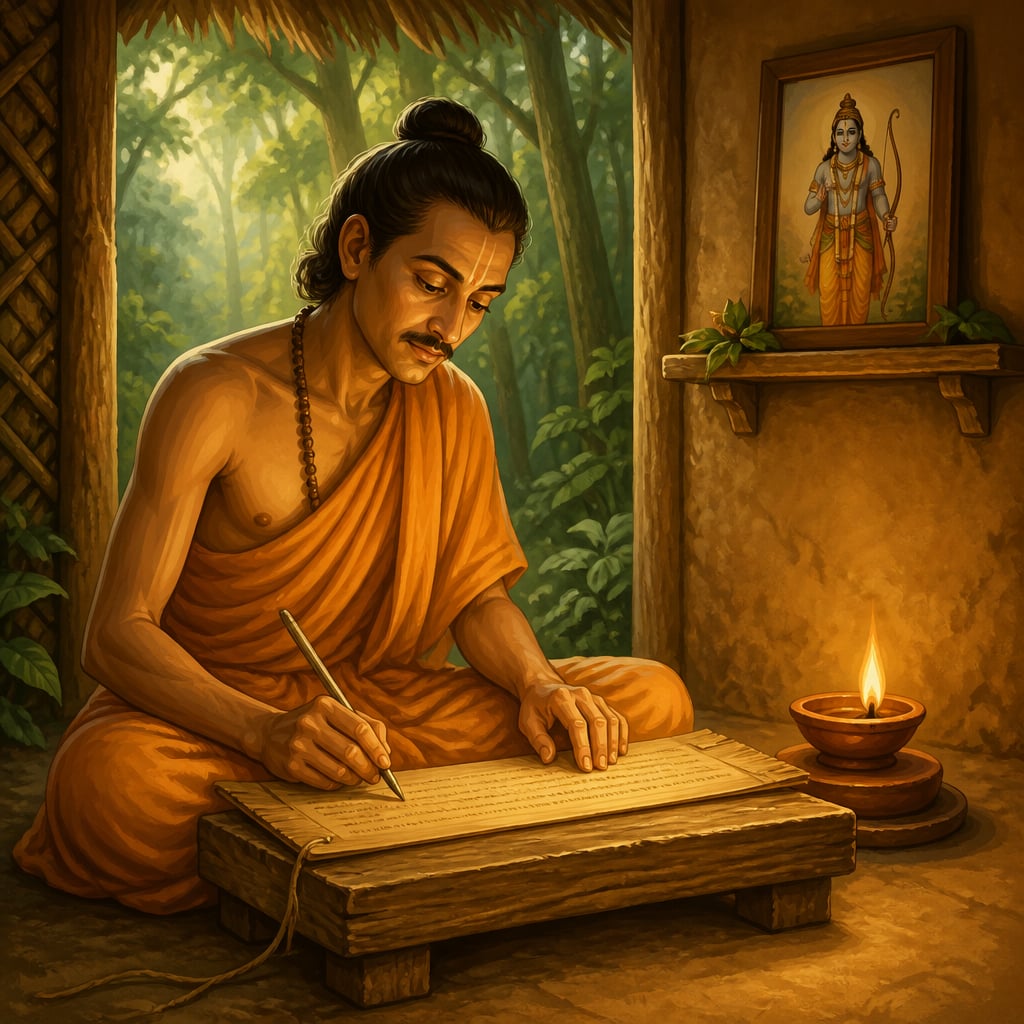
His neighbor watched with puzzlement. "You work so hard," he said, "but you seem so calm. Aren't you worried about the harvest?"
The farmer smiled. "I am responsible for the planting. I am not responsible for the rain. I do my work; the field does its work; the sky does its work. My worry would not make the grain grow faster."
The Paradox of Phala-tyāga
Phala means fruit, result, outcome. Tyāga means renunciation, letting go, release. Together, phala-tyāga is the practice of acting fully while releasing attachment to specific outcomes.
This sounds contradictory. If we don't care about results, why act at all? But the Vedic teaching is more subtle. Phala-tyāga does not mean we don't want good outcomes or that we don't work toward them. It means we recognize the difference between what we control and what we don't, and we align our energy accordingly.
The farmer cannot make rain fall. But he can prepare the soil, plant the seeds, and tend the sprouts. His energy, focused on what he controls, is effective. His energy, wasted on worrying about what he cannot control, would be exhausting and useless. Phala-tyāga is the wisdom to know the difference.
What the Rig Veda Teaches
The Rig Veda does not use the term phala-tyāga directly, that language emerges more explicitly in the Bhagavad Gita. But the seeds of this teaching appear throughout the Vedic hymns in the concept of Ṛta, the cosmic order that governs outcomes beyond individual will.
The Rishis understood that yajna (ritual action) was performed with precision, but the results belonged to the cosmic order. The priest could offer the oblation perfectly, but whether the rains came, whether the cattle prospered, whether the kingdom flourished, these outcomes emerged from the vast web of Ṛta, not from the priest's personal power.
Consider this verse about Varuna, the guardian of Ṛta:
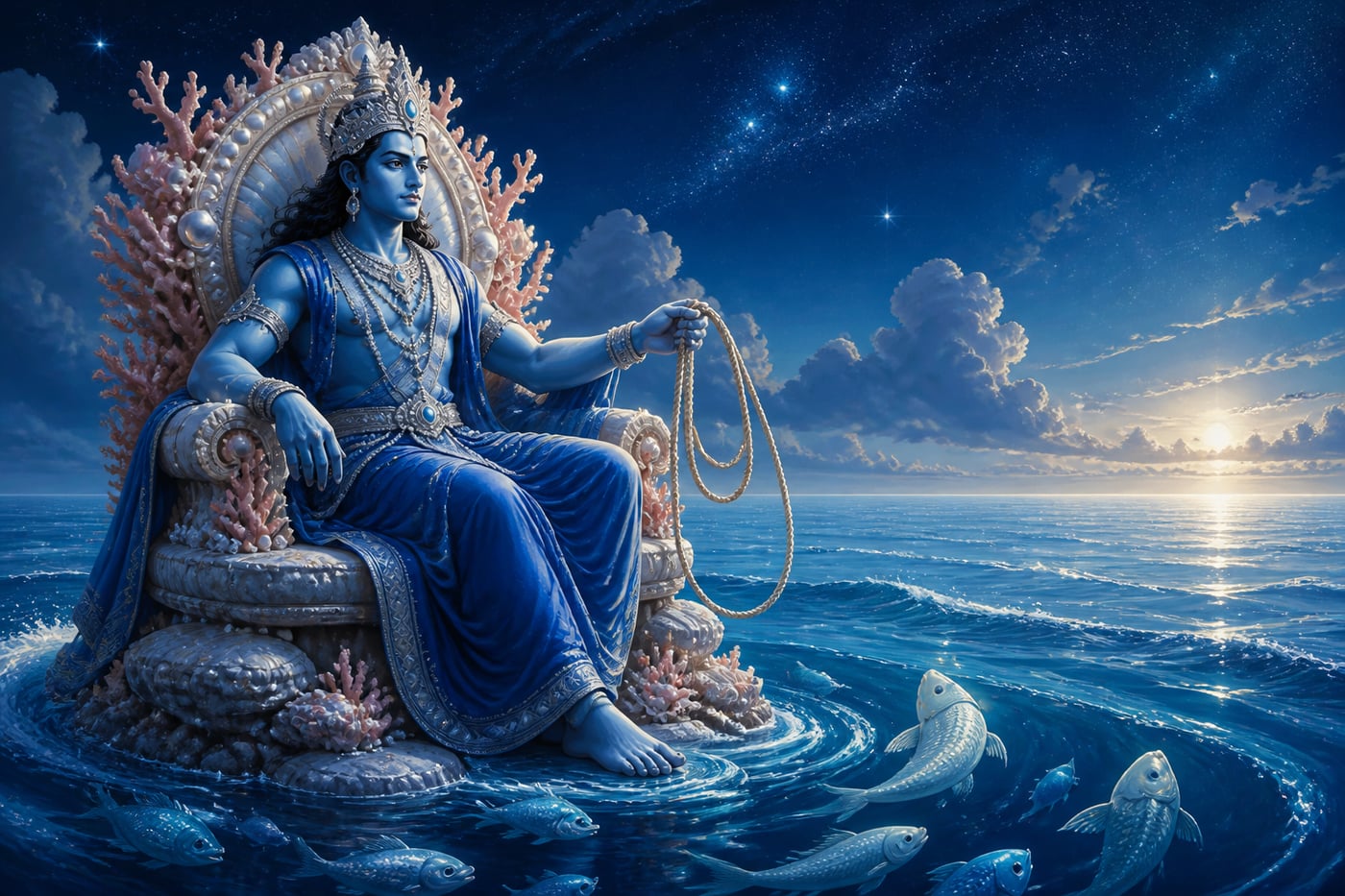
"ऋतस्य गोपा न दभाय सुक्रतुः" "The guardian of Ṛta, of good purpose, cannot be deceived."
Varuna sees all; the cosmic order cannot be manipulated. This is not threat but liberation. If outcomes emerge from Ṛta, from the vast interplay of forces, then our responsibility is to act rightly, not to control results. The quality of our action is ours; the fruit belongs to the larger order.
Word by word:
- Ṛtasya, of Ṛta, of cosmic order
- Gopā, guardian, protector
- Na, not
- Dabhāya, can be deceived
- Sukratuḥ, of good purpose/good will
Why Attachment Distorts Action
When we clutch at outcomes, our action becomes distorted. The student who is desperate for an A studies differently than the student who is genuinely curious. The desperate student cuts corners, memorizes without understanding, optimizes for the test rather than for learning. The curious student follows questions, explores tangents, builds understanding that may or may not show up on any particular exam.
Paradoxically, the curious student often performs better, because learning, not the grade, was the focus. Attachment to outcome can undermine the very outcome we seek.
The Rishis understood this pattern in ritual. The priest who performed yajna anxiously, grasping at specific results, introduced tension that disrupted the ritual's flow. The priest who performed with full attention but relaxed intention, trusting Ṛta to determine outcomes, created the conditions for grace to flow.
This is not magical thinking. It is attention management. When part of our mind is clutching at future outcomes, that part is unavailable for present action. The farmer worrying about the harvest is distracted from tending the field. Release the worry; attention returns to what matters.
Traditional Interpretations: Sayana and Aurobindo
Sayanacharya interprets outcome-related verses in terms of ritual precision. For Sayana, the yanja works through alignment with Ṛta, not through the priest's personal desire. The priest performs his role; the cosmic order responds according to its own logic. This is not fatalism but appropriate humility, recognizing that the priest is one factor among many, not the sole cause of outcomes.
Sri Aurobindo reads phala-tyāga as the psychology of liberation. In his view, attachment to outcomes binds consciousness to the ego's agenda. When we release attachment, consciousness expands beyond the narrow self and aligns with the larger purpose flowing through us. Action becomes more effective because it is no longer distorted by personal grasping.
Both perspectives converge: release of outcome-attachment improves action, not just acceptance.
The Difference Between Detachment and Apathy
Phala-tyāga is often misunderstood as not caring about results. But there is a crucial distinction:
- Apathy says: "The outcome doesn't matter, so why try hard?"
- Detachment says: "The outcome matters, but my attachment to it does not help. I will act fully and release the rest."
The detached farmer cares deeply about the harvest. He tends his field with full attention and skill. But he does not make his inner peace dependent on factors beyond his control. If the rains fail, he will grieve the loss, but he will not be destroyed, because his identity was never fused with that particular outcome.
This is the Vedic middle path between two errors: the error of attachment (which distorts action and creates suffering) and the error of apathy (which abandons action altogether). Phala-tyāga preserves committed action while releasing the tyranny of specific results.
Modern Resonance: Process Goals vs. Outcome Goals
Sports psychology has discovered what the Rishis knew about phala-tyāga. Athletes who focus on "outcome goals" (winning the game, setting a record) often perform worse than athletes who focus on "process goals" (executing technique, maintaining form, staying present).
Why? Because outcome-focus diverts attention from the only thing the athlete actually controls: their own action. The tennis player thinking "I must win this point" has less attention available for "hit through the ball, follow through, stay balanced." The runner thinking "I must beat my personal best" has less attention for "relax the shoulders, maintain cadence, breathe rhythmically."
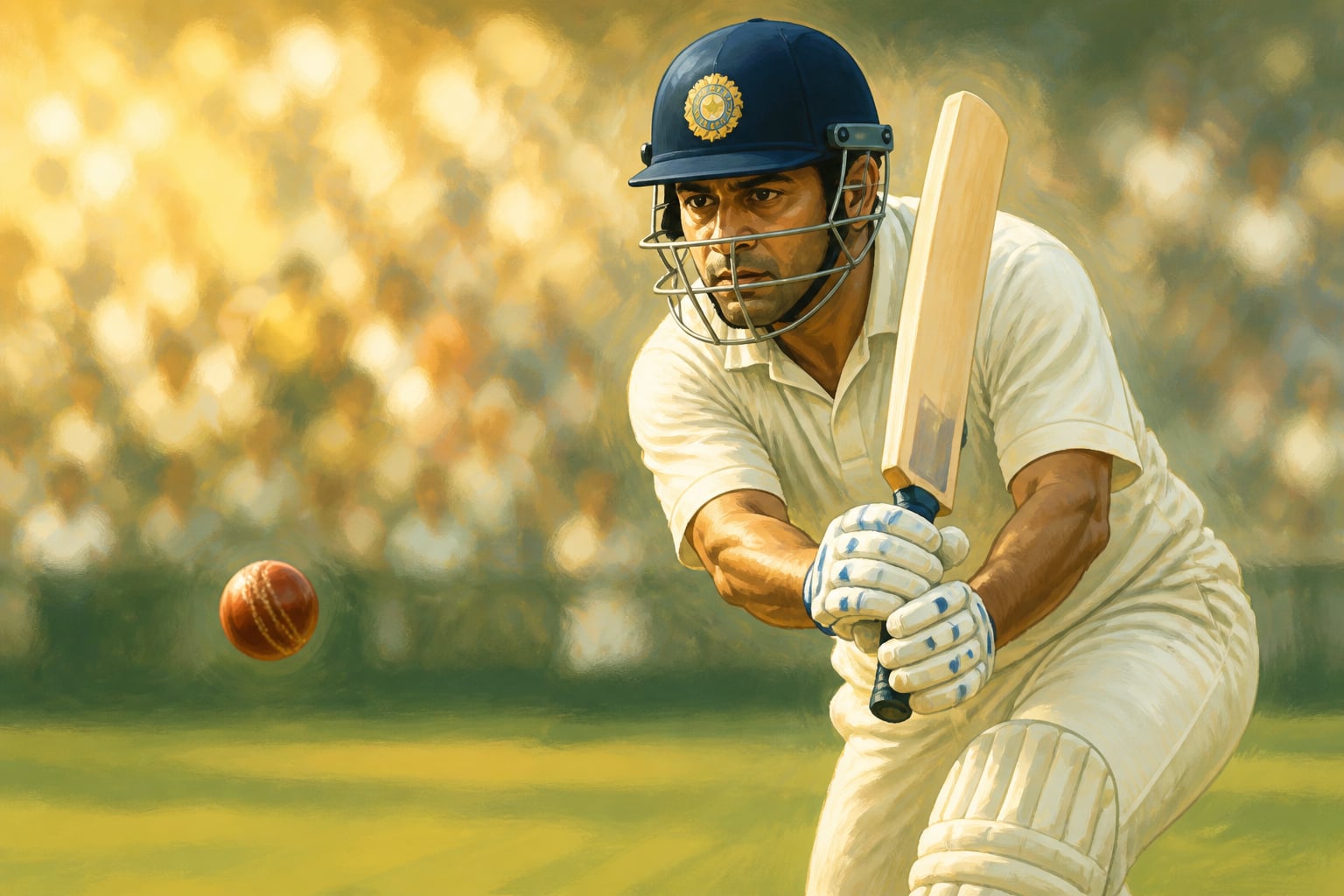
Rahul Dravid, one of cricket's greatest batsmen, exemplified this principle. Known as "The Wall" for his defensive solidity, Dravid was famous for his process focus. He did not chase records or centuries; he focused on each ball, each shot, each session. The records came, over 13,000 Test runs, but they came as byproducts of process excellence, not as grasped-at goals.
When asked about his approach, Dravid said: "I try not to think about the scoreboard. I think about the next ball. If I play each ball well, the score takes care of itself." This is phala-tyāga in cricket whites: full engagement with the action, release of attachment to the outcome.
Sports psychologist Jim Loehr's research shows that 'process focus' (what am I doing now?) produces better performance than 'outcome focus' (what result do I need?). The mind focused on process has full attention for the task; the mind grasping at outcomes is divided.
Ray Dalio's 'Principles' emphasizes process over outcomes: 'If you have a good process, you'll get good results over time, even if any single outcome disappoints.' This is corporate phala-tyāga: build systems, release attachment to specific deals.
In complex systems, outcomes emerge from many interacting factors. Trying to control outcomes directly often backfires (unintended consequences). Influencing inputs (process) is more effective than grasping at outputs (outcomes).
ACT (Acceptance and Commitment Therapy) distinguishes 'clean discomfort' (caring about outcomes) from 'dirty discomfort' (suffering from attachment). You can want things without needing them; you can prefer outcomes without demanding them.
Amazon's 'disagree and commit' principle requires caring about direction while releasing attachment to being right. Leaders advocate strongly, then fully commit to the group decision, even if different from their preference. This is organizational non-attachment.
In adaptive systems, 'equifinality' means the same end can be reached by many paths. Attachment to one path blinds us to alternatives that might work better. Non-attachment preserves flexibility.
A word of caution as we explore these teachings: In a culture of outcome-obsession, metrics, KPIs, grades, rankings, phala-tyāga offers a corrective. Our attachment to specific outcomes often undermines the very performance that would achieve them. Learning to release this grip is not resignation but liberation: freed from outcome-anxiety, we can finally give full attention to the work itself.
Your Path Forward
The farmer's wisdom applies to any field, literal or metaphorical. You are responsible for your action; you are not responsible for all the forces that shape outcomes. Your worry about results does not improve them; it only diminishes your attention for the work itself.
This week, try a simple practice: Before any significant action, remind yourself: "I will do this fully. The outcome is not mine to control." Notice whether this releases tension. Notice whether it improves your presence in the action. Notice whether, paradoxically, outcomes improve when you stop clutching at them.
In the next lesson, we explore what happens when action goes wrong, when work, instead of fulfilling us, depletes us. We examine the Vedic understanding of viṣāda (dejection) and what it teaches about burnout as misalignment.
Case studies
Rahul Dravid: The Wall Who Didn't Watch the Scoreboard
Rahul Dravid played Test cricket for India for 16 years (1996-2012). In a sport obsessed with records, centuries, and statistics, Dravid was known for something different: his process focus. He famously avoided looking at the scoreboard while batting. When asked about upcoming milestones, his 10,000th run, his 30th century, he deflected: 'I focus on the next ball. The scoreboard takes care of itself.' He earned the nickname 'The Wall' for his impenetrable defense, built not on talent alone but on relentless attention to technique.
Dravid embodied phala-tyāga at the crease. He cared deeply about India winning, about batting well, about honoring the game. But he did not grip these outcomes while batting. Instead, he released scoreboard-anxiety and brought full attention to the only thing he controlled: the next ball. Each delivery received his complete focus, footwork, bat angle, shot selection. The runs accumulated as byproduct of process excellence.
Dravid scored 13,288 Test runs, second-highest in history at his retirement. He faced over 31,000 deliveries, more than any other batsman in Test history. He was never dismissed for a duck in 286 innings. He played 164 Tests, winning many matches with patient defense when flashier players failed. And he did this while rarely watching the scoreboard.
Paradoxically, Dravid achieved exceptional outcomes by not grasping at outcomes. His process focus preserved the attention that made his technique so reliable. When anxiety about results was released, full capacity became available for the work itself. This is phala-tyāga in sport: commitment to action, release of attachment to result.
Elite sports psychology now centers on process goals rather than outcome goals. Teams that focus on execution quality rather than scoreboard results consistently outperform those fixated on winning. The same principle applies in business: companies that obsess over product quality and customer experience tend to outperform those that obsess over stock price.
Dravid spent over 44,000 minutes at the crease, more than any batsman in Test history. This patience was possible only because he was not anxiously watching the scoreboard. Process focus enabled the duration that produced the records he never chased.
Bammera Potana: 'My Work Belongs to Rama Alone'
In 15th-century Telangana, the poet Bammera Potana undertook a massive project: translating the Sanskrit Bhagavatam into Telugu. When the local king, Sarvajña Singama Nayaka, offered royal patronage, wealth, prestige, official recognition, Potana refused. 'My work is an offering to Sri Rama,' he said. 'I cannot dedicate it to a mortal king.' He continued writing in poverty, supported by his small farm, completing the Andhra Maha Bhagavatam without royal backing.
Potana practiced phala-tyāga at the deepest level. He renounced not just attachment to outcomes but the most attractive outcome available, royal patronage that would have solved his material struggles. His famous verse captures this spirit: 'I shall not sell for gold the poetry that I compose for the Lord of Lakshmi.' The work itself was the offering; its fruit belonged to the divine, not to Potana's personal gain or fame.
The Andhra Maha Bhagavatam became one of the great works of Telugu literature, revered for six centuries and still recited in homes and temples across Andhra and Telangana. Potana is remembered as the 'Sahaja Kavi' (natural poet) whose verses flowed with devotional purity. The royal patronage he refused would have lasted a generation; his work has lasted six hundred years.
Potana demonstrates that phala-tyāga is not about being indifferent to quality or impact. His work was masterful. But he held it lightly: an offering to the divine, not a possession to be traded. This release from personal grasping allowed a purity of motivation that readers have felt across centuries. When work becomes offering, its fruits exceed anything personal ambition could achieve.
Independent creators, from self-published authors to open-source developers, consistently report higher creative satisfaction than those working under commercial pressure. The explosion of Patreon, Substack, and similar platforms enables a modern version of Potana's choice: creating for intrinsic motivation while finding audiences who value authenticity over commercial polish.
Bammera Potana's Andhra Maha Bhagavatam, written in the 15th century without royal patronage, has been in continuous recitation for over 600 years. It remains the most widely read Telugu devotional text, with over 4,000 verses composed in a distinctive style that scholars consider among the finest in Telugu literature.
Reflection
- Think of a current project or endeavor. What outcome are you attached to? How might this attachment be affecting the quality of your work? What would shift if you released the grip while maintaining the care?
- The Rig Veda says 'the guardian of Ṛta cannot be deceived.' What does it mean that the cosmic order is unmanipulable? Is this threatening or liberating? How does it change your relationship to outcomes?
- Is it possible to truly care about outcomes while being genuinely detached from them? Or does caring inherently create attachment? How would you distinguish healthy caring from distorting attachment?