The Consolidation
1971-1984: The Years of Preparation
The 13-year 'gap' after 1971 was actually a period of military modernization, the Shimla Agreement era, quiet Northeast counter-insurgency, and preparation for future challenges. How India rebuilt and prepared after its greatest triumph.
The Consolidation: Building Tomorrow's Strength
The guns fell silent in December 1971, but India's military evolution had only begun. The years that followed would transform a victorious but still-modernizing force into the foundation of the formidable military India possesses today. This period of apparent peace was anything but quiet, it was a crucible of preparation, reform, and silent service.
The Shimla Framework: Diplomacy Meets Deterrence
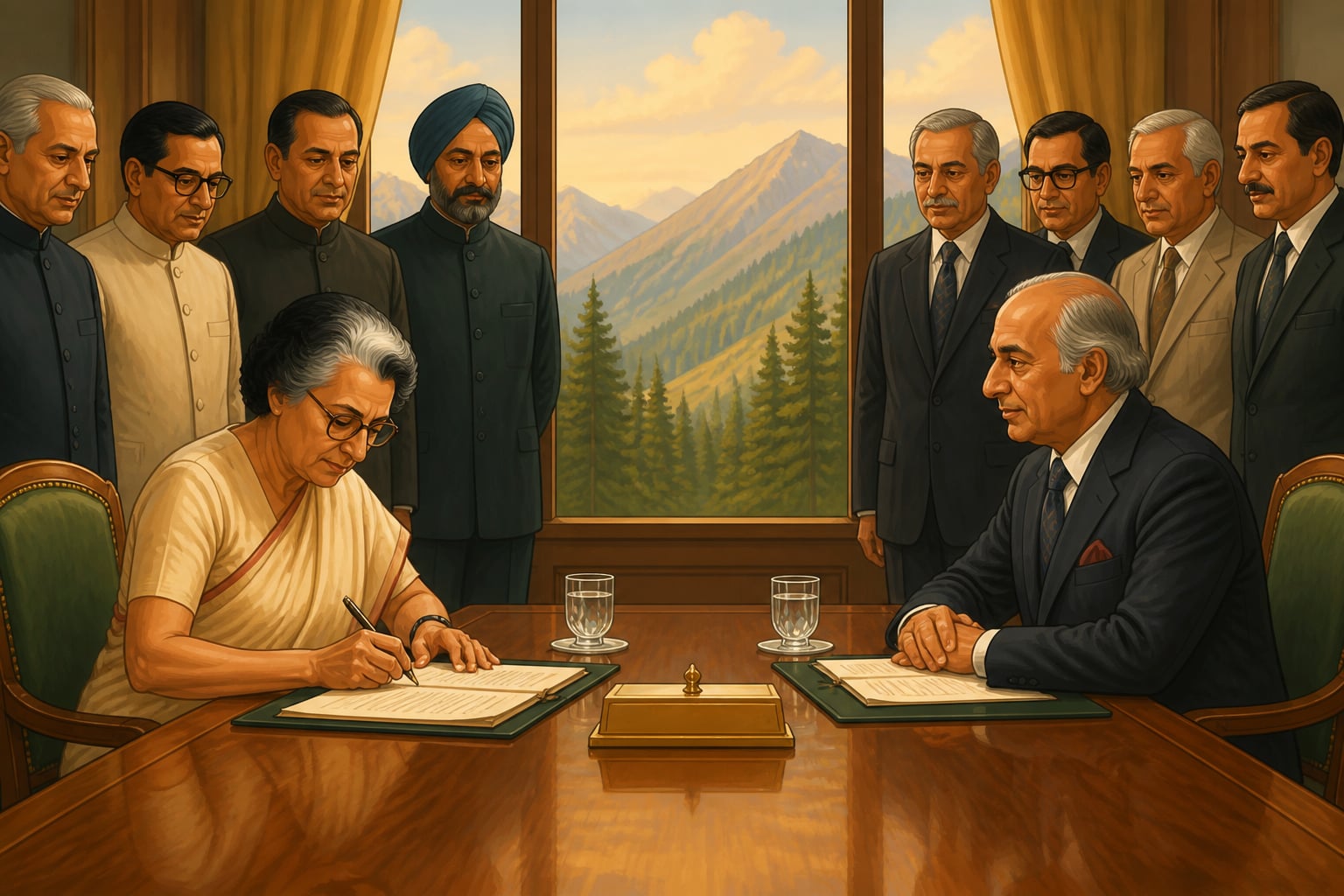
In July 1972, Prime Minister Indira Gandhi and President Zulfikar Ali Bhutto met at Shimla. The resulting agreement returned 93,000 Pakistani prisoners of war in exchange for recognition of the new Line of Control in Kashmir and a commitment to bilateral resolution of disputes. Critics called it a missed opportunity to permanently settle Kashmir. Defenders noted it established principles of peaceful coexistence that would frame future relations.
More importantly for the military, the agreement created space for consolidation. The threat of immediate revenge from Pakistan receded, allowing focus on long-term capability building rather than crisis management.
The Silent Warriors of the Northeast
While the nation celebrated 1971, a different war continued in India's northeastern states. Nagaland, Manipur, Mizoram, and Assam faced insurgencies that demanded a fundamentally different military approach than conventional warfare.
The Assam Rifles, the oldest paramilitary force in India, became the primary counter-insurgency force. Unlike 1971's set-piece battles, this was a war of patience, intelligence, and winning hearts. Officers learned that bullets alone couldn't defeat an insurgency rooted in ethnic grievances and external support from China and East Pakistan's remnants.
Operation Bajrang in Mizoram (1966-1986), though begun before 1971, intensified afterward. The military adopted the "Hearts and Minds" approach, building roads, schools, and hospitals alongside security operations. The eventual Mizo Accord of 1986 stands as proof that patient consolidation succeeds where pure force fails.
Military Modernization: Learning from Victory
The 1971 victory, while decisive, exposed gaps. The tank battles at Basantar and Shakargarh showed the need for better armored vehicles. The naval successes at Karachi demonstrated missile warfare's future. The air force's performance highlighted both strengths and areas for improvement.
Indigenous Development Begins
The Defence Research and Development Organisation (DRDO), established in 1958, received renewed focus. The Integrated Guided Missile Development Programme would eventually produce Prithvi, Agni, Akash, Trishul, and Nag missiles. The seeds planted in the 1970s bore fruit in the 1990s and beyond.
The Light Combat Aircraft program (later named Tejas) began conceptualization. Hindustan Aeronautics Limited expanded capabilities. The goal: reduce dependence on foreign suppliers who had embargoed India during 1971.
Doctrinal Evolution
Military thinkers studied the 1971 campaign intensively. General K. Sundarji would later develop the mechanized warfare doctrine that shaped the Army. The "Cold Start" concepts of rapid mobilization have roots in lessons learned from 1971's swift campaign.
The tri-service coordination that won 1971 led to discussions about greater integration, debates that continue today but began in the post-victory analysis period.
The Nuclear Question
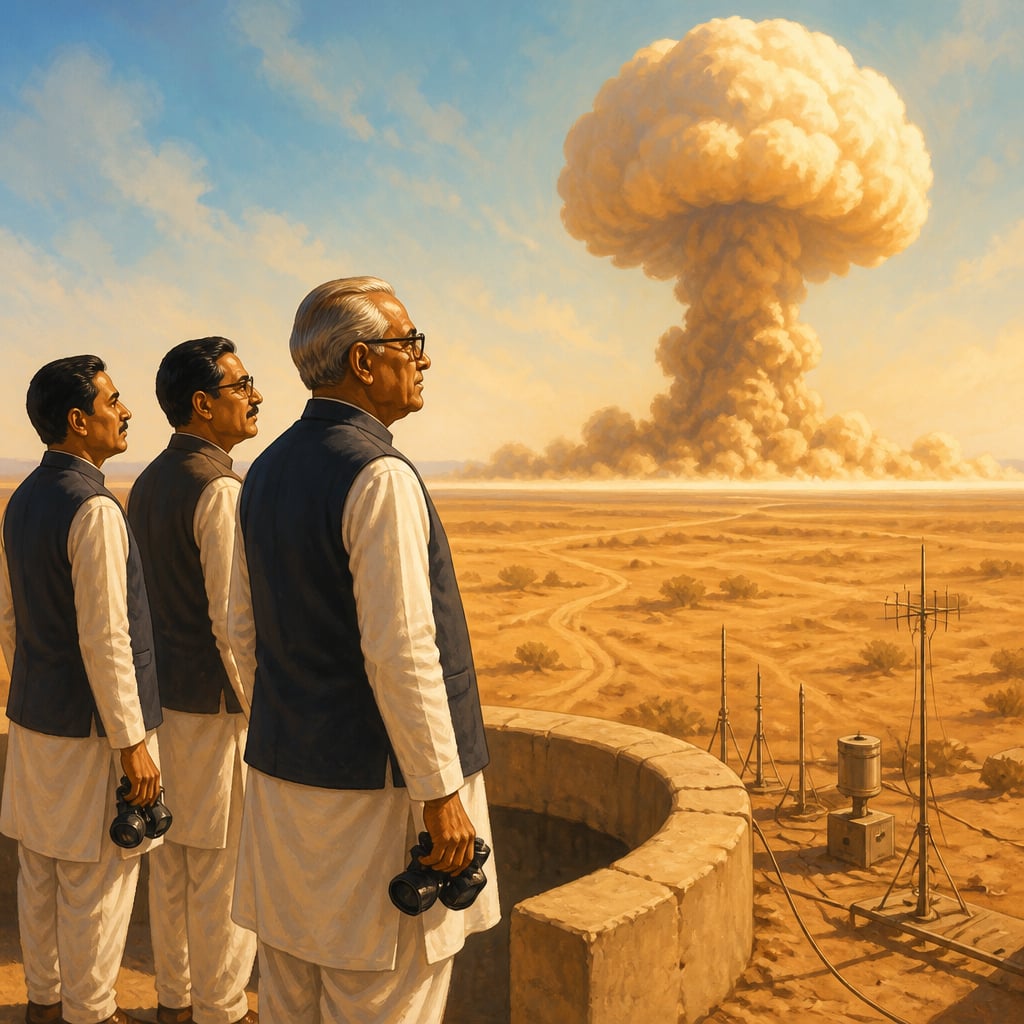
On May 18, 1974, India conducted its first nuclear test, "Smiling Buddha", at Pokhran. Officially a "peaceful nuclear explosion," it fundamentally altered regional strategic calculations. Pakistan immediately accelerated its nuclear program.
The test was both culmination and beginning. It culminated decades of scientific development under Homi Bhabha and Raja Ramanna. It began India's journey as a nuclear-capable state, adding deterrence depth to conventional military strength.
The international response, sanctions and technology denial, reinforced the push for indigenous capability. What seemed a setback became a catalyst for self-reliance.
Professionalization and Structure
The post-1971 period saw significant structural reforms:
Pay Commission and Welfare: The Third Pay Commission (1970-73) addressed military compensation. Though controversies about civil-military pay parity would persist, this period saw attention to soldier welfare.
Training Modernization: The National Defence Academy, Indian Military Academy, and various regimental centers updated curricula based on 1971 experience. Officers who fought in Bangladesh became instructors, passing hard-won lessons to new generations.
Regimental Consolidation: Some regiments that distinguished themselves in 1971 received expanded roles. The Parachute Regiment, after Tangail's success, grew in prominence. Naval aviation expanded following carrier-based successes.
Quiet Heroes of the Transition
This era produced leaders who would shape India's military for decades:
General K.V. Krishna Rao served as Military Secretary and later Army Chief. His work on mechanized warfare doctrine influenced the Army's transformation.
Admiral S.M. Nanda, who commanded the Navy during 1971, oversaw the expansion of naval aviation and submarine capabilities before his retirement.
Air Chief Marshal Pratap Chandra Lal, whose air force dominated 1971's skies, focused his post-war tenure on modernization and training.
These leaders translated victory into institutional memory, ensuring 1971's lessons became permanent military DNA.
The Siachen Prelude

The seemingly quiet period ended with Operation Meghdoot in April 1984, when India occupied the Siachen Glacier before Pakistan could. This audacious operation by the Kumaon Regiment and Ladakh Scouts demonstrated that 13 years of preparation had created a military capable of operating in the world's most extreme battlefield.
The soldiers who climbed to 20,000 feet in 1984 were products of the consolidation era, trained by 1971 veterans, equipped with gradually modernized gear, and imbued with the confident spirit of a force that had won decisively.
Legacy of the Quiet Years
The 1971-1984 period teaches that military excellence requires more than battlefield glory. It demands:
- Patience: Building indigenous capabilities takes decades, not months
- Learning: Victory must be studied as intensely as defeat
- Adaptation: Different threats (Northeast insurgency vs conventional war) require different approaches
- Investment: Today's research becomes tomorrow's deterrence
- Institutional Memory: Heroes must become teachers
The Param Virs of 1971 inspired a generation. But the consolidation period ensured that inspiration became capability, memory became doctrine, and victory became foundation. When India faced Siachen, Kargil, and challenges beyond, the answers came from seeds planted in these seemingly quiet years.
The gap was never a gap. It was a bridge, from triumph to strength, from victory to permanence, from heroes to heritage.
Historical context
Post-1971 Consolidation Period (1972-1984)
Living traditions
The institutions built during 1972-1984 form modern India's defense backbone. DRDO's missiles, HAL's aircraft, the nuclear deterrent, all began in this consolidation era. The counter-insurgency expertise developed in the Northeast became invaluable for Kashmir operations. The doctrinal frameworks created by post-1971 thinkers still guide military planning.
- Pokhran Nuclear Test Site: The site of India's 1974 'Smiling Buddha' test and the 1998 Pokhran-II tests. Though access is restricted, the nearby town and museum honor India's nuclear journey.
- Siachen Base Camp Memorial: The memorial honoring soldiers of Operation Meghdoot and subsequent Siachen service. The culmination of the consolidation period's preparation.
Reflection
- After achieving a major success, do you tend to rest on your laurels or immediately begin preparing for future challenges? What can military leaders' post-1971 approach teach about maintaining momentum after victory?
- The consolidation period involved many leaders who planted seeds they would never harvest. How do you balance working for immediate results versus investing in long-term capability that benefits your successors?
- The Northeast operations required a completely different approach than 1971's conventional war. How do you recognize when your tried-and-true methods won't work and you need to adapt fundamentally?