Vivekashilata: True Intelligence
What real wisdom looks like
What does true intelligence look like? A wise physician demonstrates the balance we have been seeking, she has studied every medical text, learned from every patient, remains humble before what she does not know, and knows when to act and when to wait. In her we see the synthesis: knowledge + experience + humility + discernment.
The Gathering of Stories
Manthaputra had grown old in his village, still telling the tale of his brothers and the lion to anyone who would listen. Over the years, he had collected other stories too, of Shankuka the weaver-general, of Prince Vidyasagara, of Garveshvara the proud pandit, each illustrating different facets of the same truth.
One evening, a young woman named Chandrika came to hear his stories. She was a physician's apprentice, trained in Ayurveda but troubled by doubts.
"Old one," she said, "I have heard your tales. Your brothers had knowledge without wisdom. The weaver had theory without practice. The prince had learning without experience. The pandit had brilliance without humility. But tell me, what does true intelligence look like? Is there anyone who gets it right?"
Manthaputra smiled. "Sit down, young healer. Let me tell you about someone who did."
The Physician of Varanasi
In the sacred city of Varanasi, there lived a physician named Shubhada, 'she who brings good fortune.' She was neither young nor old, neither famous nor obscure. Kings did not summon her, but neither did anyone in the city suffer without knowing where to find help.
Shubhada had studied Ayurveda for twelve years under the finest teachers. She knew the eight branches of medicine, could identify a thousand herbs by sight and smell, and had memorized the Charaka Samhita so thoroughly that she could recite any passage from memory.
But she never quoted texts to her patients.
"Books describe the typical case," she would say. "Patients are never typical. The book tells me what disease does; only the patient can tell me what this disease is doing to this person."
The First Patient
One day, a wealthy merchant brought his son to Shubhada. The boy had a fever that had lasted three days. The merchant was frantic.
"We have seen four physicians," he said. "Each prescribed different remedies. Nothing works. My son grows weaker."
Shubhada examined the boy carefully, his pulse, his tongue, his eyes, his skin. Then she asked questions, not just about symptoms, but about the boy's life, his fears, his recent experiences.
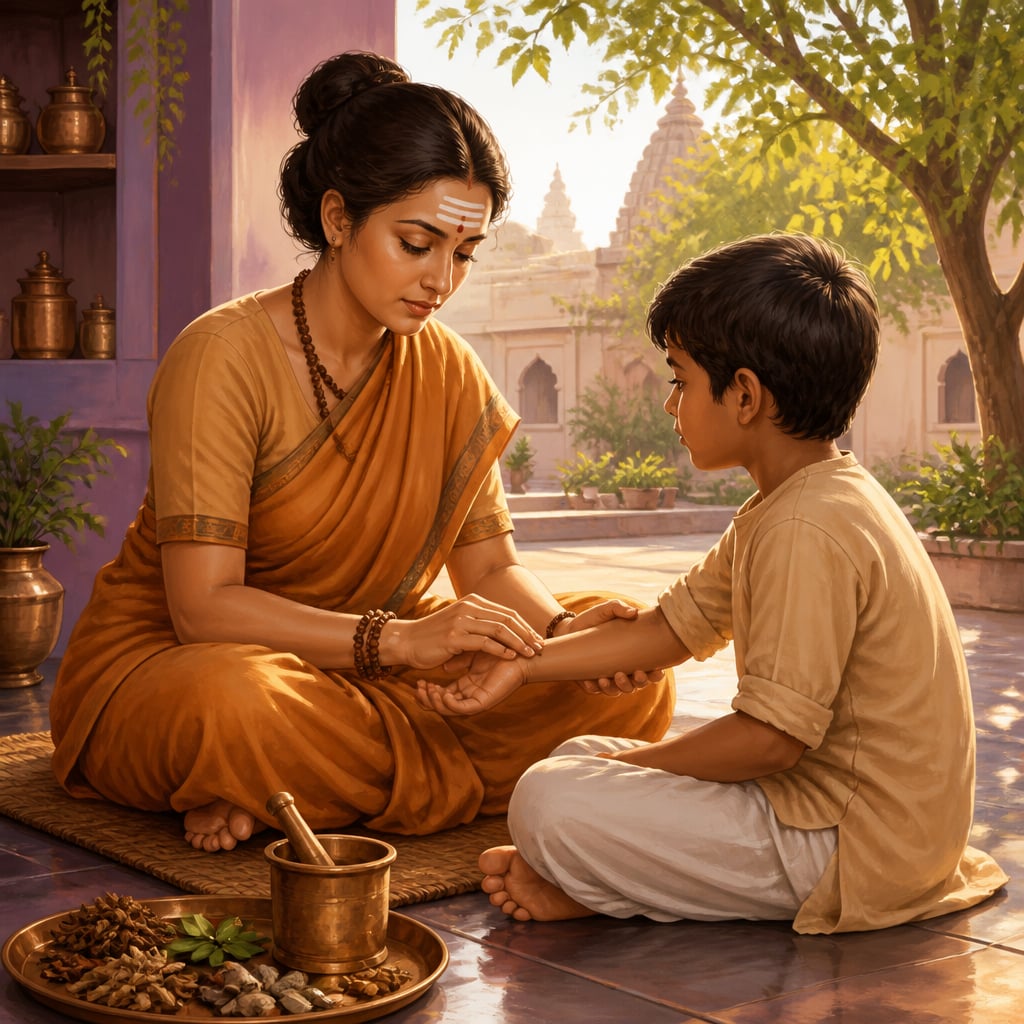
"What have the other physicians prescribed?" she asked.
The merchant listed them: purgatives, cooling herbs, warming herbs, bloodletting.
"And what did each say was the cause?"
"One said excess bile. One said corrupted air. One said imbalanced humors. One said evil spirits."
Shubhada nodded. "They were all partly right and all completely wrong. Your son has a simple fever that would have passed on its own in a week. The four treatments have confused his body more than the fever did. The cure now is to stop curing."
"Do nothing?" the merchant gasped.
"I will do many things," Shubhada said. "I will ensure he rests, drinks water, eats light food, and receives no more medicine. The most difficult thing a physician learns is when not to act."
Within four days, the boy was well.
The Second Patient
A poor widow came to Shubhada with a cough that had persisted for months. She had no money for treatment.
"Tell me about your life," Shubhada said, as she always did.
The woman described her days: rising before dawn to spin cotton, working until midnight, eating little, sleeping on a damp floor because she had sold her bed to pay for food.
"Your cough is not a disease," Shubhada said. "It is your body telling you that no body can endure what you ask of yours. I can give you herbs, but they will not work unless you also receive rest, warmth, and proper food."
"I cannot afford those things," the widow said.
Shubhada thought. Then she went to the merchant whose son she had healed.
"I cured your boy by doing nothing," she said. "Now I ask you to do something. There is a widow who needs work that does not destroy her body, and a warm place to sleep. In exchange, she can clean, cook, or tend to any work in your household that you need."
The merchant, grateful for his son's recovery, agreed.
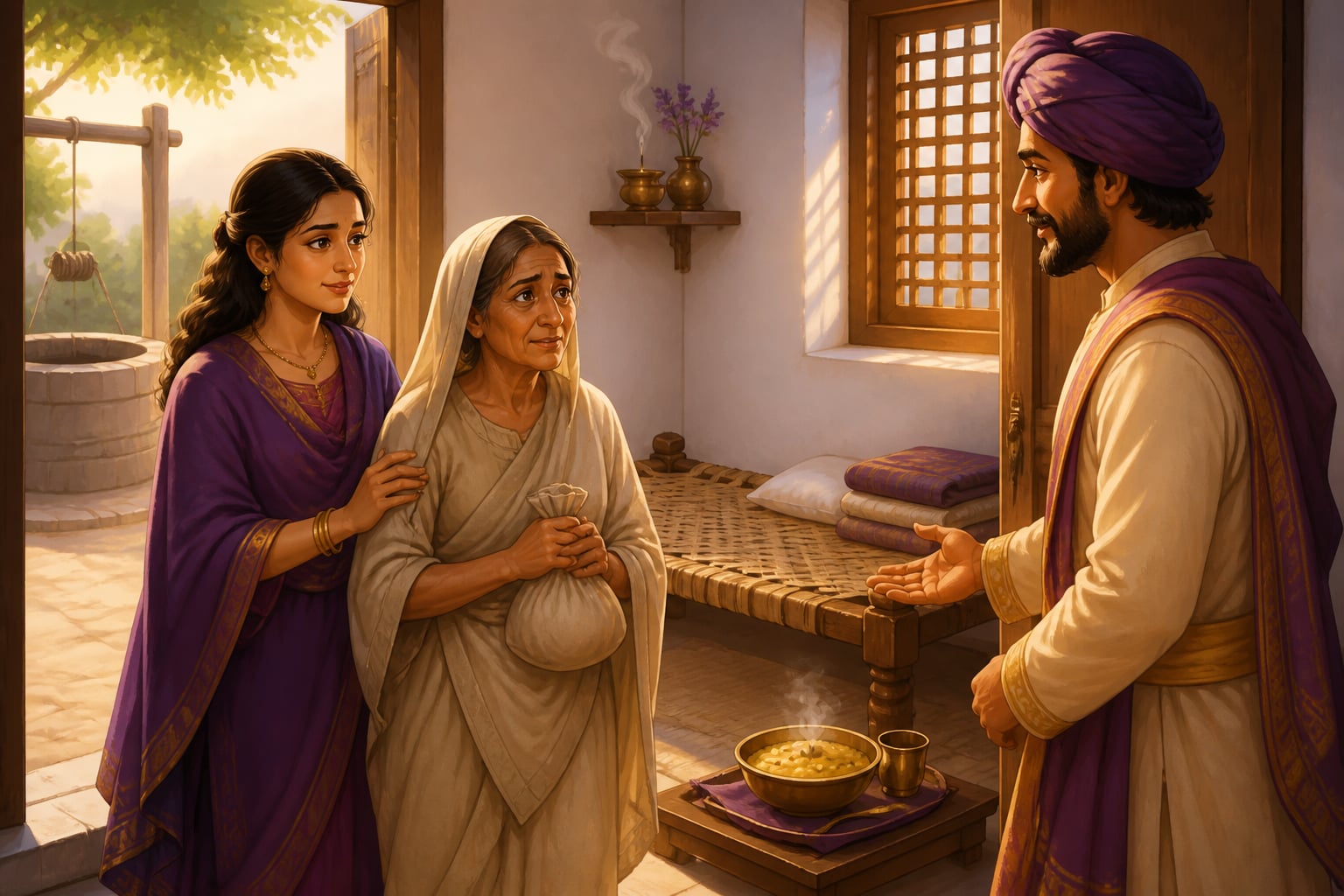
Shubhada returned to the widow. "I have found you medicine. It is called employment with a good family. The herbs I give you will help only if you take this medicine too."
The widow's cough cleared within two months.
The Third Patient
A young scholar came to Shubhada complaining of headaches that prevented his studies.
"I have memorized every text on headaches," he said. "I know the causes, the treatments, the prognosis. I have treated myself with every remedy. Nothing works."
Shubhada examined him and found nothing physically wrong.
"What are you studying?" she asked.
"Medicine," the scholar said. "I intend to become the greatest physician in Varanasi."
"Why?"
"To heal people, of course."
"No," Shubhada said gently. "That is what you tell yourself. But you said 'greatest physician,' not 'good physician.' Your headaches come from the tension between wanting to help people and wanting to be famous for helping people. The two desires pull in different directions."
The scholar was silent.
"I cannot cure your headaches," Shubhada continued. "Only you can, by deciding which desire matters more. If you choose fame, your headaches will remain, success will only make them worse. If you choose service, your headaches will fade, because you will no longer be competing with everyone, including yourself."
The scholar left without a word. A year later, he returned.
"I chose service," he said. "I am now a physician in a village too small for fame. My headaches are gone."
The Secret of True Intelligence
Chandrika listened to these tales, then asked: "What made Shubhada different from your brothers, from the weaver, from the pandit?"
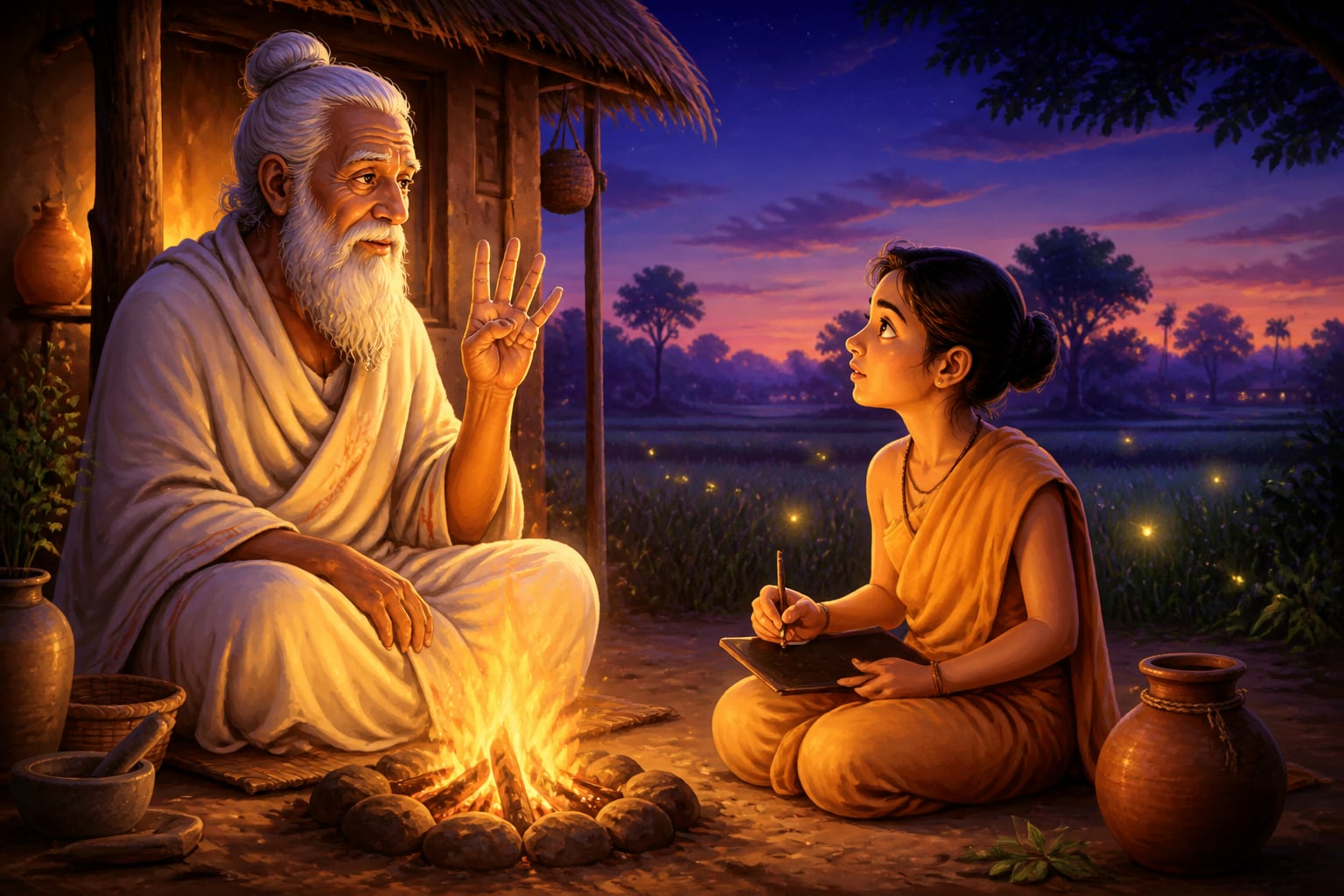
Manthaputra counted on his fingers:
*"First: she had knowledge. She had studied for twelve years and knew her texts thoroughly. My brothers had this; they failed because they had only this.
"Second: she had experience. Every patient had taught her something no book contained. The weaver lacked this, he had never fought a battle.
"Third: she had humility. She knew what she did not know. The pandit lacked this, his pride blinded him.
"Fourth: she had discernment, viveka. She knew when to act and when to refrain, when to treat the body and when to treat the life. The prince lacked this, he could not decide when decisions were needed.
"Put them together: knowledge + experience + humility + discernment. That is vivekashilata, true intelligence. Remove any one, and the others become dangerous."*
The Young Physician's Question
"How do I develop these four?" Chandrika asked.
*"Knowledge you get from teachers and books, you already have this.
"Experience you get from doing, failing, and learning, this takes time.
"Humility you get from meeting people who know things you do not, always be willing to learn from unexpected teachers.
"Discernment you get from reflecting on your actions, asking yourself not just 'What did I do?' but 'Should I have done it? What would I do differently?'
"And there is one more thing,"* Manthaputra added. "Shubhada cared about her patients more than she cared about being right. My brothers cared about demonstrating their knowledge more than they cared about staying alive. The difference is not skill, it is intention."
Chandrika sat in silence, absorbing this.
"The lion story I tell," Manthaputra concluded, "is a warning. But warnings are not enough. People need to see what success looks like, not just what failure looks like. Shubhada is what my brothers could have become, if they had learned that knowledge is only the beginning, never the end."
The Chapter Closes
Chandrika thanked the old man and returned to her training with new understanding. She would study the texts, but she would also learn from every patient. She would value her knowledge, but she would stay humble before the mysteries her knowledge could not explain. She would learn to act, but also to refrain from acting when action would cause harm.
Years later, she became a physician herself, not the greatest in the land, but perhaps the wisest. Her patients called her by a name that echoed across generations:
"The one who knows what she does not know."
And Manthaputra, who did not live to see her success, would have smiled. His brothers' deaths had not been entirely in vain. From their failure, a hundred small wisdoms had grown, cautionary tales that taught others what his brothers had never learned.
Knowledge is not wisdom. Theory is not practice. Learning is not experience. Brilliance is not humility.
But all of them together, guided by discernment, can become something greater than any alone.
This is vivekashilata, true intelligence.
This is what we seek.
Reflection
- Of the four components of true intelligence, knowledge, experience, humility, and discernment, which is your strongest? Which needs the most development? How might you cultivate what you lack?
- Shubhada sometimes healed by not treating (the merchant's son), sometimes by treating the life rather than the disease (the widow). How do you know when the problem is what it appears to be and when it is something deeper?
- This chapter began with three scholars destroyed by their knowledge and ends with a physician who uses similar knowledge wisely. What made the difference? Can knowledge be 'safe' or is wisdom always required to prevent it from becoming dangerous?