Legacy and Lessons
The Eternal Guardian: Modern Lessons from an Ancient King
More than twelve centuries after his death, Vikramaditya II speaks to us across time. His life offers profound lessons about leadership, power, morality, and the meaning of true greatness. From his preservation of enemy temples to his integration of strength and wisdom, from his cultural patronage to his philosophical depth, he established ideals that remain relevant in our complex modern world. This final lesson explores what contemporary society can learn from this guardian of dharma.
The Final Years
Vikramaditya II's reign came to an end around 744 CE, after approximately eleven years of rule that had transformed the Chalukya position in the Deccan. The kingdom he left behind was at the height of its power and prestige.
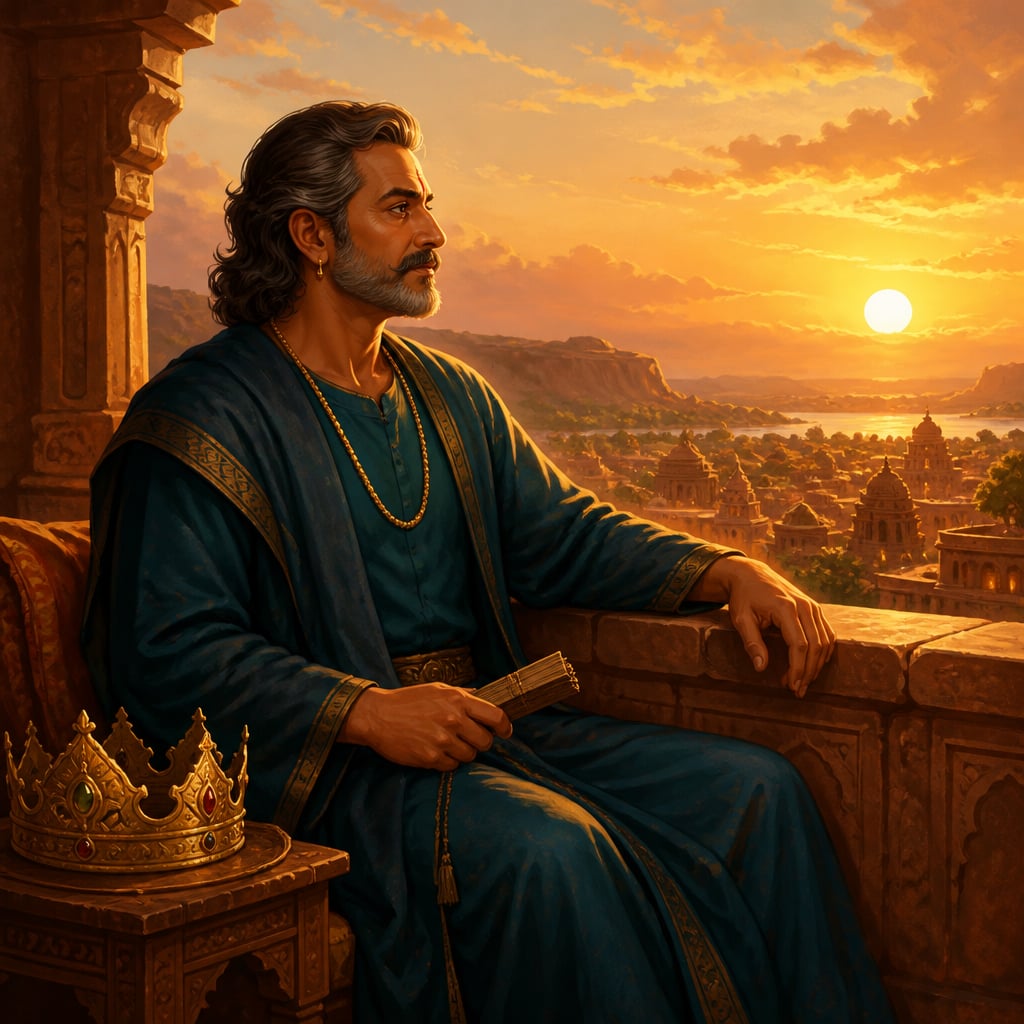
His military campaigns had established Chalukya supremacy across South India. The three conquests of Kanchi had subordinated the Pallavas. Arab raiders had been repulsed. But perhaps more importantly, he had established new standards for kingship itself. Through his preservation of enemy temples, he demonstrated that power could be exercised with moral restraint. Through his cultural patronage, he showed that a warrior-king could also be a patron of arts. Through his philosophical commitments, he proved that dharmic principles could guide action even in warfare.
Succession and Decline
Vikramaditya II was succeeded by his son, Kirtivarman II, the last great Chalukya king. Kirtivarman inherited a powerful kingdom but faced challenges his father had not. The feudatory system that served Vikramaditya II so well began showing inherent instability. Powerful feudatories like Dantidurga's Rashtrakutas now possessed strength to challenge central authority.
Within decades, the Rashtrakutas overthrew the Chalukyas. This transition was perhaps inevitable, what worked under strong leadership proved unsustainable under weaker successors. Yet even as the political kingdom fell, the cultural and philosophical legacy endured. The temples continued inspiring devotion. The principle of preserving enemy sacred sites remained an ideal. The standard of dharmic kingship he embodied influenced subsequent rulers.
The Enduring Monuments
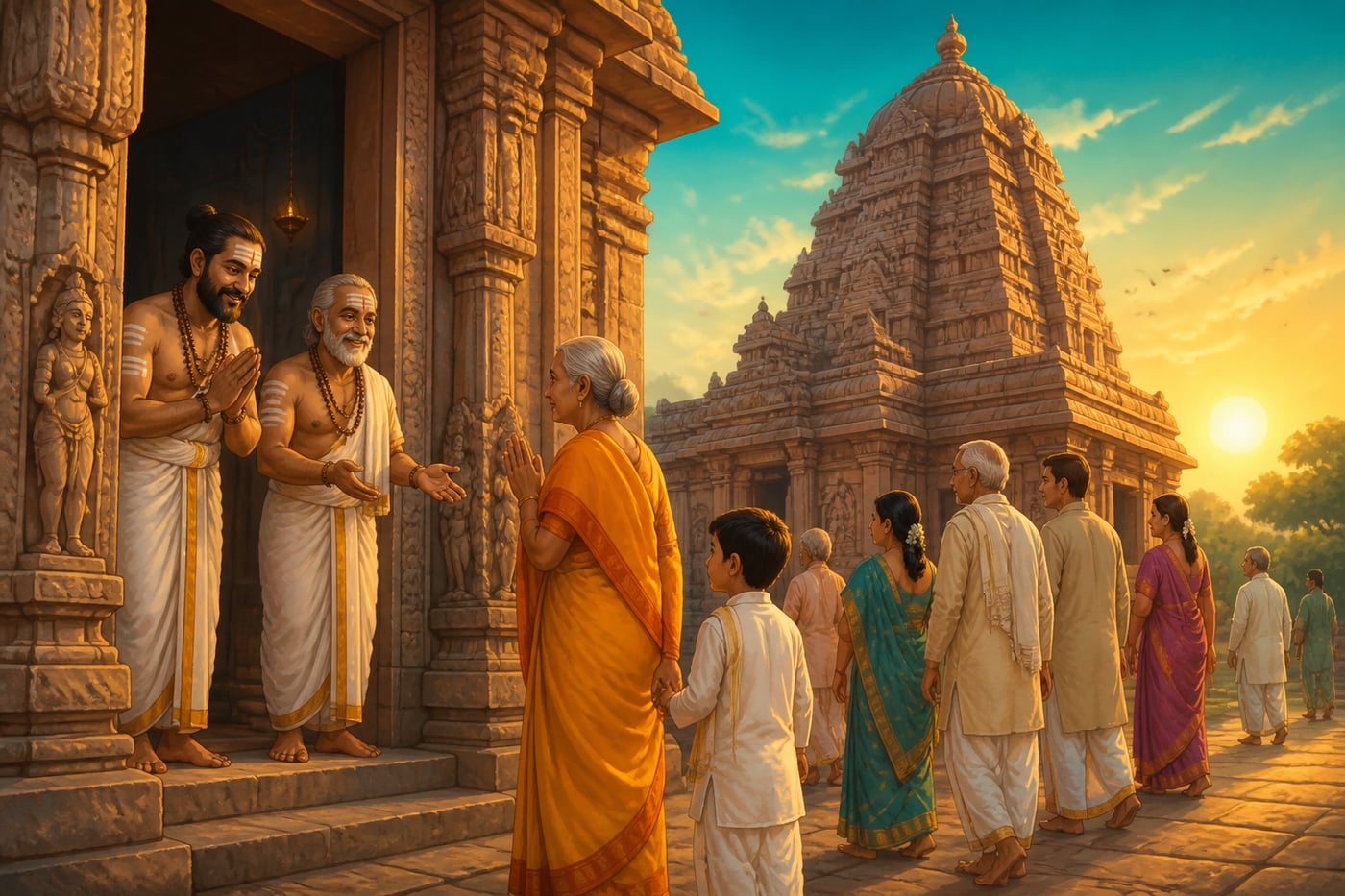
Today, more than 1,200 years after Vikramaditya II's death, the monuments associated with his reign continue serving their sacred purposes. The Virupaksha temple at Pattadakal remains an active place of worship, a UNESCO World Heritage Site visited by thousands annually.
The Kailasanatha temple at Kanchi, which he famously preserved, also continues as an active temple. The pillar bearing his inscription still stands, read by visitors who marvel at the moral vision it represents. The temple itself, now over 1,300 years old, testifies to the wisdom of preservation over destruction. These monuments have outlasted the Chalukya kingdom, the Rashtrakuta dynasty that supplanted it, and all subsequent empires that ruled the region. They have survived wars, invasions, and the rise and fall of civilizations. They continue fulfilling their original purpose, serving as dwelling places for the divine, while also teaching future generations what true greatness means.
Lessons for Modern Leadership
What can 21st-century leaders learn from an 8th-century king? A great deal. The challenges he faced, balancing power with morality, achieving success while maintaining principles, remain central challenges today.
True Power Includes Restraint: In an age measuring power by capacity for action, Vikramaditya II teaches that the highest power is capacity for restraint. Anyone can destroy; it takes wisdom to preserve. This applies across contexts, companies with power to crush competitors might achieve more through partnership; leaders who could impose their will might build more sustainable consensus through inclusion.
What You Build Outlasts What You Conquer: His military victories are remembered by historians, but his temples are experienced by millions. Creation outlasts destruction. True legacy lies not in defeating competitors but in creating value that serves people beyond your lifetime.
Principle Before Expediency: He consistently chose principled action over expedient advantage, trusting that righteous conduct ultimately produces better outcomes. Don't cut corners for short-term results. Don't compromise ethics because competitors do. The integrity you maintain is worth more than temporary advantages foregone.
Integration Over One-Dimensionality: He integrated warrior and sage, strength and wisdom, action and restraint. Modern leaders must similarly be tough and compassionate, decisive and thoughtful. Excellence requires both sets of virtues applied contextually.
Sustainable Success Requires Winning Hearts: Military conquest creates temporary control; winning respect creates sustainable governance. Organizational leaders implementing change must win people's hearts, not just command actions. People tolerate rule imposed by force, but commit to leadership they respect.
The Philosophical Legacy
Vikramaditya II's deepest legacy is philosophical: demonstrating that power and morality are complementary, not contradictory. In a world presenting false dichotomies, be ethical or effective, compassionate or strong, he proved you can be a fierce warrior and a dharmic king, exercise power and show restraint, achieve success and maintain integrity.
This offers an alternative to both ruthless Machiavellianism and ineffective idealism. It presents a third way: power guided by wisdom, action informed by principle, strength tempered by restraint, mature leadership our world desperately needs.
Contemporary Relevance
His example speaks to contemporary challenges. In an age of cultural destruction during conflicts, from the Taliban destroying the Bamiyan Buddhas to ISIS demolishing Palmyra, his temple preservation offers a powerful moral counterexample: some human achievements belong to all humanity regardless of who created them. Cultural heritage should be protected even in the midst of war. In an era of corporate scandals and abuse of power, his demonstration that leaders can be both successful and ethical provides a needed model. In a world with unprecedented destructive capacity, his teaching that the highest power is knowing when not to use it has never been more relevant.
A Life's Meaning
What made Vikramaditya II's life meaningful? Not the territories he temporarily controlled, which were lost within decades of his death. Not the enemies he defeated, who recovered and fought again. Not the wealth he accumulated, which was eventually dispersed. What made his life meaningful was what he created that served purposes beyond himself: temples that continue inspiring devotion twelve centuries later, principles that continue guiding leaders across time, and examples of moral conduct that continue teaching what true greatness means.
This suggests how we might evaluate our own lives, not by wealth, power, or victories, but by asking: What have I created serving purposes beyond myself? What principles have I upheld when difficult? What have I contributed that will outlast my brief time?
Vikramaditya II, the lesser-known guardian of dharma, teaches us that true greatness is measured not by what you take but by what you give, not by what you destroy but by what you preserve, not by the power you exercise but by the wisdom with which you exercise it. These lessons, offered across twelve centuries, remain as relevant today as when he first embodied them.
Historical context
Post-744 CE - Legacy Period Extending to Present
The decades following Vikramaditya II's death saw the Rashtrakutas rise to dominance in the Deccan, ironically continuing and expanding the cultural traditions he had championed. The ideal of dharmic kingship he embodied influenced subsequent rulers including the Rashtrakutas, Cholas, and later dynasties. His preservation of enemy temples, while not consistently emulated, remained an aspirational ideal. The temples built during his reign influenced South Indian architecture for centuries. Modern India takes pride in this heritage as part of its civilizational identity.
Living traditions
Vikramaditya II's legacy manifests in multiple dimensions: (1) Physical: The temples he built and preserved continue serving their sacred purposes after twelve centuries. (2) Philosophical: His demonstration that power and morality are complementary influences leadership thinking. (3) Cultural: The principle that cultural heritage should be preserved regardless of political conflicts, embodied in UNESCO conventions and national laws, traces back through a tradition including exemplars like him. (4) Aspirational: His life provides a model of integrated leadership combining strength, wisdom, cultural sophistication, and moral depth that remains relevant for contemporary leaders across all fields.
- Virupaksha Temple, Pattadakal: The crown jewel of Vikramaditya II's cultural legacy, built by Queen Lokamahadevi. This UNESCO World Heritage Site continues as an active temple 1,280 years after construction, demonstrating that what he built outlasts what he conquered. Pilgrims worship here daily, unaware of the political context but benefiting from his cultural vision.
- Kailasanatha Temple with Preservation Inscription: The Pallava temple Vikramaditya II famously preserved, with his inscription still visible on a pillar. The temple's survival for 1,300+ years validates his wisdom, preservation proved more powerful than destruction. Visiting this site offers profound reflection on the nature of power, legacy, and what truly endures.
- Badami Cave Temples and Fort: The Chalukya capital from which Vikramaditya II ruled. The caves and fort provide context for understanding the civilization that produced this remarkable king. Walking through the same spaces he knew helps connect ancient wisdom to contemporary life.
Reflection
- Twelve centuries after his death, Vikramaditya II's temples remain active while his kingdom is gone. What does this reveal about what endures across time? How might this change how you think about success and legacy?
- The lesson states that Vikramaditya II's ideal of dharmic kingship influenced behavior across centuries even when imperfectly practiced. Is establishing ideals valuable even when they're not consistently achieved? Or does the gap between ideal and practice make the ideal hypocritical and worthless?
- Of all the lessons from Vikramaditya II's life, restraint as strength, creation over consumption, principle before expediency, integration of opposites, winning hearts, supporting ecosystems, which speaks most powerfully to your current situation? How might you apply it?